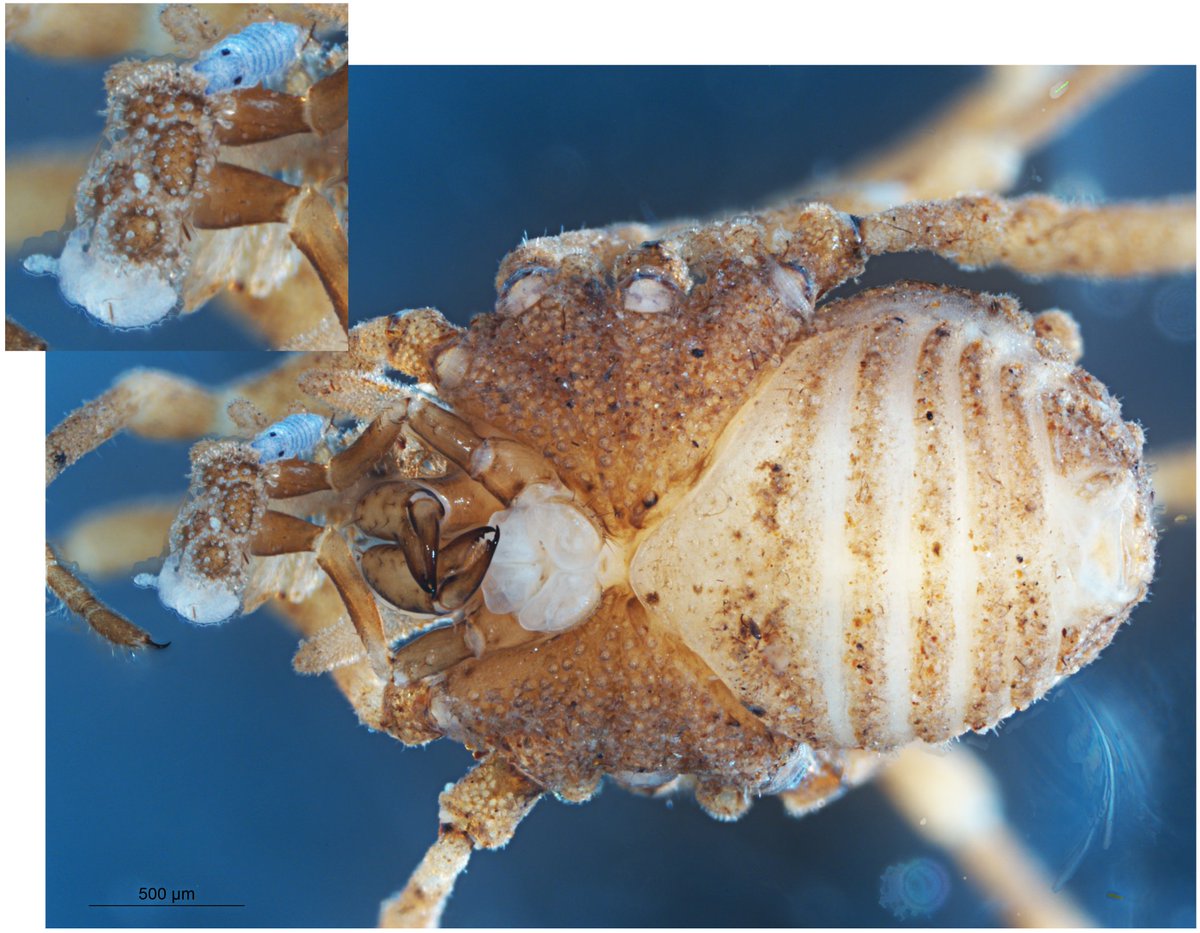
Very proud to see this study, led by our PhD student (at @AracnoMACN) Vanesa Mamani, published. It addresses an intriguing taxonomic conundrum involving synonymy, a spurious locality, and intrasexual dimorphic males in Opiliones.
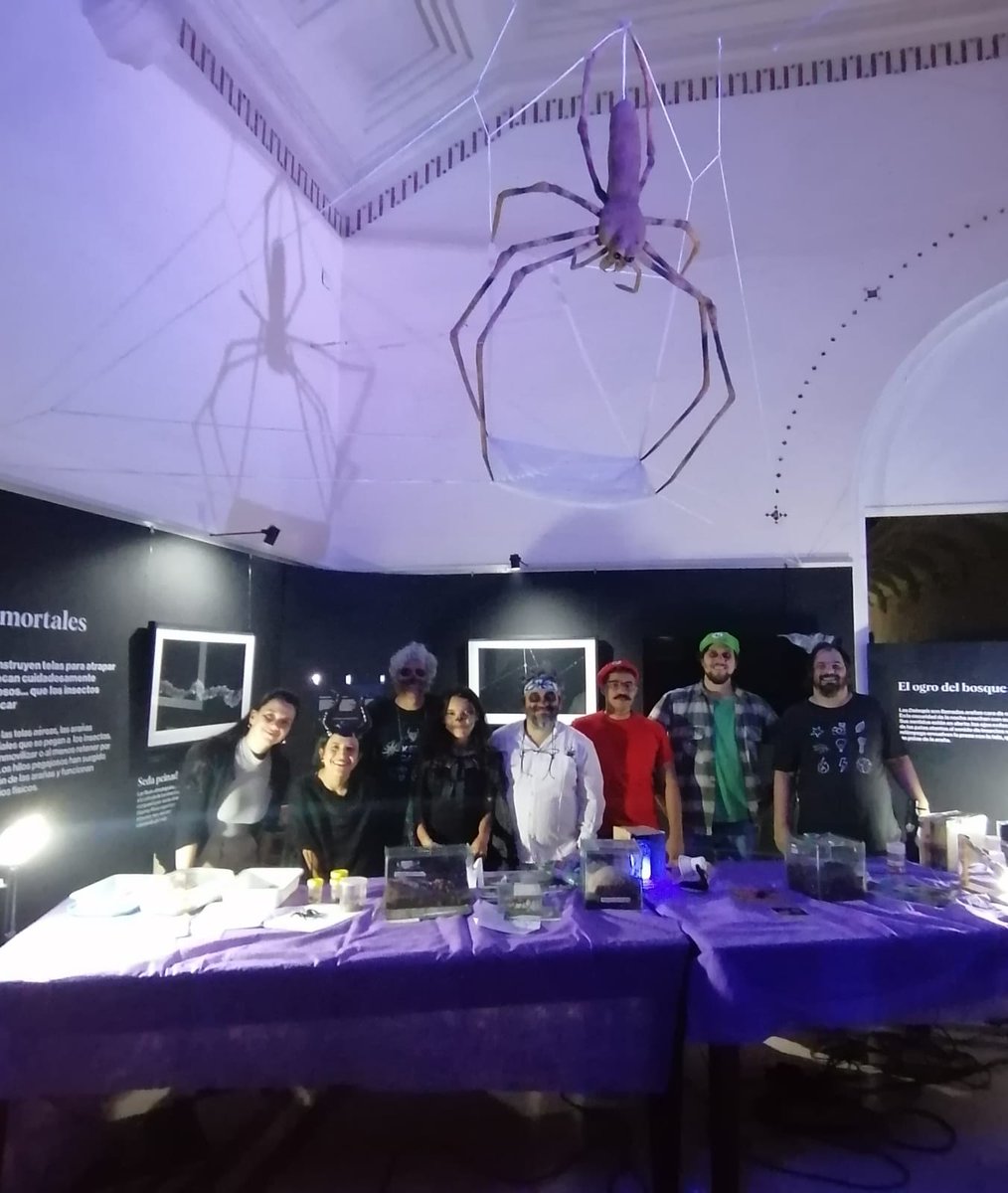
Arachnology Division MACN, June 2022
left to right
BACK: Cristian Grismado, Luis Piacentini, Leonel Martínez, Ivan Magalhães, Hernán Iuri, Andrés Ojanguren Affilastro
MIDDLE: Dante Poy, Martín Ramírez
FRONT: Willians Porto, Vanesa Mamani, Maria Paula Pereira, Abel Pérez González.
Happy to share a major contribution to the taxonomy and systematics of South American harvestmen family Triaenonychydae https://t.co/if8u1etEMU
This is one result of Willians' PhD thesis made at @AracnoMACN, with the synergistic collaboration with @ggiribet and @sderkarabetian
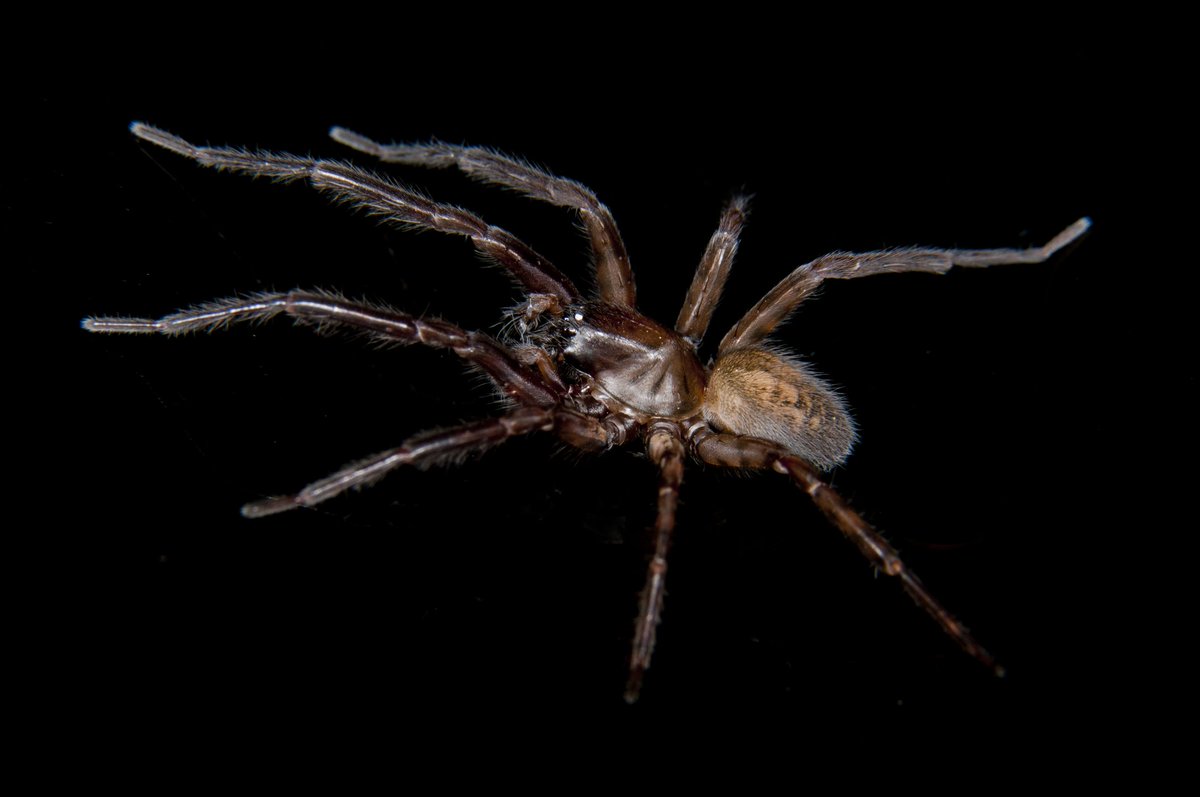
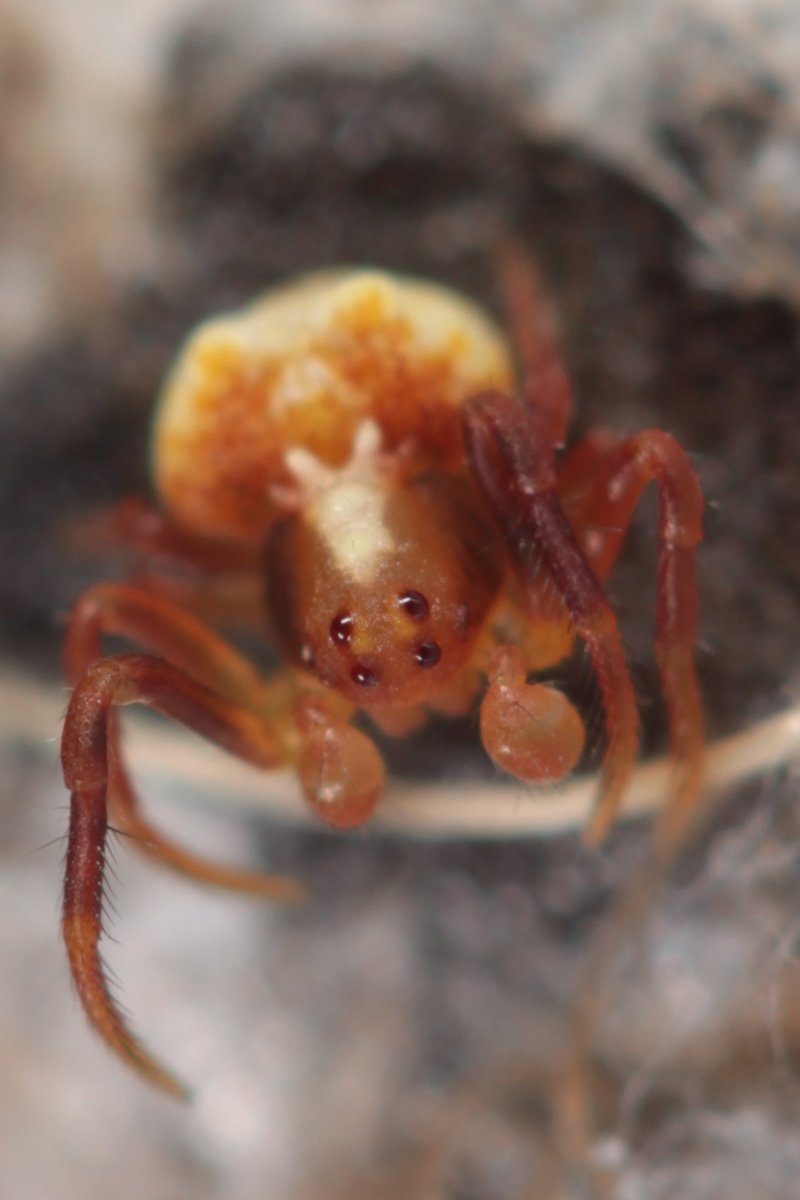
Rubrius sp., a spider from Lanín National Park, belongs to the Amaurobiidae family.
Photographed during the MACN Arachnology Division's field trip to Argentine Northern Patagonia in 2023.
Look our last collaborative research paper (between @IIBCE@Labre_arg and @AracnoMACN)
First direct evidence that Opiliones' penis contains structures that can remove sperm from the female ovipositor.
Link for free read or download before August 16, 2024:
https://t.co/vNsISKdOey
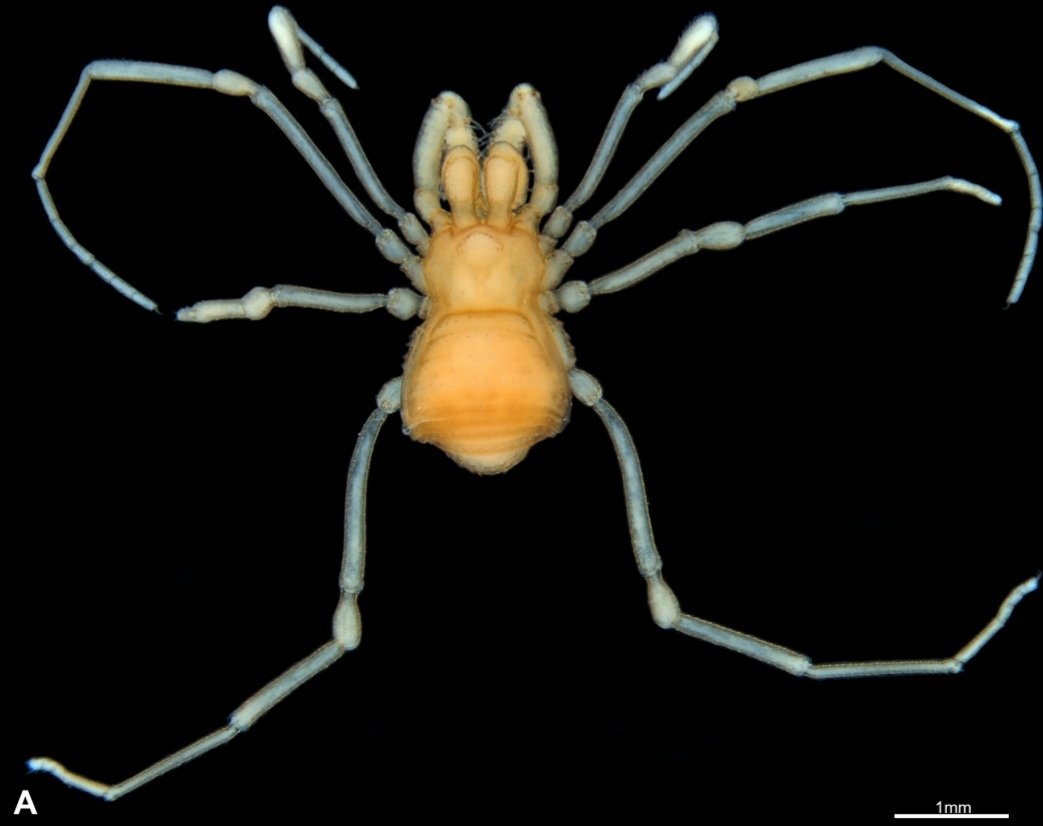
Just released in @ejtaxonomy! Our last contribution (open access) together with our dear collaborators from the LES/UFSCar! We redescribed the type species of the troglobitic genus Spaeleoleptes (Opiliones: Escadabiidae) and described a new species. https://t.co/I7Plk0P0Fb
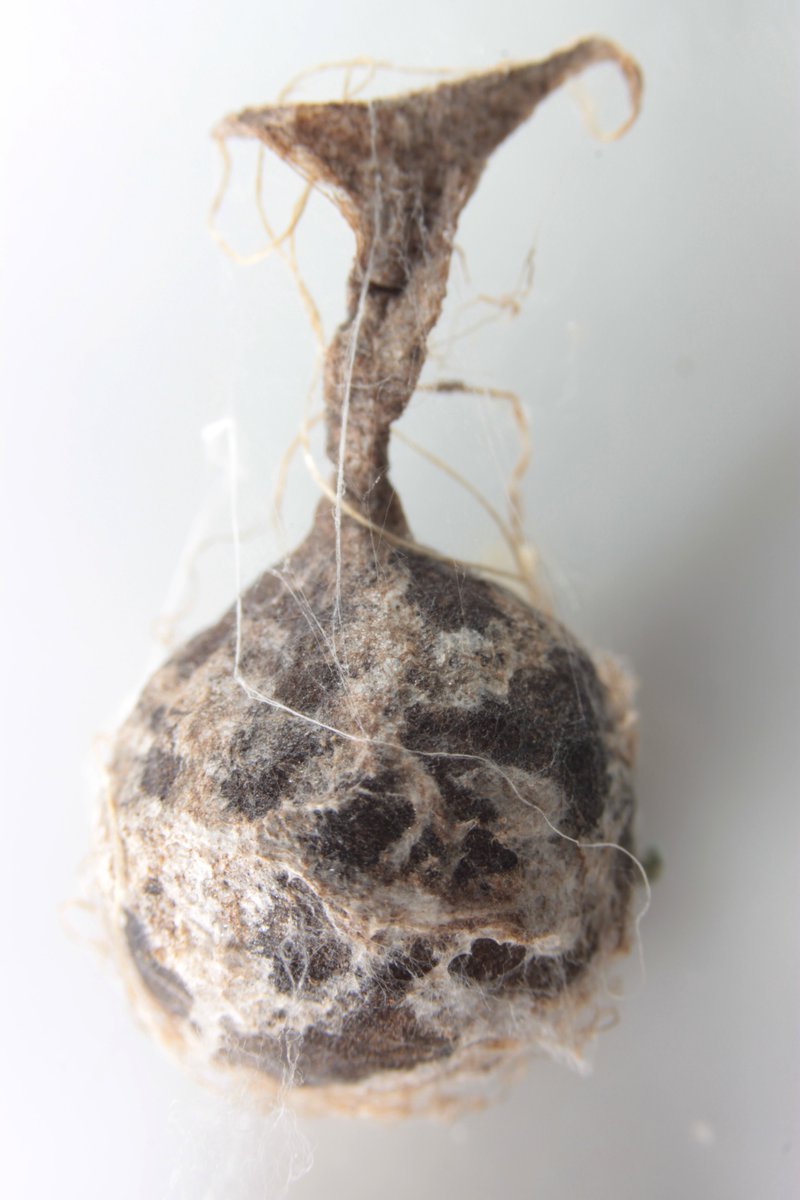
Encontramos una ooteca de Mastophora (araña boleadora) y salieron bebés. Cosas interesantes:
-Los machos salen de la ooteca ya casi adultos, así ya pueden empezar a buscar hembras lo antes posible
-Los bebés tienen patas espinosas, porque todavía no hacen las bolas para cazar
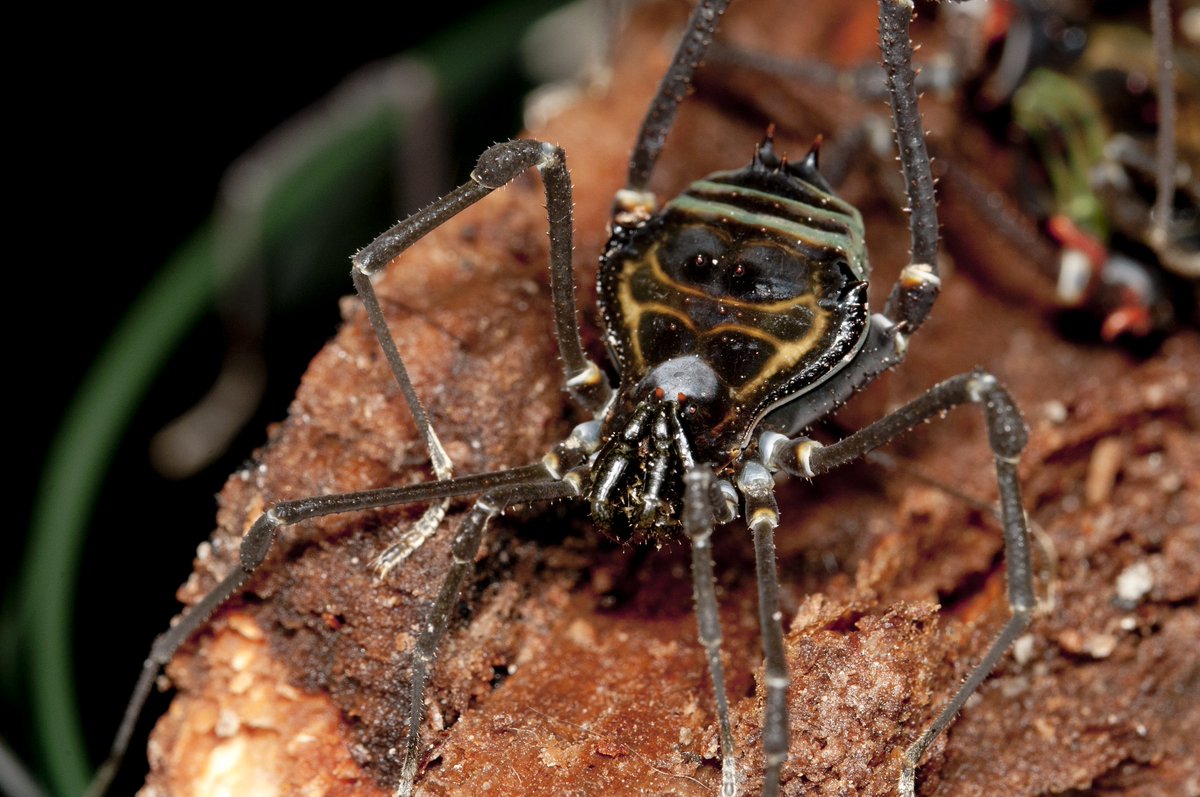
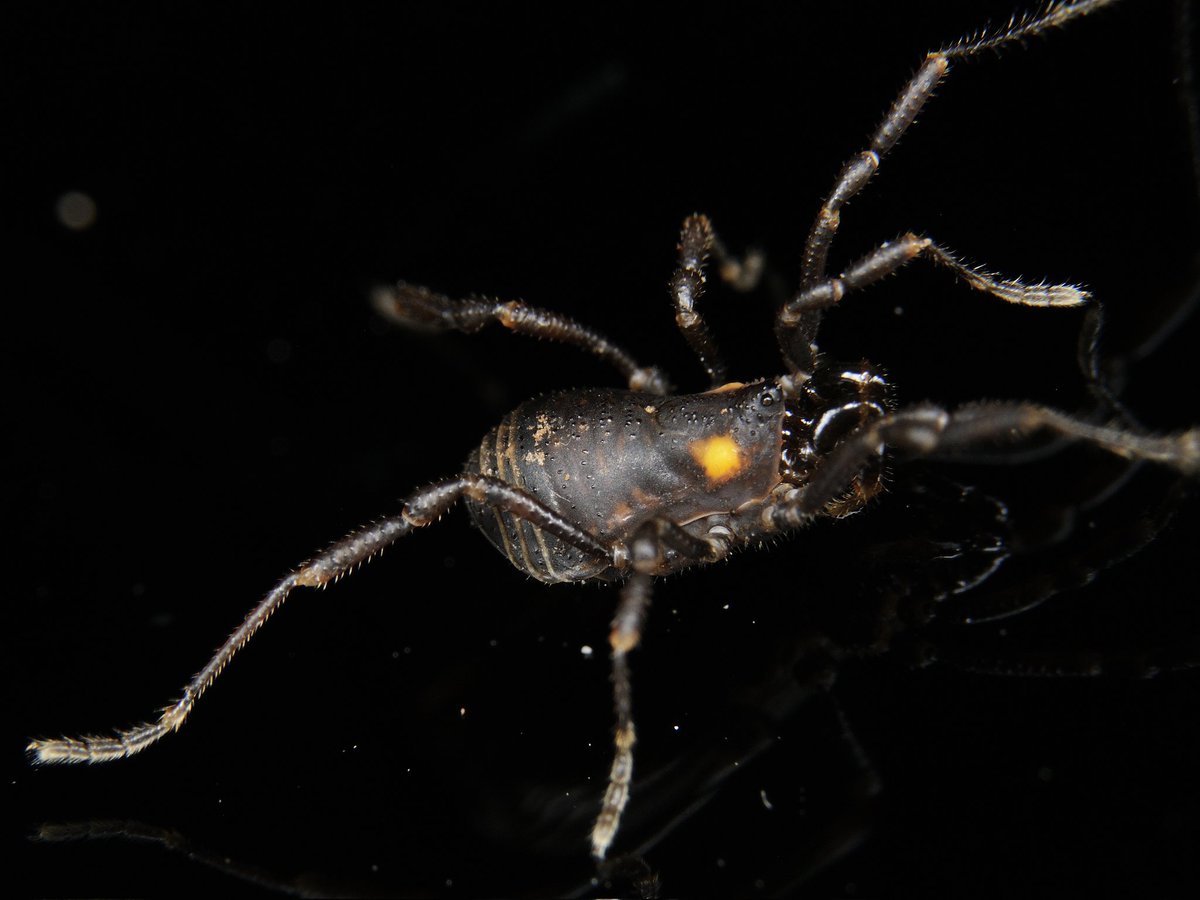
Valdivionyx crassipes Maury, 1988, is another of the curious Opiliones: Triaenonychidae observed in our recent field trip to Argentinean Patagonia. Look their remarkable orange spot in the prosoma.
One of the most fantastic and colorful harvestmen in the world. Male and female of Sadocus cf. polyacanthus (Gervais, 1847) from National Park Nahuel Huapi in Northern Argentinean Patagonia. Those speciemens were collected around Espejo Lake's boundaries in a very cold day!!
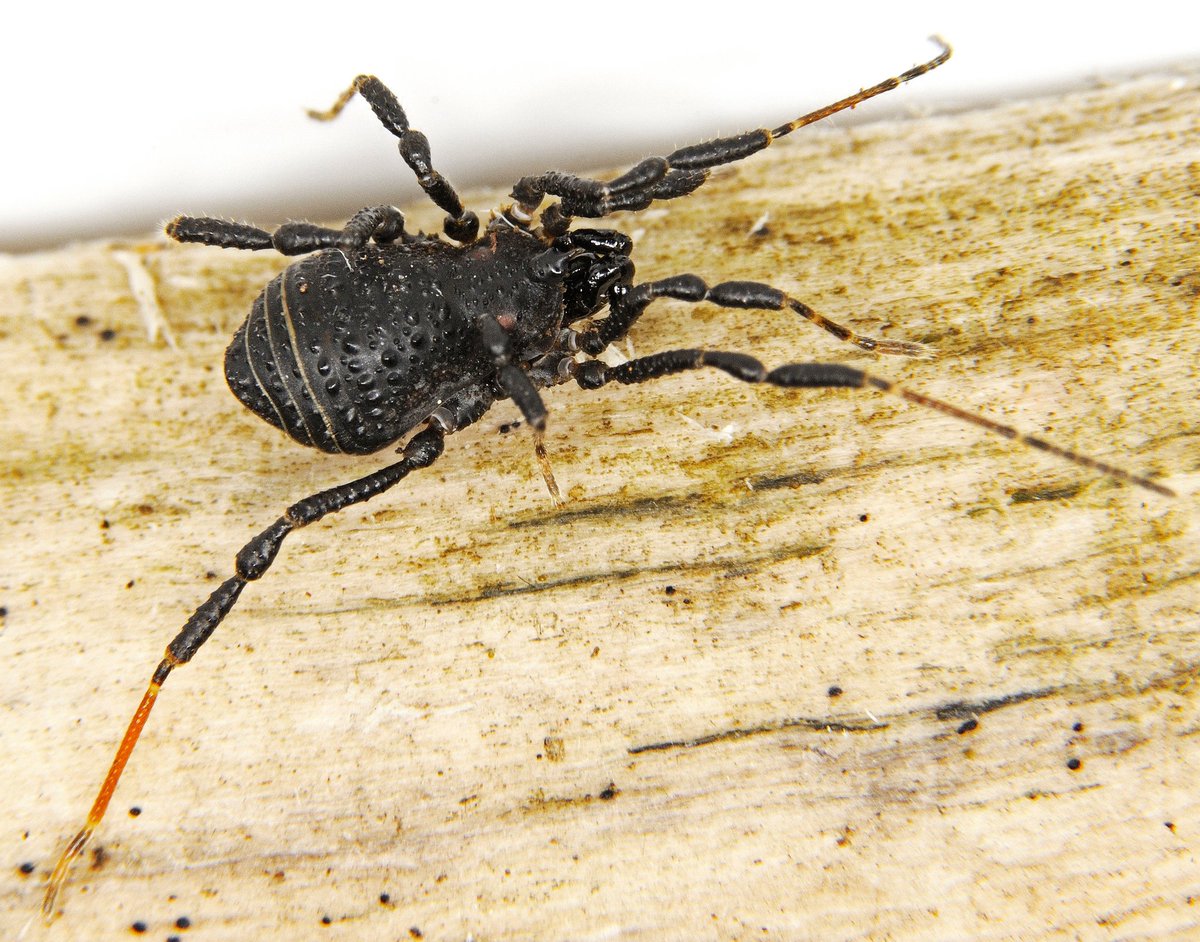
Another amazing harvestmen from the Argentinean Patagonia, also with two lighter spots in the prosoma. But, differently, Nahuelonyx nasutus (Ringuelet, 1959) exhibits rougly tubercles in the body as well as orange metatarsus IV like socks! ����
Enjoy a marvelous male specimen of Thrasychirus cf. dentichelis Simon, 1884. This harvestmen (family Neopilionidae) was recorded in Argentinean Patagónia, specifically in Puerto Blest. The enlarged chelicerae of males, is one of the sexually dimorphic characters of this species.
A viscosed preambule leading to death.
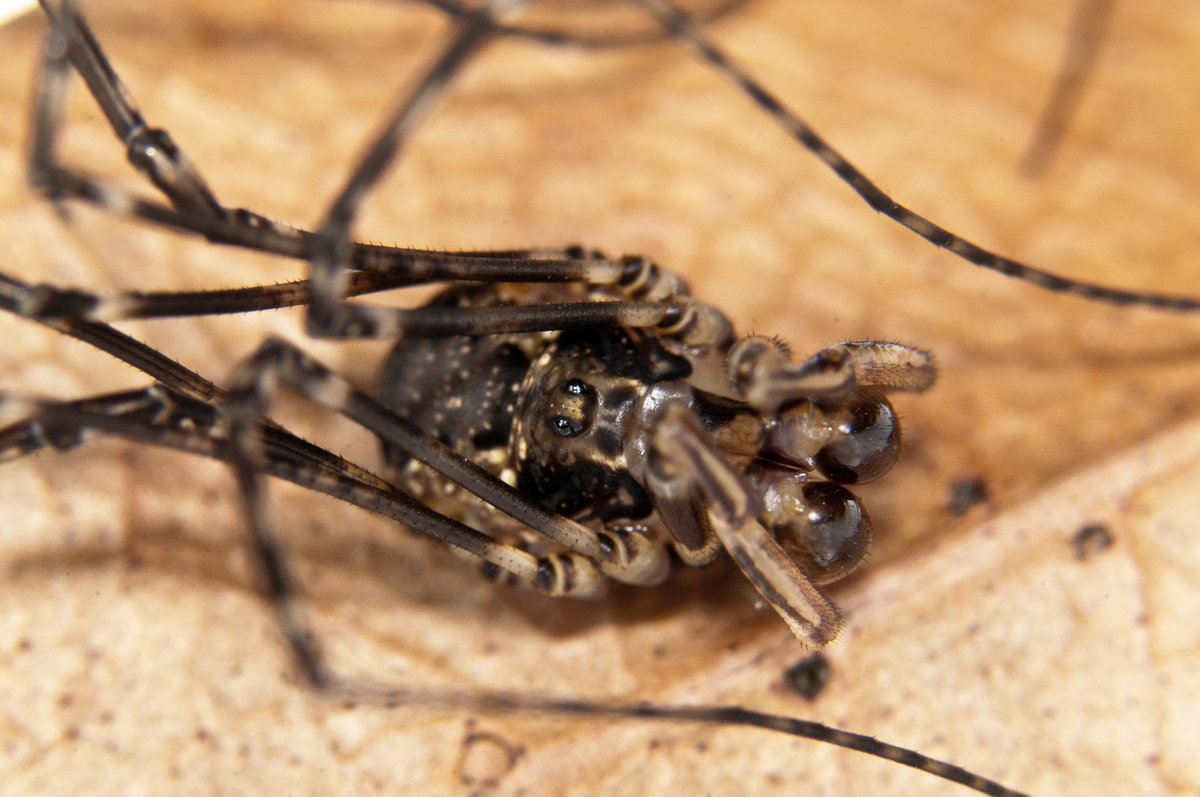
Certain harvestmen have unique glandular setae in their pedipalps, such as this Ortholasmatinae harvestman. In order to catch the prey, these modified sensilla extrude a viscoelastic glue. This time, a few tiny Collembola were the victim!
Two beautiful Eupnoi: Neopilionidaefrom the Argentinean Patagonia. Both belong to the genus Thrasychirus. The cryptic coloration is related to the microhabitat. The green one inhabits the mosses and lichens of the tree trunks; the brown one is on the floor, under logs and barks.
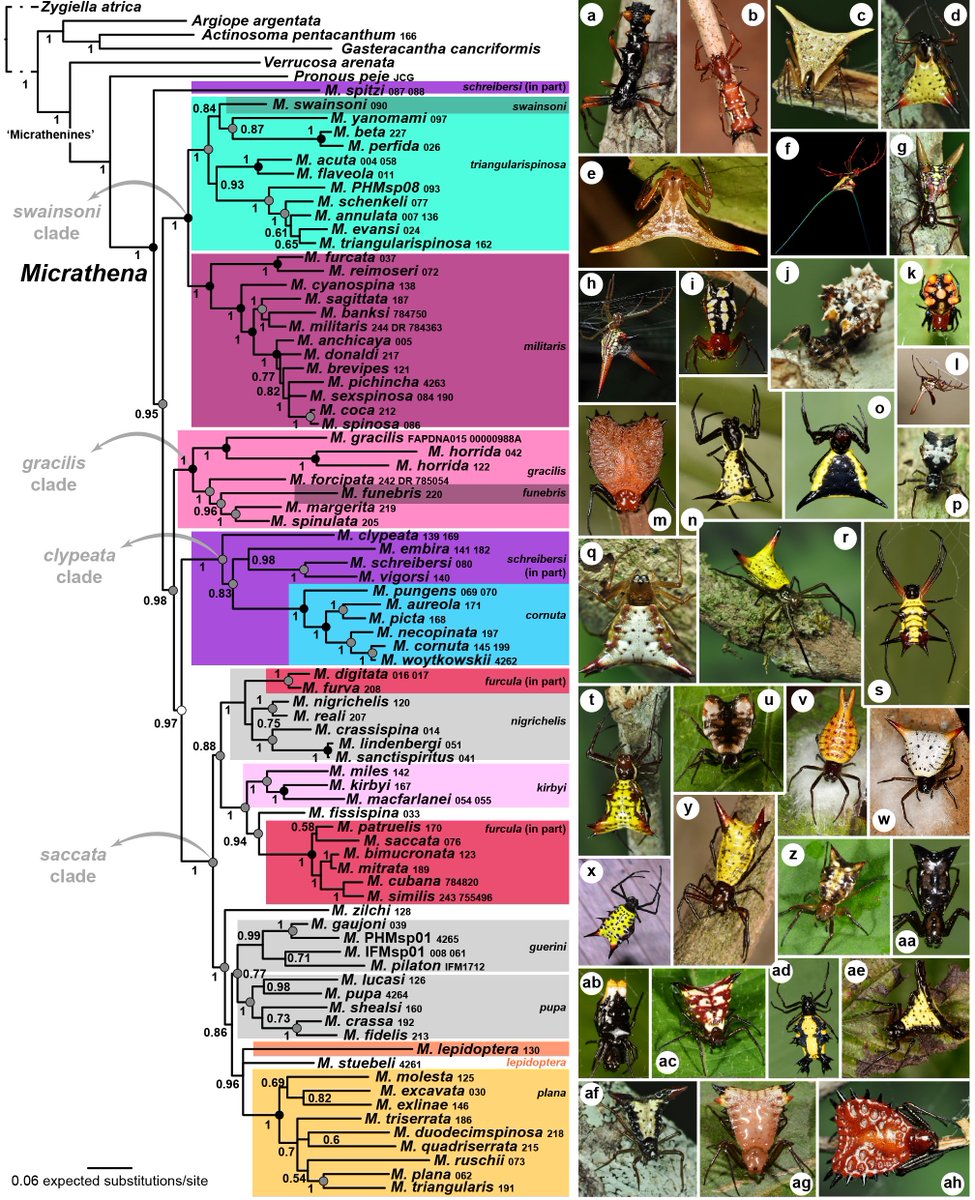
We just deposited a preprint of one of my dearest and longest projects, the phylogeny and biogeography of Micrathena spiny orb-weavers. I am truly happy!
Thanks to all my co-authors and photographers listed in the file
Link to the preprint:
https://t.co/Qj4T7BqWWP
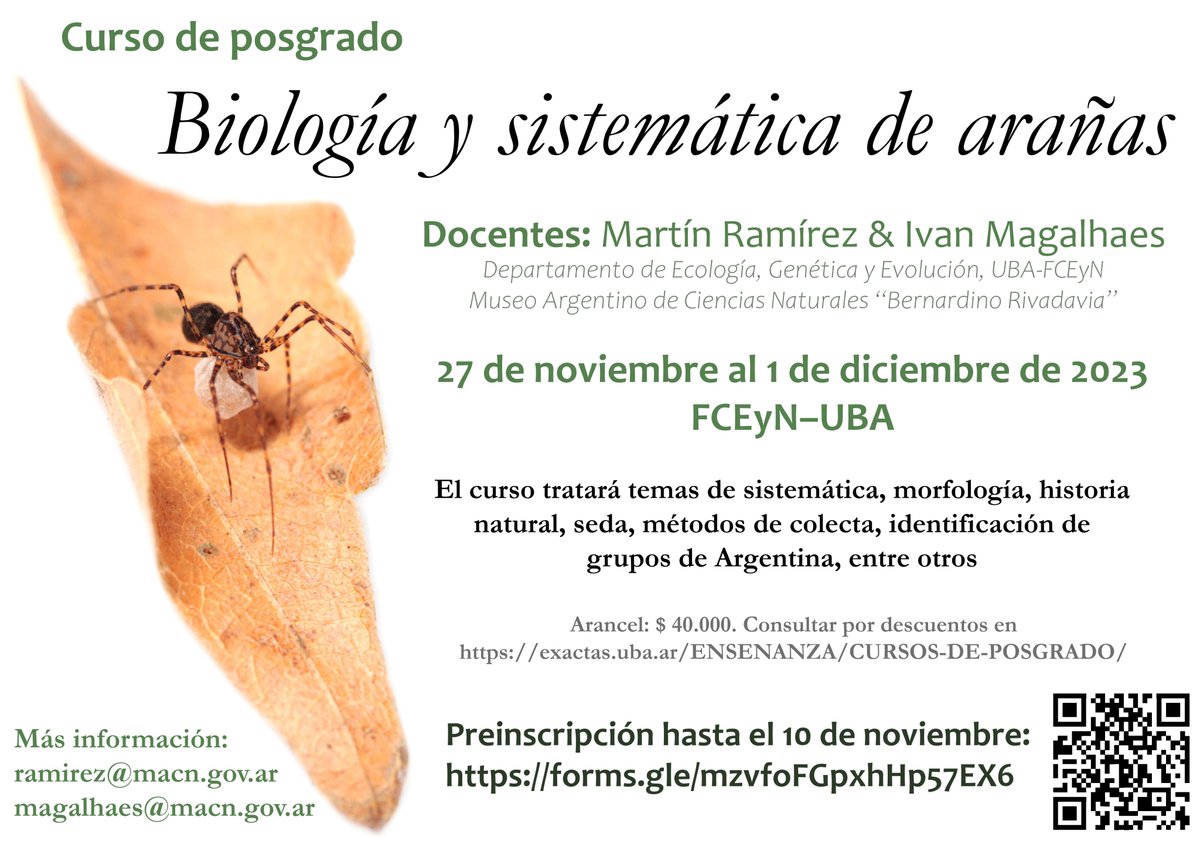
Con @spiderMartinR pronto vamos a dar el curso de posgrado "Biología y sistemática de arañas" de manera presencial en la Facultad de Ciencias Exactas y Naturales, UBA.
Los cupos son limitados, se pueden preinscribir acá: https://t.co/XQ8ZLHmo2V
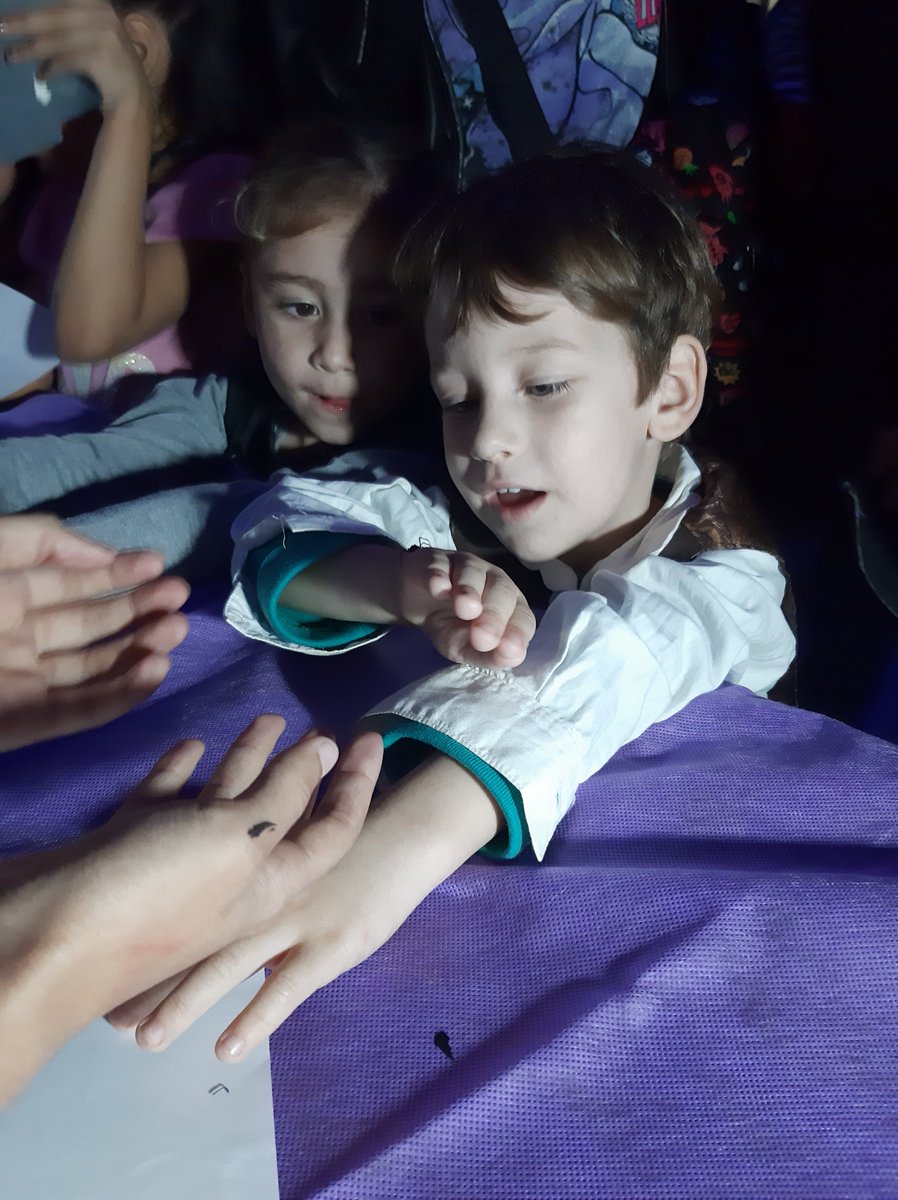
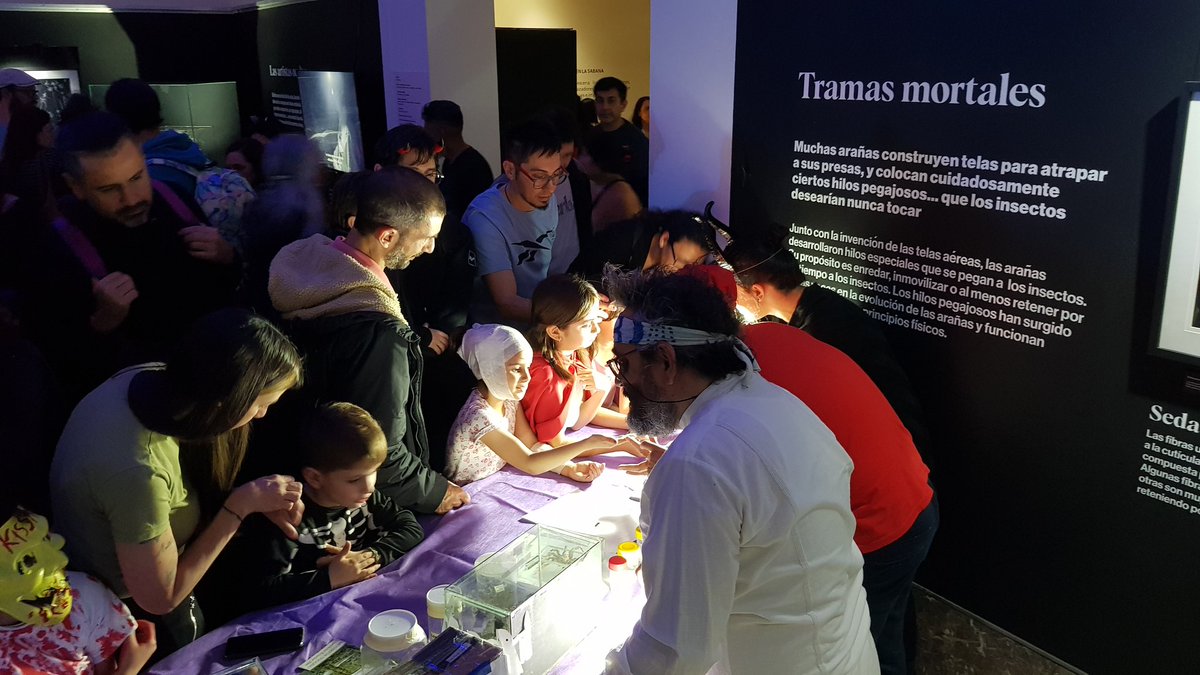
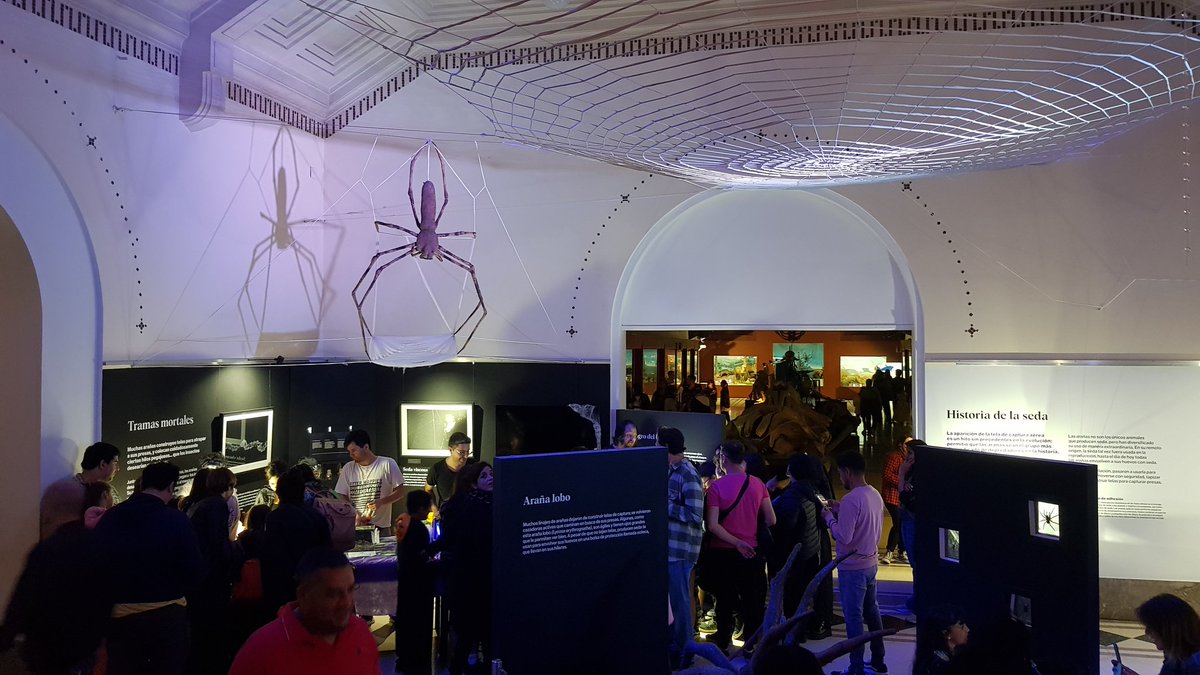
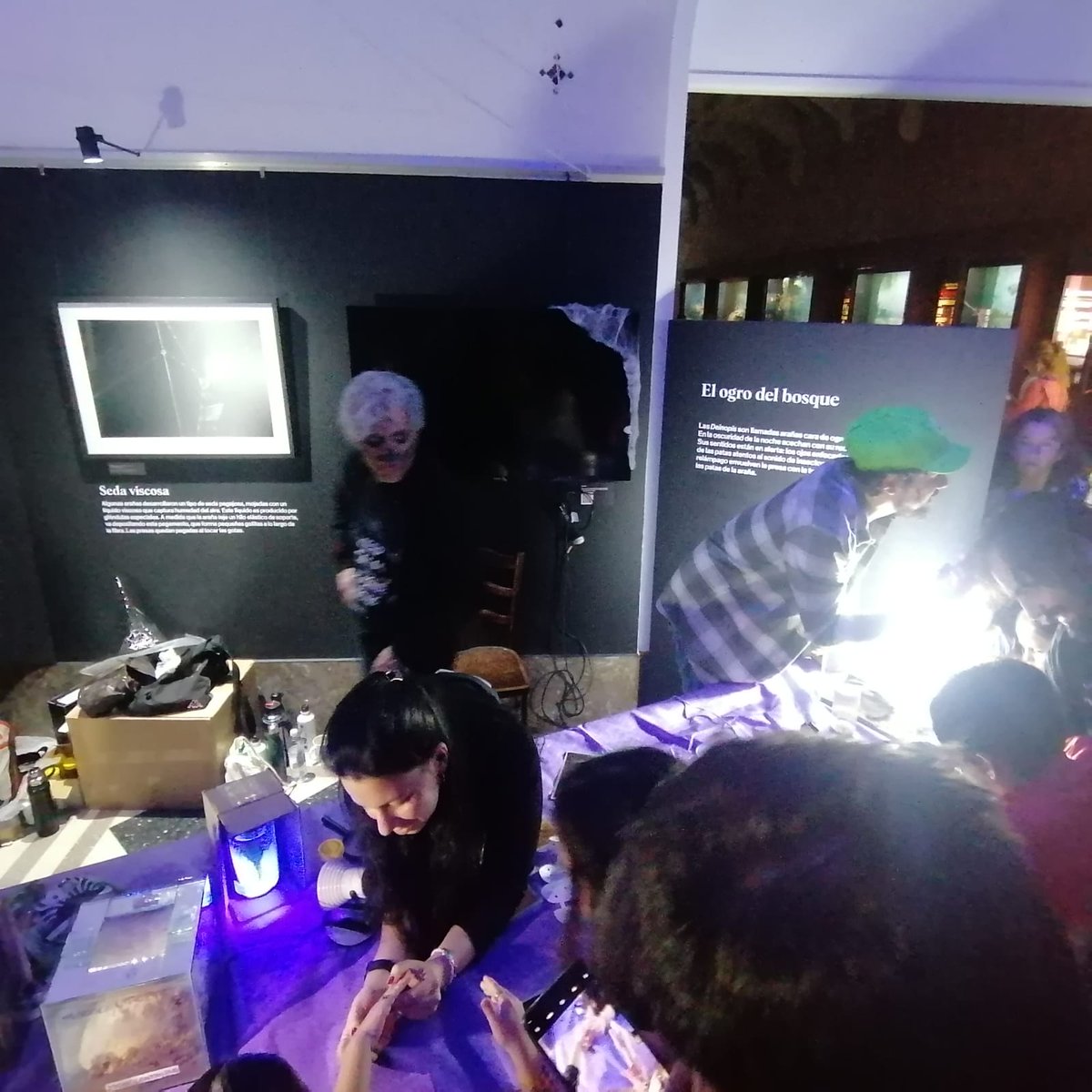
Noche de brujas MACN 2023. Nuevamente nuestra División interactua con el público poniendo en valor la aracnológía. El gran carisma de los arácnidos nos hace la tarea fácil! Y el ambiente de la noche de brujas ayuda!
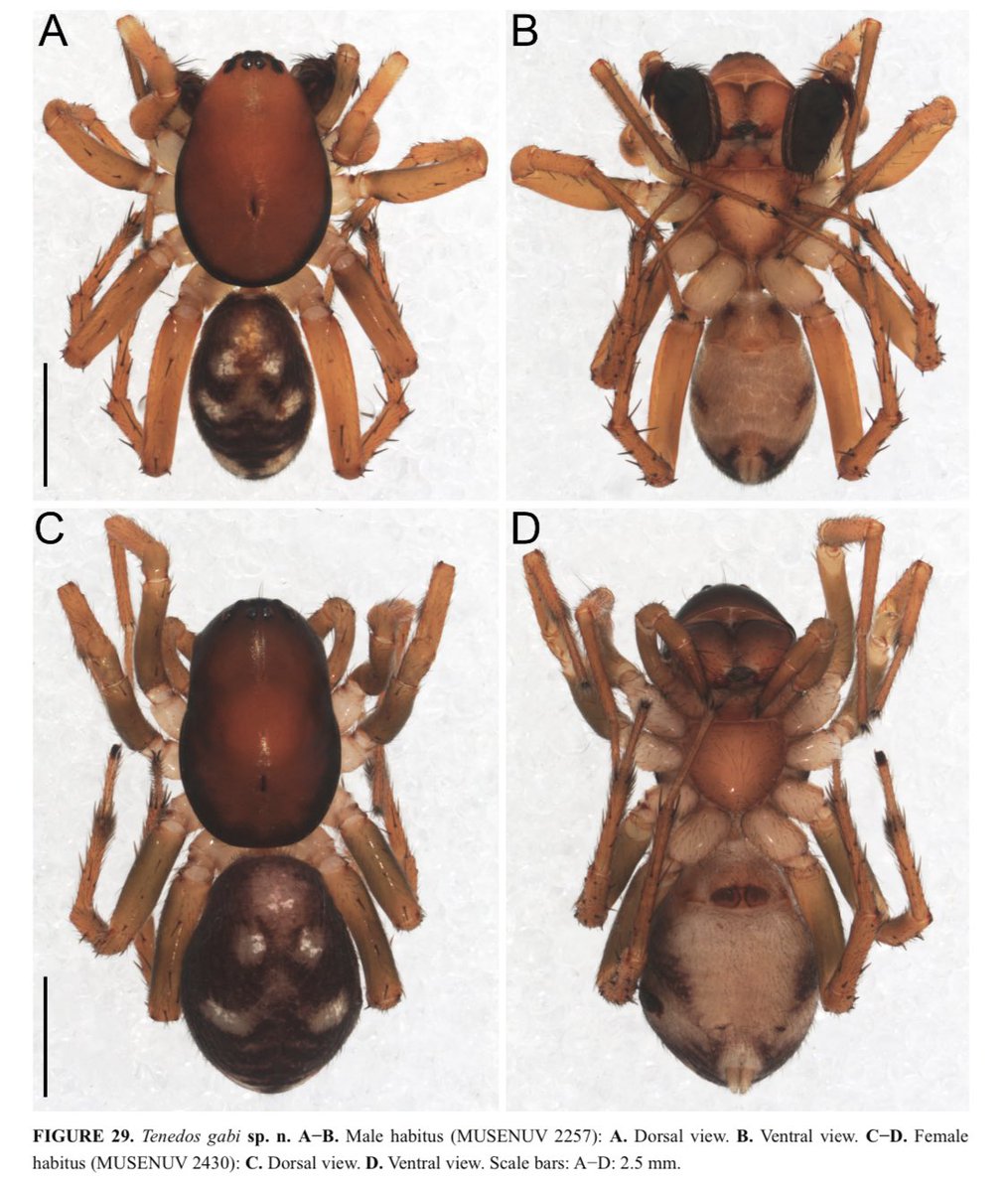
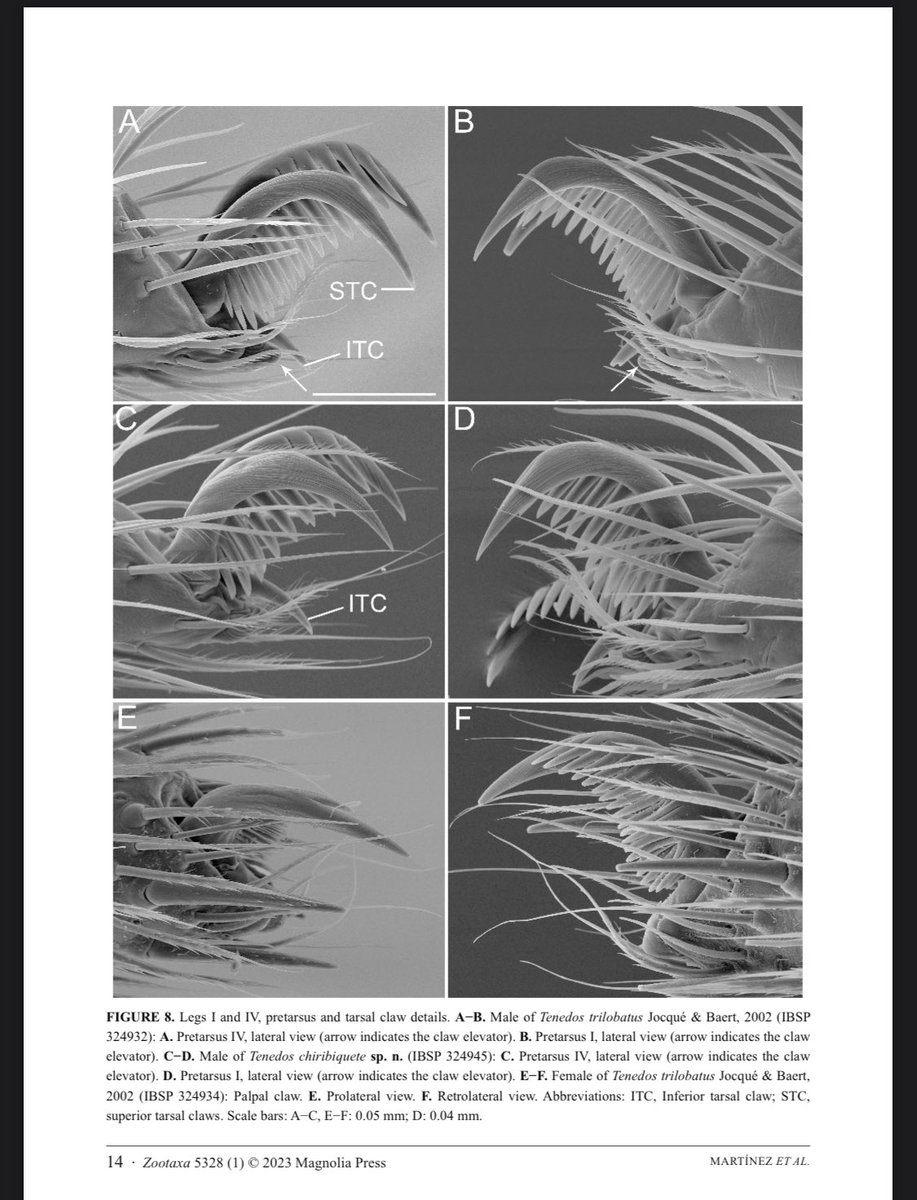
I’m very happy to share our most recent paper about Colombian Zodariids! In this paper a second species group in the genus Tenedos is proposed. The species of this group are distinguished by the modified setae on retrolateral side of the cymbium.