Henry Kissinger spent nearly 50 years shaping how the world remembered his 8 years in power. My book SUPER K shows how he did it, the institutions that helped him, and why it matters. Preorder: https://t.co/SSzVHUzu43
Great to have historian @arakeys, author of Super K, on @ClearerThnTruth with @GEBogden, J.D., D.Phil., and me.
We discussed Kissinger’s legacy, his mastery of the press, and how storytelling shaped his place in history.
🎙️ Listen: https://t.co/YfnBBP4YCI
Starred review of Super K in Booklist: “Keys skillfully uncovers the ways in which Kissinger co-opted traditional public relations to foster the misinformation machine currently fueling American media empires.” https://t.co/hwtDdmroNc
★ Former Secretary of State Henry Kissinger manipulated the media to suppress dissent about his legacy, in this investigation by Barbara J. Keys. It’s a morbidly fascinating look at the fragile ego and control freakery that defined an entire era of political commentary. @simonschuster https://t.co/UM8wr0h0pX
Delighted that Super K has received a ⭐ starred review from Publishers Weekly, which calls it a “sensational investigation” and a “morbidly fascinating look” at Kissinger’s decades-long battle to control his reputation.
Out Nov. 10 from Simon & Schuster.
https://t.co/yapO0wcvEw
Out in Oct.! When Kissinger left office in 1977, he pioneered a new model of political celebrity, sustaining for nearly 50 years a level of fame and influence that most officials never achieve even at the height of their careers. Super K (Simon & Schuster) tells how he did it.
If anyone out there has a print copy of the New York Times Kissinger obituary (Dec. 1, 2023), would you be willing to describe it to me? Is it 5 print pages with photos?
Niall Ferguson demolishes the notion that DT is fascist: he can't be, because he's funny. Who's the real threat to American democracy? It's the "blood-curdling" @samuelmoyn https://t.co/4JztGxSWtW
Can anyone shed any light on a Nixon administration FRUS document that someone cited and seems to have been re-classified and taken off the website?? https://t.co/cAPEwS0Nzm
But he also says he wrote “based entirely on my memory,” checking only some key facts against the original field notes that had been in India during the fire. If he needed only his memory, why was so much money and labor spent reconstructing his processed field notes?
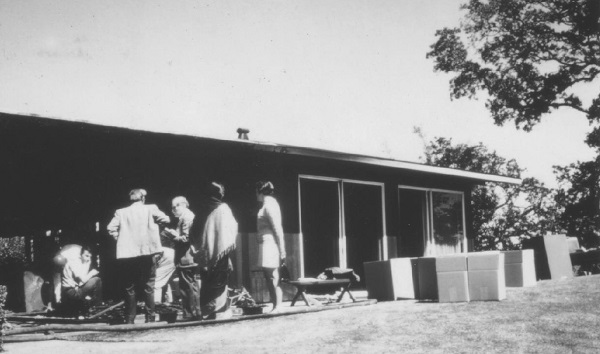
The story of Indian sociologist M. N. Srinivas’s 1978 book, The Remembered Village, is the subject of much lore. Sociologists will often say he wrote a better book *because* all his notes were burned in an arson event @CASBS in 1970 (probably Vietnam-related).
IT WAS 50 YEARS AGO TODAY
24 April 1970: Firebombing at CASBS! A renowned scholar lost almost everything.
From the ashes he somehow wrote a book considered a classic. The fire played THE defining role in shaping it. It's the stuff of legend.
STORY HERE: https://t.co/nInDSUGyRJ
Srinivas’s book says “this is not the place to narrate the story of the recovery” of his notes but says “a substantial part” were recovered by “Mrs. A. B.” and “several lady volunteers” who put each burned note into a folder and photographed it--expensive in time and labor.
Historian friends, imagine publishing a peer-reviewed article in a scholarly journal that is based on two books and three online sources, one of which is Wikipedia.
It's not just Yes, Minister; private secretaries are funny irl! This is one commenting on a 1980s private conversation between Henry Kissinger and the PM:
“The Prime Minister took [his] catalogue of woe with equanimity - that, I suppose, being the only alternative to suicide.”
We're well into this year's edition of a popular spectator sport among CASBS staff: tracking numbers of books checked out by CASBS fellows. (We're easily amused.)
Current leader: @arakeys (historian) 🥇
@fstflofscholars & @santifurnari: Is that all you got? You've got 4 months