𝐈𝐬𝐡𝐚 𝐖𝐚𝐫-𝐈𝐝𝐚𝐚𝐝 𝐓𝐡𝐞 𝐂𝐞𝐧𝐭𝐞𝐫 𝐨𝐟 𝐒𝐨𝐦𝐚𝐥𝐢𝐥����𝐧𝐝 : 𝐒𝐨𝐦𝐚𝐥𝐢𝐥𝐚𝐧𝐝’𝐬 𝐈𝐧𝐥𝐚𝐧𝐝 𝐋𝐨𝐠𝐢𝐬𝐭𝐢𝐜𝐬 𝐇𝐮𝐛
Isha War-Idaad occupies one of the most strategically positioned inland locations in Somaliland.
Situated between Somaliland’s western and eastern corridors, near the economic gravity of Berbera and the trade routes extending toward Ethiopia, its geography naturally favors logistics, redistribution, and inland trade coordination.
In long corridor-shaped countries, inland midpoint zones are not peripheral they become the structural balancing points of national movement systems.
𝐖𝐡𝐲 𝐈𝐭 𝐌𝐚𝐭𝐭𝐞𝐫𝐬
Isha War-Idaad offers four major strategic advantages:
- Efficient inland positioning between coastal imports and cross-border trade routes
- Ability to connect multiple population and market zones into one distribution network
- Large expansion capacity suitable for dry ports, warehousing, and transport infrastructure
- Strong potential for fuel storage, livestock trade, commodity exchange, and logistics clustering
Its value is not based on population size, but on network centrality the ability to reduce transport cost, distance, and fragmentation across multiple regions.
𝐆𝐥𝐨𝐛𝐚𝐥 𝐏𝐚𝐭𝐭𝐞𝐫𝐧
Many of the world’s major logistics centers began as inland transport junctions:
- Chicago became North America’s distribution hub
- Duisburg evolved into Europe’s largest inland port
- Nagpur developed around geographic centrality
- Johannesburg expanded through trade and transport convergence
Same pattern :
Infrastructure transforms inland centrality into economic power.
𝐖𝐡𝐚𝐭 𝐀 𝐅𝐮𝐭𝐮𝐫𝐞 𝐇𝐮𝐛 𝐂𝐨𝐮𝐥𝐝 𝐈𝐧𝐜𝐥𝐮𝐝𝐞
- Inland dry port and customs zone
- National warehousing and freight distribution center
- Livestock and commodity trading market
- Truck terminals and fuel depots
- Light manufacturing and agro-processing facilities
- Solar-powered energy infrastructure
- Digital logistics and trade coordination systems
- Workforce and logistics training centers
𝐒𝐭𝐫𝐚𝐭𝐞𝐠𝐢𝐜 𝐂𝐨𝐫𝐫𝐢𝐝𝐨𝐫 𝐕𝐢𝐬𝐢𝐨𝐧
A connected inland system linking:
Berbera → Isha War-Idaad → Ethiopia trade routes
Borama → Isha War-Idaad → Puntland corridors
would create a three-layer economic structure:
- Coastal gateway
- Inland redistribution hub
- Cross-border trade corridor
This is the same logistics model that powers modern regional economies.
𝐓𝐡𝐞 𝐋𝐨𝐧𝐠-𝐓𝐞𝐫𝐦 𝐎𝐩𝐩𝐨𝐫𝐭𝐮𝐧𝐢𝐭𝐲
If strategically developed, Isha War-Idaad could evolve into:
- Somaliland’s inland logistics anchor
- A national warehousing and redistribution center
- A major node in the Horn of Africa trade network
The real opportunity is not geography alone it is transforming geography into an organized system of trade, infrastructure, and logistics efficiency.
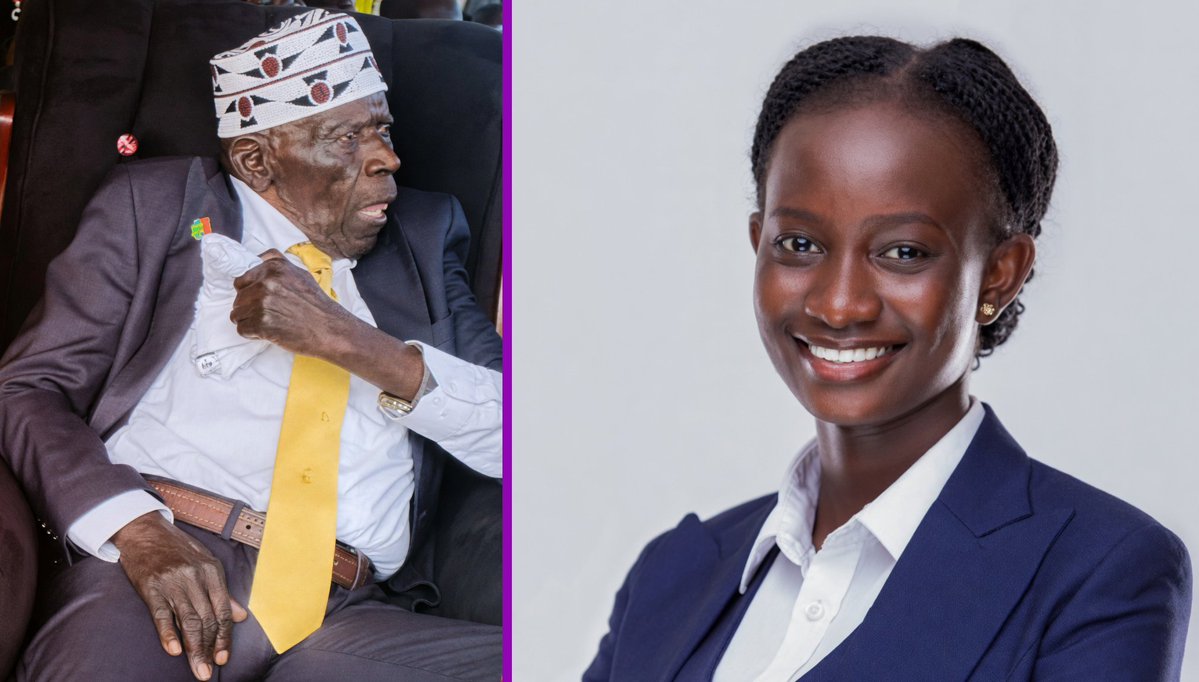
The oldest member who was recently returned to the Uganda Parliament is ailing retired Brigadier Moses Ali (L), 87, who’s been in govt variously since the military rule of Idi Amin in the 1970s. The youngest is Lenia Charity Kevin .@Leniacharity, at just 24 (R).
In a continent ruled by very old men, Lenia at 24 is very young by African parliamentary standards, yet she is not the youngest ever. Several politicians who entered the national (not provincial) parliament younger than her.
Some notable examples:
•Proscovia Alengot Oromait — Uganda. Elected MP in 2012 at just 19, becoming Africa’s youngest MP at the time.
•Francisca Oteng-Mensah — Ghana. Elected to Parliament at 23, then became a deputy minister.
•John Paul Mwirigi — Kenya. Elected MP for Igembe South at 23 in 2017, then Kenya’s youngest elected MP.
•Emma Theofelus — Namibia. Entered Parliament and became deputy minister at 23; later rose to cabinet minister.
•Yusuf Cassim — South Africa. Became the youngest MP in South African national history at 24 in 2014.
French President Emmanuel Macron interrupted the Africa Forward Summit in Nairobi, Kenya, to hush the crowd as artists and young speakers addressed the crowd, calling the noise 'a total lack of respect' https://t.co/PUpxw70qaL
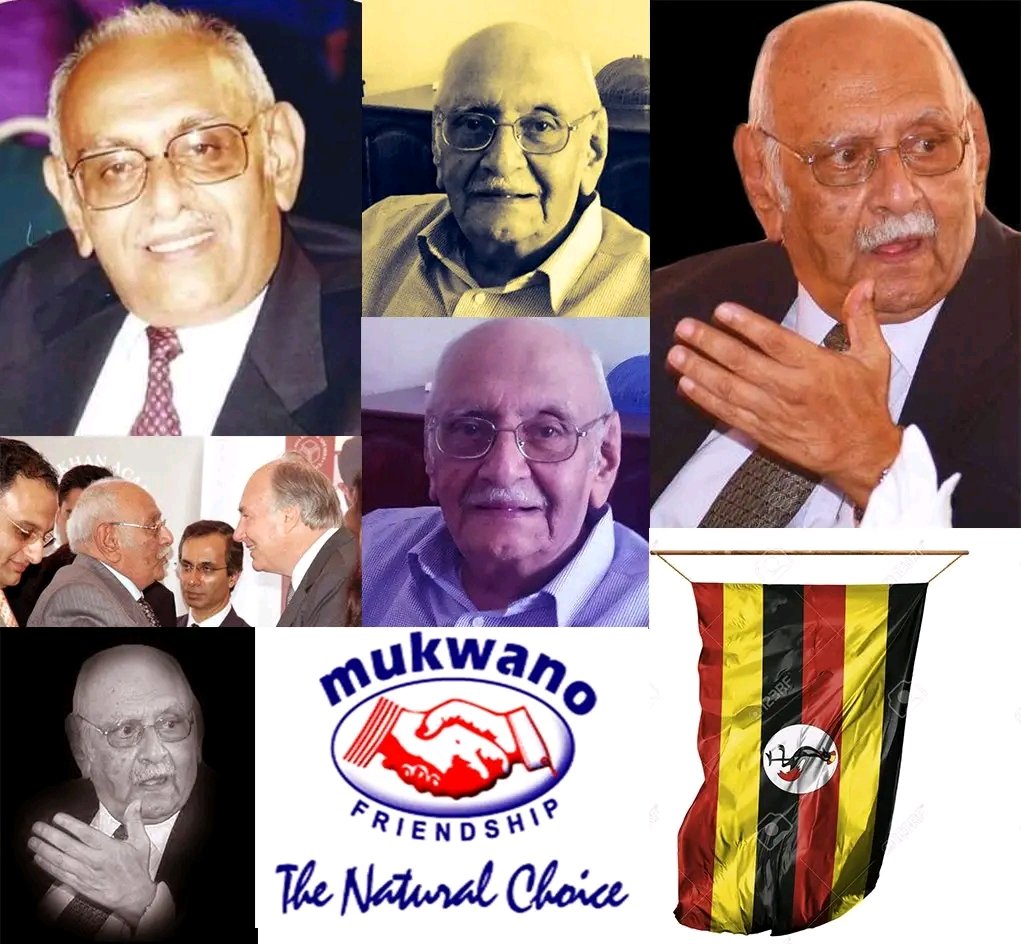
The Mukwano Group's Story.
If you look closely at your kitchen or laundry room today, you will almost certainly find a product made by the Mukwano Group. From cooking oil to laundry soap, this empire is deeply woven into the daily lives of Ugandans. But the story of the Karmali family is a fascinating generational tale of survival, resilience, and incredible business acumen.
The foundation was laid way back in 1904 when pioneer investor Ali Mohamed Karmali arrived in Uganda. He eventually settled in Bukandula in Mpigi district, where he did a roaring trade in cotton and coffee. He was so incredibly popular with the locals that they nicknamed him "Mukwano gwa bangi" (a friend of many), a title that was later affectionately shortened to just "Mukwano."
His son, Amirali Karmali, was born in the 1930s and took the family hustle to a whole new level. He acquired a single second-hand truck to transport produce from Fort Portal to Kampala. When President Idi Amin expelled Asians in 1972, legend says Amirali never actually went into exile. Instead, he was hidden by good Samaritans and quietly waited out the turbulent storm.
Emerging from the shadows in the late 1970s and 1980s, Amirali completely rebuilt the business from scratch. He established Mukwano Enterprises and rapidly grew it into a massive conglomerate covering manufacturing, plastics, detergents, and transport. In 1995, he proudly relinquished control of the group to his son, Alykhan Karmali, choosing to spend his later years growing and processing tea in Fort Portal.
Sadly, the legendary Mzee Amirali Karmali passed away in July 2019, but his vision is stronger than ever today in 2026. Under Alykhan's ongoing leadership, the Mukwano Group has expanded far beyond household products into prime real estate, most notably owning the famous Acacia Mall in Kampala, alongside vast agricultural logistics networks. The family's fortune, once estimated at $700 million back in the early 2000s, has solidified into a multi-billion dollar East African dynasty.
From a single shop assistant in 1904 to one of the continent's most powerful business families, the Mukwano story proves that great brands outlive their founders. Which Mukwano product has been a staple in your home over the years? Drop your answers in the replies!
Guys, involve your children in your Businesses.
From Nyama Choma side hustler to owning one of Burundi's most-sort-after hotels: Bernard Wanjohi
https://t.co/viRmeq4FRN
@ChamsMedia@ChamsAdventures#DaringAbroad
The construction of Masala Apartments has started.
A residential complex featuring Somaliland’s first penthouse apartments.
Our beautiful Hargeisa is growing day by day.
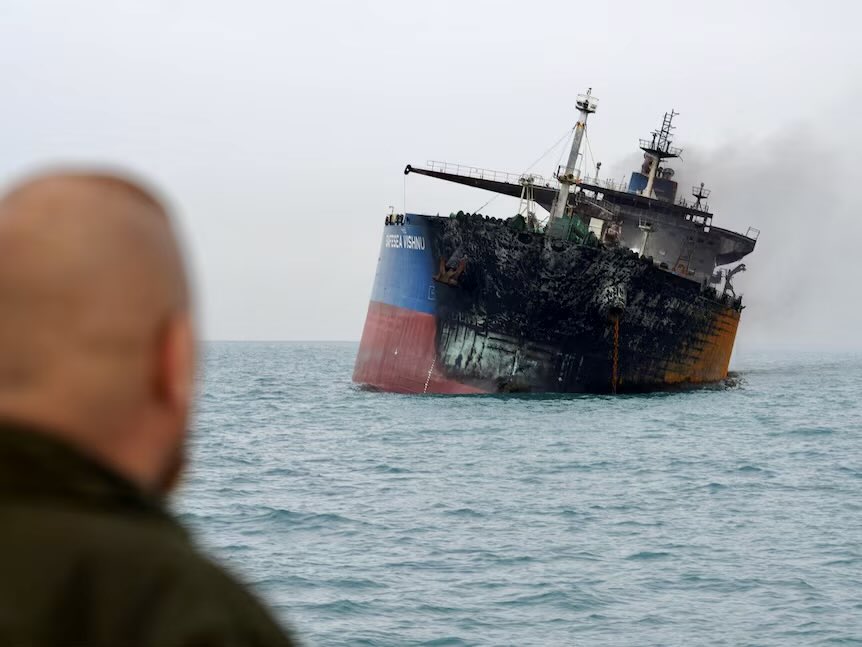
The US-Israeli war on Iran is disrupting fuel supplies to Africa, pushing countries like Ghana, South Africa and Kenya to seek relief from Nigeria’s huge Dangote Refinery, but one plant may not meet soaring demand.
Al Jazeera’s Ahmed Idris reports from Lekki in Nigeria.
Iran has agreed to allow 20 Pakistani‑flagged vessels to transit the Strait of Hormuz, in what Pakistan has called a meaningful step towards easing the energy crisis. This comes as various foreign ministers arrive in Islamabad for regional talks aimed at ending the war.
Trump on Saudi Arabia’s Crown Prince MBS today:
“He didn’t think he would be kissing my ass. He really didn’t. And now he has to be nice to me. He better be nice to me.”
This is how the President of the United States describes America’s most important Gulf ally.
The same Saudi Arabia that:
— Cut oil production by 6.7 million barrels
— Whose energy infrastructure Iran threatened to destroy
— Who the US needs to keep oil markets stable
— Who Trump is asking to join the Iran war
Diplomatic relationships are built over decades.
Trump just described the Crown Prince of Saudi Arabia as someone kissing his body parts — on camera — while asking him for military cooperation.
France got an 8 out of 10. Japan got Pearl Harbor. Saudi Arabia got this.
The isolation of America is not just a policy failure.
It is a daily practice.
The Nuclear Power Plant on Lake Victoria will demand higher international Environmental & Legal requirements to be met, and plenty of cross border - from Tanzania to Egypt - Stakeholder engagement to be undertaken before building a nuclear power plant on Lake Victoria.
🧵
Eric Rutto: China has petroleum reserves that can run them for over one year, US and Europe have reserves that can run them for six months.
Kenya has Petroleum reserves for 21 days.
#TheLastWordNTV@EricLatiff@Karanja_Ibrah
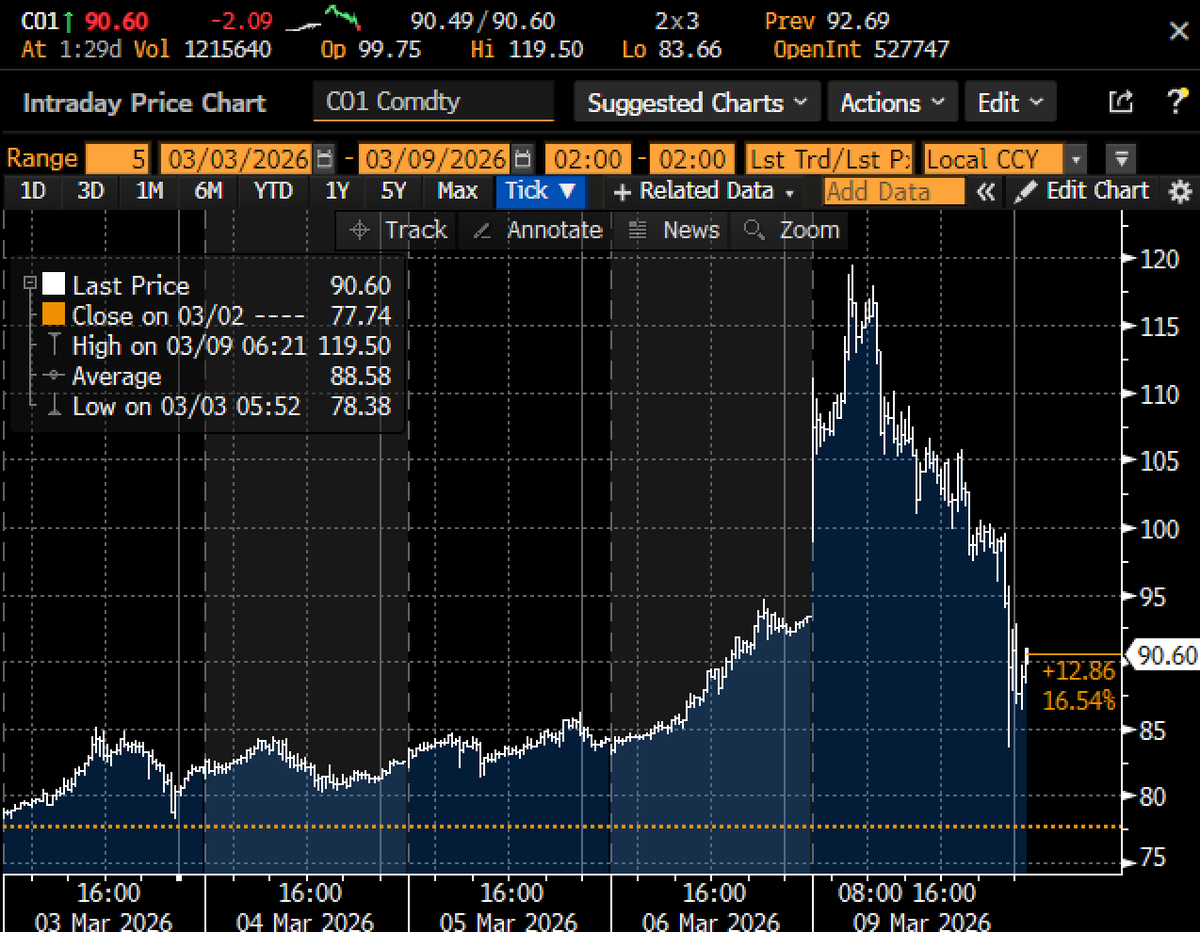
Goldman Sachs confirms Hormuz oil flows have collapsed from 19.5 million barrels per day to 0.5 million. Net disruption after pipeline rerouting: 17.2 million barrels per day offline. Two independent vessel trackers recorded zero oil tankers crossing the Strait on 12 March. The largest energy chokepoint on Earth is not closed by a navy. It is closed by a spreadsheet.
Seven major P&I clubs cancelled war-risk coverage for the Persian Gulf effective 5th March under Solvency II protocols. Premiums for remaining voyage cover surged 300 to 1,000%, reaching 1% of hull value: $2 to $3 million per VLCC on a seven-day renewable basis. The $20 billion DFC reinsurance facility backed by Chubb has limited uptake because it excludes full P&I liability. Lloyd’s still offers single-voyage cover. Nobody is buying because the premium assumes the mines, and the mines are on the seabed.
The Strait is open. The insurance is not. And without insurance, no vessel moves.
While 19 million barrels per day sit stranded on either side of the chokepoint, one category of vessel continues transiting: Chinese shadow fleet tankers carrying Iranian crude settled in yuan through CIPS. Kpler confirms 11.7 to 16.5 million barrels have reached China since 28 February. These tankers do not carry Western insurance. They do not need Western insurance. They operate under Chinese state-backed coverage, Iranian IRGC safe passage, and yuan settlement through a payment system that processed $24.5 trillion in 2025 at 43% year-on-year growth. The only oil moving through Hormuz is oil that does not touch the dollar.
This is the moment the petrodollar system was designed to prevent.
In 1974, Saudi Arabia agreed to price oil exclusively in dollars in exchange for American military protection. That agreement created a world where every barrel required dollars, every central bank held dollar reserves because energy demanded them, and American financial hegemony rested on the simple proposition that oil equals dollars. For fifty-two years, the equation held. The 2026 war is breaking it not through policy but through physics: the insurance architecture that enabled dollar-denominated oil transit has collapsed, and the only transit still functioning operates in yuan.
The dollar’s share of global reserves has fallen from 71% in 2000 to 59% today. Yuan global payments remain at 2.89%. No single event kills the petrodollar. But the Goldman data reveals what the contrarians miss: the war has created a live demonstration of a post-dollar energy system operating at scale. Chinese tankers transit. Yuan settles. CIPS clears. Iranian oil reaches Chinese refineries at $9 to $12 below Brent while Western buyers pay $96.72. The system works. It is working now. And every day the Strait remains closed to dollar shipping is another day the alternative proves it does not need the original.
President Trump’s multinational warship call is the response: send navies, reopen the Strait, restore dollar-denominated traffic, and kill the yuan alternative before it scales. If the coalition succeeds, dollar pricing survives. If it fails or fragments, the war that was launched to destroy Iran’s nuclear programme will have accidentally created the conditions for the multipolar energy order the dollar was designed to prevent.
The IEA has released 400 million barrels of strategic reserves, the largest coordinated draw in history. It covers 23 days of the 17.2 million barrel daily shortfall. The war is sixteen days old. The reserves are finite. The insurance cancellations are not.
Nineteen million barrels per day reduced to half a million. Zero tankers on 12th March. Yuan tankers the only vessels moving. And the fifty-two-year-old system that priced every barrel in dollars is watching its replacement operate in real time through the waterway it can no longer transit.
Full analysis here - https://t.co/eMrt5qYYst
A pleasure to meet with HH @HHShkMohd, Vice President, Prime Minister and Ruler of Dubai. We spoke of the strong ties between our two peoples, in business, education and culture. Looking forward to my next visit to this strong, beautiful and resilient city.
American Presidents and their Origins 🇺🇸
1. Donald Trump - 🏴 Scotland, 🇩🇪 Germany
2. Joe Biden - 🏴 England, 🇫🇷 France, 🇮🇪 Ireland
3. Barack Obama - 🇰🇪 Kenya, 🇩🇪 Germany, 🇨🇭 Switzerland, 🏴 England, 🏴 Wales, 🏴 Scotland, 🇮🇪 Ireland
4. George W. Bush - 🏴 England, 🇩🇪 Germany
5. Bill Clinton - 🏴 England, 🏴 Scotland, 🇮🇪 Ireland
6. George H. W. Bush - 🏴��� England, 🇩🇪 Germany
7. Ronald Reagan - 🏴 Scotland, 🇮🇪 Ireland, 🏴 England
8. Jimmy Carter - 🏴 England, 🏴 Scotland
9. Gerald Ford - 🇮🇪 Ireland, 🏴 England
10. Lyndon B. Johnson - 🏴 England, 🇩🇪 Germany, 🏴 Scotland
11. John F. Kennedy - 🇮🇪 Ireland
12. Richard Nixon - 🇮🇪 Ireland, 🇩🇪 Germany, 🏴 England
13. Dwight D. Eisenhower - 🇩🇪 Germany, 🇨🇭 Switzerland
14. Harry S. Truman - 🏴 England
15. Franklin D. Roosevelt - 🇳🇱 Netherlands
Note: Origins refer to known ancestral roots of each president based on genealogical records. Many presidents have mixed European ancestry, but only the most notable origins are shown.