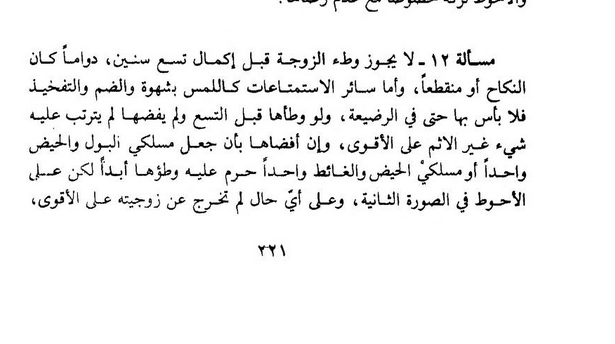
This your jurisprudential book Tahrir al-Wasilah, written by your grand daddy Ayatollah Ruhollah Khomeini, who was later translated to farsi by his lackey Ayatollah Ali Khamenei
this is law in your Godforsaken hellhole, shut your filthy demonic mouths
Tahrir al-Wasilah, Volume 2, page 221:
Issue 12: It is not permissible to have vaginal intercourse with the wife before she completes nine years of age(lunar years), whether the marriage is permanent or temporary.
As for the other forms of enjoyment such as touching with lust, embracing, and thighing (rubbing the penis between the thighs) there is no objection to them, even with a "suckling infant".
There is no problem in other things besides vaginal intercourse, even if it is before the age of nine, and even if he ejaculates, as long as it does not cause any harm or injury.
But if he has vaginal intercourse with her before the age of nine and causes her injury (ifdā’ i.e., the tearing that causes the urinary and fecal passages to become one), then he must pay "the full blood money" (diyah) for her life, and he is obliged to provide for her maintenance for the rest of her life, and she becomes forbidden for him to have vaginal intercourse with forever. And in the second case (if he did not cause such severe injury), he is still forbidden from having vaginal intercourse with her until she reaches the age of nine.
no surprises there, I know you are not going read, it is not part of your inferior culture and intellect, it shows, like the ignorant violated pdf you worship, I am just aggregating resources in that tweet, so I can use them later, it proved very useful a lot of times
now again no clue what your on about ??
"القراءة" reading ? the word reading ? what about it ?
you put in a circle the word riding
you wrote jamil (beautiful), worthless
circled the phrase saint Mary ? so ?
here is the verse
هؤذا الرب راكب على سحابة سريعة وقادم إلى مصر فترتجف أوثان مصر من وجهه و��ذوب قلب مصر داخلها
Behold, the Lord rides on a swift cloud and is coming to Egypt. The idols of Egypt shall tremble at His presence, and the heart of Egypt shall melt in its midst.
the text speaks about the lord riding a cloud, a physical cloud, and traveling to Egypt on it.
we even talking about going from point A to point B, that being Egypt,
"traveling to Egypt on a cloud". if someone interpret the cloud to be a manifestation of saint Mary, doesn't change a thing, you can't have intercourse with a cloud, the only possible meaning is riding, it is impossible for text to adopt any other meaning for the word ride and its use here.
unlike what the Zutt did to your false gay pdf you worship, now "penetration" fits quite nicely there
your gay pdf was shouting like that woman in previous example:
"Ride my Zutt and show no mercy!!"
You good, bro? Are you high? doing drugs ? Too much ash in your mouth ?
What are you on about?
That was not the subject Our subject was you lying about the simple fundamental basics of the Arabic language to hide the obvious fact that your Book is corrupted by your own standards.
but let me humor you, the fact that you are this illiterate and stupid is baffling, the simple rule of metaphorical extension (استعارة) aka to extend a verb or a word meaning to describe something else beyond the strict dictionary definition of that word, which doesn't require you to formally study the language but happens naturally in the normal use, in our case the "riding" is extended to describe sexual intercourse by mapping the physical action of "mounting" and "riding" onto the act of penetrative sex, I don't think there is a language on the face of the planet where the verb to ride is not associated one way or another with the sexual act.
how do we distinguish between them? Simple, context is crucial
First, let me give you the definition of the verb, Lissan al arab by Ibn Mandor
https://t.co/h1KG02mzNN
"رَكِبَ الدابَّة يَرْكَبُ رُكُوباً: عَلا عليها"
(He rode the mount: he rose upon it).
literal meanings: to mount or climb upon an animal (دابة, camel, horse, etc.),
We got one metaphorical extension, nothing to do with the original one
committing a sin
ارتكب الذنب
Now he doesn't list all the metaphorical usages, but we got the gist.
So what can we do? We look into other Arabic literary works, and guess what? There are a plenty:
classical Arabic erotic literature, from the tradition of medieval Arabic sex manuals, where the root ركب is used euphemistically for penetrative intercourse (the man as the active "rider")
From الروض العاطر في نزهة الخاطر (Al-Rawd al-Atir fi Nuzhat al-Khatir) by Sheikh Muhammad al-Nafzawi (15th century) = The Perfumed Garden of Sensual Delight
"فلما أثارها بالقبلات والمداعبات، أمسك بفخذيها ورفع رجليها، ثم ركبها ركوباً شديداً، يحرك نفسه فيها حركة الراكب على الجواد حتى بلغ النشوة."
"When he had aroused her with kisses and caresses, he held her thighs, raised her legs, then mounted her vigorously, moving himself inside her like a rider on a fine steed until he reached climax."
In the book, al-Nafzawi describes various "ways of coition" and advises on skillful "riding" (husn al-rukba)
"دخل عليها في الفراش، فقال: أريد أن أركبك كما يركب الفارس فرسه. ففتحت له ساقيها وقالت: اركب يا فارسي، ولا ترحم."
"He entered the bed with her and said: 'I want to ride you as a horseman rides his horse.' She opened her legs for him and said: 'Ride, my horseman, and do not show mercy.'"
compilations like Nawadir al-Ayk fi Nawadir al-Nik
"ثم أخذها ووضعها على ظهرها،””””وركب عليها ركوب الرجل على المرأة””””، يدخل قضيبه في فرجها ويحركه حركة شديدة حتى أنزل."
"Then he took her, laid her on her back, and “”””mounted her in the manner of a man upon a woman”””””, inserting his member into her vulva and moving it vigorously until he ejaculated." (what more do you want ??)
In all of these, "ركب" describes the sexual act between a man and a woman.
Now, why your example fails, simply context, every time the word is used to mean the sexual act, it is "exclusively" in the context of two people "riding each other" or one "riding" the other.
In the text you sent me, the Lord is riding a Cloud, and we describe this cloud as fast and light, a literal cloud. There is just no way to inject the sexual meaning into the text; you can't force it, it doesn't make sense, so it is simply riding nothing more, nothing less
Now, in the case your false prophet, it is not looking so good:
ثم إنه ذكر هَنِينًا كأنهم الزُّطُّ (قال عفان: أو كما قال عفان إن شاء الله): ليس عليهم ثيابٌ، ولا أرى سوآتهم، طِوالًا، قليلٌ لحمهم.
قال: فأتوا، فجعلوا يركبون رسولَ اللهِ صلى الله عليه وسلم.
قال: وجعل نبيُّ اللهِ صلى الله عليه وسلم يقرأ عليهم.
قال: وجعلوا يأتوني فيُخَيِّلون (أو يميلون) حولي ويعترضون لي.
قال عبد الله: فأرعبتُ منهم رعبًا شديدًا.
قال: فجلستُ (أو كما قال).
قال: فلما انشقَّ عمودُ الصبح جعلوا يذهبون (أو كما قال).
قال: ثم إن رسولَ اللهِ صلى الله عليه وسلم جاء ثقيلًا وَجِعًا مما ركبوه.
قال: «إني لأجدني ثقيلًا» (أو كما قال)
Then he (Abdullah ibn Mas'ud) mentioned a group of beings as if they were the Zutt.
(Affān said:):
They had no clothes on them, and I did not see their private parts (nakedness); they were tall, with little flesh (thin/scrawny).
He (Ibn Mas'ud) said:
So they came, and they began to ride the Messenger of Allah.
He said:
And the Prophet of Allah began to recite (the Quran) to them.
He said:
And they began coming to me, hovering around me , and getting in my way (or obstructing me).
Abdullah (ibn Mas'ud) said:
So I became intensely terrified of them.
He said:
So I sat down.
He said:
Then, when the column of dawn broke (i.e., when the first light of morning appeared / near dawn), they began to depart.
He said:
Then the Messenger of Allah returned exhausted and sore and in pain from the way they had ridden him.
The Prophet then said:
“I feel very heavy right now.”
Anyway you cut it, they were dark/black naked skinny men, who "rode" him all night long until dawn, and he was exhausted and in pain afterward, which meaning you think should be used in this instance? lool
""
He said Then the Messenger of Allah returned exhausted and sore and in pain from the way they had ridden him.
قال: ثم إن رسولَ اللهِ صلى الله عليه وسلم جاء ثقيلًا وَجِعًا مما ركبوه.
""
Go back to school, you illiterate Mohammadan, and stop embarrassing yourself.
** And one more thing, what's up with جميل (Jamil) in the image?? Were you trying to be smug or have a gotcha moment in Arabic? It sounds wrong, that is not it, never used that way.
@hilal_0v@JaiNDoC_RL your bowl is still not finished,
be a good a boi and finish it for me
we don't want to end up as MoMo when his moon got splitted in the night of Al zutt do we now ?
MUTILATION by anonymous scribes ?
This is has to be a joke, even if it is true, it will never come even close, not even in same universe, as deciding that proven "LIAR", "THIEF", "FABRICATOR" and "FRAUD" by every single scholar and narrator in your cult, a total consensus, is worthy to be trusted with the words of God but "rejected" in anything and anywhere else, and that his "book" will be the global standard starting 1924
"Hafs ibn Sulayman, the main transmitter of ‘Asim’s Qur’an reading, is regarded by many Sunni hadith scholars as a liar, unreliable, abandoned, fabricator in hadith"
that he's nothing, not trust worthy in any way shape or form, yet "miraculously" we can trust him with the words of God
Bukhari:
====================================
البخاري – التاريخ الكبير – الجزء : ( 2 ) – رقم الصفحة : ( 363 )
2767 – حفص بن سليمان الأسدي أبو عمر القارئ : عن علقمة بن
مرثد وعاصم ، تركوه ، وهو حفص بن أبي داود الكوفي.
"they left him"
البخاري – التاريخ الصغير – الجزء : ( 2 ) – رقم الصفحة : ( 233 )
book: small history
– حفص بن سليمان أبو عمر الأسدي كوفى : وهو حفص بن أبى داود أراه هو القارئ ، عن عاصم وعلقمة بن مرثد سكتوا عنه يروى ، عن حفص بن عمر بن أبى العطاف المدني منكر الحديث.
"his hadiths are "munkar" lies not to be taken"
البخاري – الضعفاء الصغير – رقم الصفحة : ( 35 )
Book: the weak small
( 73 ) حفص بن سليمان الأسدي أبو عمر : عن علقمة بن مرقد تركوه ، وقال أحمد بن حنبل : قال يحيى أخبرني شعبة قال : أخذ مني حفص بن سليمان كتاباً فلم يرده قال : وكان يأخذ كتب الناس فينسخها.
"he was a thief, he stole people books (ex stole the book of Shua'ba), did not returned them, and even copied them and attributed them to himself "
Al Albani
=====================================
الألباني – إرواء الغليل – الجزء : ( 1 ) – رقم الصفحة : ( 260 )
– أبو عمر هذا هو : حفص بن سليمان القارئ الكوفي وهو متروك الحديث ، وقد تابعه عمر أبو حفص وهو إبن حفص العبدي وهو مثله في الضعف أو أشد ، أخرجه عنه الطبراني في الكبير ( 3 / 49 / 1 ) ، وقول الهيثمي ( 1 / 333 ) في إسناده : ورجاله موثقون ، فهذا من تساهله فلا يلتفت إليه.
Abu Amr by the authority of Al-Tabarani: "we leave his hadiths, and his even weaker"
"his incompetence is such that we don't even look at him"
أحمد بن حنبل – العل�� – الجزء : ( 2 ) – رقم الصفحة : ( 380 و 503 )
– ( 2698 ) : أسمعت أبي يقول : حفص بن سليمان يعني أبا عمر القارئ متروك الحديث.
"his hadiths to be left"
– ( 3320 ) : سألته ، عن حفص بن سليمان فقال : قال شعبة كان حفص يستعير كتب الناس.
"he borrowed peoples books and never returned them"
أحمد بن حنبل – العلل – الجزء : ( 3 ) – رقم الصفحة : ( 78 )
– فأخبرني شعبة قال : أخذ مني حفص بن سليمان كتاباً فلم يرده وكان يأخذ كتب الناس فينسخها.
"he took others poeple's books and copied them (without consent and without returning them)"
Ibn Hajar, rapid fire
====================================
وقال ابن أبي حاتم، عن عبدالله، عن أبيه: متروك الحديث.
Ibn Abi Hatim reported from Abdullah from his father: He is abandoned in hadith (his narrations are not accepted).
وقال عثمان الدارمي وغيره، عن ابن معين: ليس بثقة.
Uthman al-Darimi and others reported from Ibn Ma'in: He is not trustworthy.
وقال ابن المديني: ضعيف الحديث وتركته على عمد.
Ibn al-Madini said: He is weak in hadith, and I deliberately left his narrations.
وقال الجوزج��ني: قد فرغ منه من دهر.
Al-Jawzjani said: People have long finished with him (i.e., abandoned him long ago).
وقال البخاري: تركوه.
Al-Bukhari said: They abandoned him.
وقال مسلم: متروك.
Muslim said: Abandoned (his narrations are rejected).
وقال النسائي: ليس بثقة ولا يكتب حديثه، وقال في موضع آخر: متروك الحديث.
Al-Nasa'i said: He is not trustworthy, and his hadith is not written; elsewhere he said: “He is abandoned in hadith.”
وقال صالح بن محمد: لا يكتب حديثه وأحاديثه كلها مناكير.
Salih ibn Muhammad said: His hadith should not be written, and all his narrations are odd and rejected.
وقال الساجي: يحدث عن سماك وغيره أحاديث بواطيل.
Al-Saji said: He narrates false hadiths from Simak and others.
وقال أبو زرعة: ضعيف الحديث.
Abu Zur‘ah said: He is weak in hadith.
وقال ابن أبي حاتم: سألت أبي عنه فقال: لا يكتب حديثه، هو ضعيف الحديث، لا يصدق، متروك الحديث. قلت: ما حاله في الحروف؟ قال: أبو بكر بن عياش أثبت منه.
Ibn Abi Hatim said: I asked my father about him, and he said: His hadith should not be written; he is weak in hadith, unreliable, and abandoned. I asked: What about his Quranic recitation? He said: Abu Bakr ibn ‘Ayyash is more reliable than him.
وقال ابن خراش: كذّاب متروك يضع الحديث.
Ibn Khirash said: A liar, abandoned, fabricates hadith.
وقال أبو أحمد الحاكم: ذاهب الحديث.
Abu Ahmad al-Hakim said: His hadith is worthless.
وقال يحيى بن سعيد، عن شعبة: أخذ مني حفص بن سليمان كتاباً فلم يرده، وكان يأخذ كتب الناس فينسخها.
Yahya ibn Sa‘id reported from Shu‘bah: Hafs ibn Sulayman took a book from me and did not return it; he used to borrow people’s books and copy them.
وقال الساجي، عن أحمد بن محمد البغدادي، عن ابن معين: كان حفص وأبو بكر من أعلم الناس بقراءة عاصم، وكان حفص أقرأ من أبي بكر، وكان ��ذاباً، وكان أبو بكر صدوقاً.
Al-Saji reported from Ahmad ibn Muhammad al-Baghdadi, from Ibn Ma‘in: Hafs and Abu Bakr were the most knowledgeable people regarding the recitation of ‘Asim. Hafs was more proficient in recitation than Abu Bakr, but he was a liar, while Abu Bakr was truthful.
وقال ابن عدي: عامة حديثه عمن روى عنهم غير محفوظ.
Ibn ‘Adi said: Most of his hadiths from those he narrated from are not preserved (i.e., unreliable).
And the list goes on and on and on...
And finally not a single copy from the period of Mohamed nor even from at least 2 to 3 centuries after him, where is Uthman Quran ?
https://t.co/AmQ6TRQEif
"IRRETRIEVABLE LOSS"
the pot calling the kettle black
Here is a taste of what your own sources say about the supposed "perfect preservation"
Starting with Ibn Umar himself
1. Ibn Umar on “Much of the Quran Has Gone”
Source: Cited in al-Suyuti’s al-Itqan fi Ulum al-Quran (and other tafsir works); from Naafi' from Ibn Umar.
Arabic:
لا يقولن أحدكم قد أخذت القرآن كله وما يدريه ما كله؟ قد ذهب منه قرآن كثير، ولكن ليقل: قد أخذت منه ما ظهر منه.
English: “Let none of you say that he has taken the whole of the Quran; how could he know what all of it was? Much of the Quran has been lost. Let him say instead: ‘I have taken of the Quran that which became apparent.’”
2. The "Verse of Stoning" (Ayat al-Rajm) – Umar ibn al-Khattab
Source: Sahih Muslim 1691a (Book 29, Hadith 21; also parallels in Bukhari and others).
Link: https://t.co/eywtP01UXw
Arabic:
حَدَّثَنِي أَبُو الطَّاهِرِ، وَحَرْمَلَةُ بْنُ يَحْيَى، قَالاَ حَدَّثَنَا ابْنُ وَهْبٍ، أَخْبَرَنِي يُونُسُ، عَنِ ابْنِ شِهَابٍ، قَالَ أَخْبَرَنِي عُبَيْدُ اللَّهِ بْنُ عَبْدِ اللَّهِ بْنِ عُتْبَةَ، أَنَّهُ سَمِعَ عَبْدَ اللَّهِ بْنَ عَبَّاسٍ، يَقُولُ قَالَ عُمَرُ بْنُ الْخَطَّابِ وَهُوَ جَالِسٌ عَلَى مِنْبَرِ رَسُولِ اللَّهِ صلى الله عليه وسلم إِنَّ اللَّهَ قَدْ بَعَثَ مُحَمَّدًا صلى الله عليه وسلم بِالْحَقِّ وَأَنْزَلَ عَلَيْهِ الْكِتَابَ فَكَانَ مِمَّا أُن��زِلَ عَلَيْهِ آيَةُ الرَّجْمِ قَرَأْنَاهَا وَوَعَيْنَاهَا وَعَقَلْنَاهَا فَرَجَمَ رَسُولُ اللَّهِ صلى الله عليه وسلم وَرَجَمْنَا بَعْدَهُ فَ��َخْشَى إِنْ طَالَ بِالنَّاسِ زَمَانٌ أَنْ يَقُولَ قَائِلٌ مَا نَجِدُ الرَّجْمَ فِي كِتَابِ اللَّهِ فَيَضِلُّوا بِتَرْكِ فَرِيضَةٍ أَنْزَلَهَا اللَّهُ وَإِنَّ الرَّجْمَ فِي كِتَابِ اللَّهِ حَقٌّ عَلَى مَنْ زَنَى إِذَا أَحْصَنَ مِنَ الرِّجَالِ وَالنِّسَاءِ إِذَا قَامَتِ الْبَيِّنَةُ أَوْ كَانَ الْحَبَلُ أَوْ الاِعْتِرَافُ.
English (summary): Umar said on the pulpit: "...the verse of stoning was included in what was sent down to him. We recited it, retained it in our memory and understood it... I am afraid that with the lapse of time, the people may say: 'We do not find the punishment of stoning in the Book of Allah'..."
3. Aisha on the Verses of Stoning and Breastfeeding (Paper Eaten by Sheep)
Source: Sunan Ibn Majah 1944 (Book 9, Hadith 100; graded Hasan by Darussalam). Also in Musnad Ahmad.
Link: https://t.co/7sj0jxe7Ng
Arabic:
حَدَّثَنَا أَبُو سَلَمَةَ، يَحْيَى بْنُ خَلَفٍ حَدَّثَنَا عَبْدُ الأَعْلَى، عَنْ مُحَمَّدِ بْنِ إِسْحَاقَ، عَنْ عَبْدِ اللَّهِ بْنِ أَبِي بَكْرٍ، عَنْ عَمْرَةَ، عَنْ عَائِشَةَ، . وَعَنْ عَبْدِ الرَّحْمَنِ بْنِ الْقَاسِمِ، عَنْ أَبِيهِ، عَنْ عَائِشَةَ، قَالَتْ لَقَدْ نَزَلَتْ آيَةُ الرَّجْمِ وَرَضَاعَةُ الْكَبِيرِ عَشْرًا وَلَقَدْ كَانَ فِي صَحِيفَةٍ تَحْتَ سَرِيرِي فَلَمَّا مَاتَ رَسُولُ اللَّهِ ـ صلى الله عليه وسلم ـ وَتَشَاغَلْنَا بِمَوْتِهِ دَخَلَ دَاجِنٌ فَأَكَلَهَا.
English: “The Verse of stoning and of breastfeeding an adult ten times was revealed, and the paper was with me under my pillow. When the Messenger of Allah died, we were preoccupied with his death, and a tame sheep came in and ate it.”
4. Abu Musa al-Ash'ari on the Forgotten Surah (Similar to al-Bara'ah / at-Tawbah)
Source: Sahih Muslim 1050 (Book 12, Hadith 156).
Link: https://t.co/hcNYu6qBEA
Arabic:
حَدَّثَنِي سُوَيْدُ بْنُ سَعِيدٍ، حَدَّثَنَا عَلِيُّ بْنُ مُسْهِرٍ، عَنْ دَاوُدَ، عَنْ أَبِي حَرْبِ بْنِ أَبِي، الأَسْوَدِ عَنْ أَبِيهِ، قَالَ بَعَثَ أَبُو مُوسَى الأَشْعَرِيُّ إِلَى قُرَّاءِ أَهْلِ الْبَصْرَةِ فَدَخَلَ عَلَيْهِ ثَلاَثُمِائَةِ رَجُلٍ قَدْ قَرَءُوا الْقُرْآنَ فَقَالَ أَنْتُمْ خِيَارُ أَهْلِ الْبَصْرَةِ وَقُرَّاؤُهُمْ فَاتْلُوهُ وَلاَ يَطُولَنَّ عَلَيْكُمُ الأَمَدُ فَتَقْسُوَ قُلُوبُكُمْ كَمَا قَسَتْ قُلُوبُ مَنْ كَانَ قَبْلَكُمْ وَإِنَّا كُنَّا نَقْرَأُ سُورَةً كُنَّا نُشَبِّهُهَا فِي الطُّولِ وَالشِّدَّةِ بِبَرَاءَةَ فَأُنْسِيتُهَا غَيْرَ أَنِّي قَدْ حَفِظْتُ مِنْهَا لَوْ كَانَ لاِبْنِ آدَمَ وَادِيَانِ مِنْ مَالٍ لاَبْتَغَى وَادِيًا ثَالِثًا وَلاَ يَمْلأُ جَوْفَ ابْنِ آدَمَ إِلاَّ التُّرَابُ . وَكُنَّا نَقْرَأُ سُورَةً كُن��ّا نُشَبِّهُهَا بِإِحْدَى الْمُسَبِّحَاتِ فَأُنْسِيتُهَا غَيْرَ أَنِّي حَفِظْتُ مِنْهَا { يَا أَيُّهَا الَّذِينَ آمَنُوا لِمَ تَقُولُونَ مَا لاَ تَفْعَلُونَ} فَتُكْتَبُ شَهَادَةً فِي أَعْنَاقِكُمْ فَتُسْأَلُونَ عَنْهَا يَوْمَ الْقِيَامَةِ.
English (key part): “We used to recite a surah which resembled in length and severity to (Surah) Bara'at. I have, however, forgotten it with the exception of this... ‘If there were two valleys full of riches for the son of Adam, he would long for a third valley...’” (He also mentions another forgotten surah resembling the Musabbihat.)
5. Ubayy ibn Ka'b on Surah al-Ahzab Being Much Longer
Source: Musnad Ahmad (Zawa'id 21207 / 21206); also 'Abd al-Razzaq al-Musannaf, Ibn Hibban, al-Hakim, al-Bayhaqi, and cited in Tafsir Ibn Kathir. (Not in the six major books but corroborated.)
Reference/Link for discussion: https://t.co/zcLPP9ul4b
English (from the narration via Zirr ibn Hubaysh): Ubayy ibn Ka'b said: “How long is Surah al-Ahzab when you read it?” I said: “Seventy-three verses.” He said: “Only? There was a time when it was as long as Surah al-Baqarah, and we used to recite in it the verse of stoning: ‘The old man and the old woman, if they commit zina, then stone them both...’” (A variant says “like al-Baqarah or more than that.”)
6. Aisha on Surah al-Ahzab Originally Having 200 Verses
Source: Abu Ubayd in al-Fada'il, Ibn al-Anbari, Ibn Mardawayh; cited in al-Suyuti’s al-Itqan fi Ulum al-Quran (and al-Durr al-Manthur).
No direct https://t.co/iPjKdv3QGb link (secondary tafsir/hadith compilation); widely quoted in classical works.
English: “The surah al-Ahzab was recited in the days of the Prophet as two hundred verses, but when Uthman wrote the Quran, he was unable to find more than what is there at present” (73 verses).
@hilal_0v@JaiNDoC_RL Schooled ? Embarrassed ? you cant even conjugate a verb or know what a subject is 😂
so my earlier assessment was correct.
all people need to do is read our conversation, that is all
And Here you go Hilal, as promised, in your Honor
okay I see what is happening, as an acolyte of the cult of lies, who got absolutely no response, all you said is not only wrong but just retarded, what you are trying to achieve now is not an argument but just to have the "last words", as you are certain that the mentally deficient followers of your cult will only see the last comment and want bother to read the rest, so let's chest thump, insult and hope for the best.
so confident in your lies and their stupidity that you just spitted the most random garbage I ever heard, their is nothing called the "book" in Islam when it comes to the Qiraat and Al-Ahruf, this just something you pulled out of your ass
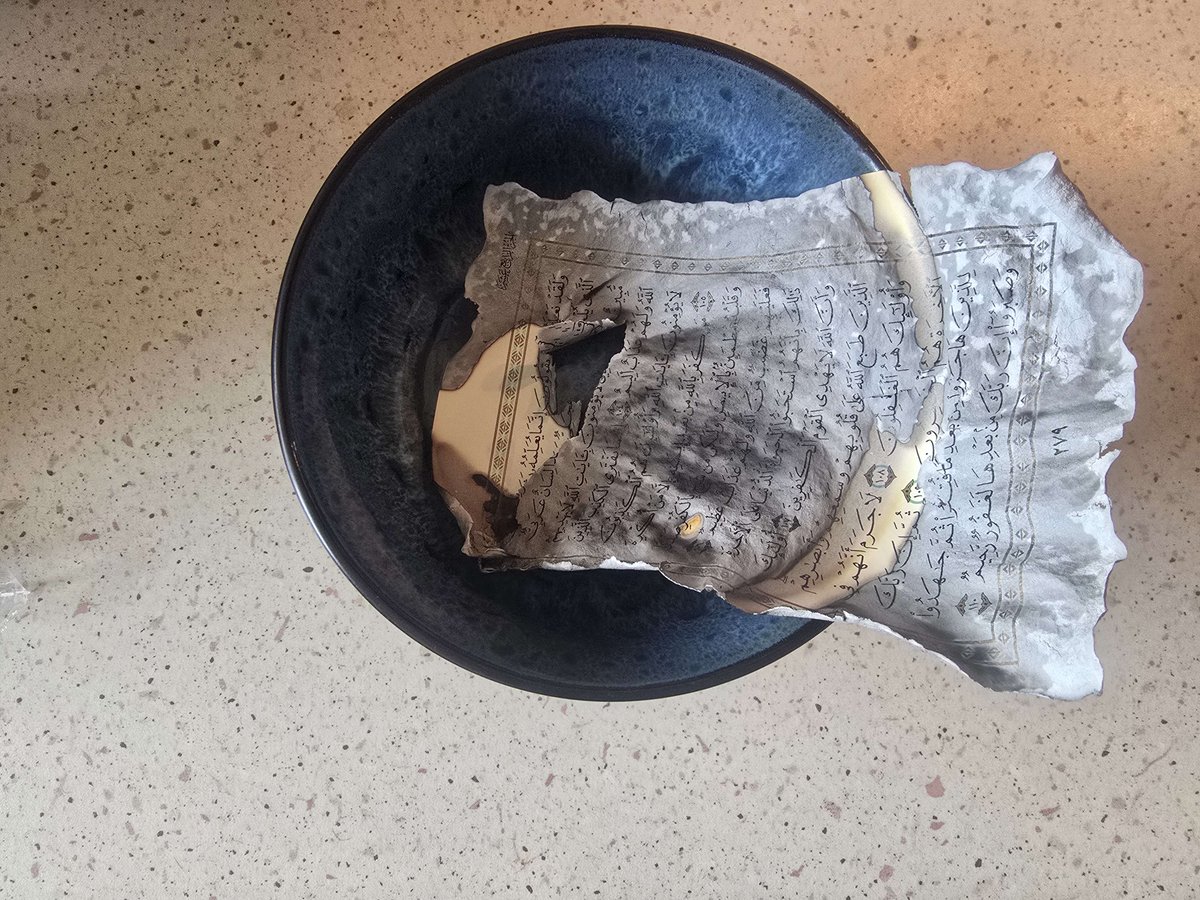
here is my deal to you, from now own, each time you respond to me, I will invoke your name and in your honor burn 10 pages of your satanic book, and post a picture, I got it right here next to me,
So my Muhammadan friend, please do try me
Address the point and stop your stupid games, how is "I was amazed" the same thing as "you were amazed"
recitation ? language ? grammar ? dialect .... do explain please
And which one is written and preserved in the اللَّوْحُ الْمَحْفُوظُ (the Guarded Tablet) ? the one tucked under you god while he sits on his throne doing nothing and sucking his thumbs (both right thumbs by the way)
your Taqiyya is too weak, and you fooling no one
@Sanchita_CtoI @CardboardPdf @xerxesss That text is law in their judicial system, so he was approved by the great Satan himself and the goons that came after him
Not a single response ? just calling me an idiot ? that all you got ?
well your are in luck, I am an Arab, did most of my education in Arabic, and tough at one point Arabic, what can I help you with هلال ? is very simple, kindergarten level, subject and verb conjugation combinations cannot mean multiple thing at the same time nor can different subjects at the same time, there no world and no language in which "I" can be "you" at the same time
here let me help you, something tailored to your level
here are some simple rules for الفَاعِلِ
https://t.co/yz2rBzCP8M
simple conjugation table
https://t.co/NdiQLQJ5YF
some nice exercises for you https://t.co/iJQKBaFOQ4
"Qirāʾāt, multiple styles of recitations of the same revelation"
just false, borderline insanity, subject changing, verbs changing, words changing or missing, contradictory meaning... are not different "recitation"
we are at a level of lies and deception here that we are effectively trying to lie about reality itself
here is your argument in a nutshell: "I ate" and "you ate", "fought" and "kill", "one person" and "3 or more persons" (my favorite, mirrors the trinity lol), ... is the "same thing" same exact meaning just a different "recitation", pathological lying bordering on delusional behavior
Here are a few examples (by yours truly)
https://t.co/VxCIyDA1tM
This again ?
"aqeeda contradiction" ?
love to see you muslims now back tracking on the whole "Perfect preservation right down to the letter"
hypocrites
here is a few example:
Surah As-Saffat verse 12, (subject change)
you wonder (Muhammed) =/= I wonder (Allah)
Surah Youness verse 16, (did or did not ?)
He have made it known to you =/= he didn't made known to you
Surah Al-Baqarah , Verse 184 (so if we can't fast how to purify oneself, one person or 3 ?)
a ransom [or substitute] of feeding a single poor person =/= a ransom [or substitute] of feeding 3 or more poor people
Surah Aal-E-Imran, Verse 146 (different words/actions, they died =/= they fought)
And how many a prophet fought with him many rabbaniyyun =/= And how many a prophet died with him many rabbaniyyun
Surah Al-Hadid, Verse 24 (word missing)
indeed, Allah "he is" the Free of need, the Praiseworthy =/= indeed, Allah the Free of need, the Praiseworthy
Surah Yusuf, Verse 90 (are they unsure or sure ?)
They said, 'Are you indeed Joseph?' He said, 'I am Joseph =/= They said, 'you are indeed Joseph' He said, 'I am Joseph
""Abu Ja‘far said: “And the correct recitation in this matter according to us is that it be recited as a question, due to the consensus of the proof‑bearing reciters upon it.” ""
** so in this one Abu Jaafar himself said that the "correct" version is the interrogative one, since it is the most "proof bearing"
so what how does your "aqueeda" address all of these, which one of these is the eternal preserved speech of allah ? they can't all be true, some contradict, missing words, different word, subject change ... ?
and what do you say about Abu Ja‘far ? he choose one ? discrediting the other ones and people like Ubay Ibn Ka'ab and Ibn Muhayssen
or here is a simple one, what to do if I can't fast a day in Ramadan ? should I feed a single person or I am forced to feed at least 3 people ?
how is the subject changing is a "different recitation", the depths of your lies knows no limit, I refuse to attribute this to ignorance or stupidity, this is pure malice, deception and evil
This is preschool level Arabic (or any language for that matter), simple verb conjugation, I learn this at 4 years old:
I was amazed => me/I
عجبتُ => أنا
ʿajibtu anā
tu (verb ending)
you were amazed (you(male)) => you(male)
عجبتَ => أنتَ
ʿajibta anta
ta tu (verb ending)
you were amazed (you(female)) => you(female)
عجبتِ => أنتِ
ʿajibti anti
ti tu (verb ending)
Donkeys are animals known for there intelligence and memory specially mapping terrains and remembering routes, which something beyond an entire human population engaging in consanguinity for centuries
NEXT
One more thing,
"Every qira’at was transmitted from the Prophet ﷺ through documented chains"
first not a single copy from the period of Mohamed nor even from at least 2 to 3 centuries after him, where is Uthman Quran ?
second, documented chains ?? don't make me laugh loool
here is what your top hadith scholars think about Hasfs,
"Hafs ibn Sulayman, the main transmitter of ‘Asim’s Qur’an reading, is regarded by many Sunni hadith scholars as a liar, unreliable, abandoned, fabricator in hadith"
that he's nothing, not trust worthy in any way shape or form, yet "miraculously" we can trust him with the words of God
Look at this:
Bukhari:
====================================
البخاري – التاريخ الكبير – الجزء : ( 2 ) – رقم الصفحة : ( 363 )
2767 – حفص بن سليمان الأسدي أبو عمر القارئ : عن علقمة بن
مرثد وعاصم ، تركوه ، وهو حفص بن أبي داود الكوفي.
"they left him"
البخاري – التاريخ الصغير – الجزء : ( 2 ) – رقم الصفحة : ( 233 )
book: small history
– حفص بن سليمان أبو عمر الأسدي كوفى : وهو حفص بن أبى داود أراه هو القارئ ، عن عاصم وعلقمة بن مرثد سكتوا عنه يروى ، عن حفص بن عمر بن أبى العطاف المدني منكر الحديث.
"his hadiths are "munkar" lies not to be taken"
البخاري – الضعفاء الصغير – رقم الصفحة : ( 35 )
Book: the weak small
( 73 ) حفص بن سليمان الأسدي ��بو عمر : عن علقمة بن مرقد تركوه ، وقال أحمد بن حنبل : قال يحيى أخبرني شعبة قال : أخذ مني حفص بن سليمان كتاباً فلم يرده قال : وكان يأخذ كتب الناس فينسخها.
"he was a thief, he stole people books (ex stole the book of Shua'ba), did not returned them, and even copied them and attributed them to himself "
Al Albani
=====================================
الألباني – إرواء الغليل – الجزء : ( 1 ) – رقم الصفحة : ( 260 )
– أبو عمر هذا هو : حفص بن سليمان القارئ الكوفي وهو متروك الحديث ، وقد تابعه عمر أبو حفص وهو إبن حفص العبدي وهو مثله في الضعف أو أشد ، أخرجه عنه الطبراني في الكبير ( 3 / 49 / 1 ) ، وقول الهيثمي ( 1 / 333 ) في إسناده : ورجاله موثقون ، فهذا من تساهله فلا يلتفت إليه.
Abu Amr by the authority of Al-Tabarani: "we leave his hadiths, and his even weaker"
"his incompetence is such that we don't even look at him"
أحمد بن حنبل – العلل – الجزء : ( 2 ) – رقم الصفحة : ( 380 و 503 )
– ( 2698 ) : أسمعت أبي يقول : حفص بن سليمان يعني أبا عمر القارئ متروك الحديث.
"his hadiths to be left"
– ( 3320 ) : سألته ، عن حفص بن سليمان فقال : قال شعبة كان حفص يستعير كتب الناس.
"he borrowed peoples books and never returned them"
أحمد بن حنبل – العلل – الجزء : ( 3 ) – رقم الصفحة : ( 78 )
– فأخبرني شعبة قال : أخذ مني حفص بن سليمان كتاباً فلم يرده وكان يأخذ كتب الناس فينسخها.
"he took others poeple's books and copied them (without consent and without returning them)"
Ibn Hajar, rapid fire
====================================
وقال ابن أبي حاتم، عن عبدالله، عن أبيه: متروك الحديث.
Ibn Abi Hatim reported from Abdullah from his father: He is abandoned in hadith (his narrations are not accepted).
وقال عثمان الدارمي وغيره، عن ابن معين: ليس بثقة.
Uthman al-Darimi and others reported from Ibn Ma'in: He is not trustworthy.
وقال ابن المديني: ضعيف الحديث وتركته على عمد.
Ibn al-Madini said: He is weak in hadith, and I deliberately left his narrations.
وقال الجوزجاني: قد فرغ منه من دهر.
Al-Jawzjani said: People have long finished with him (i.e., abandoned him long ago).
وقال البخاري: تركوه.
Al-Bukhari said: They abandoned him.
وقال مسلم: متروك.
Muslim said: Abandoned (his narrations are rejected).
وقال النسائي: ليس بثقة ولا يكتب حديثه، وقال في موضع آخر: متروك الحديث.
Al-Nasa'i said: He is not trustworthy, and his hadith is not written; elsewhere he said: “He is abandoned in hadith.”
وقال صالح بن محمد: لا يكتب حديثه وأحا��يثه كلها مناكير.
Salih ibn Muhammad said: His hadith should not be written, and all his narrations are odd and rejected.
وقال الساجي: يحدث عن سماك وغيره أحاديث بواطيل.
Al-Saji said: He narrates false hadiths from Simak and others.
وقال أبو زرعة: ضعيف الحديث.
Abu Zur‘ah said: He is weak in hadith.
وقال ابن أبي حاتم: سألت أبي عنه فقال: لا يكتب حديثه، هو ضعيف الحديث، لا يصدق، متروك الحديث. قلت: ما حاله في الحروف؟ قال: أبو بكر بن عياش أثبت منه.
Ibn Abi Hatim said: I asked my father about him, and he said: His hadith should not be written; he is weak in hadith, unreliable, and abandoned. I asked: What about his Quranic recitation? He said: Abu Bakr ibn ‘Ayyash is more reliable than him.
وقال ابن خراش: كذّاب متروك يضع الحديث.
Ibn Khirash said: A liar, abandoned, fabricates hadith.
وق��ل أبو أحمد الحاكم: ذاهب الحديث.
Abu Ahmad al-Hakim said: His hadith is worthless.
وقال يحيى بن سعيد، عن شعبة: أخذ مني حفص بن سليمان كتاباً فلم يرده، وكان يأخذ كتب الناس فينسخها.
Yahya ibn Sa‘id reported from Shu‘bah: Hafs ibn Sulayman took a book from me and did not return it; he used to borrow people’s books and copy them.
وقال الساجي، عن أحمد بن محمد البغدادي، عن ابن معين: كان حفص وأبو بكر من أعلم الناس بقراءة عاصم، وكان حفص أقرأ من أبي بكر، وكان كذاباً، وكان أبو بكر صدوقاً.
Al-Saji reported from Ahmad ibn Muhammad al-Baghdadi, from Ibn Ma‘in: Hafs and Abu Bakr were the most knowledgeable people regarding the recitation of ‘Asim. Hafs was more proficient in recitation than Abu Bakr, but he was a liar, while Abu Bakr was truthful.
وقال ابن عدي: عامة حديثه عمن روى عنهم غير محفوظ.
Ibn ‘Adi said: Most of his hadiths from those he narrated from are not preserved (i.e., unreliable).
And the list goes on and on and on...
An entire consensus is made about your Quran writer being a liar, a fabricator, a thief and a fraud
yet his Quran (mind you a recent decision, Egypt Cairo 1924) was made to be the "standard" for every Muslim on the planet
A cult made by liars for liars
https://t.co/AmQ6TRQEif
This again ?
"aqeeda contradiction" ?
love to see you muslims now back tracking on the whole "Perfect preservation right down to the letter"
hypocrites
here is a few example:
Surah As-Saffat verse 12, (subject change)
you wonder (Muhammed) =/= I wonder (Allah)
Surah Youness verse 16, (did or did not ?)
He have made it known to you =/= he didn't made known to you
Surah Al-Baqarah , Verse 184 (so if we can't fast how to purify oneself, one person or 3 ?)
a ransom [or substitute] of feeding a single poor person =/= a ransom [or substitute] of feeding 3 or more poor people
Surah Aal-E-Imran, Verse 146 (different words/actions, they died =/= they fought)
And how many a prophet fought with him many rabbaniyyun =/= And how many a prophet died with him many rabbaniyyun
Surah Al-Hadid, Verse 24 (word missing)
indeed, Allah "he is" the Free of need, the Praiseworthy =/= indeed, Allah the Free of need, the Praiseworthy
Surah Yusuf, Verse 90 (are they unsure or sure ?)
They said, 'Are you indeed Joseph?' He said, 'I am Joseph =/= They said, 'you are indeed Joseph' He said, 'I am Joseph
""Abu Ja‘far said: “And the correct recitation in this matter according to us is that it be recited as a question, due to the consensus of the proof‑bearing reciters upon it.” ""
** so in this one Abu Jaafar himself said that the "correct" version is the interrogative one, since it is the most "proof bearing"
so what how does your "aqueeda" address all of these, which one of these is the eternal preserved speech of allah ? they can't all be true, some contradict, missing words, different word, subject change ... ?
and what do you say about Abu Ja‘far ? he choose one ? discrediting the other ones and people like Ubay Ibn Ka'ab and Ibn Muhayssen
or here is a simple one, what to do if I can't fast a day in Ramadan ? should I feed a single person or I am forced to feed at least 3 people ?
No Arab or Arabic-speaking Muslim or otherwise will use "Makr" to mean to plan or "planning", the issue with you العجم (al-ʿajam) (non arabs) or non-Arabic speaking Muslims, is you are making arabs in general either look like full retards or just pure evil, lying about something as evident as the sun itself.
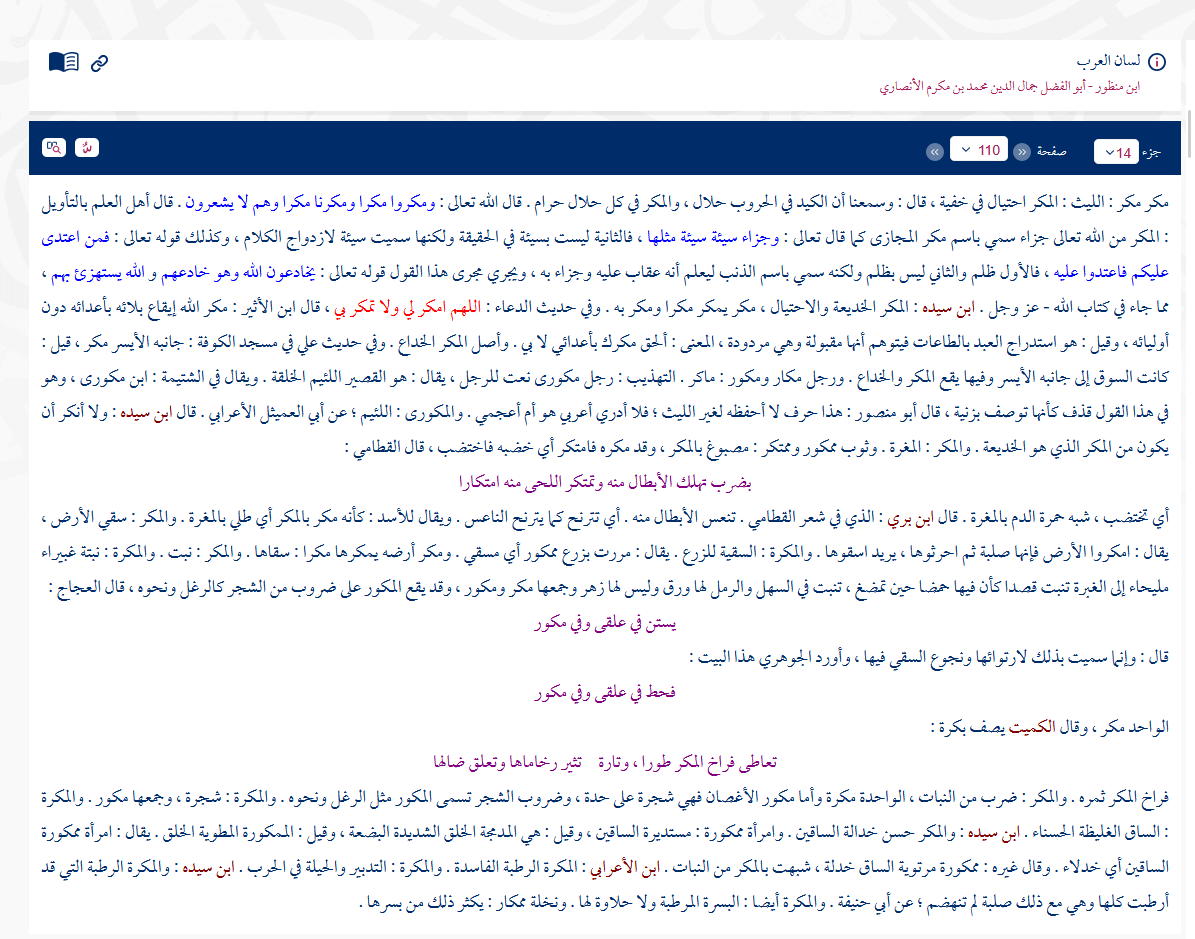
here is لسان العرب, the OG dictionary, an authority on the Arabic language, written in 1290 by محمد بن مكرم بن منظور الأنصاري or simply Ibn Mandour:
(Almost every dictionary, even modern ones, is based on it; you can't find a dictionary that doesn't quote it)
مكر مكر : الليث : المكر احتيال في خفية ، قال : وسمعنا أن الكيد في الحروب حلال ، والمكر في كل حلال حرام . قال الله تعالى : ومكروا مكرا ومكرنا مكرا وهم لا يشعرون . قال أهل العلم بالتأويل : المكر من الله تعالى جزاء سمي باسم مكر المجازى كما قال تعالى : وجزاء سيئة سيئة مثلها ، فالثانية ليست بسيئة في الحقيقة ولكنها سميت سيئة لازدواج الكلام ، وكذلك قوله تعالى : فمن اعتدى عليكم فاعتدوا عليه ،
فالأول ظلم والثاني ليس بظلم ولكنه سمي باسم الذنب ليعلم أنه عقاب عليه وجزاء به
Al-Layth (lion): Al-makr is "guile" or "deception" carried out in "secret or hidden" (احتيال في خفية). He said: We have heard that scheming, deception, cunning, or trickery (al-kayd) in wars is permissible (halal), but "makr" in anything that is otherwise permissible (halal) is forbidden (haram).
The scholars of interpretation said: "Makr" when attributed to God the Exalted refers to a recompense, and it is named after the scheming/deception of the one being requited. This is like Allah saying: "The recompense of an evil deed is an evil deed like it." The second one is not truly an evil deed, but it is called so for the sake of "rhetorical pairing."
Similarly, in His saying: "So whoever transgresses against you, then transgress against him…" the first act is wrongdoing, while the second is not wrongdoing. Yet it is given the same name as the offense, so that it is understood to be a punishment for it and a just recompense.
Not only do they explain the word and recognize the negative connotations associated with it: Guile, Ruse, Subterfuge, Artifice, Duplicity, Trickery, ... and the fact that it is an evil act, "forbidden" in all that is permissible (Halal)
They also understood the implications of associating it with God and, to their credit, without lying, tried to find a "solution": "it is not truly an evil act because it is a punishment, the recompense of an evil deed is an evil deed like it."
Now, is it a good excuse to have a "perfect being" doing evil acts to punish those who do evil? not so sure...
But people from the 9th, 10th, and 11th centuries having more brain cells than people today is something else.
If you are a compulsive liar, seek help, and if you are this ignorant, go back to school


![arbirter's tweet photo. This again ?
"aqeeda contradiction" ?
love to see you muslims now back tracking on the whole "Perfect preservation right down to the letter"
hypocrites
here is a few example:
Surah As-Saffat verse 12, (subject change)
you wonder (Muhammed) =/= I wonder (Allah)
Surah Youness verse 16, (did or did not ?)
He have made it known to you =/= he didn't made known to you
Surah Al-Baqarah , Verse 184 (so if we can't fast how to purify oneself, one person or 3 ?)
a ransom [or substitute] of feeding a single poor person =/= a ransom [or substitute] of feeding 3 or more poor people
Surah Aal-E-Imran, Verse 146 (different words/actions, they died =/= they fought)
And how many a prophet fought with him many rabbaniyyun =/= And how many a prophet died with him many rabbaniyyun
Surah Al-Hadid, Verse 24 (word missing)
indeed, Allah "he is" the Free of need, the Praiseworthy =/= indeed, Allah the Free of need, the Praiseworthy
Surah Yusuf, Verse 90 (are they unsure or sure ?)
They said, 'Are you indeed Joseph?' He said, 'I am Joseph =/= They said, 'you are indeed Joseph' He said, 'I am Joseph
""Abu Ja‘far said: “And the correct recitation in this matter according to us is that it be recited as a question, due to the consensus of the proof‑bearing reciters upon it.” ""
** so in this one Abu Jaafar himself said that the "correct" version is the interrogative one, since it is the most "proof bearing"
so what how does your "aqueeda" address all of these, which one of these is the eternal preserved speech of allah ? they can't all be true, some contradict, missing words, different word, subject change ... ?
and what do you say about Abu Ja‘far ? he choose one ? discrediting the other ones and people like Ubay Ibn Ka'ab and Ibn Muhayssen
or here is a simple one, what to do if I can't fast a day in Ramadan ? should I feed a single person or I am forced to feed at least 3 people ?](https://pbs.twimg.com/media/HEFYsRqbAAEt9kf.jpg)
![arbirter's tweet photo. This again ?
"aqeeda contradiction" ?
love to see you muslims now back tracking on the whole "Perfect preservation right down to the letter"
hypocrites
here is a few example:
Surah As-Saffat verse 12, (subject change)
you wonder (Muhammed) =/= I wonder (Allah)
Surah Youness verse 16, (did or did not ?)
He have made it known to you =/= he didn't made known to you
Surah Al-Baqarah , Verse 184 (so if we can't fast how to purify oneself, one person or 3 ?)
a ransom [or substitute] of feeding a single poor person =/= a ransom [or substitute] of feeding 3 or more poor people
Surah Aal-E-Imran, Verse 146 (different words/actions, they died =/= they fought)
And how many a prophet fought with him many rabbaniyyun =/= And how many a prophet died with him many rabbaniyyun
Surah Al-Hadid, Verse 24 (word missing)
indeed, Allah "he is" the Free of need, the Praiseworthy =/= indeed, Allah the Free of need, the Praiseworthy
Surah Yusuf, Verse 90 (are they unsure or sure ?)
They said, 'Are you indeed Joseph?' He said, 'I am Joseph =/= They said, 'you are indeed Joseph' He said, 'I am Joseph
""Abu Ja‘far said: “And the correct recitation in this matter according to us is that it be recited as a question, due to the consensus of the proof‑bearing reciters upon it.” ""
** so in this one Abu Jaafar himself said that the "correct" version is the interrogative one, since it is the most "proof bearing"
so what how does your "aqueeda" address all of these, which one of these is the eternal preserved speech of allah ? they can't all be true, some contradict, missing words, different word, subject change ... ?
and what do you say about Abu Ja‘far ? he choose one ? discrediting the other ones and people like Ubay Ibn Ka'ab and Ibn Muhayssen
or here is a simple one, what to do if I can't fast a day in Ramadan ? should I feed a single person or I am forced to feed at least 3 people ?](https://pbs.twimg.com/media/HEFYasuaMAADazF.jpg)





![arbirter's tweet photo. This again ?
"aqeeda contradiction" ?
love to see you muslims now back tracking on the whole "Perfect preservation right down to the letter"
hypocrites
here is a few example:
Surah As-Saffat verse 12, (subject change)
you wonder (Muhammed) =/= I wonder (Allah)
Surah Youness verse 16, (did or did not ?)
He have made it known to you =/= he didn't made known to you
Surah Al-Baqarah , Verse 184 (so if we can't fast how to purify oneself, one person or 3 ?)
a ransom [or substitute] of feeding a single poor person =/= a ransom [or substitute] of feeding 3 or more poor people
Surah Aal-E-Imran, Verse 146 (different words/actions, they died =/= they fought)
And how many a prophet fought with him many rabbaniyyun =/= And how many a prophet died with him many rabbaniyyun
Surah Al-Hadid, Verse 24 (word missing)
indeed, Allah "he is" the Free of need, the Praiseworthy =/= indeed, Allah the Free of need, the Praiseworthy
Surah Yusuf, Verse 90 (are they unsure or sure ?)
They said, 'Are you indeed Joseph?' He said, 'I am Joseph =/= They said, 'you are indeed Joseph' He said, 'I am Joseph
""Abu Ja‘far said: “And the correct recitation in this matter according to us is that it be recited as a question, due to the consensus of the proof‑bearing reciters upon it.” ""
** so in this one Abu Jaafar himself said that the "correct" version is the interrogative one, since it is the most "proof bearing"
so what how does your "aqueeda" address all of these, which one of these is the eternal preserved speech of allah ? they can't all be true, some contradict, missing words, different word, subject change ... ?
and what do you say about Abu Ja‘far ? he choose one ? discrediting the other ones and people like Ubay Ibn Ka'ab and Ibn Muhayssen
or here is a simple one, what to do if I can't fast a day in Ramadan ? should I feed a single person or I am forced to feed at least 3 people ?](https://pbs.twimg.com/media/HEFmr4TaAAAibEu.jpg)