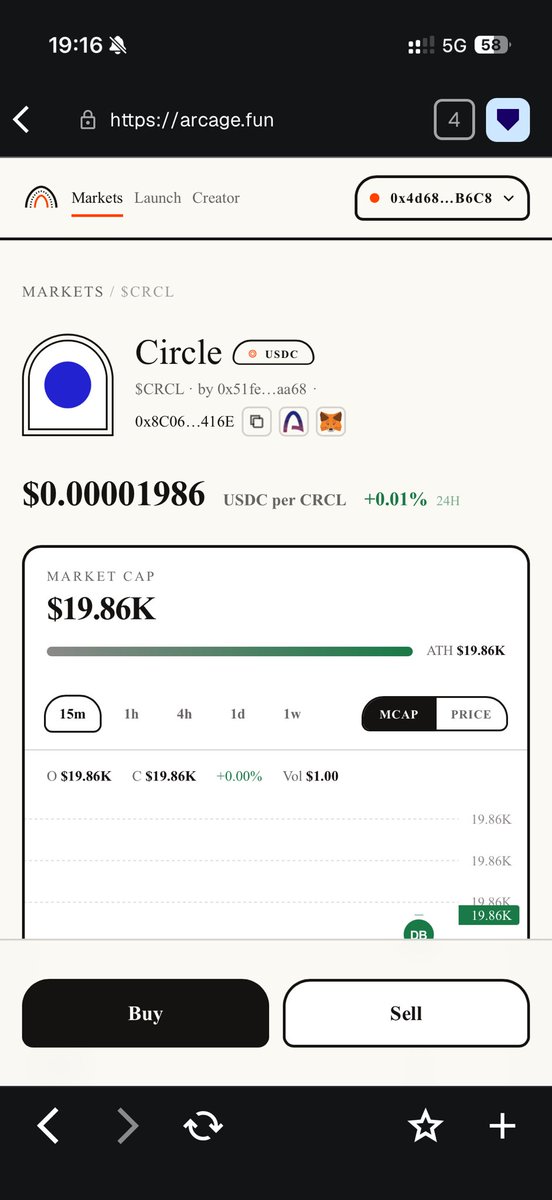
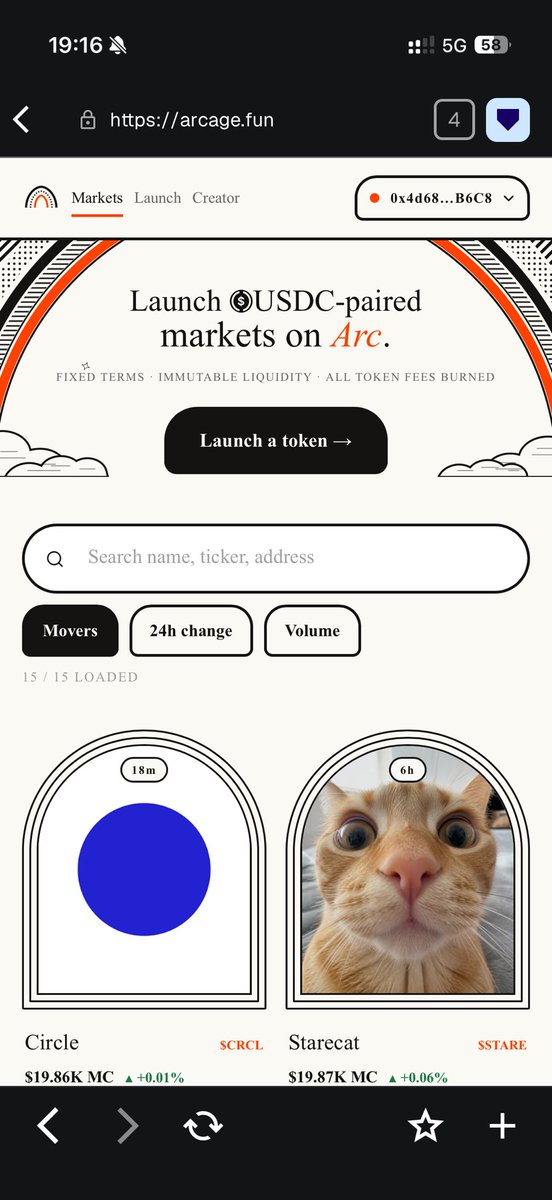
i can smell @arc mainnet coming…
ready to join the hype?
@arcagefun is now live on arc-testnet, so you can get a taste before @arc mainnet goes live.
launch tokens, trade, and explore with testnet $USDC.
https://t.co/dWnWEvgmwO
I agree. Most launchpads are just for meme coins, so creators rarely do much after launch - maybe some community vibes and a flashy site. Would make more sense if some fees went to traders generating hype and influencers bringing new users.
Ok, working on something like this.
Why I’m Skeptical of Creator Fee Structures
Personally, I have become increasingly skeptical of the creator fee structures used by recent launchpads.
NOXA
Tokens launched on NOXA, such as CashCat, Tendies, Juggernaut, and others, generate fees whenever trading takes place, and a significant portion of those fees is distributed to the creator.
As far as I understand, the trading fee is around 1%, and creators receive their share in WETH.
The fact that the fees are paid in WETH rather than in the project’s own token is at least somewhat better, because it does not create direct sell pressure on the token itself.
However, as long as trading volume continues, creators can keep earning revenue, while it is not always clear what additional value they are required to provide in return.
Longxyz
I am even more skeptical of Longxyz.
Based on my understanding of its V1 structure, the total trading fee is around 1.5% to 1.7%, and roughly half of the fees generated are distributed to the creator.
What concerns me most is that these rewards are paid in the project’s own token rather than in ETH or WETH.
Of course, I cannot claim that every developer immediately sells all the tokens they receive. Some may hold them, burn them, or use them to fund the project.
However, from an economic perspective, if creators continuously receive rewards in the project’s own token, it seems more likely that they will eventually convert at least part of those rewards into ETH or stablecoins rather than burn the entire amount.
As a result, this structure continuously distributes new token supply to creators whenever trading occurs, which can create ongoing potential sell pressure.
PONS
PONS V1 has a similar issue.
According to the publicly known structure, 70% of the trading fees are distributed to the creator, while the remaining 30% goes to the protocol. PONS has also recently referred to this 70/30 fee split.
However, unlike Longxyz, PONS pays creator fees in WETH or another pairing asset rather than in the project’s own token.
This means that creator rewards do not directly create inflation or sell pressure on the token itself.
Even so, I still believe that allowing creators to continuously receive 70% of all trading fees is an extremely high allocation.
What I See as the Main Problems
I do not believe that creator fees are inherently wrong.
It is reasonable for creators who launch a project and help build its initial liquidity and community to receive some form of compensation.
The problems, in my view, are the following.
First, the percentage allocated to creators is often excessively high.
Second, these fees can continue indefinitely in proportion to trading volume, even though the creator’s ongoing responsibilities or obligations are often unclear.
Third, when fees are paid in the project’s own token, they can create continuous potential sell pressure.
Fourth, it is often difficult to verify whether the fees are actually being used for development, liquidity provision, buybacks, burns, marketing, or other activities that benefit the project.
Ultimately, traders pay substantial fees every time they buy and sell, and a large portion of those fees is continuously transferred to creators.
Meanwhile, the actual value created with that revenue varies significantly from project to project.
If I’ve misunderstood anything, feel free to correct me in the comments.
Why I’m Skeptical of Creator Fee Structures
Personally, I have become increasingly skeptical of the creator fee structures used by recent launchpads.
NOXA
Tokens launched on NOXA, such as CashCat, Tendies, Juggernaut, and others, generate fees whenever trading takes place, and a significant portion of those fees is distributed to the creator.
As far as I understand, the trading fee is around 1%, and creators receive their share in WETH.
The fact that the fees are paid in WETH rather than in the project’s own token is at least somewhat better, because it does not create direct sell pressure on the token itself.
However, as long as trading volume continues, creators can keep earning revenue, while it is not always clear what additional value they are required to provide in return.
Longxyz
I am even more skeptical of Longxyz.
Based on my understanding of its V1 structure, the total trading fee is around 1.5% to 1.7%, and roughly half of the fees generated are distributed to the creator.
What concerns me most is that these rewards are paid in the project’s own token rather than in ETH or WETH.
Of course, I cannot claim that every developer immediately sells all the tokens they receive. Some may hold them, burn them, or use them to fund the project.
However, from an economic perspective, if creators continuously receive rewards in the project’s own token, it seems more likely that they will eventually convert at least part of those rewards into ETH or stablecoins rather than burn the entire amount.
As a result, this structure continuously distributes new token supply to creators whenever trading occurs, which can create ongoing potential sell pressure.
PONS
PONS V1 has a similar issue.
According to the publicly known structure, 70% of the trading fees are distributed to the creator, while the remaining 30% goes to the protocol. PONS has also recently referred to this 70/30 fee split.
However, unlike Longxyz, PONS pays creator fees in WETH or another pairing asset rather than in the project’s own token.
This means that creator rewards do not directly create inflation or sell pressure on the token itself.
Even so, I still believe that allowing creators to continuously receive 70% of all trading fees is an extremely high allocation.
What I See as the Main Problems
I do not believe that creator fees are inherently wrong.
It is reasonable for creators who launch a project and help build its initial liquidity and community to receive some form of compensation.
The problems, in my view, are the following.
First, the percentage allocated to creators is often excessively high.
Second, these fees can continue indefinitely in proportion to trading volume, even though the creator’s ongoing responsibilities or obligations are often unclear.
Third, when fees are paid in the project’s own token, they can create continuous potential sell pressure.
Fourth, it is often difficult to verify whether the fees are actually being used for development, liquidity provision, buybacks, burns, marketing, or other activities that benefit the project.
Ultimately, traders pay substantial fees every time they buy and sell, and a large portion of those fees is continuously transferred to creators.
Meanwhile, the actual value created with that revenue varies significantly from project to project.
If I’ve misunderstood anything, feel free to correct me in the comments.
@yeonwoo1102 I agree.
Most launchpads are just for meme coins, so creators rarely do much after launch - maybe some community vibes and a flashy site.
Would make more sense if some fees went to traders generating hype and influencers bringing new users.
ok, working on something like this.
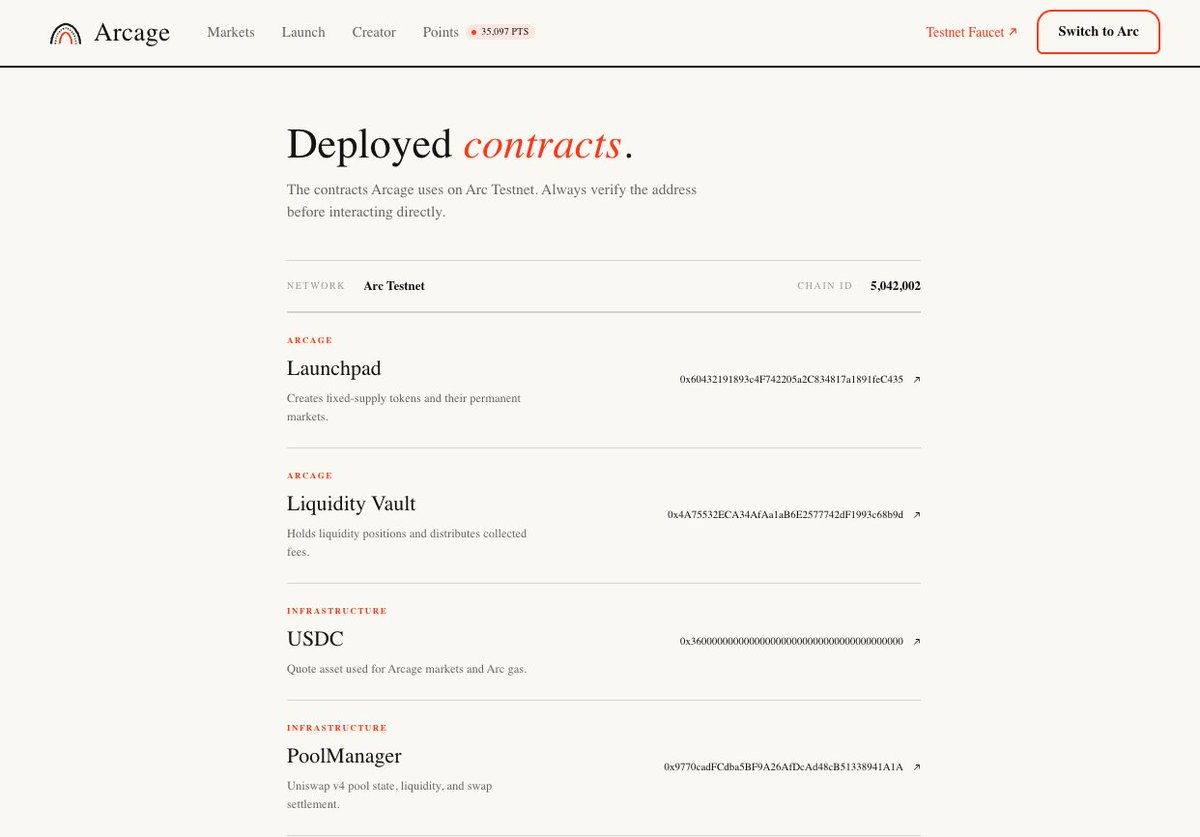
i love blockchain because you can verify everything on-chain.
instead of just saying "safe, secure, friendly, or fast," verify the contract yourself (or with your agent).
https://t.co/DcSqGaluo7
don't feel like dealing with the @arc testnet faucet to get your base:0x833589fcd6edb6e08f4c7c32d4f71b54bda02913?
fair enough. just drop your wallet address right here and I'll hook you up! 🤝
FUD: @arc mainnet isn't live and the bridge isn't ready.
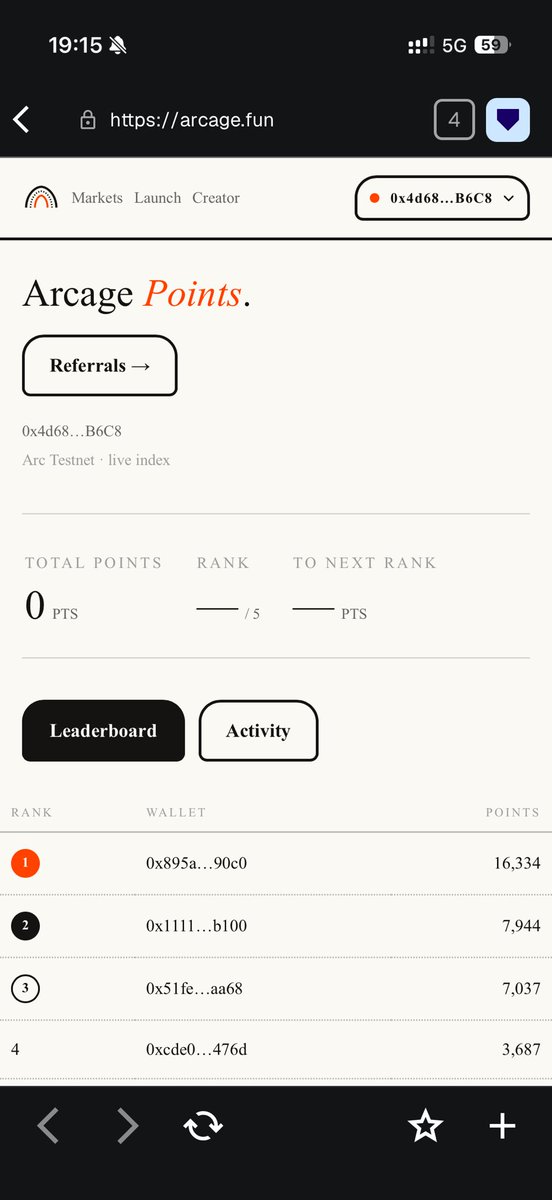
Fact: @arcagefun launchpad is live on arc-testnet RIGHT NOW, and the points program has begun.
https://t.co/dWnWEvgmwO
get testnet $USDC from the official @circle faucet: https://t.co/hksCesAx4e
arcage points:
we haven’t finalized their utility yet, but if @arcagefun succeeds, early contributors will be rewarded.
all testnet points will carry over to @arc mainnet.
i can smell @arc mainnet coming…
ready to join the hype?
@arcagefun is now live on arc-testnet, so you can get a taste before @arc mainnet goes live.
launch tokens, trade, and explore with testnet $USDC.
https://t.co/dWnWEvgmwO