Ever think about what it really takes to become the person you want to be?
Like… what if it’s not about adding more—
but letting go of who you’ve been?
What if becoming that version of you means destroying the part that’s been holding you back this whole time?
The habits.
The fear.
The comfort you’ve been stuck in.
What if the only thing standing in the way… is you?
NASA is hunting deep space for Voyager 2 after flight controllers accidentally sent a wrong command that cut contact with the spacecraft 12 billion miles away https://t.co/CuNaIiU5Rt
Bob Marley, a legendary musician, was not only recognized for his musical talents but also for his remarkable skills on the soccer field. He possessed a profound passion for the sport and engaged in it on an almost daily basis. His dedication to soccer was so profound that he even took the initiative to establish his own club in Jamaica, showcasing his love for the game.
However, tragedy struck in 1977 when Marley experienced a minor foot injury that required him to seek medical attention at a hospital. To his dismay, doctors made a shocking discovery during the examination. They found melanoma, a type of skin cancer, beneath one of his toenails. The severity of the situation led medical professionals to recommend the amputation of the affected toe as a means to combat the cancer. Despite the seriousness of the diagnosis, Marley adamantly refused the operation, driven in part by his awareness that losing a toe would significantly impair his agility and athletic prowess.
Regrettably, within a span of three years, the melanoma had metastasized throughout Bob Marley's body. As the cancer progressed, his physical condition deteriorated rapidly, leaving him weakened and incapable of bearing the weight of his iconic dreadlocks. Recognizing the necessity of adapting to his diminishing health, Marley's wife and close friends organized a heartfelt ceremony. The gathering involved the lighting of candles, recitation of biblical passages, and a poignant act of cutting off his beloved dreadlocks. This symbolized both a relinquishment of the physical burden they posed and a recognition of the changes his illness had brought upon him.
Bob Marley's battle with cancer was an arduous and tragic journey, ultimately leading to his untimely passing. Nevertheless, his legacy as a gifted musician and his significant contributions to the world of music continue to resonate with countless individuals worldwide.
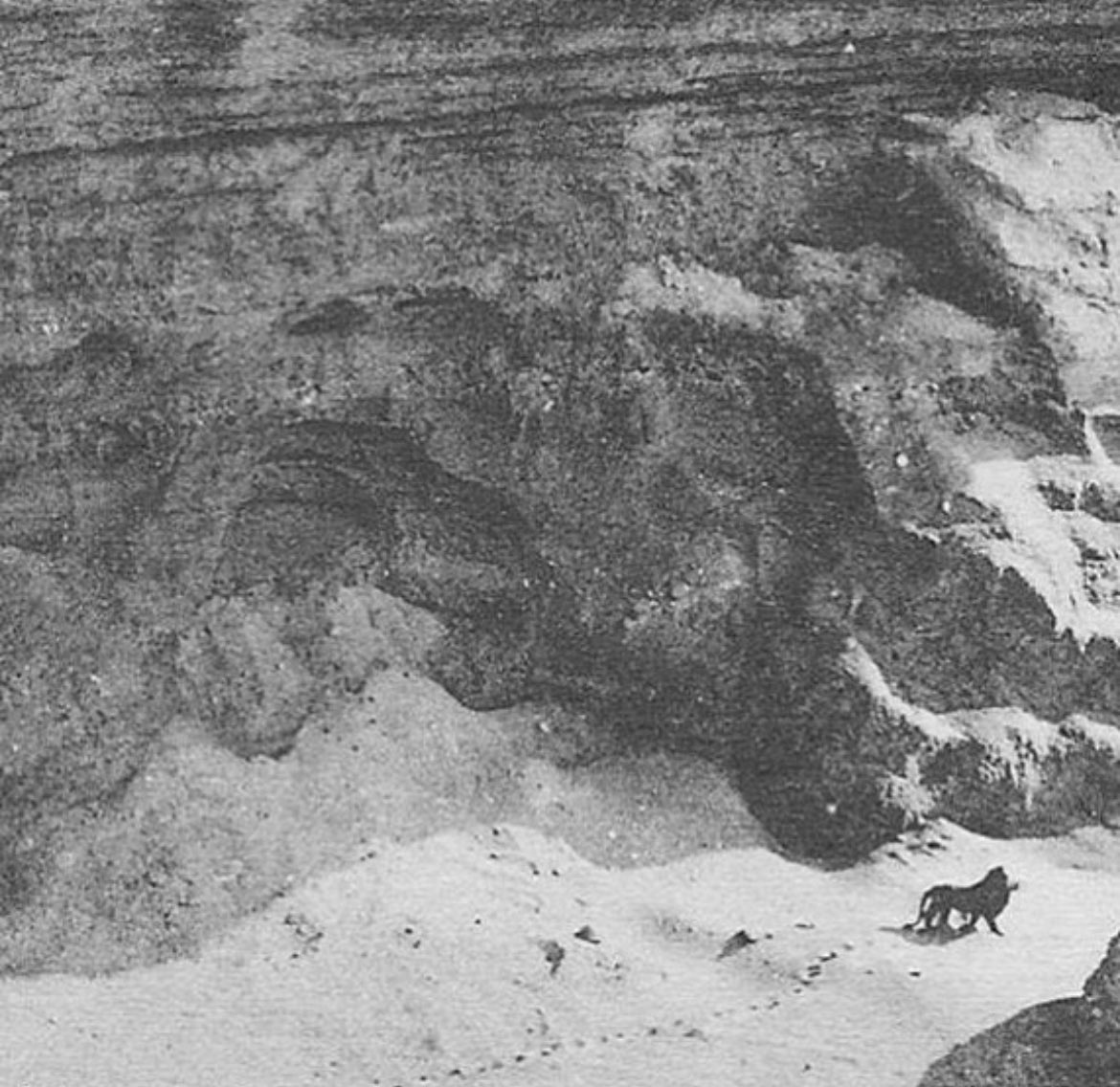
A lion was seen in the Atlas Mountains during a flight on the Casablanca-Dakar air route. The photograph, taken by Marcelin Flandrin in 1925, is the last visual record of a wild "Barbary" lion of North Africa.
To clarify, the Barbary lion is not completely extinct but is extinct in the wild. It is reported that there are fewer than 90 of them in captivity worldwide. They are part of a global breeding program aimed at helping to revive the population.
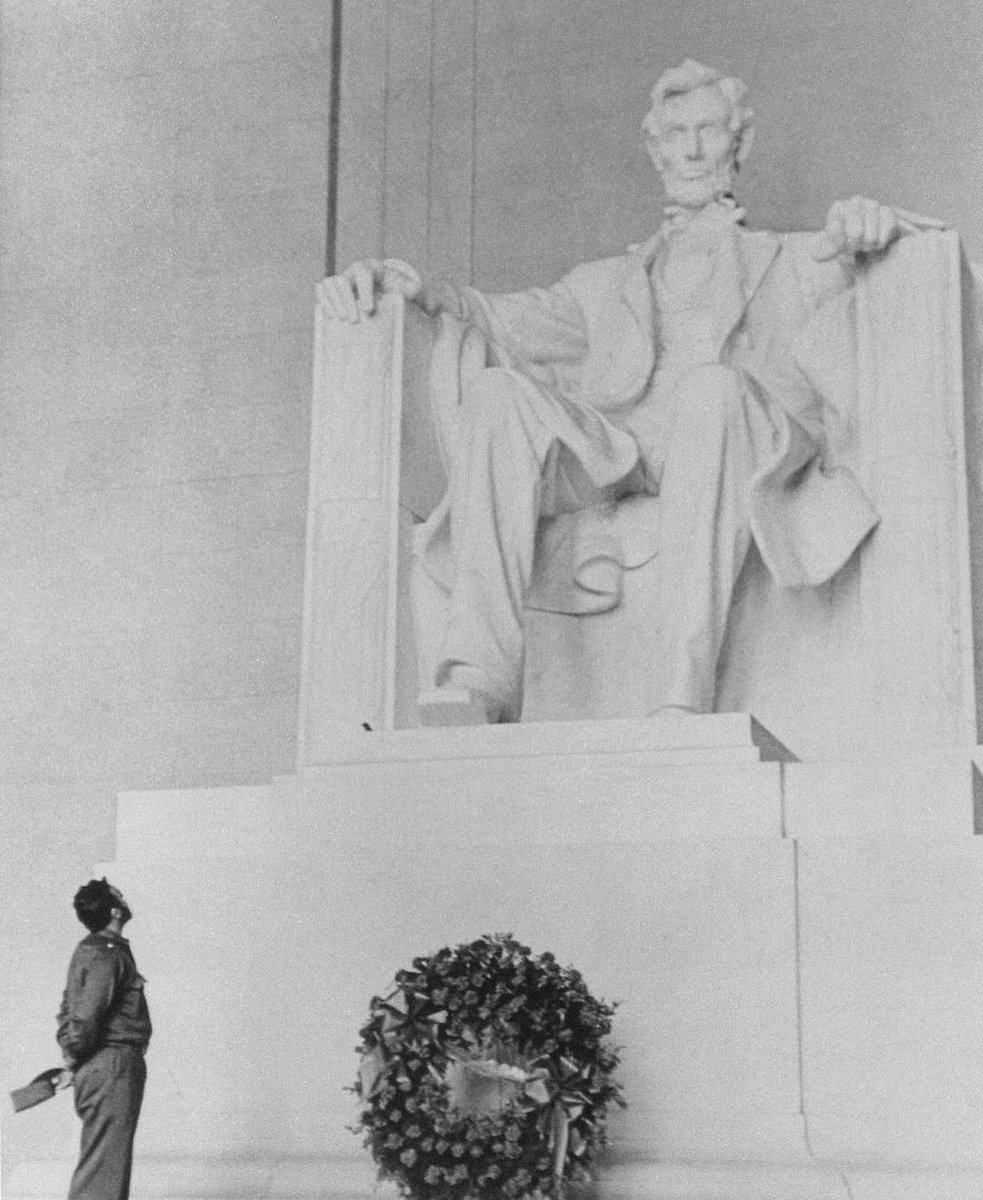
In 1959, during his visit to the United States, Fidel Castro pays his respects at the Lincoln Memorial by placing a wreath. According to The New York Times: “At the Lincoln Memorial, Dr. Castro walked up to the crowd of several hundred, shook hands, and chatted. Then he went up the steps to the memorial and slowly, in a low voice, read the Gettysburg Address inscribed on the wall. ‘Formidable and very interesting!’ he murmured.”
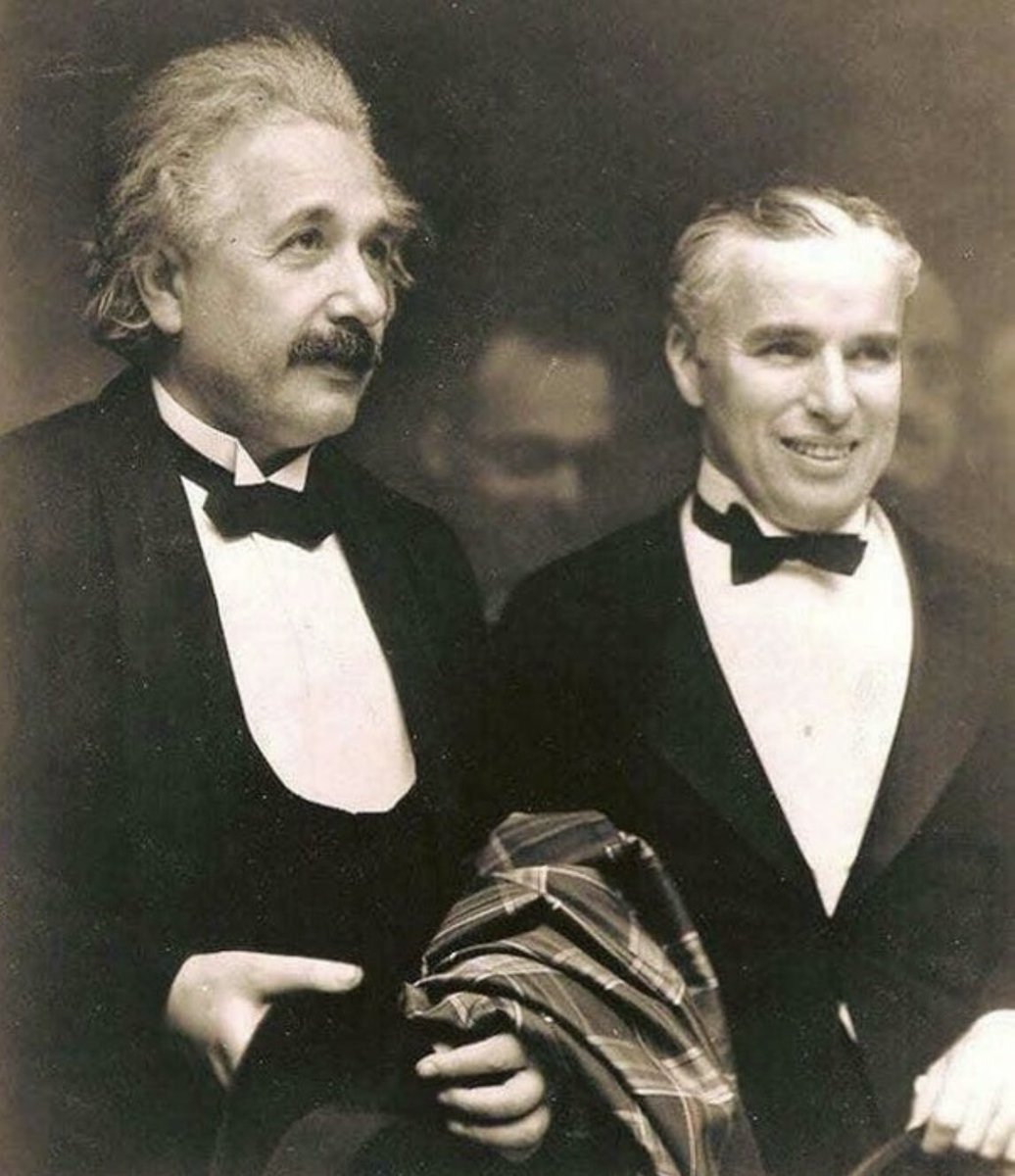
When Albert Einstein met Charlie Chaplin in 1931, Einstein said, "What I admire most about your art is its universality. You do not say a word, and yet the world understands you." "It's true." Replied Chaplin, "But your fame is even greater. The world admires you, when no one understands you."