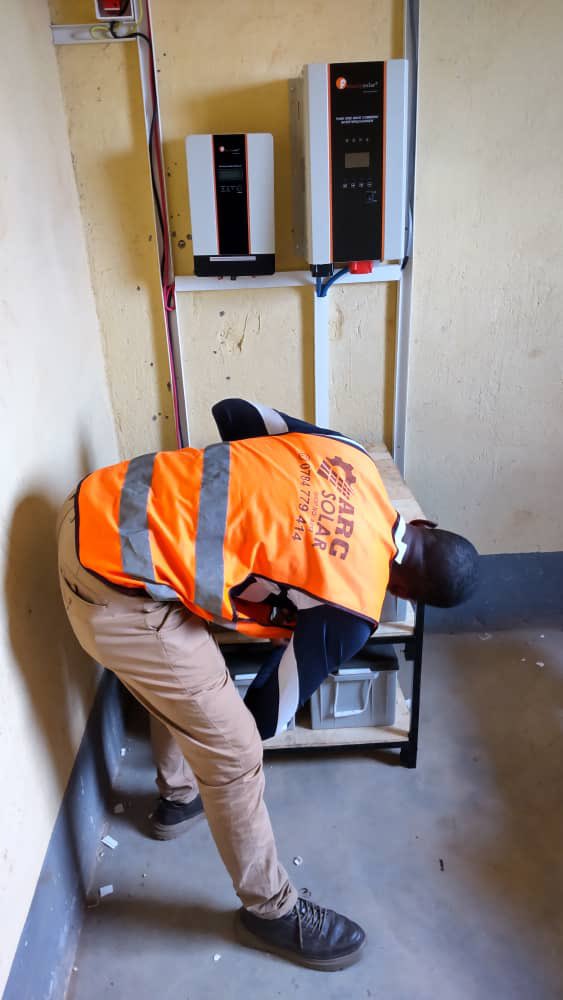
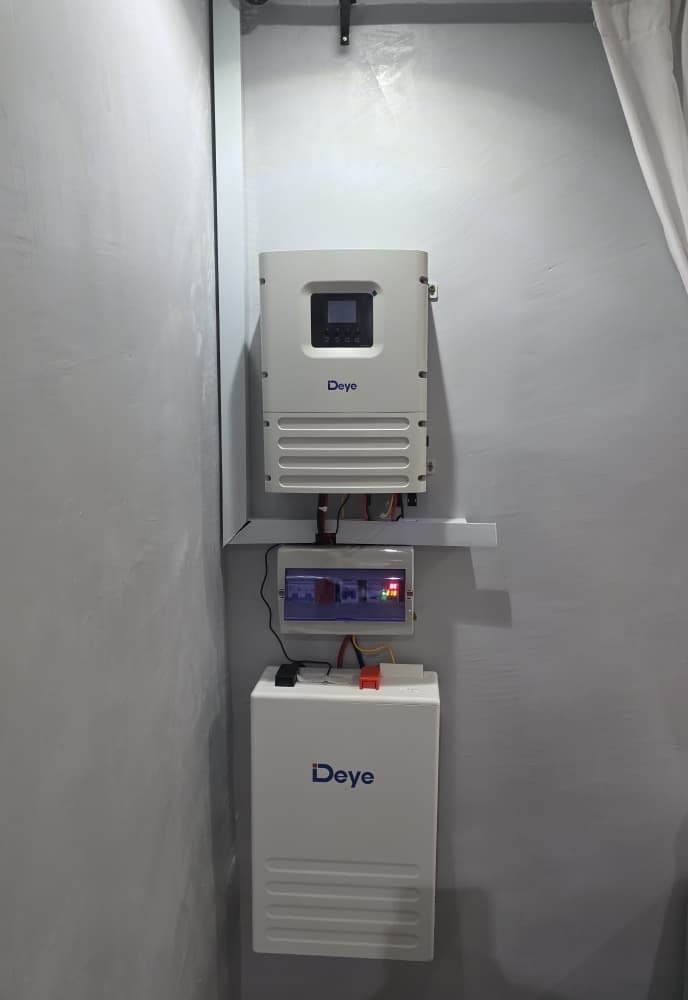
ARC Solar delivers dependable solar energy solutions tailored to power homes, businesses, and institutions across Uganda with efficiency and reliability.
Solar panels are a great way to offset energy costs; install one to enjoy benefits, such as energy independence, high productivity rate due to electricity availability,…. Contact us today for more information regarding solar energy. https://t.co/fkpaSIwCiy
+256784779414
What Happens When a Smart Inverter Is Not Compatible with a Lithium Battery
Many solar users assume that a lithium battery will work perfectly with any smart inverter as long as the voltage ratings match. In reality, modern lithium batteries depend heavily on communication between the inverter and the Battery Management System (BMS). Without proper compatibility, the system may still operate, but performance, battery lifespan, and safety can be significantly compromised.
The BMS continuously monitors critical parameters such as cell voltage, charging current, battery temperature, and State of Charge (SOC). Smart inverters are designed to communicate with the BMS through protocols such as CAN or RS485. This communication allows the inverter to receive real-time battery information and adjust charging behavior accordingly. When the inverter and battery are incompatible, this digital communication is lost, forcing the inverter to rely on generic voltage settings rather than actual battery conditions.
One of the most common consequences is improper charging. The inverter may overcharge the battery, accelerating cell degradation, or undercharge it, reducing available storage capacity and backup time. In some cases, the inverter may attempt to draw more current than the battery’s BMS allows, causing the BMS to enter protection mode and disconnect the battery unexpectedly. Homeowners may notice inaccurate battery percentage readings, incomplete charging cycles, frequent system shutdowns, or batteries that appear healthy but deliver poor performance.
Compatibility issues can also affect safety and warranty coverage. Without active communication, the inverter may not respond appropriately to high battery temperatures or changing operating conditions. Most lithium battery manufacturers therefore publish approved inverter compatibility lists and often require compliant inverter models to maintain warranty protection. In modern solar systems, compatibility is not simply about making the battery charge. It is about ensuring that the inverter and battery work together intelligently to maximize performance, protect the cells, and deliver the lifespan the battery was designed to achieve.
Why N-Type Bifacial Solar Panels Are Replacing Traditional Solar Panels
The solar industry is undergoing a major technological shift. For many years, P-type monofacial panels dominated residential and commercial installations. P-type panels are manufactured using silicon wafers doped with boron, creating a positive charge carrier structure. They have powered the solar industry for decades because they are reliable, proven, and relatively affordable. Today, however, manufacturers are increasingly investing in N-type bifacial technology because it delivers higher efficiency, lower degradation, and greater energy production over the lifetime of the system.
The “N-type” designation refers to silicon cells manufactured using phosphorus-doped silicon, which creates a negative charge carrier structure. Compared to P-type cells, N-type cells are more resistant to Light Induced Degradation (LID) and Light and Elevated Temperature Induced Degradation (LeTID), two common mechanisms that gradually reduce solar panel performance over time. As a result, N-type panels maintain their original power output longer and often exhibit annual degradation rates as low as 0.4%, allowing homeowners and businesses to harvest more energy throughout the lifespan of the installation.
The term “bifacial” means the panel can generate electricity from both the front and rear surfaces. While the front captures direct sunlight, the rear side absorbs reflected light from surfaces such as concrete, white roofs, water, and light-colored ground. This additional energy capture, known as bifacial gain, can increase total energy production by 5% to 30% depending on installation conditions. A 615W N-type bifacial panel, for example, may generate considerably more energy over the course of a day than a similarly rated P-type monofacial panel because it benefits from both superior cell technology and dual-sided generation.
For homeowners, businesses, and commercial solar developers, this combination of higher efficiency, improved temperature performance, lower degradation, and dual-sided energy generation translates into greater energy yield and a stronger return on investment. While P-type panels remain a cost-effective solution for many installations, N-type bifacial technology is increasingly becoming the benchmark for high-performance solar systems, particularly in regions with abundant sunlight such as East Africa.
How Solar Batteries Charge: A Breakdown of the Four Key Stages.
Many solar users monitor battery percentage daily but never understand what actually happens while the battery is charging. Whether you use lithium or lead acid batteries, proper charging occurs in stages, each designed to maximize battery performance, efficiency, and lifespan.
The first stage is the Bulk Stage. During this phase, the solar charge controller or inverter delivers the maximum available charging current from the solar panels into the battery. This is the fastest charging period and typically restores approximately 70% to 90% of the battery’s capacity. The objective is to replenish energy as quickly as possible while maintaining safe operating limits.
Once the battery reaches a predetermined voltage level, the system enters the Absorption Stage. Here, charging voltage remains constant while charging current gradually decreases. This stage allows the battery’s internal chemical processes to complete fully and is often the most important stage for achieving a true full charge. After absorption is complete, the charger transitions into the Float Stage, where voltage is reduced to a maintenance level that keeps the battery full without causing overcharging, overheating, or unnecessary stress.
Some lead acid battery systems also include an Equalization Stage. This controlled high voltage charging cycle helps balance cell voltages, reduce sulfation, and improve battery performance. In practical solar engineering, understanding these charging stages helps homeowners appreciate why battery charging is not simply about reaching a certain voltage. Long term battery health depends on completing each charging stage correctly and consistently.
Before Buying Solar, Understand What Is Really Consuming Your Electricity.
Many people assume their electricity bill is caused primarily by lighting. In reality, lighting often represents only a small fraction of total household energy consumption. The largest contributors are usually heating, cooling, refrigeration, pumping, and water heating equipment.
A single electric water heater can consume more energy than dozens of LED bulbs. Refrigerators operate continuously, pumps draw significant power during operation, and older appliances are often far less efficient than modern alternatives.
This is why successful solar projects begin with understanding consumption patterns. Without knowing where electricity is being used, it becomes difficult to accurately size panels, batteries, inverters, and backup systems.
The first step toward energy independence is not buying solar panels. It is understanding your energy profile. Once you know where the power is going, you can design a solar solution that delivers reliable and cost effective performance.
How Does a Solar Panel System Work, Step by Step?
The process begins when sunlight strikes the photovoltaic (PV) cells inside the solar panel. These cells are usually made from semiconductor materials such as silicon. Sunlight contains tiny energy particles called photons. When photons hit the silicon cells, they transfer energy to electrons inside the material, knocking them loose from their atomic structure. This process is known as the photovoltaic effect, which is the fundamental principle behind solar electricity generation.
Once the electrons begin moving, the solar cells generate Direct Current (DC) electricity. This DC power then flows through cables into the solar charge controller or inverter system. In battery based systems, the charge controller regulates voltage and current to safely charge the batteries while preventing overcharging or deep discharge conditions. Modern MPPT controllers continuously track the panel’s maximum power point to maximize energy harvesting efficiency under varying sunlight conditions.
The inverter then converts the DC electricity into Alternating Current (AC), which is the type of electricity used by most household appliances such as televisions, refrigerators, pumps, lighting, laptops, and office equipment. During daytime operation, solar energy can power household loads directly while simultaneously charging the batteries. At night or during poor weather conditions, stored battery energy supplies electricity back through the inverter to continue powering the home.
In practical solar engineering, a complete solar system operates as an intelligent energy system where solar panels harvest energy, controllers regulate charging, batteries store energy, and inverters distribute usable electricity safely and efficiently throughout the property.
How Should a Solar Flood Light Be Used Correctly and where Does It Perform Best?
For optimal operation, solar flood lights should be installed approximately 8 to 12 feet above ground level in areas receiving at least 6 to 8 hours of direct sunlight daily. The solar panel should face the direction of maximum sun exposure while avoiding shading from trees, walls, roofing extensions, or nearby buildings. Even partial shading can significantly reduce charging efficiency and shorten nighttime runtime. Before first use, most units should also be fully charged for 24 to 48 hours while switched OFF to allow proper battery conditioning.
Solar flood lights perform best in security lighting applications, compound walls, parking areas, gates, pathways, gardens, farms, remote structures, and areas affected by unstable grid power or load shedding. Modern units commonly operate using motion sensor mode, dusk to dawn mode, or timer mode. Motion sensor mode is especially efficient because the light remains dim or OFF until movement is detected, greatly extending battery runtime and lifespan.
Proper maintenance is equally important for long term reliability. Dust, bird droppings, and dirt accumulation on the solar panel can reduce charging efficiency significantly over time. Batteries should also be monitored because aging rechargeable cells gradually lose storage capacity after repeated charging cycles. In practical solar engineering, the performance of a solar flood light is determined not only by its wattage label, but by correct installation, charging exposure, operating mode, battery quality, and long term maintenance practices.
The Hidden Intelligence Inside Every Genuine MPPT Solar Controller
Most people think an MPPT controller simply “charges batteries.” In reality, a true MPPT controller is continuously performing thousands of electrical calculations every second to force solar panels to operate at their highest possible power point. This is why a genuine MPPT can harvest significantly more energy than ordinary PWM controllers, especially during cloudy weather, temperature fluctuations, or low sunlight conditions.
At the core of this process is a tracking method called Perturb and Observe, often referred to as “hill climbing.” The controller constantly adjusts the solar panel voltage slightly, then measures whether power output increases or decreases using the formula Power = Voltage × Current. If power increases, the controller continues adjusting in that direction. If power drops, it immediately reverses direction. This nonstop electronic balancing act keeps the solar panels operating at the peak of their power curve throughout the day.
The real engineering magic happens internally through high speed MOSFET switching and duty cycle control. By rapidly changing the electrical resistance seen by the solar panels, the MPPT controller tricks the panels into operating at their most efficient voltage while simultaneously delivering the correct charging voltage required by the battery bank. For example, the solar array may operate efficiently at 36V or 90V while the battery safely charges at 12V, 24V, or 48V independently.
This is why true MPPT controllers are far more advanced than many people realize. A genuine industrial MPPT is not merely a voltage reducer. It is an intelligent power optimization device constantly performing dynamic impedance matching, voltage conversion, thermal management, and real time power tracking. Understanding this difference is essential because many low cost controllers marketed as “MPPT” lack the true high speed tracking architecture required to maximize modern solar panel performance.
Why Your Solar Water Heater May Not Be Heating Water Properly
The Small Disadvantages of Solar Water Heaters Most Installers Never Explain
Solar water heaters are among the most cost effective energy saving investments for residential homes. However, many homeowners become frustrated after installation because nobody explained the small technical realities that affect long term performance. The truth is that most solar water heater problems are not caused by the technology itself, but by poor installation practices and improper system sizing.
One of the biggest hidden issues is heat loss through plumbing. In many homes, the hot water tank may heat water effectively, yet by the time the water travels through long uninsulated pipes, much of the heat has already dissipated. This creates the false impression that the solar heater “does not heat properly.” Proper thermal pipe insulation is therefore just as important as the solar collector itself.
Another overlooked challenge is mineral scaling inside the vacuum tubes and heat exchange pathways. In areas with hard water, calcium deposits slowly reduce heat transfer efficiency over time. The system still operates, but heating performance gradually declines. Periodic descaling and proper water treatment can dramatically improve long term efficiency and maintain stable hot water production for years.
Perhaps the most misunderstood issue is overnight temperature retention. A poorly insulated tank loses heat rapidly after sunset, especially during cold or rainy weather. High quality solar water heaters use dense polyurethane foam insulation and intelligent backup heating elements to maintain stable water temperatures even during extended cloudy conditions. In modern solar thermal engineering, insulation quality and installation standards often matter more than the collector tubes themselves.
What Every Homeowner Must Do to Keep a Solar System Operating Efficiently
Many homeowners assume that once a solar system is installed, it will operate perfectly for decades without attention. While modern solar systems are highly durable and relatively low maintenance, proper monitoring, cleaning, electrical inspection, and load management remain essential for maintaining efficiency, safety, and long term reliability.
One of the most important practices is monitoring system performance regularly. Homeowners should track daily and monthly energy production through the inverter or monitoring application provided by the installer. Sudden drops in generation, unusual battery behavior, slow charging, or abnormal inverter alarms may indicate shading problems, loose connections, battery degradation, or panel faults. Identifying these issues early helps prevent larger and more expensive failures later.
Solar panels also require periodic cleaning and physical inspection. Dust accumulation, bird droppings, leaves, pollen, and pollution layers can reduce panel efficiency significantly, especially during dry seasons. Overgrown trees and new shading sources should also be controlled because even partial shading on one section of a panel can reduce output across an entire string.
Battery care is equally critical in hybrid and off grid systems. Repeated overloading, deep discharging, poor ventilation, and incorrect inverter settings can shorten battery lifespan dramatically. Inverters, breakers, surge protection devices, earthing systems, and changeover switches should also undergo periodic professional inspection to ensure electrical safety and stable operation. In practical solar engineering, long term reliability comes not only from good installation, but also from consistent maintenance and operational discipline.
Do Solar Panel installation Really Cause Roof Leaks?
One of the oldest concerns many homeowners still have about rooftop solar systems is the fear that installing solar panels will make the roof leak. While the concern is understandable, modern solar engineering and roofing practices are specifically designed to prevent water penetration. In reality, properly installed solar systems do not cause roof leaks. Most leakage problems associated with solar installations are usually the result of poor workmanship, improper mounting techniques, or pre existing roof damage rather than the solar panels themselves.
To securely install a rooftop solar system, mounting brackets must be anchored into the roof’s structural rafters beneath the roofing material. This process requires carefully controlled roof penetrations. Professional installers use specialized flashing systems, waterproof gaskets, industrial sealants, and mounting hardware engineered to maintain a watertight seal around every penetration point. Proper flashing redirects rainwater away from the mounting area, preventing moisture intrusion even during heavy rainfall. When installed correctly, the roof remains structurally and hydraulically protected.
The real risk often comes when solar systems are installed on aging or already deteriorated roofs. Roofs with cracked tiles, weak timber structures, worn waterproof membranes, rusted sheets, or deteriorated shingles may already have hidden vulnerabilities before installation begins. This is why professional solar companies conduct roof condition assessments before installation. In many cases, repairing or upgrading an old roof before solar installation becomes part of good engineering practice to ensure long term system reliability.
Interestingly, solar panels can actually help protect roofing materials over time. By covering portions of the roof, the panels reduce direct exposure to ultraviolet radiation, rain impact, and thermal expansion caused by constant heating from the sun. This can slow roof aging in covered areas. Ultimately, rooftop solar safety depends less on the panels themselves and more on proper structural assessment, waterproofing techniques, mounting quality, and installation professionalism. At ARC Solar Uganda, proper engineering and roof integrity remain critical parts of every rooftop solar installation.
Why Modern Monocrystalline Solar Panels Look Smaller and Why That Does NOT Mean Lower Performance.
Lately, many potential solar clients have been concerned about the “shrunk” appearance of modern monocrystalline solar panels, especially the newer half cut cell designs. Many people assume that because the individual cells inside the panel are smaller, the panel itself cannot produce the same power as older models. Technically, that is a misunderstanding of how modern photovoltaic engineering works.
Half cut technology does not reduce the power capability of the panel. Instead, manufacturers use laser technology to cut standard solar cells into two smaller halves. This doubles the number of cells inside the panel from 60 to 120 cells or from 72 to 144 cells while maintaining nearly the same external panel dimensions. The objective is not to reduce size, but to improve electrical efficiency and overall performance.
The biggest advantage comes from reduced electrical resistance. When solar cells are cut into smaller sections, the current flowing through each cell is reduced significantly. According to electrical engineering principles, resistive power losses are proportional to the square of the current (P = I²R). By reducing current flow, half cut panels reduce internal power losses dramatically, allowing the panel to generate higher wattage more efficiently while operating at lower temperatures.
From a technical performance standpoint, older conventional panels commonly operated within the 250W–330W range, while modern half cut monocrystalline panels now regularly achieve 450W–700W depending on panel size and application. Typical module efficiencies have also improved from around 15%–17% in older technologies to approximately 21%–23% in premium modern panels. This means homeowners and businesses can generate significantly more electricity using fewer panels and less roof space.
Half cut panels also perform much better under partial shading conditions. In traditional full cell panels, shading one section can reduce output across a large portion of the panel. But in half cut designs, the panel operates in multiple independent sections. This means if one portion is shaded, the remaining section can continue generating power more effectively. The smaller cells also experience lower mechanical stress, reducing the risk of micro cracks and improving long term durability.
Another major technical advantage is improved thermal performance. Modern half cut panels generally operate several degrees cooler than traditional full cell modules because lower current flow reduces heat buildup across the electrical pathways. Lower operating temperatures directly improve energy production since solar panels naturally lose efficiency as temperatures rise. Many modern monocrystalline panels also achieve lower temperature coefficients, commonly around -0.29% to -0.35% per °C, compared to older panels that often exceeded -0.40% per °C.
In practical solar engineering, modern half cut monocrystalline panels are not a downgrade. They are a major technological improvement designed to increase efficiency, improve shading tolerance, reduce heat losses, and enhance long term performance. The appearance may have changed, but the engineering behind the panels has become significantly more advanced.
Why Do 12V LED Bulbs Flicker on Solar Systems After Some Months?
One of the most common complaints among homeowners using moderate solar systems is persistent LED bulb flickering. The bulbs may work perfectly when newly installed, but after several months they begin blinking, dimming irregularly, or flickering continuously, especially at night. Many people immediately blame the bulbs themselves, yet in most cases the real issue originates from unstable DC power conditions within the solar system.
When 12V bulbs are connected directly to the battery, they are exposed to constant voltage changes. A solar battery does not maintain a steady 12V continuously. During discharge, voltage may fall to around 11V to 12V, while during charging it can rise to 13.8V or even 14.6V depending on the controller charging stage. Cheap 12V LED bulbs often lack proper voltage regulation circuits, meaning their internal drivers and capacitors experience continuous electrical stress from these fluctuations.
Another major cause comes from low quality PWM charge controllers and poor electrical installations. PWM controllers rapidly pulse charging current into the battery, creating small voltage ripples and electrical noise across the DC line. Weak LED drivers inside low quality bulbs struggle to filter these fluctuations over long periods, eventually leading to capacitor degradation and visible flickering. Loose terminals, undersized cables, corroded joints, overloaded battery systems, and weak battery cells can further worsen voltage instability throughout the lighting circuit.
The long term solution is not simply replacing bulbs repeatedly. Homeowners should instead improve overall DC power stability by using high quality regulated 12V LED bulbs, better MPPT charge controllers, healthy batteries, proper cable sizing, and strong electrical connections. In practical solar engineering, “12V DC” is rarely a perfectly stable 12V supply. Lighting reliability depends heavily on how stable and clean the battery power remains over time.
Hybrid Inverters Explained. Why They Are Called the “Brain” of a Solar System.
Many solar users hear the term “hybrid inverter” every day, yet very few truly understand what it actually does inside a solar power system. A hybrid inverter is far more than just a device that converts DC electricity into AC power. It is essentially the intelligent energy management center of the entire solar installation, capable of controlling solar panels, batteries, grid power, and household loads simultaneously.
At the heart of every hybrid inverter is an MPPT (Maximum Power Point Tracking) charge controller. Solar panels constantly change voltage and current depending on sunlight intensity, temperature, cloud cover, and irradiance conditions. The MPPT continuously tracks the optimal operating point of the panels to extract the maximum available power. Without MPPT technology, a solar system can lose up to 20% to 30% of its potential energy production, especially during unstable weather conditions.
One of the greatest advantages of hybrid inverters is their intelligent operating modes. In “Solar First” mode, the inverter prioritizes solar energy to run household appliances and charge batteries before drawing power from the utility grid. This significantly reduces electricity bills and maximizes solar utilization. In “Grid First” or “Electricity First” mode, the inverter prioritizes utility power while keeping batteries fully charged for backup protection during outages. Modern hybrid inverters also protect the entire system through battery management, overcharge protection, low voltage disconnect, anti-islanding protection, short circuit detection, and voltage stabilization for sensitive appliances.
A properly designed hybrid solar system is therefore not simply about installing panels and batteries. It is about balancing inverter capacity, battery storage, photovoltaic generation, load demand, and intelligent energy management. When correctly engineered, a hybrid inverter creates a seamless energy ecosystem capable of reducing electricity costs, improving backup reliability, extending battery lifespan, and maximizing long term energy independence. At ARC Solar Uganda, we believe educating solar users is just as important as installing the equipment itself.
At ARC Solar Uganda, we support hospitals, health centers, laboratories, NGOs, and institutional facilities with engineered solar and lithium backup systems designed for mission critical operations. Properly designed hybrid solar infrastructure helps maintain refrigeration, lighting, communication systems, laboratory equipment, CCTV, and emergency operations continuously, even during prolonged grid interruptions.
Reliable healthcare response requires reliable energy infrastructure. ARC Solar Uganda remains committed to supporting Uganda’s energy resilience through dependable solar engineering solutions.
ARC Solar Uganda
+256784779414
+256703316194
Does Adding More Solar Panels Increase the “Units” You Get From a 5.12kWh Lithium Battery?
No, adding more solar panels does not increase the storage capacity or “units” inside a 5.12kWh lithium battery. The battery will still store the same amount of energy regardless of how many panels are connected to it. However, increasing the number of solar panels does increase the amount of electricity generated during the day, which means more solar power can go directly to running household appliances while also charging the battery faster.
One of the biggest misconceptions in residential solar design is the belief that adding more solar panels somehow increases the “units” stored inside a lithium battery. Technically, that is not how energy storage works. A 5.12kWh lithium battery will always remain a 5.12kWh battery, whether it is connected to 4 panels or 10 panels. The battery capacity is fixed by its internal cell architecture, voltage, and amp-hour rating, not by the number of photovoltaic modules attached to the system.
In electricity billing terms, 1 unit equals 1 kilowatt-hour (kWh). Therefore, a 5.12kWh battery theoretically stores 5.12 units of energy. However, lithium batteries are designed to operate within a safe Depth of Discharge (DoD), typically around 90% to 95%, to preserve long term cycle life. After accounting for inverter conversion losses and reserve protection, the practical usable energy is usually around 4.6 to 4.9 units per cycle. This usable capacity remains unchanged regardless of solar panel quantity.
Now let us examine what actually changes when more panels are added. Using 615W solar panels with approximately 5 peak sunlight hours per day:
• 4 panels = 2.46kW array → ~12.3 units/day • 6 panels = 3.69kW array → ~18.5 units/day • 8 panels = 4.92kW array → ~24.6 units/day
The increase is not in battery storage, but in solar generation capability. More panels harvest more energy during daylight hours, allowing the battery to charge faster while simultaneously powering household loads directly from solar production.
This creates a major operational advantage in real world installations. With only 4 panels, daytime appliances such as refrigerators, pumps, routers, televisions, and washing machines continuously consume part of the generated solar energy, slowing battery charging. But with 6 or 8 panels, the battery often reaches full charge much earlier in the day, sometimes before midday under strong irradiance conditions. Once fully charged, excess solar energy flows directly through the inverter to support live household consumption, reducing dependence on both the battery and the utility grid.
From an engineering perspective, solar panels determine energy harvesting capability, while batteries determine energy storage capability. A properly balanced solar system is not just about storing energy. It is about maximizing direct daytime solar utilization. That is where the real efficiency, reduced battery cycling, lower electricity costs, and long term energy independence are achieved.
Properly Sizing a Solar Charge Controller Using Fundamental Electrical Calculations.
One of the leading causes of overheating, controller failure, and inefficient battery charging in small solar power systems is improper charge controller sizing. Many installers concentrate primarily on solar panel wattage while neglecting the amount of current flowing into the controller.
In solar power system design, charge controllers are sized principally according to current, rather than panel wattage alone.
The fundamental electrical relationship is expressed as: Watts = Volts × Amps
For example, consider a 5A charge controller in a 12V solar system.
Step 1: Determine the continuous operating capacity
5 Amps × 12 Volts = 60 Watts
This calculation indicates that a 5A controller can safely manage approximately 60W continuously under standard operating conditions.
However, batteries do not charge at exactly 12V. During the charging cycle, a 12V battery typically rises to approximately 14.4V which is 5 Amps × 14.4 Volts = 72 Watts
This value represents the controller’s practical charging capability.
Nevertheless, proper engineering analysis requires additional considerations.
Solar panels may temporarily generate higher current under conditions such as: • Intense sunlight • Low ambient temperatures
For this reason, professional solar system design incorporates a 25% safety margin.
Step 3: Apply the safety factor
72W × 1.25 = 90W
Accordingly, the recommended maximum panel size for a 5A controller should remain near 80W in order to ensure long-term reliability and thermal stability.
In practical solar engineering, strict adherence to electrical design limits is essential for achieving reliable system performance and preventing premature overheating or equipment failure.