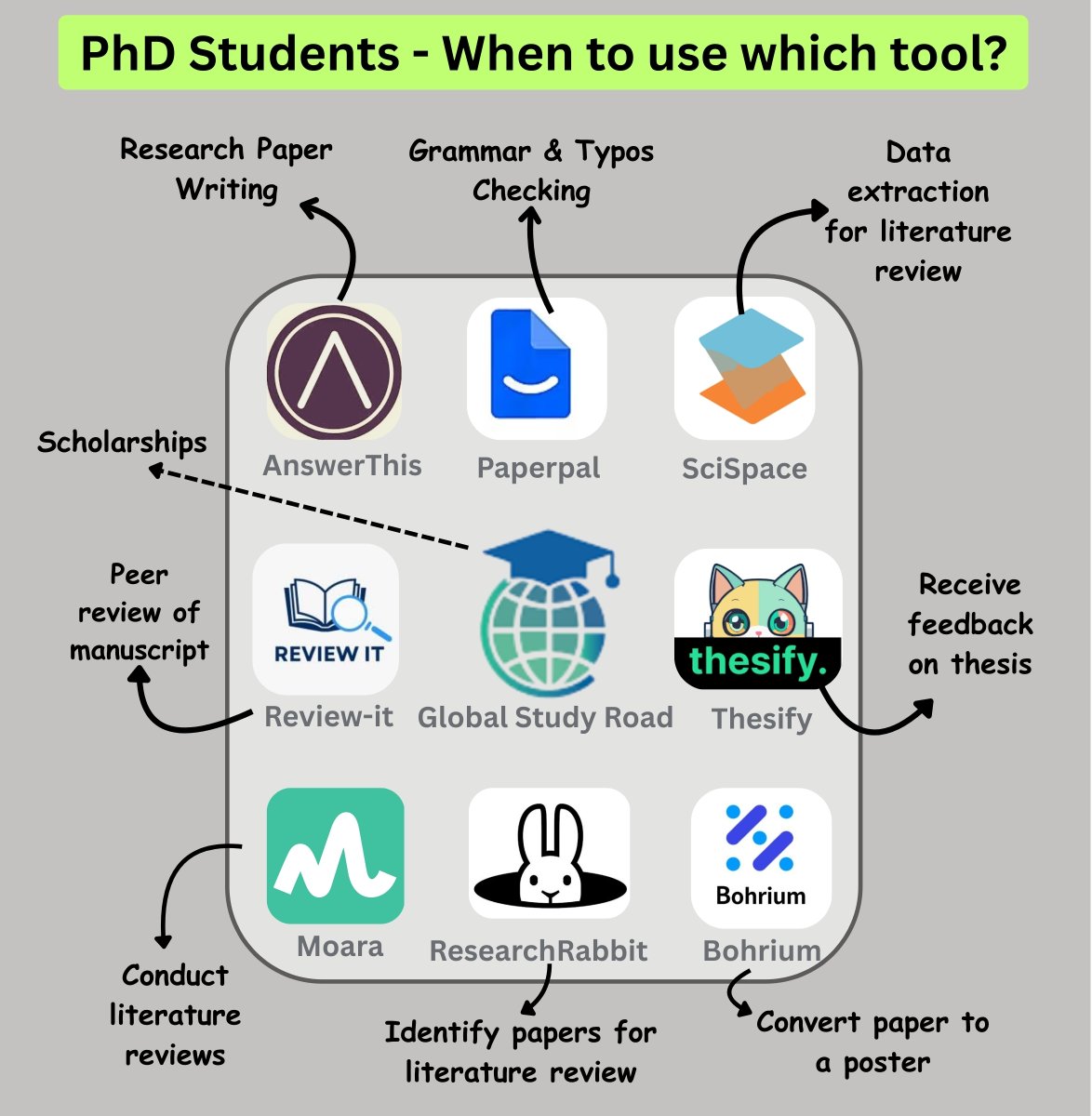
PhD Students - When to use which tool?
1. Writing research papers ➝ 𝐀𝐧𝐬𝐰𝐞𝐫𝐓𝐡𝐢𝐬
Link: https://t.co/EagIhCGWn4
2. Grammar and typos checking ➝ 𝐏𝐚𝐩𝐞𝐫𝐩𝐚𝐥
Link: https://t.co/jLDR3VwrSL
3. Data extraction for literature review ➝ 𝐒𝐜𝐢𝐒𝐩𝐚𝐜𝐞
Link: https://t.co/8Kg056Opce
4. Peer review of manuscript ➝ 𝐑𝐞𝐯𝐢𝐞𝐰-𝐢𝐭
Link: https://t.co/PMrNAhnkJM
5. Scholarships ➝ 𝐆𝐥𝐨𝐛𝐚𝐥 𝐒𝐭𝐮𝐝𝐲 𝐑𝐨𝐚𝐝
Link: https://t.co/1nDbIUmRK1
6. Receive feedback on thesis ➝ 𝐓𝐡𝐞𝐬𝐢𝐟𝐲
Link: https://t.co/dkmQJWRdlC
7. Conduct literature reviews ➝ 𝐌𝐨𝐚𝐫𝐚
Link: https://t.co/MlJOSIZgTy
8. Identify papers for review ➝ 𝐑𝐞𝐬𝐞𝐚𝐫𝐜𝐡𝐑𝐚𝐛𝐛𝐢𝐭
Link: https://t.co/S1BaWRcb8u
9. Convert paper to a poster ➝ 𝐁𝐨𝐡𝐫𝐢𝐮𝐦
Link: https://t.co/rNB7rdA0RT
Any other tool you'd like to add?
An average systematic review takes 67 weeks to complete. Here's how to avoid common time-wasters:
(𝘭𝘦𝘢𝘳𝘯 𝘮𝘰𝘳𝘦 𝘪𝘯 𝘵𝘩𝘪𝘴 𝘸𝘰𝘳𝘬𝘴𝘩𝘰𝘱: https://t.co/6FSSgwm0M3)
You're going to filter 1000s of papers down to dozens
A team went from 77K references to 243 final studies.
That's 0.31%.
Here's where people lose the most time ⤵️
— 𝐓𝐢𝐦𝐞-𝐖𝐚𝐬𝐭𝐞𝐫 #1: 𝐓𝐡𝐞 "𝐏𝐞𝐫𝐟𝐞𝐜𝐭 𝐒𝐞𝐚𝐫𝐜𝐡 𝐒𝐭𝐫𝐢𝐧𝐠" 𝐓𝐫𝐚𝐩
You spend weeks crafting the perfect search terms.
Turns out your term appears in 26% included studies.
The rest use different terminology for the same thing.
— 𝐓𝐢𝐦𝐞-𝐖𝐚𝐬𝐭𝐞𝐫 #2: 𝐓𝐫𝐞𝐚𝐭𝐢𝐧𝐠 𝐄𝐝𝐮𝐜𝐚𝐭𝐢𝐨𝐧 l𝐢𝐤𝐞 𝐌𝐞𝐝𝐢𝐜𝐢𝐧𝐞
Med reviews are often cleaner. Drug X → Outcome Y
Education and public health? Often messy.
𝘉𝘦𝘵𝘵𝘦𝘳 𝘢𝘱𝘱𝘳𝘰𝘢𝘤𝘩: Use configurative synthesis for "how" & "why". Save aggregative meta-analysis for when you actually have comparable effect sizes.
........................................................................
💬 Lemme know if you'd like a link to download this book!
Estimados,
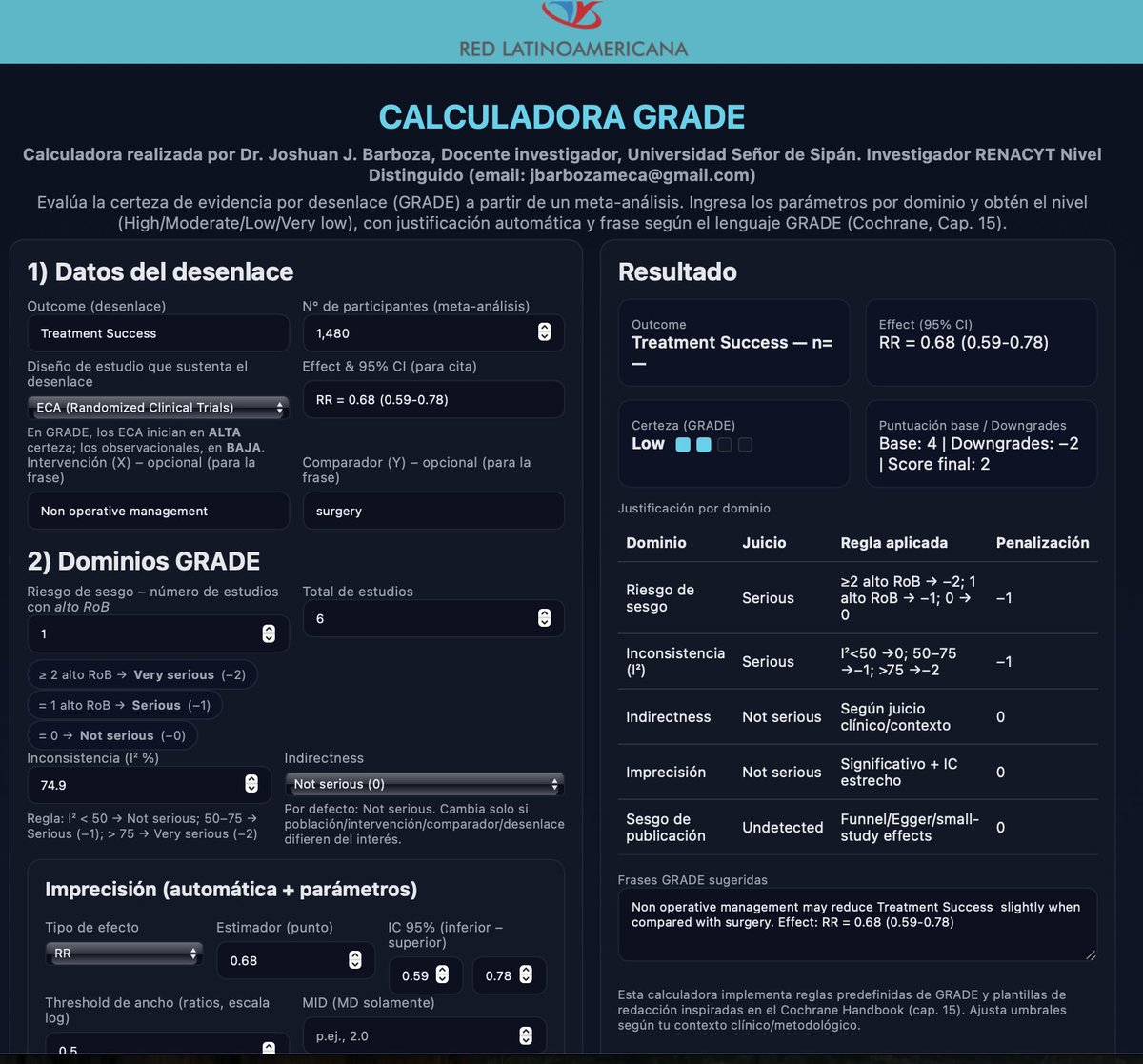
He creado una calculadora GRADE para el análisis de la evidencia, de manera que podamos leer una revisión sistemática con meta-análisis para la toma de decisiones.
https://t.co/bds5ZXRqQA
Espero sus comentarios
PhD Students - How to detect AI text in your writing?
We often use ChatGPT for writing.
However, this leads to AI-plagiarized text.
This can be problematic in many scenarios.
For example, if you use AI text in your papers.
Your research paper can get desk rejected.
🍁How to detect if there is AI text in your writing?
1. Go to https://t.co/KYy6egEfjZ and log in.
2. Click on 𝐴𝐼 𝑑𝑒𝑡𝑒𝑐𝑡𝑜𝑟 from the left menu
3. Insert your text and click on 𝐴𝑛𝑎𝑙𝑦𝑧𝑒.
4. @scispace will generate AI detection report
This report shows the following.
→ Percentage of AI generated text
→ Options for converting AI text into non-AI text
🍁How good is this AI detector?
SciSpace conducted a benchmarking study.
In this study, the detection capability was compared with other AI-detectors.
SciSpace AI detector was tested with 4000 samples.
It showed an accuracy of 96%.
This means it can detect AI-generated text with 96% accuracy.
The study showed that SciSpace AI detector has outclassed AI detectors like GPTZero, ZeroGPT, and Grammarly.
🔴Anything you'd like to add?
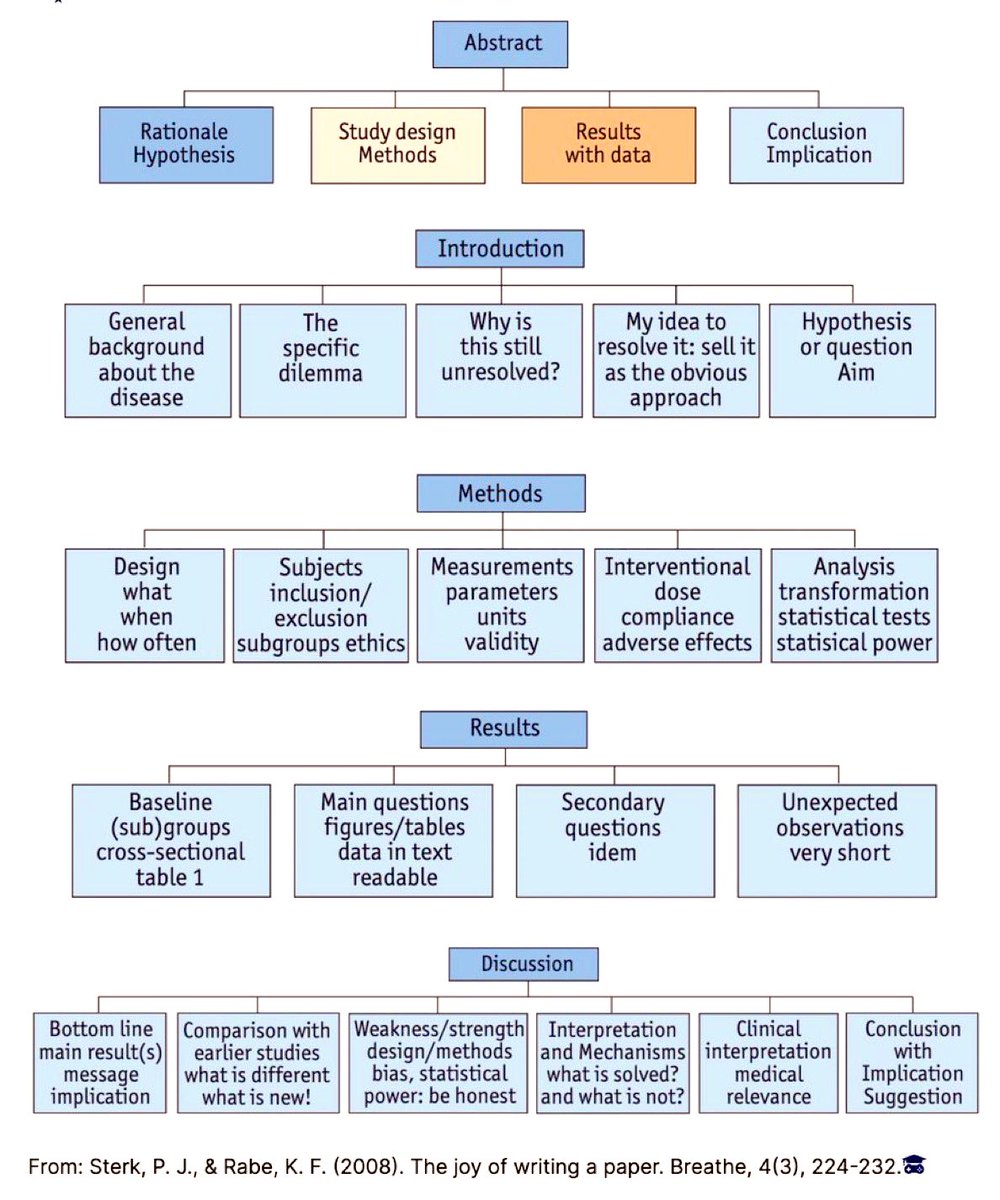
📄✍️ Estructura de un artículo IMRaD: Introducción 🧠, Métodos 🧪, Resultados 📊 y Discusión 🗣️. ¡Haz que tu investigación brille! 🌟 #Ciencia#Investigación#IMRaD
Don't use ChatGPT for academic research. It creates fake citations to papers that don't even exist.
Instead, use Scite Assistant — an AI-powered app designed for researchers.
It answers your questions with citations to (real) published papers.
Here's how to use it:
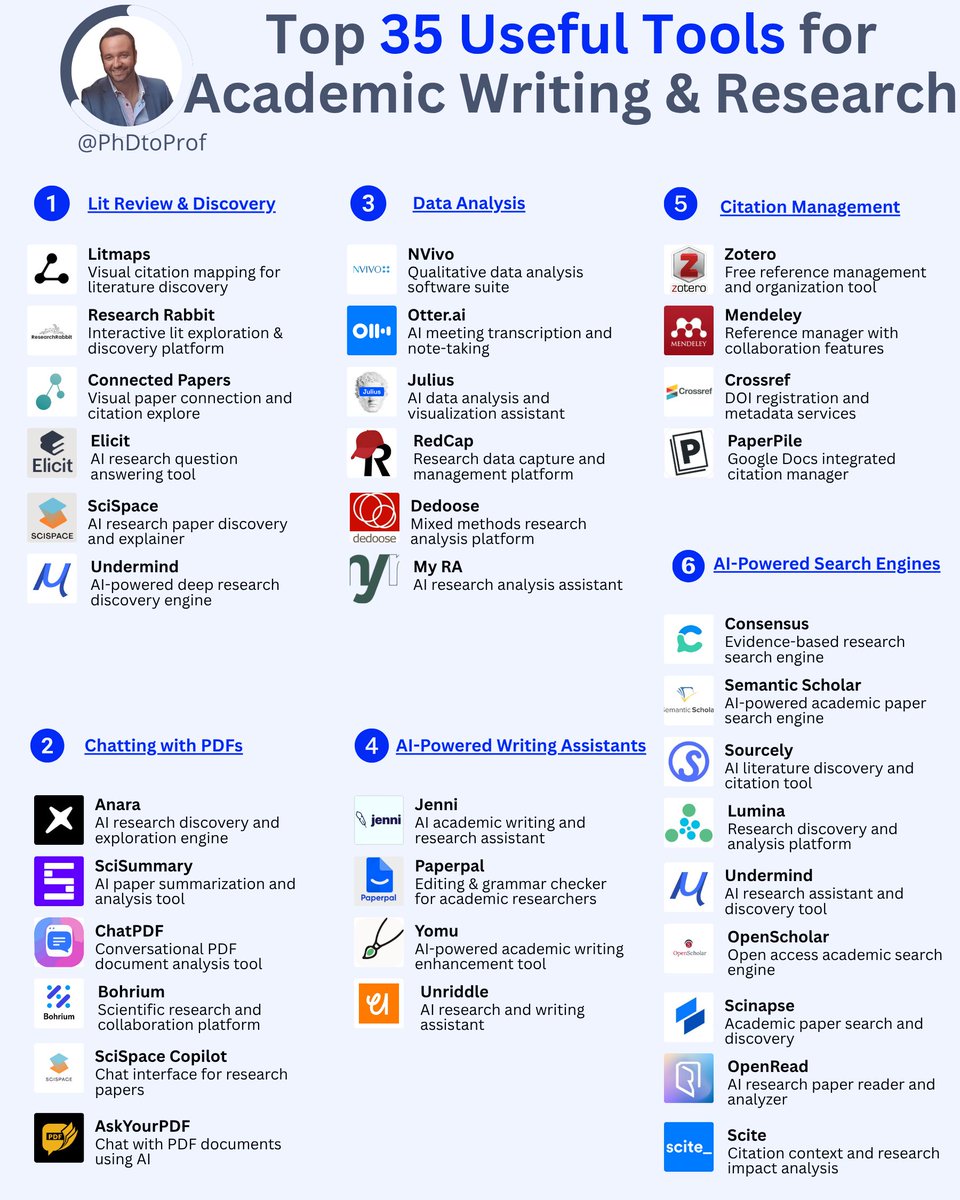
How to cut your PhD research time by a third with 35 tools most PhDs don't know about
Most PhD students use ChatGPT and Google Scholar.
That's like using a bicycle on a highway.
Smart researchers use specialized tools for each task 🧵