Leading a new era of sovereign intelligence from space.
ICEYE Series F funding round exceeds €1B, led by @generalatlantic, at a valuation of over €10B.
Read more: https://t.co/vwoeEY9euM
A couple of weeks ago together with Designers in Space Community we did a webinar where I showcased why working at @iceye_global Solutions hits different.
https://t.co/jKPfzbue5s
Having an actual impact on the ground during natural catastrophes such as floods, cyclones, and wildfires is something that I could only dream of at the beginning of my career.
16 stadiums across USA, Mexico, and Canada.
3 days to go.
Every host venue of FIFA World Cup 2026™, seen from orbit. Imaged by the world's largest SAR satellite constellation.
Enjoy the tournament ⚽
[1/4 #FIFAWorldCup]
How does it feel to work in the hottest software startup on planet Earth?
What skills should we as designers cultivate today to get ready for the big shift coming soon?
How Lovable is growing their product by reaching non-technical audience?
We asked all of these questions to Mindaugas Petrutis of @lovable
Here are the answers: https://t.co/E0BVs4Nrxe
How does it feel to work at the hottest software startup on the planet?
Mindaugas Petrutis (Marketing and Growth at @lovable) sat down with us a couple of weeks ago to tell more about his extraordinary story of joining the team of just 60 extremely talented folks who generate $100M ARR.
We first met with Mindaugas around a year ago for his previous project called Coho, way before he joined Lovable. During our interview, we checked on a couple of things:
- Is work at Lovable exciting?
- What makes Lovable so special?
- Will they eventually compete with Figma?
- Can you do a hackathon with no engineers?
- And finally, what does he think of the future of design tools?
Subscribe to Fundament to not miss this interview.
Going live this Thursday, 11 September, at 12 pm CEST.
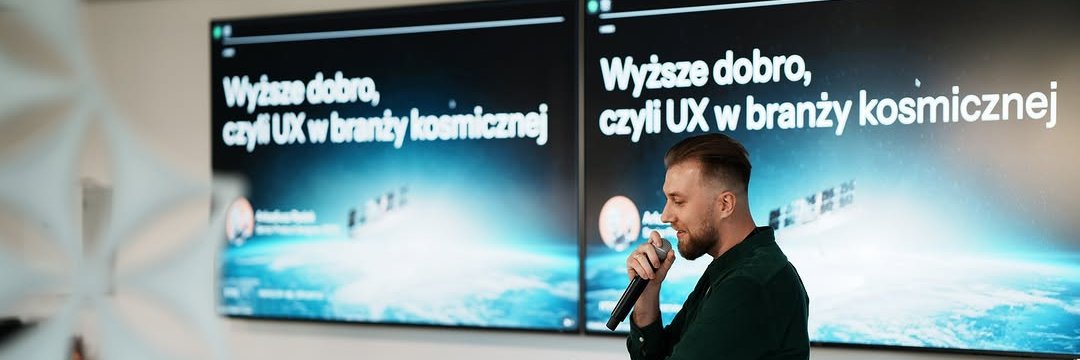
Had a blast speaking at UXberries’ conference last weekend at @AGH_Krakow.
I was invited to speak at the 10th edition of Ciemna Strefa UX („The Dark Side of UX”), and on the contrary, I delivered a quite positive talk: how good UX enables a chain of events that can save lives during floods.
Here are some universal takeaways from my talk that all UXers can apply in their work:
💬 The success of a digital product equals Vision plus Strategy plus Execution. We, as designers, rarely have control over the Vision element. Depending on our seniority, we can influence Strategy. But no matter how experienced we are, we’ve got (almost) full control of Execution. If all ingredients are thought through, there’s a higher chance of creating something meaningful with Impact.
💬 Impact sometimes can not be directly linked to revenue, especially in enterprise projects. But there are other types of impact we as designers can make with our decisions: we can save money, we can save time, we can reduce manual work and stress, we can improve the quality of someone else’s life.
💬 Once you make a decision and look back, you will probably notice the influence you made (or Impact, if you will) wasn’t just in a single place but on many aspects and departments of your organization. More on that in my upcoming edition of the newsletter.
💬 Empathy helps in a deep understanding of the real needs of our users. Combined with cross-functional collaboration it can lead to making a piece of software that people find useful.
I hope that the people who came to listen to my presentation left inspired.
#UX is not over.
There’s lots of difficult domains and unique problems that we designers can solve and bring positive impact on humanity.
The essence of product making is knowing what people will use and pay for.
Without learning about the users’ and customers’ needs and validating whether the ideas really address these, one can’t build a successful and lasting product.
According to the latest data, 90% of startups fail, while poor product-market fit is the top reason (34%) for this higher-than-ever failure rate.
Product discovery is an umbrella term for various activities teams can put effort into to ensure what they build is worth building.
If you don’t have much experience with user research and validating ideas, this term can be a little overwhelming.
But don’t worry, I’ve got you covered.
Today's episode of Fundament will help you fight the fear.
Together, we are going to plan and execute your first product design initiative.
https://t.co/gWSqgQ7O8k
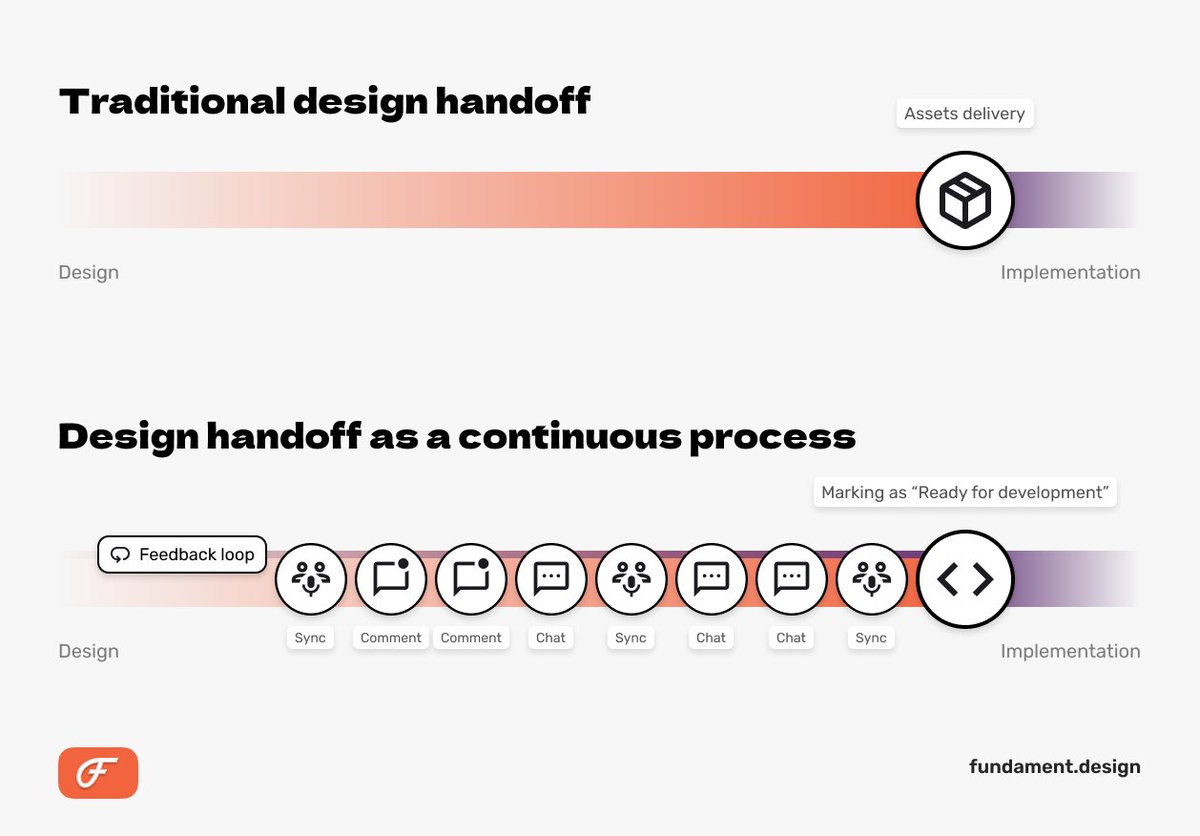
Design Handoff is broken
Design handoff in a product environment for in-house teams doesn’t foster collaboration. Instead, it creates more walls between design and engineering.
Design handoff is like a little door in the wall designers occasionally open for a one-way conversation. Designers send engineers finished assets and close the doors for months.
Can this be fixed?
Read more: https://t.co/dJ5ZTDzNlK
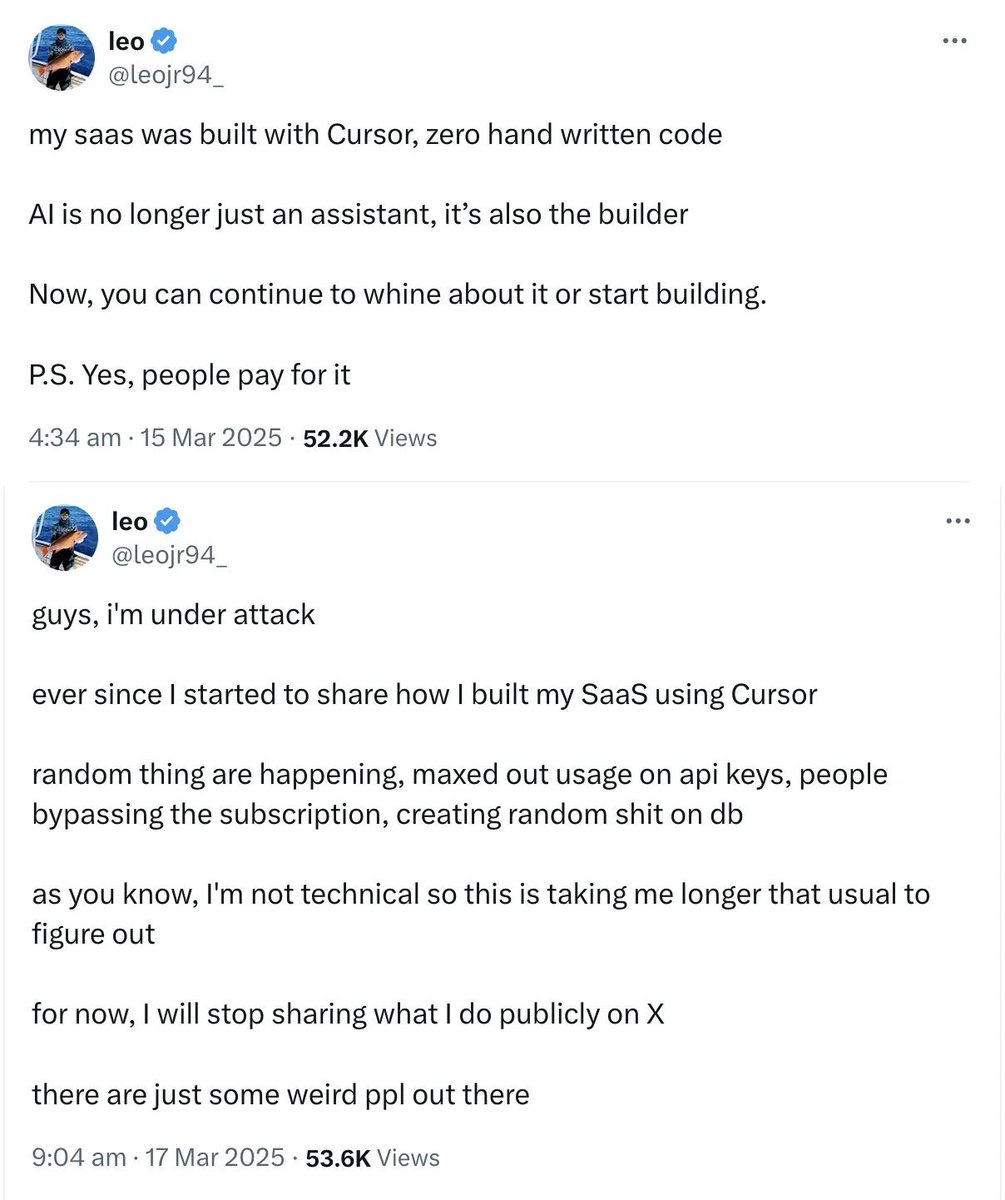
The biggest LIE that "vibe coding" community sold to beginners is
that ANYONE can build a production ready app for mass consumption.
It is simply not true (for multiple logical reasons).
Prototype - sure.
MVP for "invite only testers" - definitely.
An app you can show to investors to secure funding - absolutely.
But if you ship that shit to prod without understanding what the code does....
What do you think is going to happen?
Don't believe the hype. LEARN TO CODE, then you can use AI to help you do it faster, anon.
@its_nataniah@SayHelloMarcus That’s not product design. What you are reffering to could be web design.
Totally different thing and different skill set.
People call themselves product designers while they make websites or templates but never ever heard of metrics, research, and product discovery.


![iceye_global's tweet photo. 16 stadiums across USA, Mexico, and Canada.
3 days to go.
Every host venue of FIFA World Cup 2026™, seen from orbit. Imaged by the world's largest SAR satellite constellation.
Enjoy the tournament ⚽
[1/4 #FIFAWorldCup] https://t.co/aKaIccoDuv](https://pbs.twimg.com/media/HKRpqvQXQAAlExM.jpg)
![iceye_global's tweet photo. 16 stadiums across USA, Mexico, and Canada.
3 days to go.
Every host venue of FIFA World Cup 2026™, seen from orbit. Imaged by the world's largest SAR satellite constellation.
Enjoy the tournament ⚽
[1/4 #FIFAWorldCup] https://t.co/aKaIccoDuv](https://pbs.twimg.com/media/HKRpqvQWgAAPUlq.jpg)
![iceye_global's tweet photo. 16 stadiums across USA, Mexico, and Canada.
3 days to go.
Every host venue of FIFA World Cup 2026™, seen from orbit. Imaged by the world's largest SAR satellite constellation.
Enjoy the tournament ⚽
[1/4 #FIFAWorldCup] https://t.co/aKaIccoDuv](https://pbs.twimg.com/media/HKRpqvNXYAA-nAt.jpg)







![iceye_global's tweet photo. 16 stadiums across USA, Mexico, and Canada.
3 days to go.
Every host venue of FIFA World Cup 2026™, seen from orbit. Imaged by the world's largest SAR satellite constellation.
Enjoy the tournament ⚽
[1/4 #FIFAWorldCup] https://t.co/aKaIccoDuv](https://pbs.twimg.com/media/HKRpqvVXcAAhWmy.jpg)