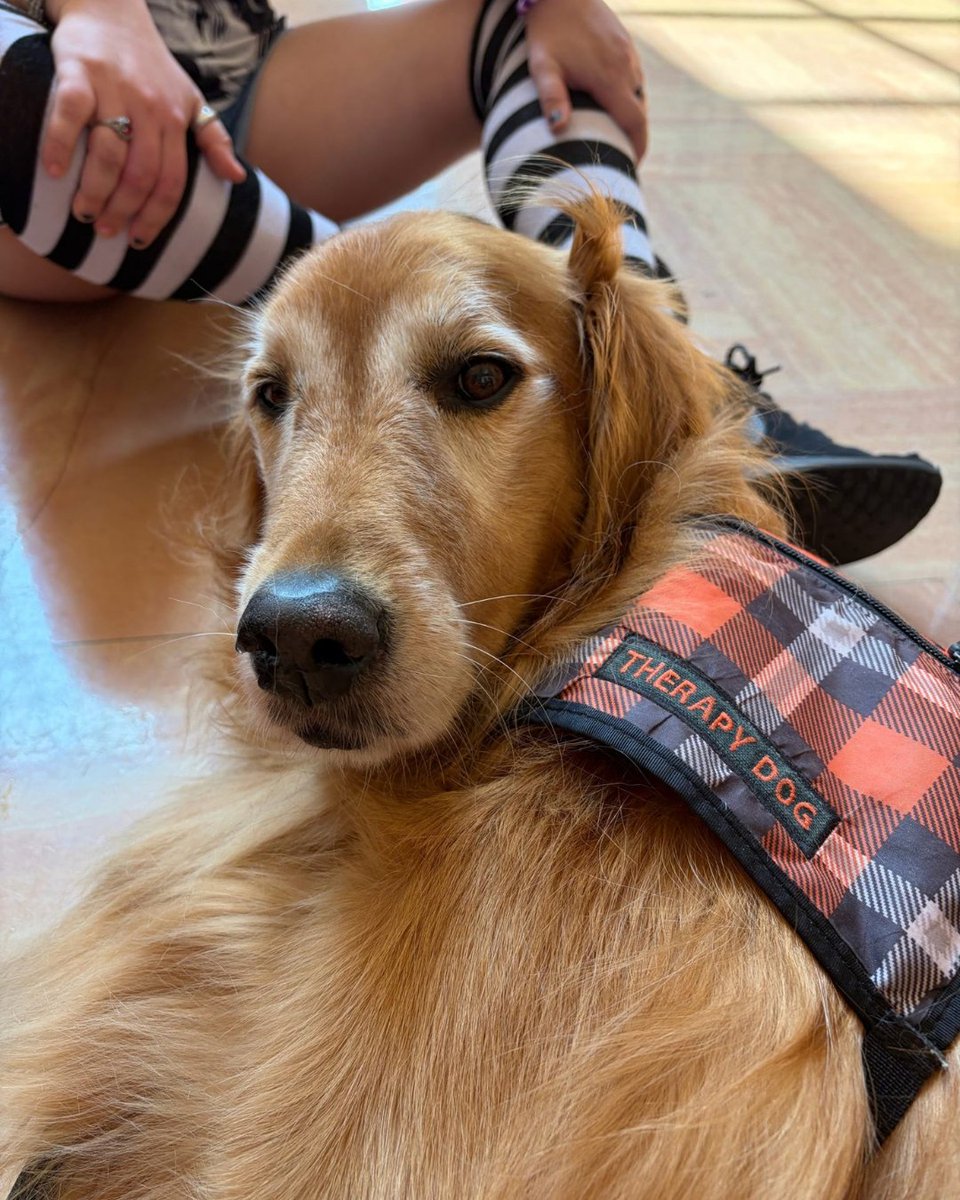
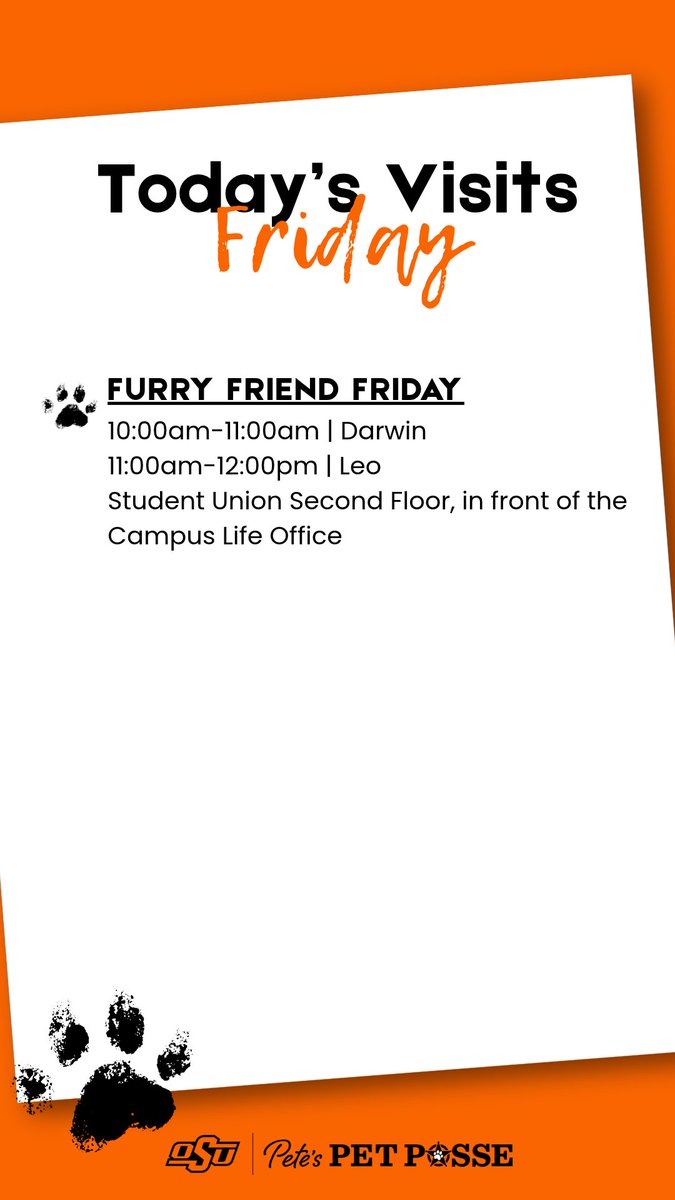
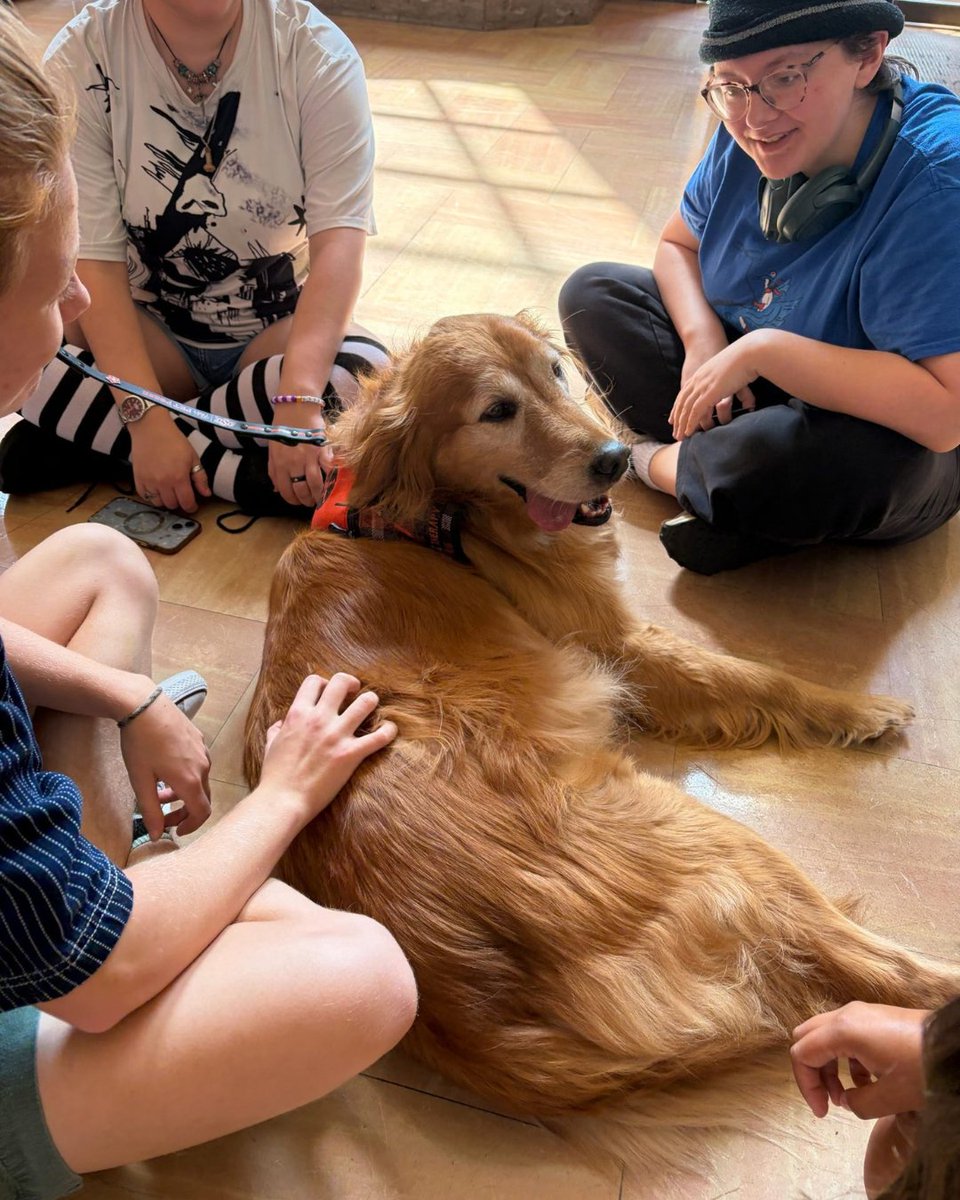
🧡🐾 It's OSU Homecoming Week! 🖤
Celebrate Cowboy pride all week long with the help of Pete's Pet Posse! Your favorite pups will be on campus every day, spreading smiles, tail wags, and plenty of orange and black spirit! 🐶🤠
Go Pokes!
#okstate#pettherapy
When stress hits, the Posse is here! 🧡 Our therapy dogs from Pete’s Pet Posse Tulsa are making a pawsitive impact at @okstatetulsa & @OSUMedicine! Check out the full story on Tulsa People’s website! 🐾
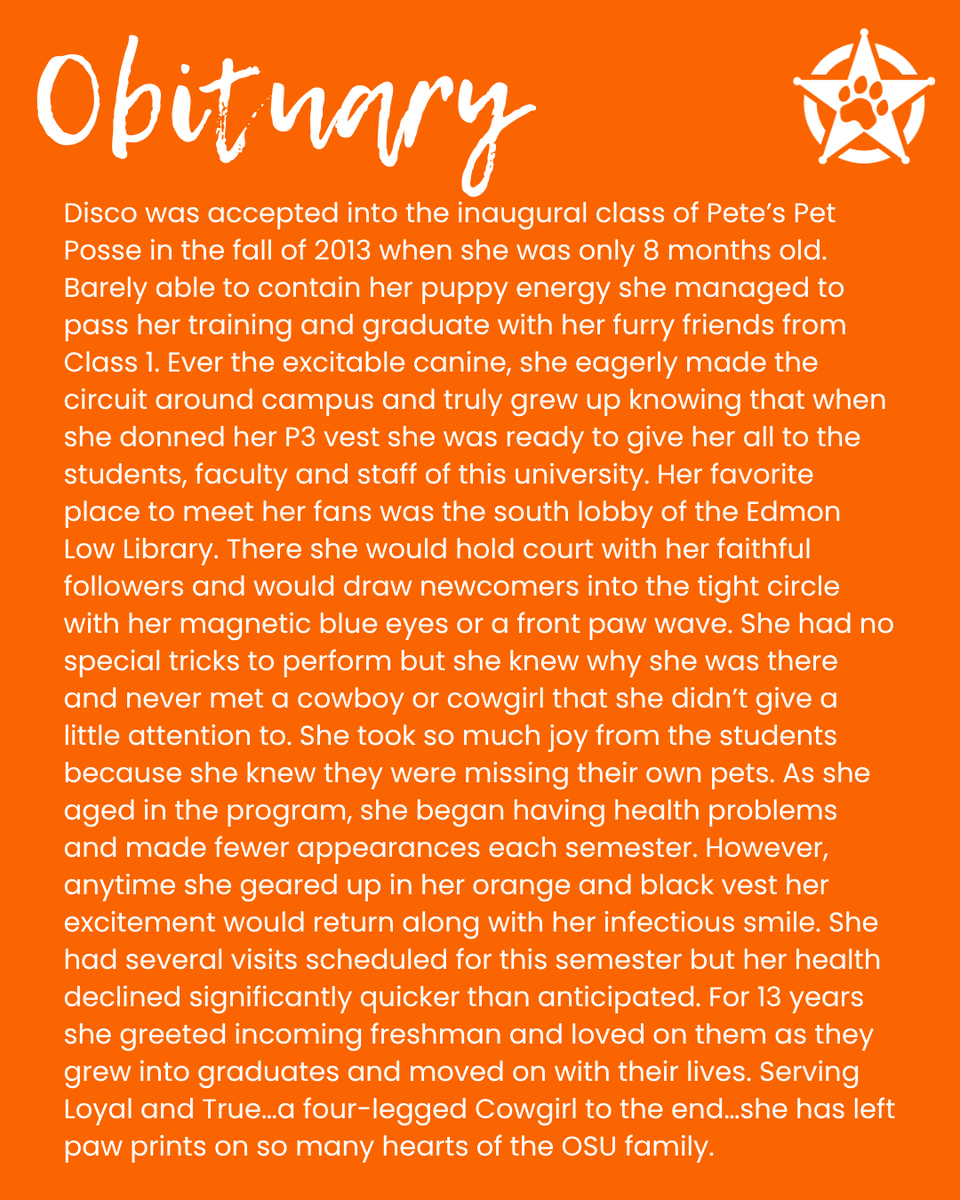
We've lost a very special girl. Disco was an original P3 pup & the last remaining dog of Class 1. She & her dad, Rick, were there from the beginning, helping lay the foundation. We are forever grateful to Disco for the lives she touched, the love she gave & the legacy she leaves
@Pets4Pete Thank you Kendria & Sutton for all that you do to help others!! So very grateful for the time you give to help students & staff. Bless you both🧡🧡
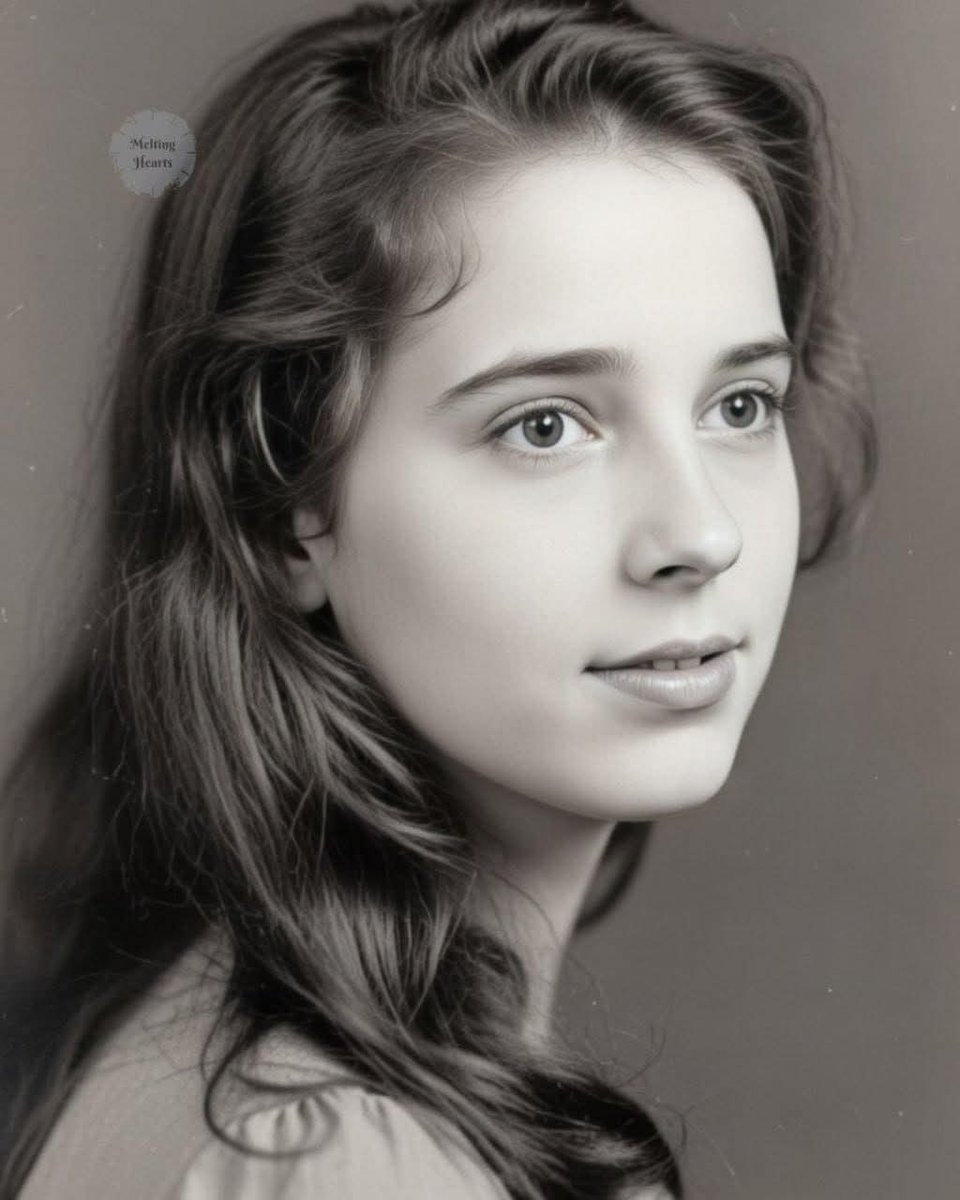
On September 11, 2001, a 27-year-old woman made a phone call from a hijacked plane and said eight words her family has never forgotten:
“This is going to be so much harder for you than it is for me.”
Her name was Honor Elizabeth Wainio.
Everyone who loved her called her Lizz.
Two days earlier, she had been in Paris.
She had just returned from Europe — a dream trip years in the making. She attended a friend’s wedding in Florence. She walked the Champs-Élysées. She stepped into a church and lit a candle for her grandmother.
She once told her mother that if she ever got to see Paris, she could die happy.
She was 27. A rising district manager for Discovery Channel Stores. Driven. Warm. The kind of person who moved fast in life because she had so much to do.
On the morning of September 11, 2001, Lizz boarded United Airlines Flight 93 at Newark, headed to San Francisco.
There were 40 passengers and crew on board.
At 9:28 a.m., four hijackers stormed the cockpit.
Passengers were forced to the back of the plane. But something critical happened that morning — something that changed history.
Through phone calls, the passengers learned the truth.
The World Trade Center had already been hit. The Pentagon had been struck.
This wasn’t a negotiation.
It was a suicide mission.
And the people on Flight 93 understood before it was too late.
In the chaos, a stranger handed Lizz a phone.
“Call someone you love.”
She reached her stepmother, Esther.
Her voice was steady. Calm. Clear.
She didn’t beg. She didn’t scream.
She tried to comfort the woman who was about to lose her.
“It just hurts me most,” she said, “that this is going to be so much harder for you than it is for me.”
Let that sink in.
A 27-year-old woman, facing death at 30,000 feet… worried about the pain her family would feel.
They spoke for about four minutes. They breathed together. No dramatics. Just love stretched across distance.
Then Lizz said something else:
“I’m gonna be with Grandma.”
Her grandmother had lived near rural Pennsylvania — not far from where the plane would crash. She couldn’t have known that. But in that moment, she found comfort in the thought of reunion.
At 9:57 a.m., the passengers made their decision.
They were going to fight back.
Flight attendant Sandra Bradshaw called her husband and said she was boiling water to throw at the hijackers.
Passenger Todd Beamer prayed the Lord’s Prayer with a phone operator and said the words that would echo across a nation:
“Let’s roll.”
Lizz’s final words came just before the revolt began.
“They’re getting ready to break into the cockpit. I have to go. I love you. Good-bye.”
At 10:03 a.m., Flight 93 crashed into a field near Shanksville, Pennsylvania.
Investigators later concluded the hijackers were likely targeting the U.S. Capitol.
Because the passengers fought back, that building still stands.
Thousands of lives were spared.
The 40 passengers and crew were later awarded the Congressional Gold Medal. Today, the crash site is the Flight 93 National Memorial.
There stands the Tower of Voices — 40 wind chimes, each tuned to a different note. When the wind moves across that field, they don’t sound the same.
They sound like individuals.
For years, Lizz’s father would call her cellphone just to hear her voicemail greeting. One day it was gone.
He said losing her voice a second time was devastating.
At the memorial, he listens for one particular chime.
“That’s my daughter,” he says.
Honor Elizabeth Wainio’s story is not only about how she died.
It’s about how she chose to live her final minutes.
She had just seen Paris.
She had just lit a candle for her grandmother.
And when the worst moment imaginable arrived, she didn’t ask for comfort.
She gave it.
“This is going to be so much harder for you than it is for me.”
In a world that remembers the fire and the fear, remember this too:
Thirty thousand feet above the earth, a young woman chose love over panic.
Check comments.
The neighbors call the cops on my dad every six months. They think he’s running a fighting ring or flipping pets for profit. For years, I wasn't sure they were wrong.
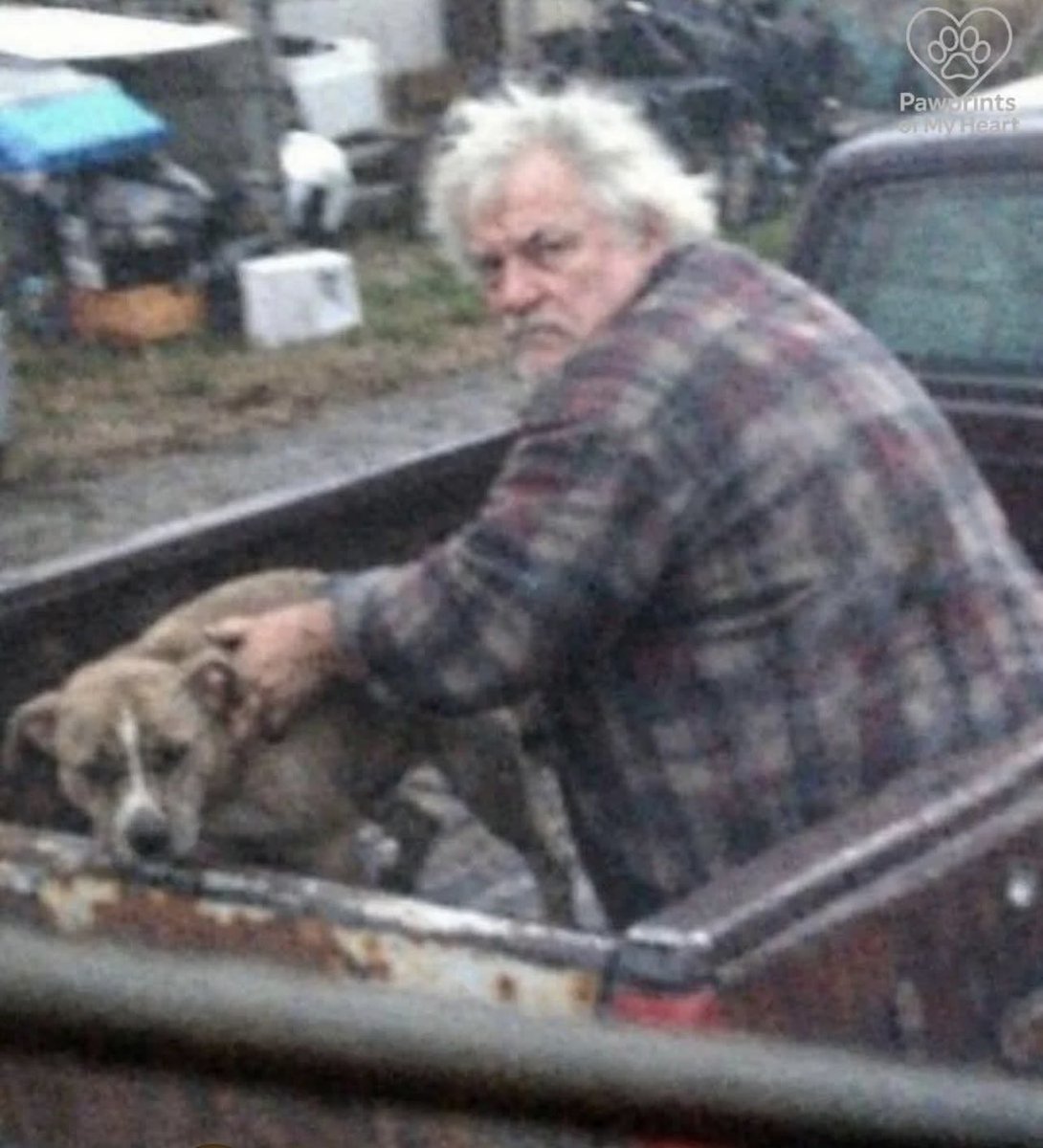
My father, Frank, is a man of few words and even fewer friends. He lives on a fixed income in a small, weathered house just outside of town. He’s 68, walks with a limp he got in ’71, and spends most of his day in his garage.
But his most controversial habit involves the local animal shelter.
Like clockwork, Dad brings home a dog. Not the cute puppies everyone wants. He picks the "unadoptables." The three-legged pit bulls, the senior labs with gray muzzles, the curs that cower in the corner. For six months, that dog lives like royalty. I’d visit and see Dad hand-feeding them steak scraps, walking them for hours, talking to them in a soft voice he never used with me.
Then, six months later? Gone.
The dog vanishes. No photos, no collar left behind. Just an empty bowl and Dad driving his rusted pickup truck to the shelter to get another one.
"Where’s Barnaby?" I asked last Sunday. Barnaby was a one-eyed Golden Retriever mix he’d had since spring. That dog worshipped the ground Dad walked on.
"Moved on," Dad grunted, staring at his coffee.
"Moved on? Did you sell him, Dad? The neighbors are talking. They say you’re sick."
"Let them talk."
I couldn't take it anymore. I loved Barnaby. The thought of my father selling that sweet soul to some stranger for a few hundred bucks made my stomach turn. So, when I saw him load a bag of high-grade kibble and a new leash into his truck the next morning, I followed him.
I expected him to drive to a breeder or a shady parking lot exchange. Instead, he drove two towns over to a drab apartment complex near the VA hospital.
He pulled up to a ground-floor unit. I watched from my car, phone ready to record evidence, as he knocked on the door.
A young man answered. He couldn't have been older than 25, but he looked 50. He was missing his right arm, and the way he stood—tense, scanning the perimeter—screamed PTSD. I recognized that look. I’d seen it in Dad’s old photos.
Dad didn't say a word. He just whistled.
From the passenger seat of Dad’s truck, a dog jumped out. It wasn't Barnaby. It was "Duke," a German Shepherd he’d had last year. Duke looked incredible. Focused. Calm. He trotted right up to the young man and sat by his left leg, leaning his weight against the boy’s thigh.
The young man crumpled. He fell to his knees, burying his face in Duke’s fur, sobbing. Duke didn't flinch. He just held his ground, anchoring the boy to reality.
Dad handed the young man a thick envelope. Not money—paperwork. Vaccination records. Training logs.
I got out of my car. "Dad?"
He jumped, looking more terrified than I’d ever seen him. He walked me away from the boy, lowering his voice.
"You weren't supposed to see this."
"You trained him," I realized. "You didn't get rid of them. You trained them."
Dad sighed, lighting a cigarette with shaking hands. "A fully trained PTSD service dog costs anywhere from fifteen to thirty thousand dollars. The insurance doesn't cover it. The VA has a waiting list a mile long. These boys... they come home, and they can't sleep, they can't go to the grocery store, they can't breathe."
He looked back at the young man, who was now smiling through tears, throwing a ball for Duke with his left hand.
"I can't give them money," Dad said, his voice cracking. "I don't have any. But I know dogs. And I have time."
"But why the secrecy? Why every six months?"
"Because that’s how long it takes to turn a scared shelter dog into a soldier’s lifeline," he said. "Basic obedience, task training, desensitization. I take the broken dogs nobody wants, and I turn them into the partners these kids need."
"And Barnaby?" I asked, my throat tight.
"Delivered him yesterday to a female marine in Ohio. She hadn't left her house in two years. She went to the park this morning."
🐾 on my ❤️ Please share if this moved you.