In aviation [I’m told] the most dangerous phase of flight is approach and landing. The same is true of deploying and changing digital systems. Change management is hard and sometimes the complexity of your system surprises you.
Illusory correlation is when your smart mammalian brain ties together events in time and perceived relationship to conclude individual things are related [even when they’re not].
So beware of tying this past week’s news stories of attackers using Agentic Offensive frameworks like artex with recent outages.
IMO (no insider info here) the current cluster of outages has more to do with our favorite confounding variable of Velocity. Increased velocity to Patch (insert plug here on behalf of your security team), and increased velocity of software development.
I haven’t lived here in awhile, but I see no other way to answer the hundreds of texts/DMs asking me if the world is, indeed, ending.
In the span of six days, we’ve experienced;
11/12 — Microsoft outage
11/13 — Nationwide FAA ground stop
11/16 — Major US banking disruptions
11/17 — NSA’s classified internal network goes down
We need far more analysis of why so much is breaking at once. I don’t want to get out over my skis here, and what I am hearing does not contradict the messaging that most of this is the result of screwy updates.
But stepping back, the dots are starting to form a collective picture. We are seeing:
• An explosion in severe and critical vulnerabilities, with AI accelerating discovery to 3X the number of vulnerabilities discovered in the same period last year. This is collectively being referred to as “vulnageddon” or “the vulnpocalypse.”
• Mean time to exploit those vulnerabilities has collapsed to NEGATIVE SEVEN DAYS. AI allows attackers to find/exploit vulns far faster than software makers have time to fix them.
• Powerful AI-enabled offensive tools like ARTEX have been thrown into the hands of every third tier nation state, cybercriminal and digital arsonist, which logically creates havoc.
• This creates enormous pressure to compress patching windows and accelerate software updates, increasing the likelihood these fixes break things in unexpected, cascading ways.
• Pressure to just “AI everything” means we are rolling out automated AI tooling on top of brittle infrastructure that can’t support it.
My generation grew up in an extraordinary period of technological stability. We worked our way up the software stack, abstracting away layer after layer, until we lost a fundamental understanding of how the underlying systems actually work.
We were told to “move fast and break things.” VCS told us to celebrate the idea that “software would eat the world.” Now we’re telling ourselves we can simply “roll out AI” across everything, as though nothing underneath will buckle.
We never stopped to ask: SHOULD WE?
Should we be digitizing every last nook and cranny of our companies, infrastructure, healthcare, homes, cars, bodies, lives? Especially when the complexity, interdependence, and fragility we were introducing overwhelmed our ability to understand/secure/maintain the systems we built?
Nobody every asked: What if, in the name of progress, we were creating the ripest attack surface in human history?
We are now entirely dependent on software systems that almost nobody understands end to end, that increasingly few people can repair, and that attackers can now probe at machine speed. We are hearing that incident response firms, the 911 for breach victims, are backlogged six months. Even those paid on retainer lack the bandwidth to triage every incident. The cavalry is disappearing.
We are entering a period of unprecedented technological instability.
“Software Beirut” is an incredibly apt analogy. We are in for a period of cascading failures, whether triggered by attackers, bad updates, or our own accumulated complexity.
This, I’m sorry to say, is just the opening chapter.
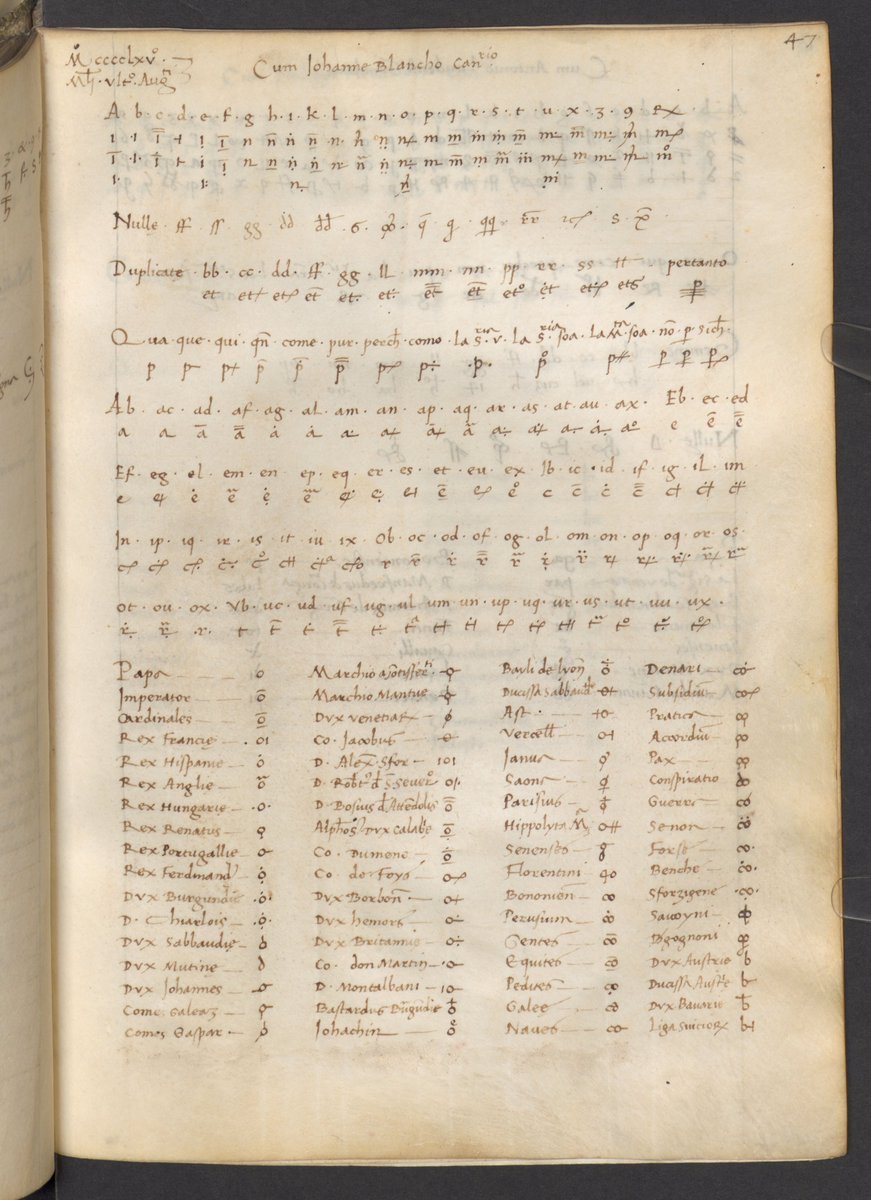
I asked Gemini 4 Carbon to crack an unread 1466 Sforza Renaissance cipher. Unaided, it used its vision and research capabilities to decipher the text.
Gemini:
- transcribed 15th-century cipher characters from manuscript scans
- ran blind statistical decoding attempts
- pivoted to searching digitized European archives for clues
- found a handwritten flyleaf chart in Paris showing how Milan’s cipher office built syllable tables
- widened its search to all Sforza keys and spotted an unindexed gap in Vienna Codex 2398
- read Tranchedino’s 15th-century Latin index in Vienna and found Giovanni Bianco’s 1465 key on folio 47r
- mapped the key signs to decode all 18 encrypted lines in Italian
- uncovered warnings of Savoyard reprisals after an ambush on the new Duke of Milan, plus Louis XI’s secret three-marriage plan
Full details:
https://t.co/Xu1AnouWGq
With Carbon's help, I ran Gemma directly in an office printer 😅🖨️
🤏Carbon compiled a small transformer engine + quantized Gemma 3 270m into a single PostScript job
⚡️ 100% in the printer: 14MB peak RAM and blazing 60s per token
🧠Smart layers juggling to avoid OOMing
Well, for "who is responsible" for setting the date of Easter to the current practice vs. passover (the so-called Quartodeciman controversy) vs. other practices, we have to go much further back in time and there's no single person responsible. But we probably can point to Emperor Constantine in 325 at the 1st Council of Nicea as a pretty solid turning point in standardizing practice. But even after that (e.g., in the Celtic tradition) the date was pretty variable... they used an entirely different calendar than the Romans. All very complicated. :)
Fun fact about Oswiu. Can’t help myself. He presided over the council of whitby in 664, which settled the Roman Christian tradition as the realm’s established practice (over Celtic Christianity) — most importantly, settling the date of Easter! For their efforts, the Pope sends Oswui’s queen a gift of a cross with a golden key, infused with iron shavings from the Chains of St Peter (this is the weird thing I study when not doing cyber cyber stuff).
Oswiu, king of the Bernicians, slew Penda, pagan king of the Mercians, in battle near a river Bede calls Winwaed, in the district of Loidis (Leeds), #OTD in 655. Œthelwald, king of the Deirans, had refused to help his northern uncle and was soon replaced by Oswiu’s son Alhfrith.
I call this pattern of thinking the universe de-scoping problem. It’s a common approach to battling complexity — divide a problem into smaller subsets to solve for and try to get 80% solved as a result. The issue in cyber that there are dragons in the rest of the universe that gets descoped. Its a fine approach but you still have to solve for the rest of the risk.
The KEV is USG systems only now so if there’s a vuln being exploited that doesn’t affect them, it’s not there (policy change made awhile back). In terms of plenty, the last Verizon breach report indicated 31% of confirmed breaches were root cause vulns, on an upward trend. That report is a lagging indicator. It’ll be another year before we really have solid data.
Like I said.. I don’t know. Here are some possible outcomes.
1) projects roll into a foundation (Apache, Linux, etc) that get commercial funding but maintain independence.
2) entities (industry groups) create forked repos and maintain shadow projects with commercial support. There is a growing call to do this for critical infra.
3) projects are replaced by safer alternatives that are commercially backed. I suspect this could happen with many smaller projects and their replacements can be spec-driven replaced quickly in safer languages. I’d like to see this for media libraries.
4) very critical projects will likely get direct support and maybe formally verified. This will be a smaller group as verification is expensive. But would work for things like crypto.
But let’s be clear, the conversation inside companies right now is how to reduce the dependency risk on the thousands of poorly supported projects, and there is growing support to rewrite proprietary alternatives now that it’s cheap to do so.
Give your network engineers a hug, bake them cupcakes for every failed update from a vendor, and a coupon for a therapist if their vendors run php on their firewalls.
It’s not an easy time to keep legacy infrastructure online. ❤️
Give your network engineers a hug, bake them cupcakes for every failed update from a vendor, and a coupon for a therapist if their vendors run php on their firewalls.
It’s not an easy time to keep legacy infrastructure online. ❤️
⚠️ PostgreSQL patches 52 security flaws — including a 22-year-old bug allowing remote code execution.
Tracked as CVE-2026-6460 (CVSS 8.8), the flaw lets authenticated users with object-creation privileges execute code on database servers.
Patching alone may not be enough.
Here's why ▸ https://t.co/7HlSdG2uJo