Milton Friedman: “Keep your eye on one thing and one thing only: how much government is spending, because that’s the true tax.”
“If you’re not paying for it in the form of explicit taxes, you’re paying for it indirectly in the form of inflation or borrowing.”
Despite a horrible federal budget, there’s a major tax debate taking shape.
Labor is making big changes - not necessarily for the better and nowhere near enough, but more than we’re used to from the major parties.
The Greens have had success raising gas export tax into a major political issue and garnering broad support for some sort of reform.
The Liberals are talking about indexing income tax cuts - a desperately needed structural reform that’s been off the table for decades.
And now One Nation is proposing a hybrid public-private gas policy that more closely resembles Norway’s than the United States’.
I hope all of this is just the tip of a major tax reform iceberg.
Strong competition drives better outcomes - and for the first time in a long time, it looks like we’re starting to get it.
Tomorrow marks 125 years since Australia's first Parliament opened.
The ceremony began with the singing of Psalm 100.
12,000 voices joined in the Lord's Prayer.
The Christian foundations of Australia aren't myth or sentiment. They are documented fact. 🧵
Completely ridiculous...the ideal case for who?
The IMO best case overall is high supply, lower migration, low unemployment, price growth matching income growth at a maximum, no high LVR loans but FHB advantaged in the market and start to treat home ownership as something the underpins the economy and society and is not an asset class.
I suspect that FHB would think price falls are better...
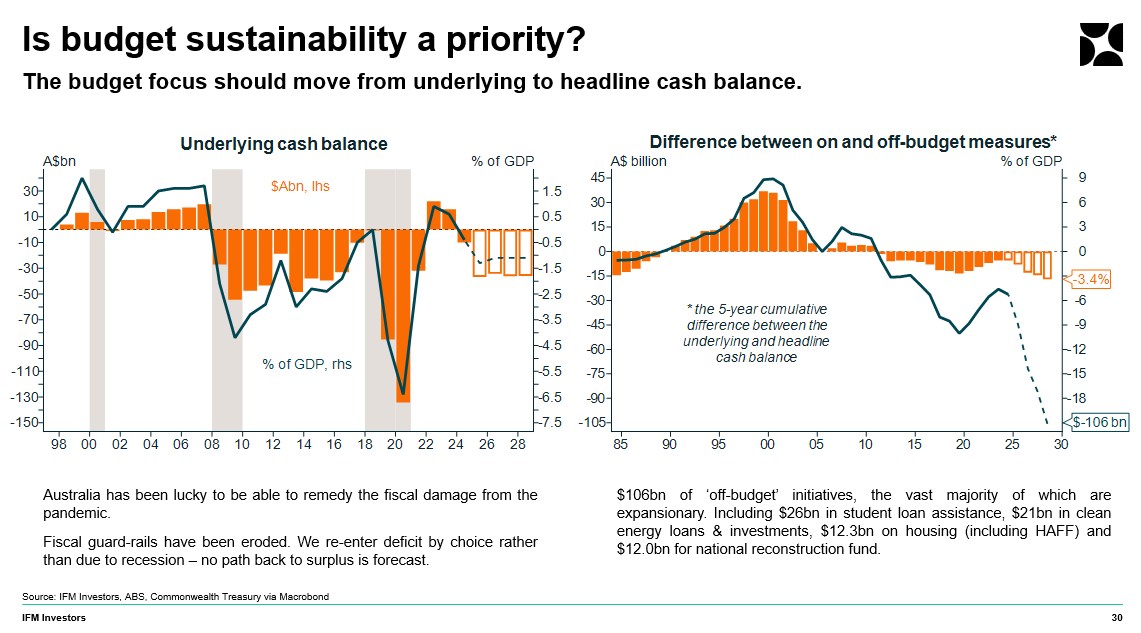
Have been in furious agreement with @ChrisEconomist on this for some time. The underlying cash balance is far less relevant if the headline cash balance is moving away from it. That is to say more policy is shifted "off balance sheet". This is in terms of what the borrowing requirement is - spending maybe be off balance sheet but it's on the tab. And the fiscal impulse that flows to the economy, for example $26billion in student loan forgiveness is clearly stimulatory.
The budget should heavility detail 'Table 3.4: Reconciliation of general government sector underlying and headline cash balance estimates' so these projects can be understood better by economists. I recall one very senior former policymaker saying all this didn't matter as the headline cash balance is a stock not a flow - well not if it just gets bigger and bigger - which it has.
Known as “The First American,” Ben Franklin excelled as a writer, scientist, statesman, and much more.
While not perfect, he strived to live as a virtuous man.
What can we learn from his efforts as we seek a life of virtue for ourselves?🧵
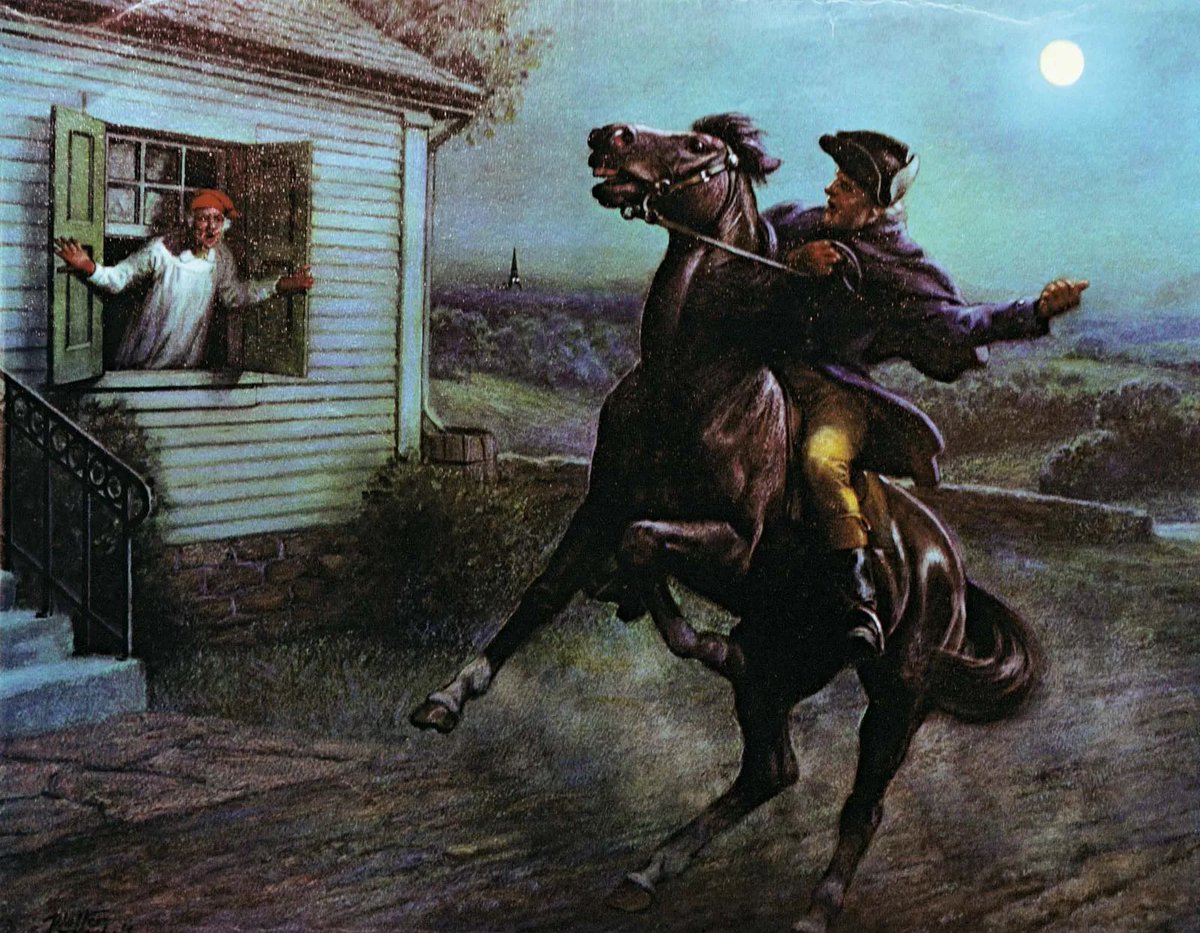
Today in American History: 1775
Paul Revere's Midnight Ride!
On the night of April 18, 1775, silversmith and Patriot Paul Revere, along with William Dawes (and later joined by Samuel Prescott), rode from Boston to warn colonial leaders Samuel Adams and John Hancock in Lexington, Massachusetts, and alert minutemen that British troops were marching to seize weapons and supplies in Concord. Revere’s famous warning helped rouse the countryside.
The next day (April 19), this sparked the Battles of Lexington and Concord—“the shot heard round the world”—marking the start of the American Revolutionary War.
Classical literature is not just harder content. It is liberation.
It rips students out of the tiny prison of their own age, their own trends, their own slogans, their own shallow assumptions about what matters. It reminds them the world did not begin with them, and that their feelings are not the measure of truth.
Shakespeare doesn’t teach “skills.” He reveals ambition, lust, betrayal, guilt, and the cost of sin. Homer teaches courage and honor. Augustine exposes the restless heart. Dante shows that loves can be ordered rightly or twisted into ruin. These books give students a map of the soul.
Our greatest enemy is a culture training kids to be bored by silence and incapable of deep thought.
The key reason that the RBA needs to be more proactive on tackling inflation is that in Australia once prices rise they do not, on average, come down again. Indeed the RBA is not seeking to engineer this outcome. It will be true of the coming inflation spike as well. Food prices are an interesting and observable case where average prices rise even when underlying prices may fall.
There's clearly a role for other policymakers (at a macro and micro level) to help get inflation lower faster particularly given the RBA (at least on recent form) does not have the appetite to do this - prioritising labour market gains over aggressive action against inflation. This is should not be via subsidising, regulating or legislating lower prices prices but via de-regulation, encouraging productivity and increasing competition.
"I recognize the right and duty of this generation to develop and use the natural resources of our land; but I do not recognize the right to waste them, or to rob, by wasteful use, the generations that come after us."
President Theodore Roosevelt at Osawatomie, August 31, 1910
“Perhaps consuming a few dozen book pages a day should become the new 10,000 daily steps — a basic foundation of activity to maintain cognitive fitness.”
https://t.co/IeOGhGmrPq
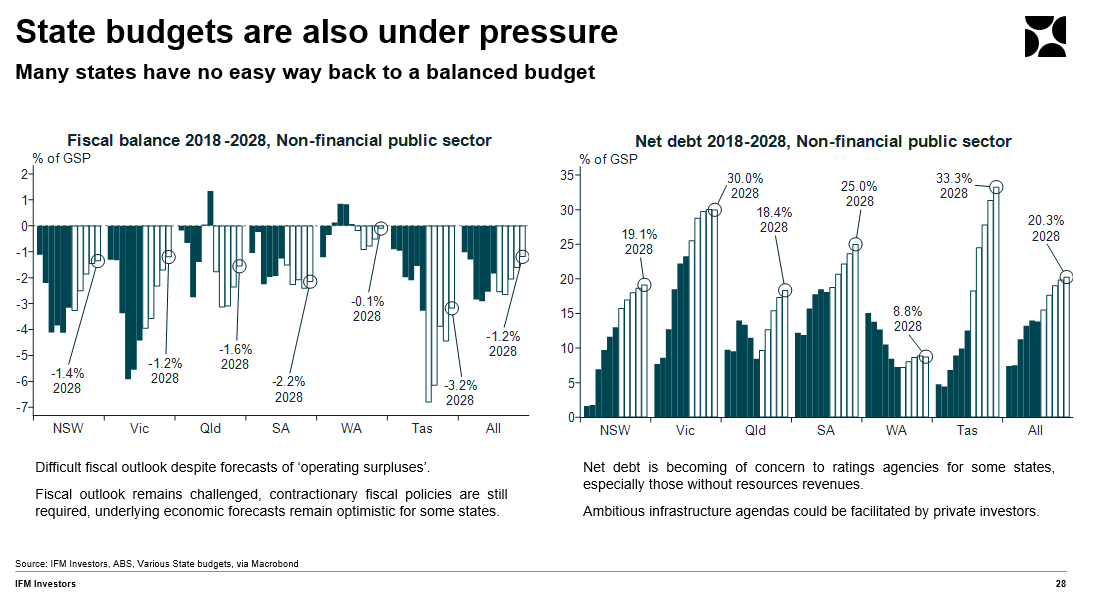
High and rising costs are going to be another hit to state budgets that never recovered from the pandemic (unlike the Federal budget that did so briefly). Significant cost pressures will come via large infrastructure projects which is just another reason not to focus on 'operating balances' but 'headline' or 'fiscal' balances that include these expenditures and are what define a state debt burdens.
The Anxious Generation was published two years ago today, in a very different world. Back then, the most common objection I got was resignation: "The train has left the station." "You can't put toothpaste back in the tube." "It's how the kids connect today."
Today, the world looks very different. It turns out that if our kids were all on a train and we learned it was heading toward a collapsed bridge, we'd find a way to stop it and bring them safely back to the station. That’s what’s happening now.
After the historic verdicts in Los Angeles and New Mexico, today is a great day to reflect on the capacity of people in democratic societies to take action, even when opposing some of the most powerful corporations in history. We're getting access to the courts. We're getting phone-free schools. We're seeing whole neighborhoods letting kids out to play, unsupervised, which is what we older folk all remember as the best part of childhood.
So I want to recognize:
--The mothers (and, right behind them, fathers) who rose up by the millions and powered the movement.
--The farsighted governors and legislators in red states and blue states who have been innovating on policy solutions.
--The leaders of a dozen of nations, who are raising the age to 16 for opening social media accounts (with a special shoutout to Australia, for going first).
--The teachers and school administrators who had their classrooms disrupted for 15 years, and who are now eager to think through new solutions as screens have taken over and obstructed learning.
--The grassroots organizations who have been dedicating their efforts to advocate for all of the above in their local communities.
--The millions of members of Gen Z who have been rising up, demanding agency over how they spend their lives in the digital era, and finding better ways to connect in real life.
And one final group: the survivor parents--the ones you saw in those pictures of people embracing on the front steps of the LA courthouse. I have met many over the years. I am in awe of their courage and tenacity, their willingness to tell their stories of loss, over and over again, to different audiences, in the hope that no other parent would have to endure what they have endured. At long last, juries and legislatures are hearing you, and are acting.
Together, we are calling the train back to the station. Together, we are rolling back the phone based childhood and reclaiming life in the real world.
The work continues. If you’re not already involved, join us: https://t.co/HdJDTKOQ3T
Giant sequoias were once considered indestructible.
But decades of mismanagement have led to dangerous fuel buildup, causing unnaturally intense wildfires.
Now, Congress is stepping in. The House just passed the SOS Act to save these iconic trees 🧵
Went down the rabbit hole on this. Your brain treats a physical book like a landscape. It builds a spatial map of the text, the same way it maps trails, rooms, and city blocks. When you scroll on a phone, that map breaks apart.
Seven large-scale research reviews and direct brain scans confirm what you already feel.
A 2023 study in PLOS ONE attached brain-activity sensors to children’s heads while they read the same text on paper and on screen. Paper reading produced fast brain waves, the pattern linked to focused attention. Screen reading shifted the brain into slow waves, the pattern linked to mind wandering and daydreaming. Same kids. Same words. Measurably different brain states.
A separate 2022 study from Showa University in Japan scanned the front of the brain, the area that manages focus and comprehension, during phone versus paper reading. Smartphones sent that region into overdrive, meaning the brain was straining just to keep up with basic processing. Paper reading produced a moderate load that triggered natural deep breathing, which helped regulate brain function and sustain focus. The phone suppressed that breathing pattern entirely.
Since 2017, researchers have published seven major reviews combining hundreds of individual studies. Six of seven reached the same conclusion: people understand less on screens. A 2018 review of 54 studies and 170,000+ participants, literally titled “Don’t throw away your printed books,” found paper outperformed screens across the board for non-fiction. A 2024 follow-up with 49 more studies confirmed it. The gap has grown steadily every year since 2001. Being a “digital native” doesn’t help.
The best explanation is how your brain tracks where you are. Your short-term memory can only juggle about 7 things at once. A physical book gives you constant location cues: the weight shifting from right hand to left, where a paragraph sits on the page, how thick the remaining pages feel. Your brain hands off the “where am I in this text?” job to those physical signals, leaving more room for actually understanding what you’re reading. On a phone, every screen looks identical. Your brain has to track position and process meaning at the same time, and something gives.
A Norwegian eye-tracking study analyzing 25,000+ individual eye movements found screen readers processed text more shallowly. The students had no idea they were reading differently.
In 2019, nearly 200 reading scientists from 30+ countries signed an open letter warning that screen reading was degrading deep comprehension. Since then, Scandinavian countries, among the most digitized school systems on Earth, have started putting physical books back in classrooms.