Our chaos cluster caught a real OpenRaft bug this week. A node panicked while catching up via snapshot under network delay (tc netem), silently stalling two Raft groups.
Upstream confirmed and shipped a fix the same day. Thanks openraft community!
https://t.co/ncTAAmfqot
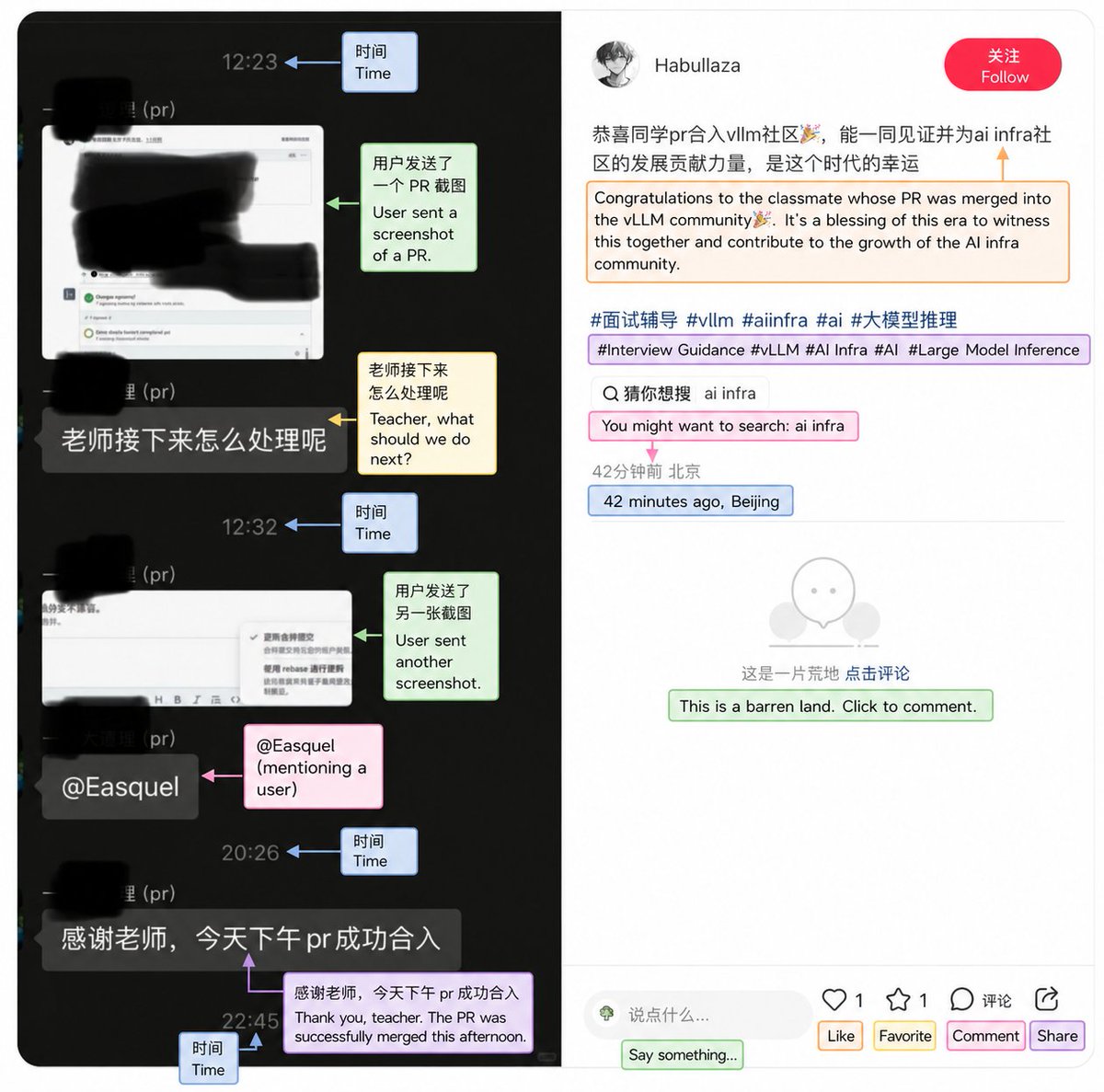
Thanks to the community report, we recently identified a PR https://t.co/QWboSmskkF that attempted to solve a non-existent issue and was submitted as part of a “PR training” workflow for resume building.
The contributor involved has been banned from the vLLM community.
This kind of low-signal contribution increases maintainer review overhead and creates unnecessary operational costs for open-source projects.
As AI coding agents make generating large volumes of small PRs increasingly cheap, open-source communities will need to explore new ways to preserve contribution quality and reviewer trust.
While we are investigating how to deal with AI slop, we continue to highly value contributions from real users solving real production problems.
If you have an important contribution that has not yet received maintainer attention, please email us at:
[email protected]
Using a verifiable company or university email, include:
- your production or research use case
- the problem you encountered
- how your contribution addresses it
This helps us better prioritize impactful contributions while keeping the vLLM community open and collaborative.
As AI makes virtual contributors look increasingly real, authentic human collaboration matters more than ever.
vLLM’s mission remains unchanged: to make LLM inference easy, fast, and cheap for everyone — and we will continue working toward that goal.
🎉🎉🎉 Excited to introduce our recent project FigMirror - a very interesting and useful tool with a simple workflow for making any paper-style figures.
- See a beautiful figure in a paper
- Screenshot it
- Add your own data
- Get a new Matplotlib figure with the same visual style
FigMirror learns the quiet details that make paper figures look polished:
- typography
- spacing
- line weight
- color restraint
- layout rhythm
The key mechanism is Grounded Measurement.
Computer-use AI can point to coordinates inside the reference figure. Code then inspects the pixels, colors, spacing, and layout around those points. This gives the system concrete visual evidence to iterate on.
Our FigMirror draws a candidate figure, compares it with the reference, keeps what works, and improves what still feels off.
Outputs:
- editable Matplotlib code
- camera-ready PDF
It works as both a local Web UI and a Codex / Claude Code skill.
Open source:
https://t.co/zCVM0aAyxp
Try it before your next deadline!