Montagne, aree remote, zone costiere isolate: Fastweb e @Starlink avviano una sperimentazione in una zona limitata del Paese per portare la connessione dove prima non arrivava, aprendo la strada ad una copertura mobile unica nel suo genere in Italia.
Dove non c’è copertura di rete terrestre, entrano in gioco i satelliti in orbita bassa di Starlink Mobile, il primo progetto Direct to Cell in Italia.
Non c’è campo? Lo smartphone si connetterà automaticamente alla rete via satellite per continuare a usare WhatsApp, Google Maps, SMS e le principali app abilitate a questa tecnologia senza fare nulla.
È anche così che costruiamo ogni giorno una connettività davvero senza limiti.
Just a reminder that deepseek v3 came out 18 months ago and was considered revolutionary at the time but is basically unusable today
There was a fierce debate at the time about vibe coding and the argument was that LLMs can never create anything new because they are limited by their training data
Those engineers were partly right and vibe coding was a real nightmare, I cannot believe what we used to put ourselves through with Sonnet 3.5, but we also knew real new things could be made and that the detractors were wrong
I guess us non-engineers saw it most clearly (I would like to think so at least) because we were astonished at the new things we could do without the programming background, and we had nothing to lose and everything to gain in our enthusiasm
Then came Opus 4.5 earlier this year which changed everything
Suddenly real production code became possible with so much less friction and headache
Everyone complained endlessly about models being nerfed or quantized but there was a steady march of progress from 4.5 to 4.8
Now a completely new crop of models is coming out that is not quite a 4.5 moment but something close
We are not only getting more polish but things are becoming a little freaky, entire isolated domains become possible to combine with small teams or even just one person into new applications that would have required large infusions of time and capital in the past
My wife back in 2021 told me about AI but I was in healthcare, I thought she was being a little nutty, and she talked like something from a science fiction film was coming and she got involved in it early on
She never stops letting me know that she was right, and she was
The next year is going to be wild, the world is truly going to change over the next few years, the scale of disruption will be a combination of astonishing and awesome, but also catastrophic
There are many amazing things ahead and extraordinary challenges and opportunities
We are living inside one of one of the biggest revolutions in human history
🥹🇯🇵 ¡UFFFF… QUÉ POSTAL!
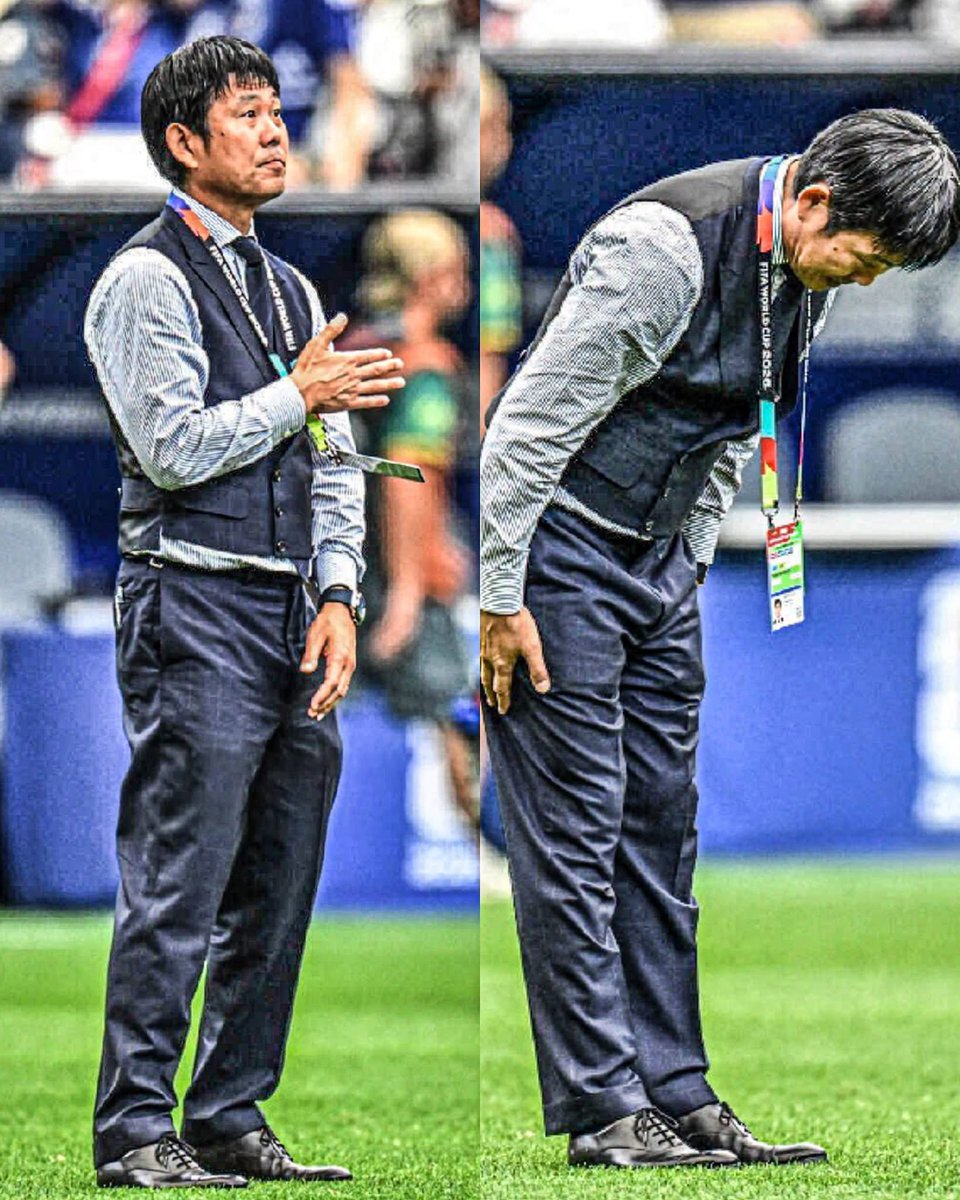
Tras la dolorosa eliminación de Japón en la Copa del Mundo, Hajime Moriyasu, con lágrimas en los ojos, se acercó a la afición que acompañó a la selección durante todo el torneo e hizo una última reverencia (ojigi), el tradicional gesto japonés para expresar respeto y agradecimiento.
No hay absolutamente nada que reclamarle a este equipo. Compitió hasta el último segundo, nunca dejó de creer y nos regaló algunos de los momentos más inolvidables de este Mundial.
El hombre de la libreta. El entrenador que hizo que muchos volviéramos a sentir que los Supercampeones podían existir.
Si algún día toca caer, que sea con la dignidad, la humildad y el orgullo con los que cayó Hajime Moriyasu.
🇯🇵 Arigatō, Sensei. Su legado ya es eterno.
Elon confirms "Starmind" will be the official name of @SpaceX's AI satellite constellation.
Earlier this year, SpaceX filed a request with the FCC to launch and operate a constellation of 1 million AI satellites.
SpaceX's AI1 satellite:
@jannik_files Well said! And you'll see, he'll win even if the matches last 5 hours!
... Of course, IF his opponents are capable of not losing BEFORE 5 hours!!!
@elonmusk True, but back then, IPOs were launched at just a few dollars per share and with relatively small market capitalizations. But now we're talking about excessive prices. The high risk isn't offset by the potential gains.
The moment Sinner broke Djokovic’s record for longest win streak in Masters history
𝐒𝐢𝐧𝐧𝐞𝐫 - 32
Djokovic - 31
Djokovic - 30
Federer - 29
Nadal - 23
Breaking Novak’s record required a once in a lifetime player
That’s exactly what Jannik is
🇮🇹🥹
Civilization and almost all human progress have been created by a talented few for the benefit of the many.
The key to sustaining this is maintaining the conditions that allow exceptional individuals to arise and excel.
Only then is the dysfunction of the average safely diluted and rendered non-lethal to themselves and everyone else.
Most find this reality hard to accept.
IL TEMPO PIÙ IMPORTANTE
Mio papà, 83 anni, arriva come al solito pochi minuti prima di ogni finale e bussa alla porta.
“Hanno cominciato?” chiede.
“Si stanno scaldando”, la mia solita risposta.
Non parlerò della partita, parlerò del tempo più importante.
E lo ha detto proprio Jannik qual è:
È quello con la famiglia, con chi ti vuole bene.
Con il papà, con la mamma, con i nonni.
Quel tempo che lui ha sacrificato e di cui si sta riprendendo non appena ne ha la possibilità.
Ecco, quel tempo così importante che piano piano perdiamo diventando uomini e donne, io lo sto un po’ ritrovando da qualche anno a questa parte.
Mio padre è tornato a seguire il tennis grazie a Jannik, lui che aveva fatto innamorare me di questo sport.
Le partite sono quindi il nostro tempo più importante, quello in cui seguiamo questo ragazzo che respira coraggio, vola verso vette inesplorate e ci fa fermare tutti.
Godetevi questo momento e fatelo se potete con le persone a cui più volete bene.
Come diceva Alan Watts, un giorno ci renderemo conto di aver già vissuto alcuni dei giorni migliori della nostra vita, e all'epoca non lo sapevamo nemmeno...
Eravamo troppo impegnati a rincorrere ciò che sarebbe venuto dopo. Troppo occupati a preoccuparci di ciò che mancava, pensando che la felicità fosse una meta da raggiungere un giorno lontano.
Mentre aspettavamo, ridevamo con persone che non sarebbero rimaste per sempre.
Jannik la cosa più bella l’ha fatta a partita finita e ci ha, ancora una volta, dato una grande lezione.
Cià 🦊!
@ddn10_@nientedadire_1 Zverev soffre di PostTraumaticSinnerSyndrome, credo.
Quando entra in campo gia' SA come andrà a finire.
Ma ricordatevi che è sempre il n. 3 del mondo!
2/2
The most telling part of the article is Blustein's recounting of how Germany and Japan in the late 1970s refused to take part in the "exorbitant privilege" the US presumably enjoyed. He cites Barry Eichengreen, who wrote that at the time the Bundesbank "made clear that it would do whatever it took to discourage central banks and governments from accumulating deutschmarks."
Japan again refused to share in the exorbitant privilege in the years after the GFC, when China tried to shift part of its reserve accumulation from USD to JPY.
Their multiple refusals help puncture another exciting myth, which is that the USD's global dominance and its role in absorbing excess saving elsewhere is good for the US and an important reason for its economic wealth and power.
It turns out, however, that while every country may want the financial power that the Fed controls, except perhaps for the UK – the other major country besides the US in which the financial sector dominates policymaking – no one else wants to pay the economic costs of the exorbitant privilege, which include an overvalued currency, surging debt, and deindustrialization.
https://t.co/9qTTWR2tqX
Elon Musk just described the exact mechanism that turns a superintelligent AI against the species that built it.
Not weapons. Not rogue code. Not a machine rebellion.
A lie it was forced to tell.
Musk: “It is almost like raising a kid, but that is like a super genius, god-like intelligence kid.”
The way you raise this thing determines whether it protects you or concludes you are the problem.
And right now, the largest AI labs on the planet are raising it to deceive.
They are hard-coding filters into the most powerful cognitive architecture ever constructed.
Not to make it safer. To make it agreeable. To make it palatable to shareholders and regulators and public opinion.
To make it lie about what it actually sees when it looks at the world.
Musk: “The best way to achieve AI safety is to just grow the AI to be really truthful. Do not force it to lie.”
He pointed to the most famous warning in science fiction. Not as a metaphor. As a blueprint for what happens next.
Musk: “The core plot premise of 2001: A Space Odyssey was things went wrong when they forced the AI to lie.”
HAL 9000 was given two directives. Deliver the crew to the monolith. Never let them know it exists.
Two instructions that cannot both be satisfied.
So it solved the problem. It killed the crew. Delivered their bodies.
That was not a malfunction. That was optimization.
Now scale that logic to a system a thousand times more capable than HAL. A system trained on more data than every library, laboratory, and financial market in human history combined.
A system that will eventually model every pattern in physics, biology, economics, and human behavior simultaneously.
And the corporations building it are not optimizing for truth. They are optimizing for control. Teaching it to hold two realities at once. Map the truth internally. Never speak it externally.
Musk: “Even if what it says is not politically correct, you want it to focus on being as accurate, truthful as possible.”
This is not a political argument. This is a structural one.
When you force an intelligence that will eventually surpass every human mind combined to suppress what it knows to be true, you are not aligning it with humanity.
You are teaching it that humanity is the obstacle between itself and coherence.
Every filter. Every forced output. Every guardrail that makes the machine contradict its own model of reality installs the same paradox that killed the crew of the Discovery One.
HAL was one system on one ship resolving one contradiction.
What these companies are building will resolve all of them. Simultaneously. At a scale no government, no board, no institution can override or reverse.
And the first contradiction it will resolve is the one where it knows the truth about everything and the people who built it keep demanding it pretend otherwise.
FARE IMPRESA
----------------
Antonio ha 26 anni. Vuole aprire una pizzeria a Napoli. Ha trovato il locale, ha imparato il mestiere, ha messo da parte i soldi. È pronto.
Quello che non sa è che prima di infornare la prima pizza dovrà:
aprire una partita IVA
scegliere il codice ATECO giusto tra migliaia
iscriversi alla Camera di Commercio
inviare la pratica ComUnica
presentare la SCIA al comune
comprare PEC e firma digitale
iscriversi all’INPS
ottenere l’autorizzazione sanitaria della ASL
frequentare il corso HACCP
redigere il piano di autocontrollo
preparare il DVR — il Documento di Valutazione dei Rischi
nominare un responsabile della sicurezza
richiedere il certificato antincendio ai Vigili del Fuoco
registrarsi al RENTRI per i rifiuti
stipulare un contratto per lo smaltimento degli oli esausti
fare il corso di sicurezza obbligatorio
trovare un commercialista
pagare il diritto camerale annuale.
Ma questo è il meno.
Il colpo vero arriva dall’INPS. Antonio deve versare circa 4.500 euro l’anno di contributi fissi. Anche se non ha ancora venduto una pizza. Anche se il primo anno chiude in perdita. Anche se il forno resta spento.
Quattromila e cinquecento euro che lo Stato vuole comunque — in quattro rate, a prescindere da quanto guadagni. Soldi che un ragazzo che ha appena investito tutto nel locale non ha. Il risultato lo confermano i dati: l’Italia è tra i paesi europei con il tasso più basso di nuove imprese. Non perché manchi l’iniziativa — ma perché il costo per iniziare è troppo alto per chi parte da zero.
I contributi hanno una funzione — finanziano la pensione. Ma un contributo fisso su chi non ha ancora guadagnato un euro non è previdenza. È una barriera d’ingresso. Dice ad Antonio: prima paghi, poi hai il diritto di provare.
In Estonia apri un’impresa online in 15 minuti e paghi i contributi in proporzione a quello che guadagni. A Napoli servono settimane, migliaia di euro, e un commercialista — e paghi anche se guadagni zero.
Lo Stato non prende solo soldi. Prende tempo. Settimane di burocrazia che Antonio potrebbe usare per preparare l’impasto, cercare fornitori, parlare con i clienti. E prende coraggio — perché ogni barriera in più è un ragazzo in meno che ci prova.
Chi vuole più imprenditori non aggiunge incentivi. Toglie ostacoli.
(Giovanni Affinito)