Everyone and their mama's in SK music industry keep trying to replicate BTS since 2017 the famous title
"The Next BTS " and to this day no one not even simon who wants that uk pop badly succeeded . So who else have the balls , dare to follow BTS ? Without getting scare sabotaging their own music career ? BTS is bigger that scammy . They don't need validation , They can keep their 800$ gramophone trophy and give it to whoever can kiss *ss .
Meanwhile BTS will continue touring with all sold out biggest stadium concerts unbothered.
While us will keep supporting BTS 200%
Nothing will change as if nothing happen.
Goodluck to scammys ratings
They can try SM artist to help them with the rating since Mr. CEO and his wife work with their artist for 8yrs. "Exclusively" 🤗
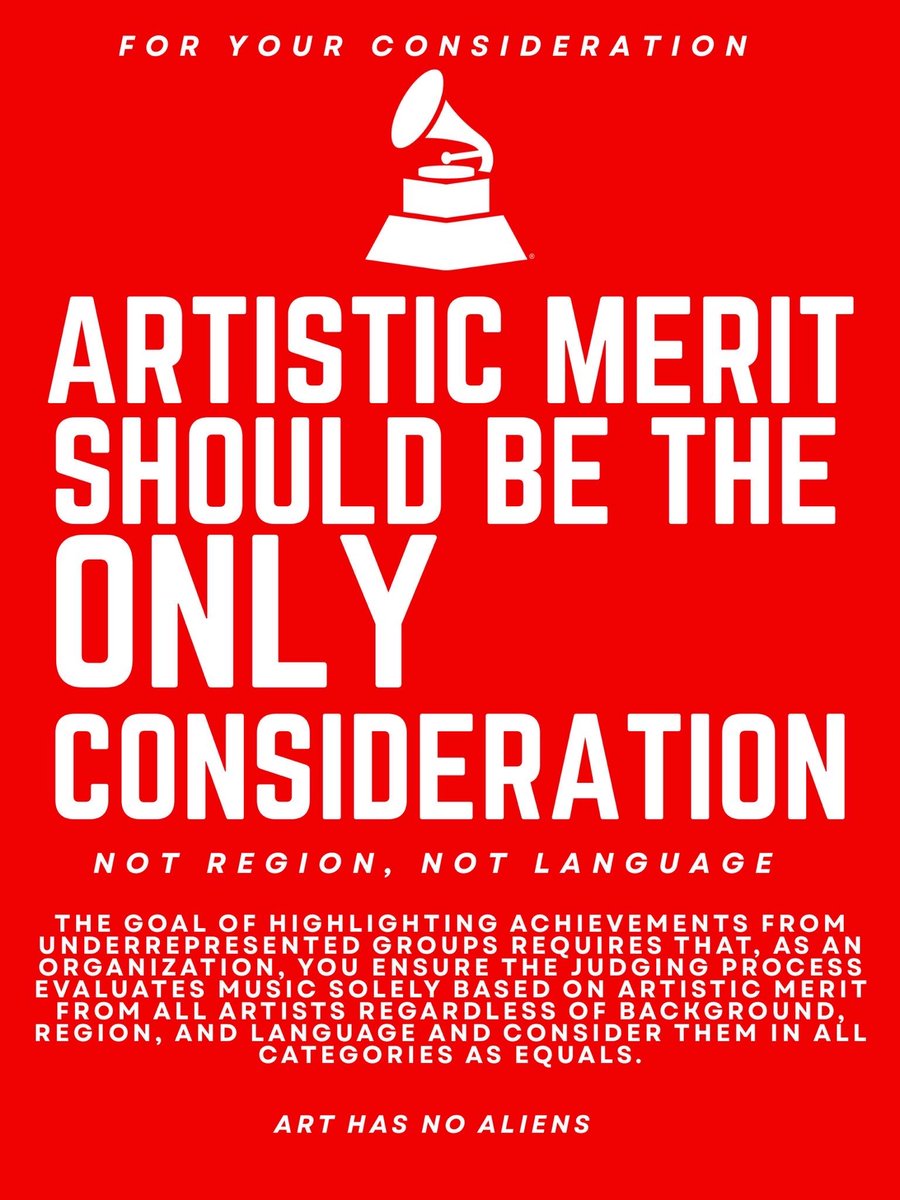
#ArtHasNoAliens
#ARMYStandsWithBTS
[JTBC News] 260730 Lee Ga-hyeok's One Shot Today. BTS's Polite Boycott
🐹From BTS Jin's Instagram: "We have decided not to submit our music to the Grammys this year. We hope music will be heard and loved for what it is, rather than being divided by region or language. Thank you to ARMY and to everyone who has always supported us."
👨🏫All 7 BTS members posted these same words simultaneously. It was, in effect, 'a declaration of a Grammy boycott'.
Because they offered no explanation beyond those three sentences, fans and people across the music industry around the world have been interpreting the reasons in different ways. However, many believe it was a protest against the Grammys' recent creation of a separate Best Asian Pop category.
Some have praised the new category as a way to expand opportunities for Asian artists. Others, however, have questioned whether it simply places Asian artists into a separate box rather than allowing them to compete equally.
The Grammys, which have long faced criticism for being overly favorable toward the white mainstream music industry, may have brought this controversy upon themselves.
👨🏫Whatever the reason, BTS's "polite boycott" encourages us to rethink our long-standing habit of seeking validation from outside Korea by saying things like, "Foreign media reported it," "Hollywood recognized it," or "The U.S. market responded."
In other words, BTS's boycott represents a refreshing shift in perspective: refusing to be confined by a system created by others.
It will be interesting to see what changes this confident declaration of independence will bring.
This has been One Shot Today.
#JIN #방탄소년단진 @BTS_twt
The anchor ended the entire news segment with Jin's Instagram post.
Disney+ taking over the Grammys from 2027 won’t mean a thing if we don’t tune in.
When that broadcast goes live, we switch off ABC, Hulu, and Disney+ completely and host a massive global re-watch party for "BTS THE COMEBACK LIVE | ARIRANG" on Netflix instead.
What do you say? Shall we? Pass it along if you agree....
@surah3200@a_lzzzzz Yo me uní cuando se fueron los últimos miembros al sm, y me tocó cosas horribles en X que aveces me sentí desalentada , pero mi amor por ellos es más grande que todas las dunas juntas contra mis bitis
Especialistas da música do mundo inteiro elogiando o boicote, explicando o quanto isso é importante não só pro kpop, mas pra indústria da musica no geral, mas sou obrigada a ver fã de kpop e de diva pop comemorando a segregação e fazendo hate train pra cima do BTS.
“BigHit Music, <BTS’in yaptığı> açıklamanın tam olarak yazıldığı şekliyle değerlendirilmesini istedi, bu şekilde bakıldığında ise açıklama dikkat çekici bir nitelik taşıyor çünkü herhangi bir talep içermiyor. Boykot eylemleri talepler üzerine kuruludur. Oysa bu açıklama hiçbir talepte bulunmadı, herhangi bir koşul öne sürmedi, bir şikayet dile getirmedi ve Recording Academy’ye onları yeniden kazanmaları için bir yol sunmadı. Kararına hala ihtiyaç duyduğunuz bir kurumla tartışma yaparsınız, kararını artık geride bıraktığınız bir kuruma ise sadece durum bildirirsiniz.”
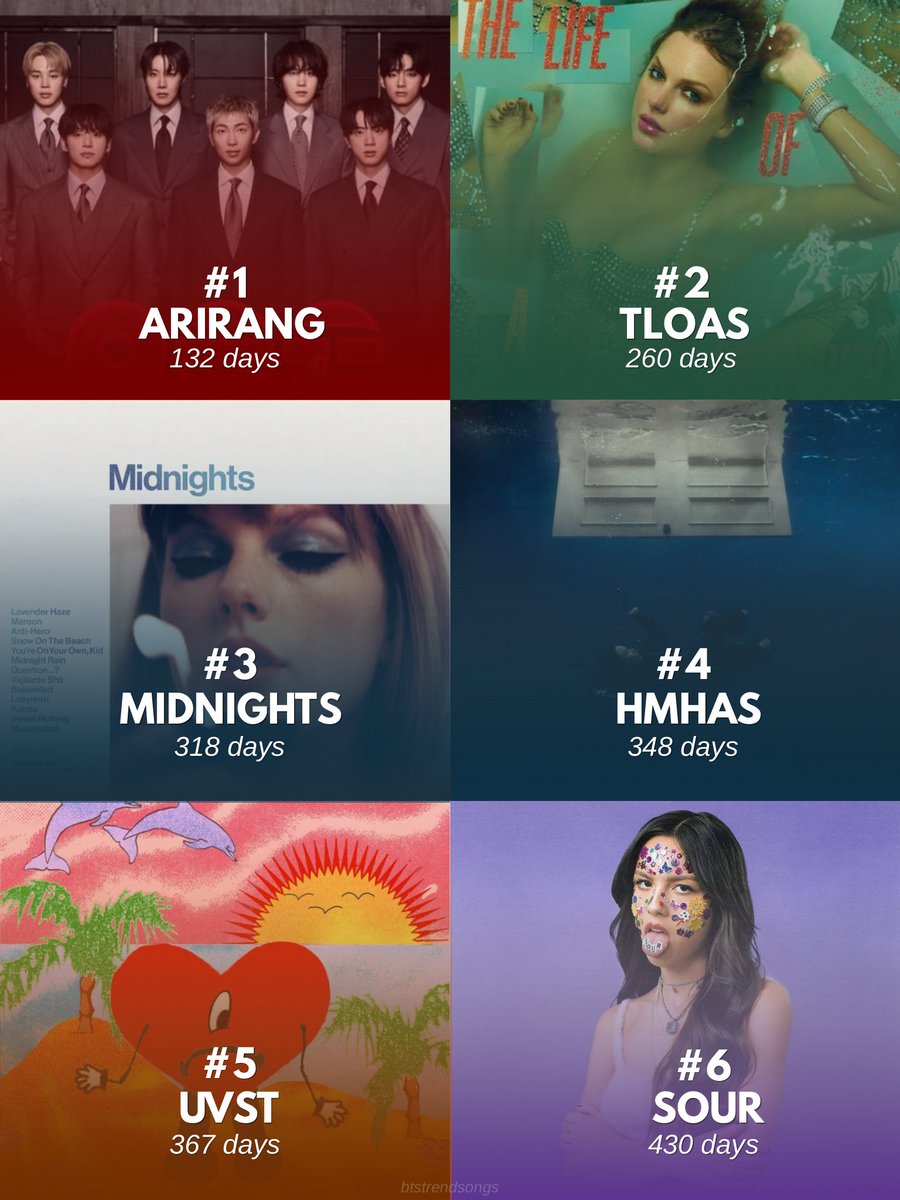
Fastest albums to have all songs surpassing 200 million streams on Spotify!
1. #BTS “ARIRANG” — 132 days
2. Taylor S. “TLOAS” — 260 days
3. Taylor S. “Midnights” — 318 days
Since we're already talking about fairness and transparency at the Recording Academy, I came across one of its most well-known internal controversies and thought it was worth sharing for context.
In 2020, former Recording Academy CEO Deborah Dugan alleged voting irregularities, conflicts of interest, financial mismanagement, gender discrimination, sexual harassment, and a broader culture of discrimination within the Academy. She also claimed she was removed after raising governance concerns though the Recording Academy denied many of these allegations.
Just sharing this for informational purposes. It's one of the most public controversies involving the Recording Academy, and I found it interesting to read about.
https://t.co/D0UtD6I82e
https://t.co/qhFzMtVbQH
https://t.co/ZIak5DLrbz
[DW News] 260631 Why boy band BTS is boycotting the Grammys
Professor Grace Kao(Yale university): I think the frustration with the language part is really, you know, um, K-pop artists were told that they're not being played on radio in America because they're not speak singing in English. So more and more of them are singing more songs in English. And then now they're being told, "well, actually, no, you're from Asia, so we're going to put you in this other category." So it's as if they can't win.
#JIN #방탄소년단진 @BTS_twt
Professor Grace Kao, the director of the Center for the Study of Social Stratification and Inequality at Yale University, has been giving lectures related to K-pop. She has previously said that BTS’s true virtue lies in their sense of connection and solidarity. She has taught that, with BTS at the forefront, Korea, K-pop, K-dramas, and Korean content as a whole continue to grow by supporting and helping one another.
In this DW News report, the thumbnail features Jin from the FIFA World Cup halftime show.⚽🤟🐹
Deutsche Welle (DW) is Germany’s international broadcaster, producing content in 30 languages. DW independently reports on social, political, and economic developments in Germany and Europe, incorporating not only German perspectives but also a wide range of different viewpoints.
INFO | 📰
El inversor de capital riesgo coreano-estadounidense Ian Park comparó la situación de #BTS con el Premio Nobel otorgado a Han Kang*:
El Comité Nobel no le concedió a Han Kang el "Premio Literario Asiático", sino el Premio Nobel de Literatura. Esta diferencia, aparentemente insignificante, es la clave de la actual controversia de los Grammy.
BTS declinó presentar su trabajo para los Grammy de 2027. El motivo fue la creación de una nueva categoría: "Mejor Interpretación Pop Asiática". El grupo declaró: "Queremos que nuestra música se escuche por lo que es, sin divisiones por región o idioma".
A primera vista, esto podría parecer un signo de reconocimiento. Pero en realidad, podría significar división. Crear una categoría aparte para la música asiática podría marginarla de las nominaciones principales. A medida que el debate cobraba fuerza, el director ejecutivo de la Academia de la Grabación aclaró personalmente: "Nuestro objetivo no es dividir, sino empoderar. Esta categoría se creó para destacar el desarrollo de la música pop asiática y descubrir nuevos artistas, no para aislarlos".
A primera vista, esto suena convincente. Pero la idea de "dividir en nombre de la igualdad" ya ha demostrado su inconsistencia. En la historia de Estados Unidos, los espacios separados nunca han sido verdaderamente iguales: las instituciones diseñadas para personas de color han sido sistemáticamente de menor calidad. Por lo tanto, tales explicaciones solo alimentan las críticas. Y, ante todo, la identidad asiática no es un género musical. El jazz, el rock o el country sí lo son. Asia no.
La identidad asiática no es un género musical, sino una raza y una región geográfica. No existe el "pop europeo". No hay categorías como "pop británico" o "pop blanco". Ed Sheeran y Adele no pertenecen a una categoría aparte basada en la raza. Sin embargo, Asia comprende aproximadamente el 60% de la población mundial, decenas de países e idiomas. Y todo esto se combinó en una sola categoría. Es más, uno de los requisitos de nominación era la interpretación de canciones en idiomas asiáticos. Resulta que la división no se basa en la música, sino en el origen y el idioma.
La reacción de los organizadores es aún más extraña. Si bien afirmaban que "no hay exclusión", borraron discretamente las grabaciones archivadas de presentaciones anteriores. Aunque aseguraron que los artistas aún podían ser considerados para las categorías principales, sus acciones contradecían sus palabras. Como si dijeran: "¿Cómo se atreven?". Primero, demostraron su autoridad borrando el video. Esta es precisamente la reacción que suelen recibir quienes se atreven a denunciar la injusticia. Incluso si las intenciones eran buenas, el resultado sigue siendo la división racial. Un escenario aparte no implica necesariamente respeto. Por lo tanto, la negativa era la única respuesta correcta.
Creo que BTS rechazó la oferta de los Grammy no por hipersensibilidad. El problema radica en el sistema mismo. Cuando la raza se convierte en una categoría musical, se convierte en una jaula. Y por muy bellamente decorada que esté, una jaula sigue siendo una jaula.
El verdadero respeto no proviene de crear categorías separadas, sino de poder estar en el mismo escenario y competir en igualdad de condiciones. Esto, en mi opinión, es lo que sucedió con Han Kang.
Han Kang simplemente ganó el Premio Nobel de Literatura. No se trata de un "Premio Nobel Asiático de Literatura" aparte, sino del mismo Premio Nobel que todos los demás. Eso sí es verdadera autoridad.
Y este no es ni mucho menos el primer caso. Tras la triunfal actuación de Bad Bunny en los Grammy de 2026, se creó una nueva categoría: "Mejor Canción Latina". Cada vez hay más intentos de incluir la música en idiomas distintos del inglés en categorías separadas.
Para mí, la conclusión es clara: BTS no necesita los Grammy, pero los Grammy sí necesitan a BTS. Esta historia no hizo sino dejarlo aún más claro.
I applaud @bts_bighit for rejecting the Recording Academy's attempt to shove them into a category for the Grammys.
The Grammys wanted to label BTS as "Asian pop." They said, No thanks. We're not 'Asian music.' We're pop. Put us in the main category.
GOOD. Enough with all the groups, labels, and categories. That's what caused all the controversy around The Odyssey. They had to check the Academy's boxes to be considered for an Oscar. These organizations can keep their awards if it means bowing to a system that puts arbitrary limits on artists.
— @CBCNews reports over BTS not submitting their music for the Grammys.
"BTS talks, People Listen."
"It's the biggest news in music."
"It's been a humongous year for BTS. Their album, ARIRANG is critically acclaimed, culturally beloved...most of these are factors which leades to thinking that 'hey, this will lead to some GRAMMY consideration' and they are telling us that they are not interested in that in 2027."
#ArtHasNoAliens






![nightstar1201's tweet photo. [DW News] 260631 Why boy band BTS is boycotting the Grammys
Professor Grace Kao(Yale university): I think the frustration with the language part is really, you know, um, K-pop artists were told that they're not being played on radio in America because they're not speak singing in English. So more and more of them are singing more songs in English. And then now they're being told, "well, actually, no, you're from Asia, so we're going to put you in this other category." So it's as if they can't win.
#JIN #방탄소년단진 @BTS_twt
Professor Grace Kao, the director of the Center for the Study of Social Stratification and Inequality at Yale University, has been giving lectures related to K-pop. She has previously said that BTS’s true virtue lies in their sense of connection and solidarity. She has taught that, with BTS at the forefront, Korea, K-pop, K-dramas, and Korean content as a whole continue to grow by supporting and helping one another.
In this DW News report, the thumbnail features Jin from the FIFA World Cup halftime show.⚽🤟🐹
Deutsche Welle (DW) is Germany’s international broadcaster, producing content in 30 languages. DW independently reports on social, political, and economic developments in Germany and Europe, incorporating not only German perspectives but also a wide range of different viewpoints.](https://pbs.twimg.com/media/HOikc9WbgAAy1UI.png)


