this open trading library is fu*cking insane.
Jane street PM leaked all internal trading strategies and made them public with code.
https://t.co/rGyRdDun3F
Bookmark rn.
Tesla Event - Short Version
Die verrückteste Produktvorstellung aller Zeiten.
Elon Musk zeigt fliegenden Roadster.
0 - 100 km/h in unter 1 Sekunde.
Das war's für Ferrari, Bugatti und Co. Dieses Auto wird jeden Rundenrekord brechen.
Fewer than 300 people in human history have ever seen this with their own eyes.
Earth spinning beneath them. Nothing between their face and the infinite void except a helmet visor. 🌍🚀
It’s called an extravehicular activity (EVA)—a spacewalk.
You leave the station, secure yourself to the spacecraft, and spend hours working in the vacuum of space.
And the strangest part? Silence. Sound cannot travel through the vacuum.
But the incredible images never show what happens before the hatch opens.
1️⃣ Hours of preparation with pure oxygen
Astronauts follow procedures designed to reduce the risk of decompression sickness as suit pressure changes.
2️⃣ Hundreds of hours of underwater training
Wearing a spacesuit in a giant pool, astronauts rehearse every movement until it becomes second nature.
3️⃣ Every movement is planned and timed
Nothing is improvised. From opening the hatch to securing tools and completing each task, the sequence is meticulously rehearsed.
What looks effortless, spontaneous, and almost magical is actually the result of years of training and obsessive preparation.
The conversation.
The perfect demonstration.
The spacewalk.
What you see is only the final few minutes of an enormous human effort. 🌌
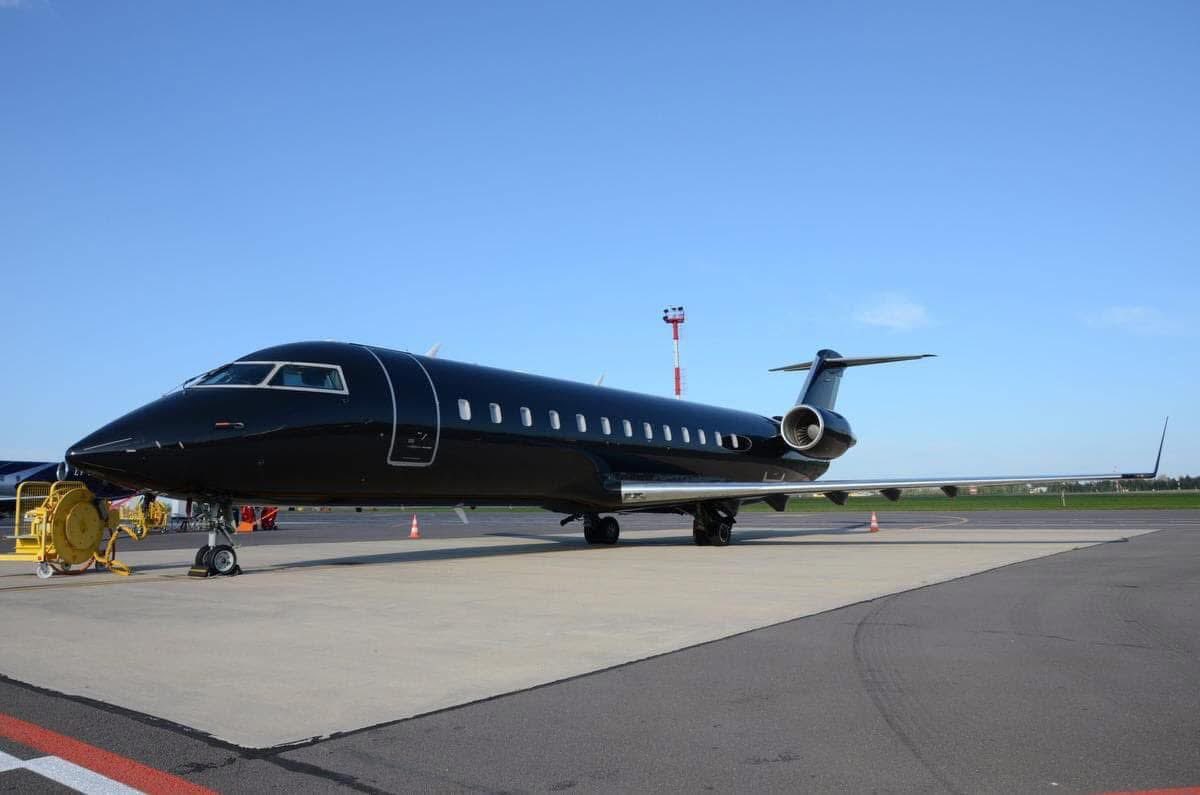
"A guy looked at my airplane the other day and said I wonder how many people I could have fed for the price of that airplane...
I replied I am not sure, it fed a lot of families at the Dassault factory where it was built. I’m sure it fed a bunch of families that rolled the aluminum at the Alcoa factory. It surely fed a lot of people at the Honeywell factory where the experts built the turbines. It fed a whole company for a few weeks when I had them build me a new interior. It feeds the families of the linemen that fuel it.
That’s the difference between capitalism and a welfare mentality. When you buy something, you put money in people's pockets, and give them dignity for their skills.
When you give someone something for nothing, you rob them of their dignity and self worth.
Capitalism is freely giving your money in exchange for something of value.
Socialism is taking your money against your will and shoving something down your throat that you never asked for."
Elon Musk just proved every sighted person on Earth is blind.
Your eye captures 0.0035% of the electromagnetic spectrum.
You are not seeing the universe. You are seeing the sliver your biology decided was enough to keep you alive.
That was never vision. That was a survival filter bolted onto your perception four hundred million years ago.
No one has ever removed it.
Musk: “Blindsight will enable those who have total loss of vision to be able to see again. Including if they have lost their eyes, or the optic nerve.”
No eyes. No nerve. The entire optical system physically absent from the skull.
Neuralink does not rebuild what broke.
It routes around biology entirely. It streams synthetic signal straight into the visual cortex.
Your eye never saw anything.
Your brain did.
Your brain sits in total darkness inside a vault of bone.
It has never seen the sun. It has never seen anything.
It builds reality out of whatever electrical signal the eye allows through.
The eye is the bottleneck between your mind and the universe.
Neuralink removes the bottleneck.
Musk: “Maybe have never seen, were even blind from birth.”
A human who has never perceived a single photon of light.
Given sight for the first time.
Not through medicine. Through engineering.
Musk: “You can see in radar, you can see in infrared, ultraviolet.”
Infrared is pouring off every surface in the room around you.
Radio waves are passing through your body right now.
Ultraviolet is painting patterns across everything you have ever looked at.
You cannot see any of it.
Your biology locked you out before you were born.
Musk: “Superhuman capabilities.”
The person born blind would not be restored to human sight.
They would see more of the universe than any sighted person who has ever lived.
The blind would out-see the sighted.
You will not pity them.
You will envy them.
Musk: “Cybernetic enhancement.”
Every human sense is a sensor converting the world into electrical signal.
Replace the sensor and the brain does not care where the signal came from.
It just processes.
Your senses were never built to show you reality. They were built to show you just enough of it to survive.
Evolution built a keyhole. We called it sight.
Elon Musk is not fixing blindness.
He is fixing sight.
Ein junger SpaceX-Mitarbeiter fragte Elon, was passiert, wenn sie den Mars zu seinen Lebzeiten nicht erreichen. Der Raum war voller Ingenieure und die Frage landete schwerer, als irgendjemand erwartet hatte.
Es war eine einfache Frage, doch sie traf den Kern, wofür SpaceX existiert. Das gesamte Unternehmen, jede späte Nacht, jeder explodierte Prototyp, jeder Ingenieur, der den Geburtstag seines Kindes für ein Startfenster verpasst hat – alles zielt auf den Mars. Was, wenn es nicht rechtzeitig passiert?
Elon hielt inne.
Er sagte, das Ziel sei nie gewesen, persönlich auf dem Mars zu landen. Es gehe darum, die Infrastruktur aufzubauen, die unvermeidlich ist. Selbst wenn er stirbt, bevor die erste Besatzung landet, würde das System die Mission ohne ihn vorantreiben.
Die Raketen, die Fabriken, das Team, die Kultur – alles sei darauf ausgelegt, jede einzelne Person zu überdauern. Einschließlich ihm. Besonders ihn.
Dann sagte er etwas, das die Leute im Raum bewegte: Wenn er glaubte, der Erfolg hänge davon ab, dass er am Leben sei, hätte er bereits versagt. Der Punkt sei, etwas zu bauen, das seinen Gründer nicht braucht.
Er verglich es mit einer Kathedrale. Die Architekten mittelalterlicher Kathedralen wussten, dass sie sterben würden, bevor das Gebäude fertig wäre. Dennoch entwarfen sie es und gaben ihr Leben für etwas, das sie nie vollenden würden. Die Verpflichtung war der Punkt.
SpaceX ist seine Kathedrale. Er wird vielleicht nie einen Fuß auf den Mars setzen. Aber die Straße dorthin wird existieren, weil er sich weigerte zu akzeptieren, dass niemand sie baut.
Der ehrgeizigste Mann der Welt hat sich mit der Möglichkeit abgefunden, dass seine größte Leistung nach seinem Tod erfolgen könnte.
Das ist kein Misserfolg. Das ist der Glaube an etwas Größeres als sich selbst.
Happy Birthday Elon 🚀💪🔥
i hooked my whoop to my work calendar to find which coworker gives me the most stress 🚨
thanks to fable, I reverse engineered whoop to pull per minute heart rate. nd matched spikes with cal events and attendees
I now have a leaderboard and I think about it daily.
few info masked for obvious reasons ;)
Microsoft just banned its own engineers from using AI.
The tool was literally costing MORE than the humans it was supposed to replace.
They lied to you about AI adoption and now the whole narrative is blowing up:
Microsoft gave thousands of engineers access to Claude Code six months ago and encouraged them to use it.
Engineers loved it and adoption exploded. But then the invoices arrived.
Token-based pricing means every query, every code review, every debugging session costs money. At scale across 100,000 engineers, the numbers became so large that Microsoft issued an internal order to cancel nearly all Claude Code licenses by end of June and force everyone onto their own cheaper tool instead.
The company that invested $5 billion in Anthropic just told its own people to stop using Anthropic's product because it costs too much.
Uber's story is even worse...
Their CTO Praveen Neppalli Naga told The Information that the budget he planned for the full year was "blown away already" by April.
Uber had rolled out Claude Code in December 2025. By March, 84% of their 5,000 engineers were using it with 70% of all committed code coming from AI systems.
Heavy users were burning $500 to $2,000 per month each. Naga himself spent $1,200 in a single two-hour demo session.
The company had even built internal leaderboards ranking engineers by how much AI they used. They literally gamified the spending and then ran out of money.
Now look at what Nvidia's own VP of applied deep learning Bryan Catanzaro said to Axios last month. Direct quote:
"For my team, the cost of compute is far beyond the costs of the employees."
This is a VP at the company that SELLS the chips saying that using AI is more expensive than paying humans.
Think about what this means for the entire AI narrative.
Every CEO on every earnings call for the past two years has said the same thing:
AI will make us more efficient, reduce headcount, and cut costs.
The stock market rewarded every company that said it.
Fired workers, stock goes up. Announced AI adoption, stock goes up.
But the actual companies deploying AI at scale are discovering the math doesn't work. The MORE employees use AI, the HIGHER the bill.
Goldman Sachs forecasts a 24x increase in token consumption by 2030 as companies adopt AI agents. Gartner just published a report showing that even though individual token prices will drop 90% by 2030, total enterprise AI costs will go UP because agents consume exponentially more tokens per task than basic tools.
Meta built an internal dashboard called "Claudeonomics" to track which employees use the most AI. Amazon started pushing engineers to "tokenmaxx," their internal term for consuming as many AI tokens as possible.
Both companies are spending hundreds of billions on AI infrastructure this year alone.
And Microsoft, the company that bet its entire future on AI, just told 100,000 engineers to stop using the tool they liked best because the per-token bills got out of control.
The companies building AI are telling investors it saves money. The companies using AI are finding out it costs more than the humans it was supposed to replace. And even the company that makes the chips just admitted it through its own VP.
This is the gap nobody on Wall Street is pricing in.
$725 billion in AI infrastructure spending this year across Big Tech. And the first companies to actually deploy these tools at scale are already pulling back because the economics don't work.
What do you think?