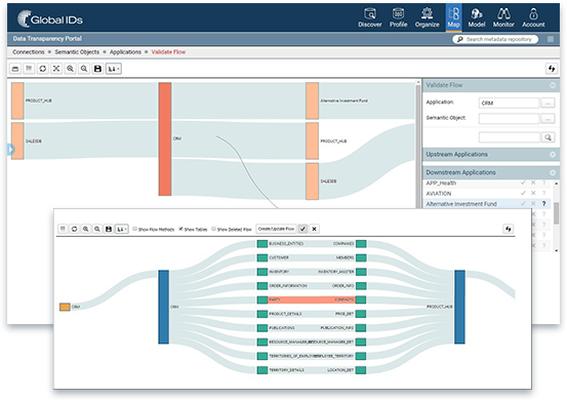
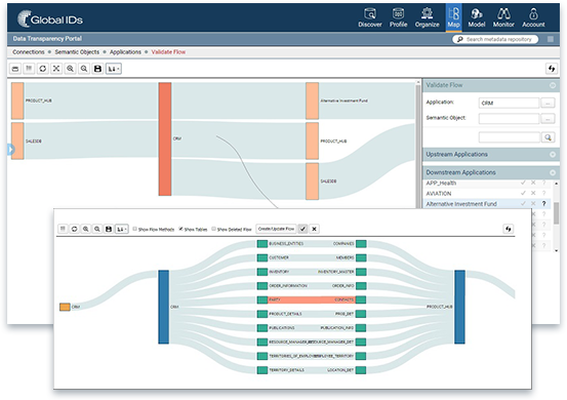
With the growth of business and data streams, it's incredibly difficult for data teams to have clarity and visibility into all the transformations and journeys of all their data sources.
https://t.co/WGKvQA05bQ
#datalineage#datamanagement#datastrategy#datagovernance
I couldn't agree more with Jacques Vilar, CDO at the FDIC: “Understanding that data lineage...will drive insight to our leaders and help them make better decisions or quicker decisions." https://t.co/KIRqbKWPMW #datagoverance#analytics#CDO#datamanagement
If you need to change a data structure, do you just do it and see who screams downstream? Impact analysis can be done better than “scream tests.” https://t.co/ORWxfxuZvj
#datalineage#impactanalysis#globalids
Data Mapping is a vital task that is needed to reshape data for many uses, like regulatory reports, metrics generation, and analytics. Take out the guesswork.
https://t.co/itpTpM8a1A #dataclassification#datascience#datamapping#datadiscovery
Data scientists often want to get to a Minimum Viable Model to reduce time to insight. But a Minimum Viable Model requires Minimum Viable Data. See how to automate this. https://t.co/efAMLEMYY0 #analytics#datascience#datadiscovery#semantics
One underappreciated aspect of #dataliteracy is recordkeeping. Who decided what about data, when was the decision made, why it was it made, and how was it implemented? Learn about how to implement this at: https://t.co/Tb56OswVnL #datamanagement
#Dataliteracy requires people to have a full understanding of the data pipeline in their org. This can only be done with an enterprise-class platform that provides people with what they need to be truly data-literate. https://t.co/Tb56OswVnL
How do you deal with new and evolving financial regulations their interpretations? Only by quickly understanding what data you need to apply what regulations to at any moment. Learn how: https://t.co/3bYCLmOenK #dataquality#datacleansing#banking#financialservices
A data catalog can be a kind of Rosetta stone that enables users, developers, and administrators to find and learn about data -- and for information professionals to properly organize, integrate, and curate data for users. https://t.co/LnGuYMKbcC #datacatalog#metadata
Do large organizations have different data management needs than small ones? Maybe, but complexity is one thing a lot of organizations have in common — large and small. Learn how to automate these capabilities. https://t.co/dKyF28NI76 #analytics#datadiscovery#masterdata
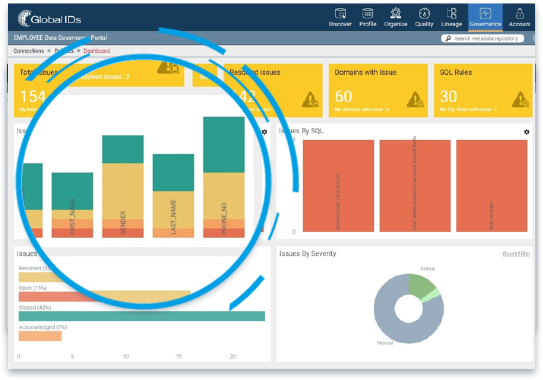
Transparency is a fundamental principle of Data Governance. Everything about data should be knowable – the good, bad, and ugly. In reality, most knowledge about data is hidden but doesn't need to be. Learn more at: https://t.co/sU7w1rQP7c
#datagovernance#metadata#globalids
If you need to change a data structure, do you just do it and see who screams downstream? Impact analysis can be done better than “scream tests.” https://t.co/ORWxfxuZvj
#datalineage#impactanalysis#globalids
Data literacy requires people to have a full understanding. This can only be done with an enterprise-class platform that provides people with what they need to be truly data-literate. https://t.co/pIgdHBTEOw
#datagovernance#dataliteracy#datalineage#metadata
Don’t let the Cloud become a fogbank in which nobody knows where all the enterprise’s data assets are. Know where your data is to govern it. Global IDs offers data discovery you can use. Learn more at: https://t.co/TkmTdNnn3O
#cloud#datadiscovery#globalids
A key point about data literacy is sustainability. You can't keep going back to the same subject matter experts. How do you avoid this? https://t.co/tIbwuaqdm1
https://t.co/dGe9stHbXT #datagovernance#dataliteracy#datalineage#metadata