Computational Studies on the Functional and Structural Impact of Pathogenic Mutations in Enzymes
1. This study explores the crucial role of computational simulations in understanding the molecular effects of disease-causing mutations in enzymes, offering insights into enzyme structure, dynamics, and catalytic efficiency.
2. Using tools like molecular dynamics (MD) simulations, multiscale calculations, and machine learning, the study highlights how computational methods uncover mutations’ impact on enzyme stability, substrate binding, and active site interactions, which are often difficult to capture experimentally.
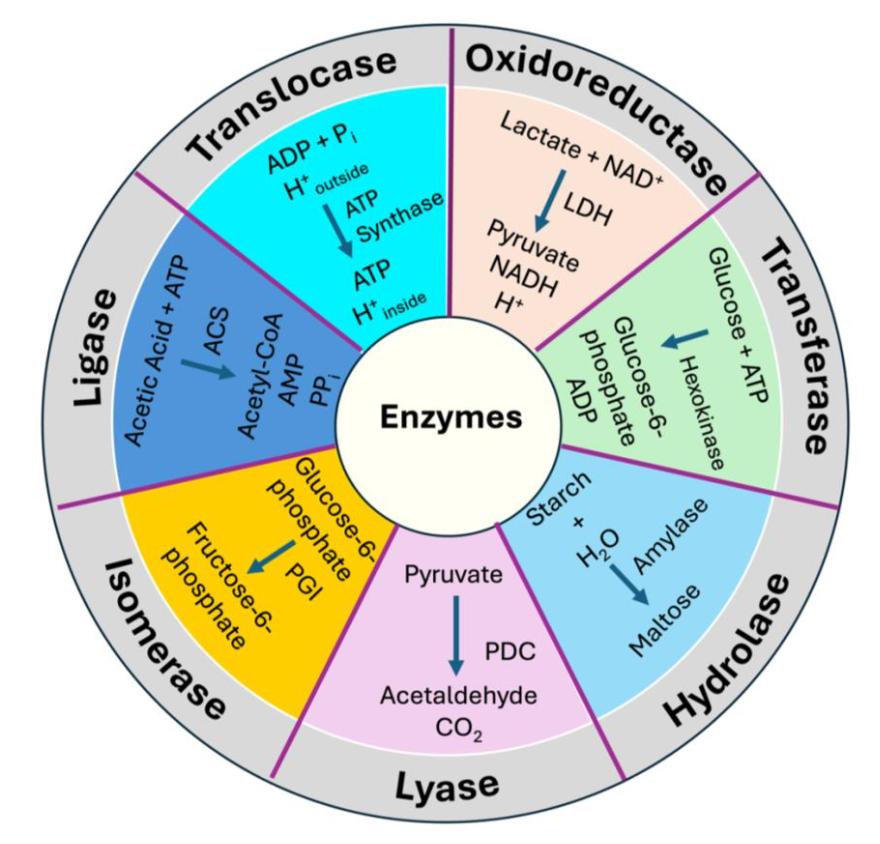
3. The paper emphasizes the predictive power of MD simulations, detailing specific enzymes affected by pathogenic mutations. Examples include oxidoreductases and transferases, where mutations lead to significant alterations in metabolic functions, underscoring the method’s potential for therapeutic strategies.
4. Oxidoreductases, involved in critical redox reactions, serve as a case study, showing how mutations disrupt electron transport and redox balance, directly linking computational results to observed deficiencies in drug metabolism and immune responses.
5. The role of advanced methods like QM/MM coupling is examined, particularly for enzymes where high accuracy at atomic levels is required, such as for active sites where mutations may alter cofactor binding and reaction energetics.
6. Machine learning advancements, such as RoseTTAFold and AlphaFold, are highlighted as transformative tools for protein structure prediction, enabling the modeling of large mutation datasets and helping researchers predict unknown mutations’ effects on enzyme structure and function.
7. The integration of predictive models and bioinformatics, like Hypothesis Driven-SNP-Search, allows for large-scale screening of mutations, enhancing the efficiency of discovering disease-associated mutations and guiding drug discovery efforts.
8. The paper concludes that computational studies, especially in tandem with experimental validation, provide a cost-effective and detailed approach to studying enzyme mutations, fostering developments in personalized medicine and enzyme design for synthetic biology applications.
@Tanay8690@YazdanMaghsoud@arkanil_roy@UpekshaD1
📜Paper: https://t.co/zGqFes0RTw
#ComputationalBiology #EnzymeMutations #Bioinformatics #MolecularDynamics #ProteinEngineering #DrugDiscovery #MachineLearning
It was a great experience to present our research at @UTDResearch#ResearchDays24 ! A big thank you to @CisnerosRes for the nomination and for his immense support!
Thank you to @YazdanMaghsoud and @EmLedd1 who were an integral part of the project I presented today!
BREAKING NEWS
The Royal Swedish Academy of Sciences has decided to award the 2024 #NobelPrize in Chemistry with one half to David Baker “for computational protein design” and the other half jointly to Demis Hassabis and John M. Jumper “for protein structure prediction.”
Special thanks to Dr. Cisneros @CisnerosRes and his research group for these amazing years. I carry with me great memories and experiences. A.U., here we go!
Hello @UTDAuxiliarySvs
I see you are back at it again removing all green parking spaces. Lot H has no more green parking. With temperatures reaching three digits, green parking spots are getting further away from the main buildings and getting more inaccessible.
Disappointed.
Excited to share that I won the 1st place in Physical/ Computational Chemistry at 56th MIM by American Chemical Society DFW section. Grateful for this recognition among such esteemed peers! #ACSDFW