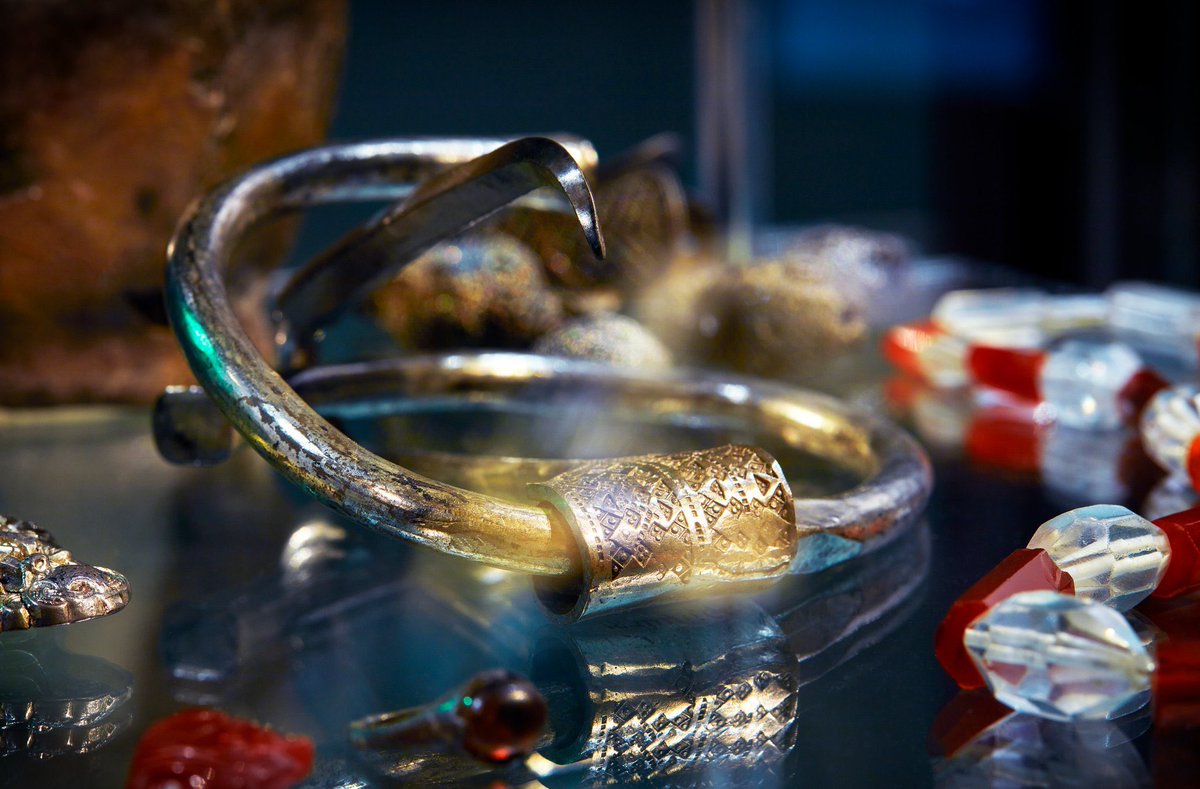
Among 70 other wells dating to the Bronze Age (approx. 2200-950 BC), archaeologist in Fürstenfeldbruck, Germany, have found what is believed to be a wishing well.
https://t.co/irjyeGg30G
During an excavation of a burial mound in Norwegian Svingerud, archaeologist have unearthed a stone which bears the oldest so far known runic inscriptions.
https://t.co/NZCdVkNPeo
https://t.co/NZCdVkNPeo
Outside Sösdala, south Sweden, a dispute is ongoing between Hässleholm’s municipality and Vittfarnas Viking-village, resulting in the municipality reporting the couple who run the business, claiming serious crime against an ancient monument.
https://t.co/zCeaXGyGnn
In connection with the extensive excavations at Slussen, central Stockholm, archaeologists have found the remains of the legendary 18th-century restaurant Peilikan, where the famous poet Carl Michael Bellman is said to have composed songs.
https://t.co/OD25CkqU4r
Thanks to a solar storm in 775 AD, when unusually large amounts of carbon-14 hit the Earth, Danish archaeologists have now been able to carry out new and more detailed dating of 100,000 objects from the Viking Age town of Ribe.
https://t.co/NYqAEnfGCa
A unique mosaic has recently been found in a large Roman villa near British Rutland. The mosaic, which measures a full 11×7 m, is located on private land and shows scenes from the Illiad.
https://t.co/BtX8Ov1caU
Our popular newsletter is back! In it you’ll get the past week’s archaeology news, tips and content not published on our website. The newsletter goes out every Sunday and you can subscribe via the form on https://t.co/EwYAvfIYVH
Enjoy!
At the same excavation where a unique knife handle was recently found, archaeologists have now uncovered two medieval runic inscriptions.
https://t.co/Fv8hyeoYsT
With the help of ground penetrating radar, archaeologists have discovered between 4-5 buildings as well as several burials in close proximity to the Gjellestad ship, a recently excavated Viking age burial.
https://t.co/sVgRoFc8RI
In Oslo, Norway, archaeologists recently discovered what is believed to be a knife handle made of bone or antler, depicting a falconer holding a falcon.
https://t.co/rNHx9Lq0eA
A great, informative and funny video production from the exciting excavation of the Vendel and Viking age site Aska, in Swedish Östergötland.
(With English subtitles)
https://t.co/XbFiRGZrls
The grave of a mounted warrior with a sword and spurs dating to 4-7th century AD have been found on the Baltic island of Gotland.
https://t.co/EO9IiTg2ZR
Several inhumations dating to the late 10th century have been found in Swedish Sigtuna. Archaeologists believe they could represent the area’s first Christian population and provide an important link to the predecessor Birka.
https://t.co/oZIhTamexs
On 24 June a new 1000 square metre large Viking Age exhibition will open at @historiskamuse in Stockholm with 2500 objects, interactive stations and online content. According to the museum the exhibition is the largest of its kind.
📷 Erik Lernestål, Historiska museet/SHM CC-BY
Scottish researchers has announced the findings of the country’s only known pre-historic rock art depicting animals, dating to the early Bronze Age. The discovery was made by a member of the public inside a stone cairn and has been proven authentic by specialists.
📷 @HistEnvScot
Sad news from south Sweden. The famous early Bronze Age burial in Kivik has been neglected and is currently facing serious damage.
https://t.co/6uu12FIB7U
An amazing 11 cm big, embroidered textile fragment dating to 850-950AD has been found in a female chamber burial in Norwegian Hestnes, Trøndelag. Other burial artefacts include a set of textile working equipment.
📸 @Vitenskapmuseet video on Facebook: https://t.co/JZk0kYzFkE
During a routine watching brief in Hunnestad, southern Sweden, archaeologists found a picture stone which turned out to have been part of the Viking Age so-called Hunnestad Monument.
https://t.co/Zjgdpgto7R
During excavations of a Viking age hall in eastern Iceland, archaeologists have found an even older building dating to the 8th century.
https://t.co/yFfkCiJdnD