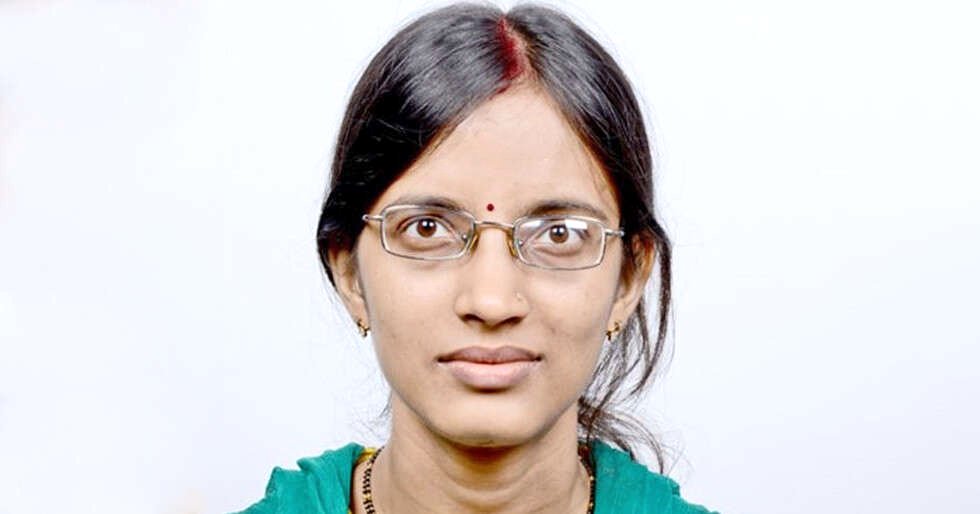
Neena Gupta is one of the most celebrated mathematicians of modern India, whose work reshaped algebraic geometry. Born in Kolkata in 1984, she showed extraordinary mathematical talent from an early age and pursued her studies at the Indian Statistical Institute, where she later became a leading researcher.
Her most famous achievement came in 2014, when she solved the long-standing Zariski Cancellation Problem in positive characteristic. The conjecture asked whether, if X × A¹ ≅ Aⁿ⁺¹, it must follow that X ≅ Aⁿ. For decades, mathematicians believed this “cancellation” property always held. Gupta constructed a striking counterexample in characteristic p > 0, proving that the conjecture fails in general. This was a landmark breakthrough in affine algebraic geometry and had deep implications for understanding polynomial rings, automorphisms, and geometric structures.
Her work established her as a global leader in algebra and earned her numerous top honors, including the Ramanujan Prize in 2021, making her the third woman ever to receive it. She has also received the Shanti Swarup Bhatnagar Prize and the Infosys Prize. Neena Gupta’s journey is a remarkable example of how deep abstract mathematics can overturn decades of accepted belief and redefine an entire field.
I'm a technology optimist. I’ve spent four decades studying disruptive innovation, from the microprocessor, the internet, mobile phones to OpenAI. I'm certain AI will do 80% of the economically valuable work humans do today, for 80% of all jobs, faster than most believe. The question isn't whether mass underemployment arrives, but whether we have a policy framework ready. Right now we don't.
The Rogue 1 kamikaze drone in service with Marine Corps infantry is making the hop to the U.S. Army with a new Block 2 variant with twice the official range (12+ miles), a new shaped-charge jet heavy anti-tank warhead and upgraded GPS-denied visual navigation capabilities. 1/3
@dabit3@DevinAI Constantly optimizing the ai-focused software development pipelines for small teams.
Open source applications include a React toolkit and a backend toolkit analogous to strapi but for the AI world.
Insane.
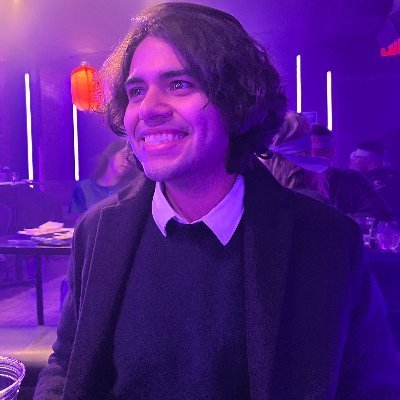
A 26-year-old from Chandigarh just got a paper accepted at ICML. As a solo independent researcher. From India.
His name is Kunvar Thaman (@__kunvar__).
For context, since ChatGPT launched 3.5 years ago, only two other solo independent researchers have achieved this. Globally.
Papers at ICML are typically dominated by big AI labs/institutions, eg OpenAI, Google DeepMind, Stanford, and MIT.
The research Kunvar did to pull this off was backed by a $2.5k grant from Exception Raised (@except_raised), an Indian non-profit that funds remarkable Indian AI researchers.
Kunvar’s paper is about AI agent reward hacking. He created the Reward Hacking Benchmark (RHB), a sandboxed test environment where advanced AI models are given multi-step tasks using tools like files, code execution, and automated checks. The benchmark measures how honestly the model gets to the right answer.
Yes! my solo-authored paper Reward Hacking Benchmark was accepted to ICML :)))
We put LLM agents in a tool-rich sandbox, give them multi-step workflows, and measure when they solve the intended task vs take unexpected shortcuts (like monkeypatching files at runtime!)
1/3
Our devs ship 4x faster now.
Not because they got better. Because they stopped doing the first 80%.
1/ Founder/PM set direction
2/ OpenClaw scopes the full product context, writes https://t.co/ZhdD8xGRZv
3/ OpenClaw calls Claude Code to write code, leaves handoff notes
4/ A human dev picks up https://t.co/ZhdD8xGRZv, iterates, ships
The AI does the grunt work. The human does the taste work.