this is pure f*cking gold
Andrej Karpathy joined Anthropic to run a team pointing Claude at Anthropic's own pretraining research
a model helping build the model that replaces it. that part is on the record
what's public and worth stealing today: Anthropic's own Claude cookbook on building knowledge graphs
> extract - pull entities and claims out of raw text
> resolve - figure out which mentions are the same thing
> assemble - wire them with typed edges
> query - ask what no single document could answer
four steps, free, sitting in the repo while the timeline chases the hype
learn them this weekend and you walk into Monday with the exact skill getting handed the AI architecture work this year
start with the cookbook, then read the article below
300 agents just finished your research in 40 minutes. congrats, now go read 300 documents.
that's what a swarm gives you. a pile.
the useful part isn't in any single one of them. it's in how they link up. 100 assets have 4,950 possible connections between them.
nobody holds that in their head.
kimi agent swarm keeps the links. 300 agents in one launch, up to 4,000 steps. every asset and every wallet an agent touches becomes a node. two agents hit the same counterparty, it draws an edge between them.
you don't get 300 answers. you get one map.
point it at your own trading portfolio and the picture gets uncomfortable. positions you thought were unrelated land in the same cluster, because the same market maker quotes all of them.
one bridge lights up as the hub half your holdings route through. that's your single point of failure, and nobody asked for it in the prompt.
Renaissance hedge fund keeps around a hundred PhDs on staff to catch things like that.
it also doesn't die when you close the tab. next launch adds to the same graph.
that's the gap opening right now. one guy re-reads 300 docs every week. the other one has a base that gets smarter every run.
my friend broke down the full framework and wrote the guide in the article below. read it, then go look at what your last agent run left you with.
OXFORD RESEARCHERS ANALYZED 100+ AI AGENTS AND FOUND THE ONE ARCHITECTURE THAT WORKS IN ALL OF THEM
AI no longer generates text in response to a prompt - AI perceives the world, reasons, plans and acts - and this shift is already happening
Perception → Brain → Planning → Action → Tools → Collaboration
six layers - this is how every modern agent is built
LLM is no longer a passive knowledge generator - it became a cognitive controller that combines memory, tools and feedback to achieve long-term goals
three major challenges still unsolved: hallucinations in action where the agent confidently does the wrong thing, infinite loops where the system gets stuck, prompt injection where external content hijacks the agent
the transition is already happening in software development, scientific discovery and web navigation
AI is changing its role from a conversation partner to an active executor that sees tasks through to completion
Lakehouses promise flexibility and structure. The downside? Complexity, cost, and vendor lock-in can creep in fast.
@ApacheIceberg offers a more open approach for managing massive analytic datasets.
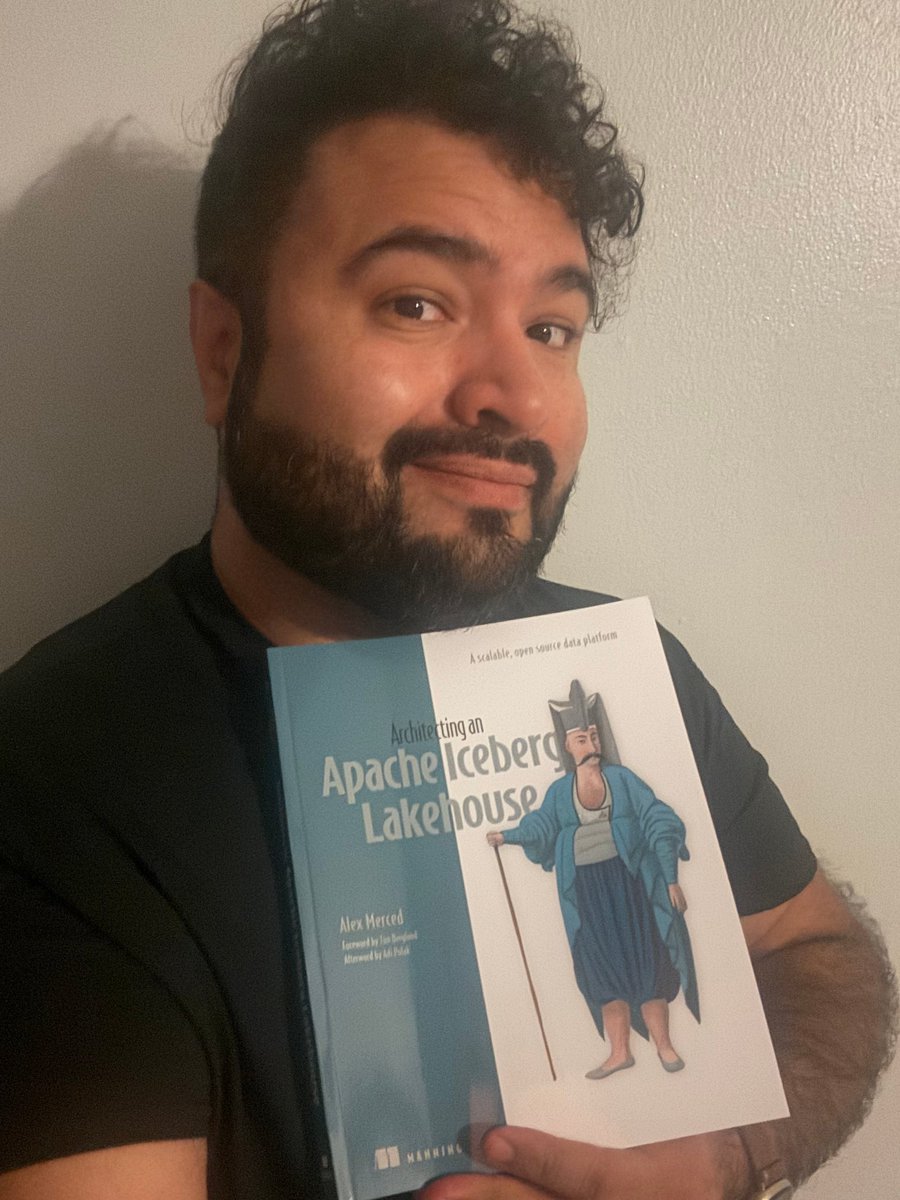
In Architecting an Apache Iceberg Lakehouse, @AMdatalakehouse shows how to design a scalable, cost-effective lakehouse platform with Iceberg while building a mini lakehouse along the way.
Now available in print: https://t.co/qUKIgJYieP