Using structural equation modeling and mediation analyses, our new open-access paper found that greenspace has the most substantial total effect on mental health, followed by air pollution and noise pollution. @theAAG@AmericanGeo
🚀 Excited to launch my new video tutorial series on #GeoAI! 🎉 The first tutorial is now live:
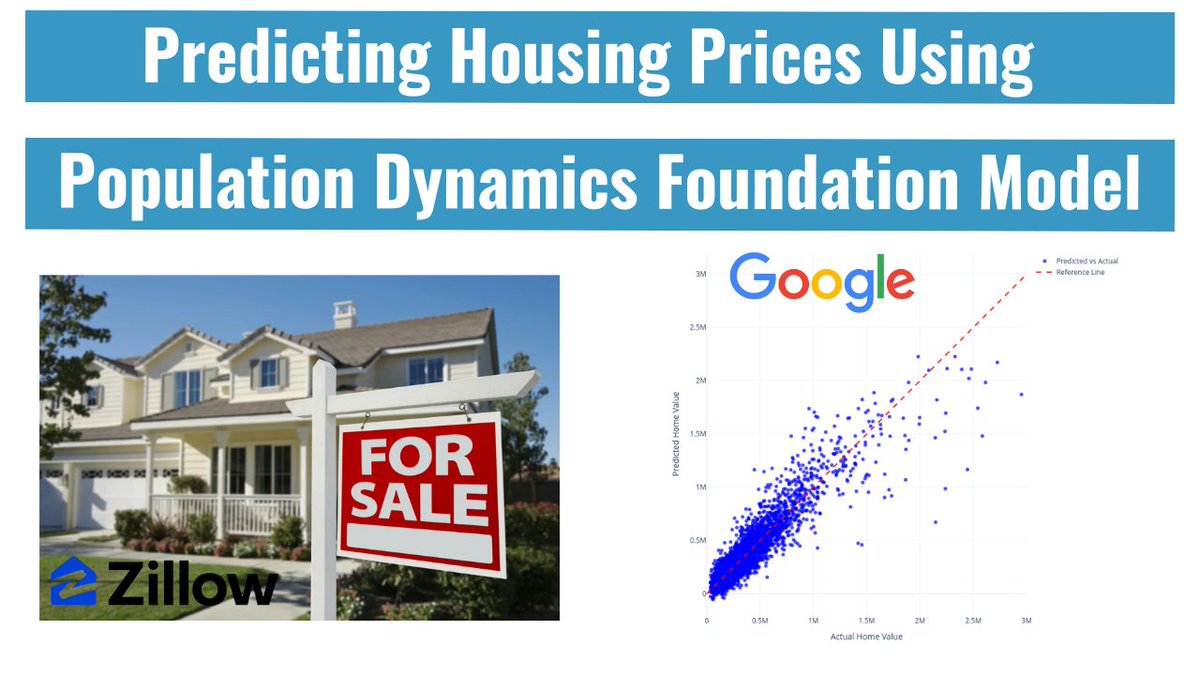
🔍 Predicting US Housing Prices at the Zip Code Level using Google's Population Dynamics Foundation Model and Zillow Data.
📚 GitHub: https://t.co/zwtnJN7Mpv
📓 Notebook: https://t.co/jrtJJJwOdM
🎥 Watch the Video: https://t.co/Ym6fdKCqDo
Join me on this journey! 🌍✨
Happy to announce that I started a new position as an Assistant Professor in the Department of Geography and Geoinformation Science at @GeorgeMasonU! I'm very excited about the new chapter of my life and look forward to working with this amazing academic community!
Ever wanted to research mobility patterns but no idea where to start looking for data? @qingqingchen77, @mattzook and I are releasing a dataset originally based on geotagged social media posts by 2 mln users across the US, containing 1.2 bln data points sent between 2012-2019.
New paper with @Dapper_Mapper, Yilei Yu, and @hk_friedrich! Our review highlights disparities in health outcomes following flood events in the US, but also provides methodological critiques to emphasize the need for precise flood exposure metrics and community engagement.
Thrilled to share our latest publication in @ijgis! 🎉 Our review dives into how street view imagery and cutting-edge visual intelligence techniques are reshaping built environment auditing. Check out our full article for more: https://t.co/d5P8hq7n88
Excited to share our recent paper on high-resolution PM2.5 prediction modeling from low-cost sensor data. By comparing the model results of multiple cities, we identify space-time kriging models perform better for PM2.5 predictions than machine learning approaches.
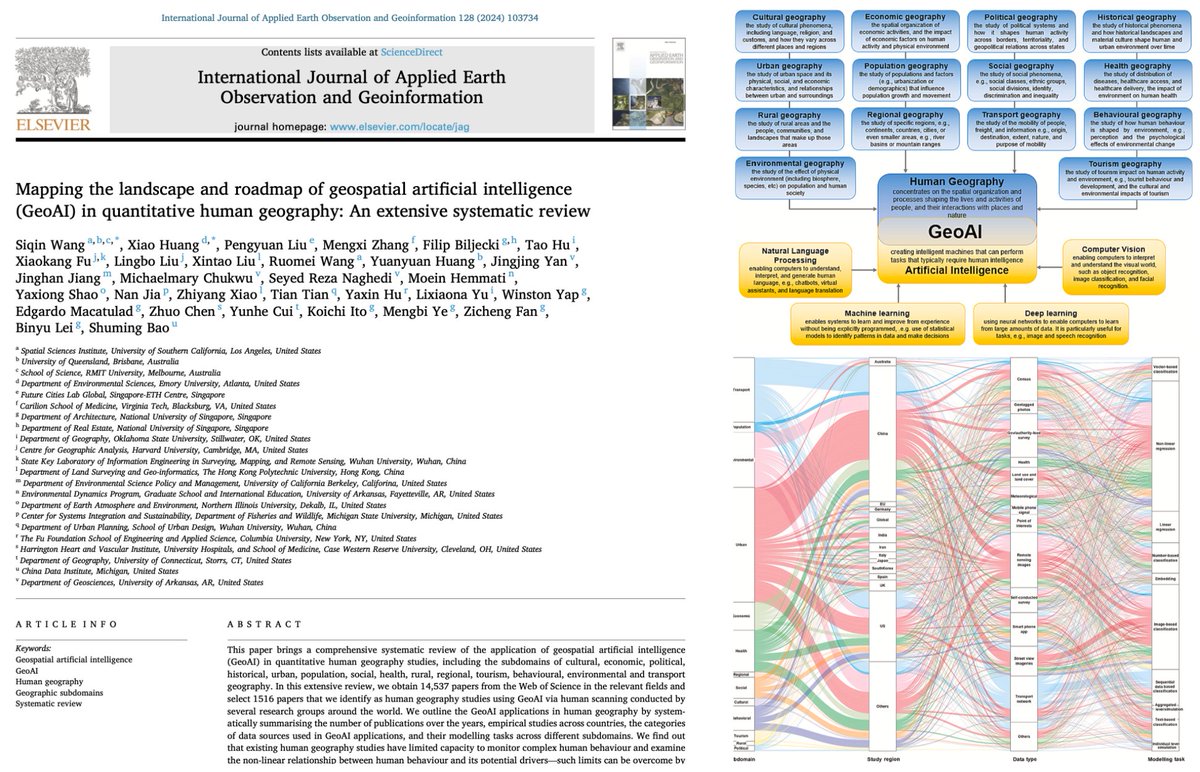
JAG publishes a massive review on GeoAI in quantitative human geography. In this paper, 8 of our lab members have been involved in. Starting from a corpus of 14,537 papers, 1516 of them were reviewed to outline the applications of GeoAI in this domain. 🔗 https://t.co/1ym2siOHvh