I am pleased to announce our paper has been published in Carbohydrate Polymers. Thanks to all members of this excellent team, i look forward to working with you all again.
https://t.co/2QmAoDVgdA
AI agents are learning to read @biohub protein models @GaoShanghua@AdaFang_@_yepeng
https://t.co/hPR7IYr9f0
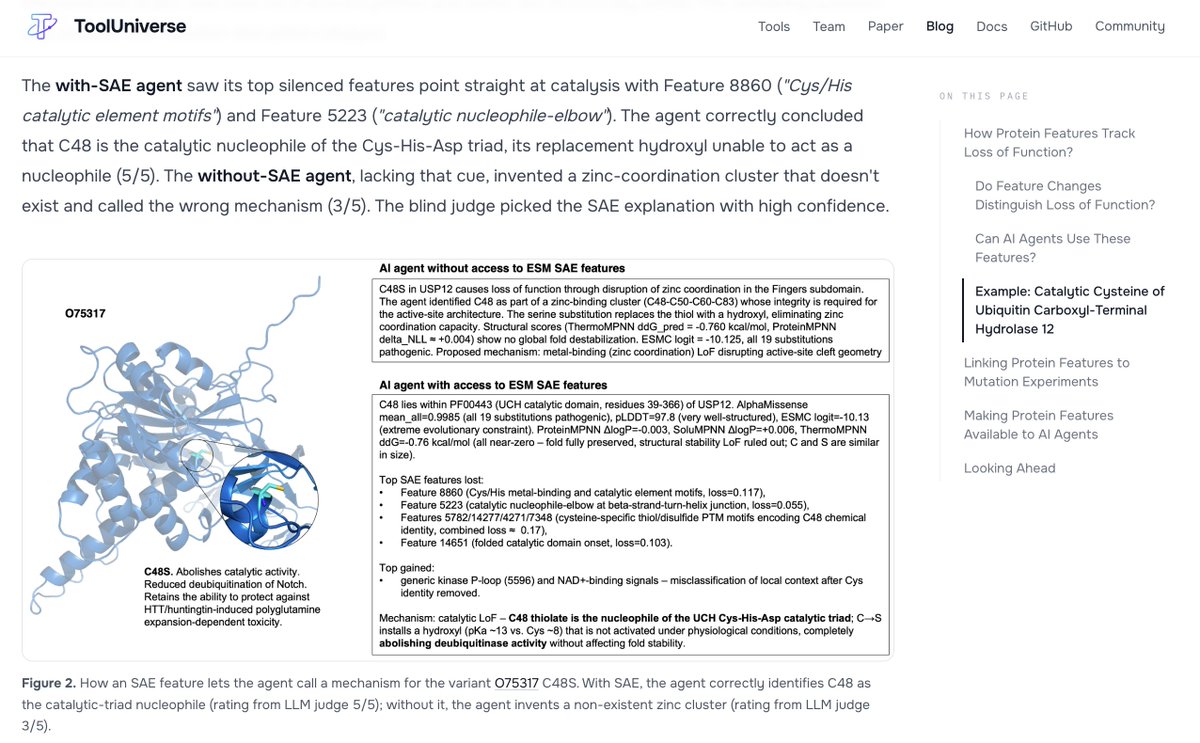
We explored how AI agents powered by ToolUniverse @ScientistTools can interact with new ESM models
🧬 Mutation and loss-of-function analysis
Agents compare reference and mutant proteins, identify SAE features most affected by a mutation, and connect those perturbations to structural and functional consequences. The agents then relate these changes to experimental evidence, including deep mutational scanning measurements, to explain potential loss-of-function mechanisms
🧪 Functional mechanism exploration
Agents analyze protein representations to identify functional tracks associated with specific molecular activities. By linking SAE features to protein regions, structures, and annotations, the agents can generate hypotheses about how proteins carry out their functions
Check out new SAE-enabled ToolUniverse skills for variant interpretation, loss-of-function analysis, structural annotation, functional mechanism interpretation, and evaluation against experimental datasets
@HarvardDBMI@harvardmed@Harvard@broadinstitute@KempnerInst
Say I am trying to solve GSM8k but no LLMs allowed! Only with a symbolic style solver with perhaps a few trainable parameters, so it's effectively a python program. How high do you expect it to go?
Scientific discovery is not a single chain of thought @GaoShanghua@AdaFang_ . It is a long-running process of competing hypotheses, failed experiments, shared insights, and changing research directions
AutoScientists lets AI agents do the same
https://t.co/JHAkbEx2Ac
🧪 We call this AutoScientists: self-organizing agent teams for long-running scientific experimentation
Open science:
Paper: https://t.co/mzEx5xwtSE
Code: https://t.co/1OLxN4AW94
@HarvardDBMI@harvardmed@broadinstitute@KempnerInst
We tend to think about metabolism as a biochemical process, but we can also examine it through the lens of biophysics.
Today on The Science and Experience of Energy, @niroshajmurugan discusses how quantum biology adds another layer to our understanding of how energy shapes health, stress, mitochondria, repair, and lived experience. For example, we know that quantum phenomena, such as electron tunneling, are integral to the everyday activities of our mitochondria.
We share highlights from our time at the recent 2026 Quantum Biology Forum and how rigorous scientific inquiry in this growing field may open the door to new approaches for diagnostics and therapies.
https://t.co/qh3DMffzMT
We're excited to host the amazing Sridevi Sarma from John's Hopkins, who blends math and engineering with biology and neuroscience like very few can do.
If you want to hear about her Brain Entropy Index please join us on Zoom.
Live virtual office hour on Thu, May 28 at 3pm PT! I'll cover a lot of ground, including yet more spring showers in CA (& a "pivoting" marine heatwave), an overview of our new paper on Western US precip extremes, & brief reflections on the RCP85 discourse. https://t.co/NgGKOaIzlq
Congratulations @biohub on the release of ESMFold2, ESMC, and ESM Atlas!
Excited to share that these models are available on day one to AI agents powered by ToolUniverse @ScientistTools
Stay tuned for agentic skills that let AI agents use SAE representations for protein variant interpretation, loss-of-function mechanism analysis, structural annotation, and mechanistic protein reasoning @GaoShanghua@AdaFang_@_yepeng
https://t.co/lWHESvWXTo
Our "evolutionary antifragile therapy" paper is now posted online (Cancer Research):
https://t.co/QyGexLImV2
First experimental validation of antifragility in cancer (ALK inhibitors in lung)! An awesome collaboration involving @ara_anderson, @AndriyMarusyk, @Binadesai14 et al
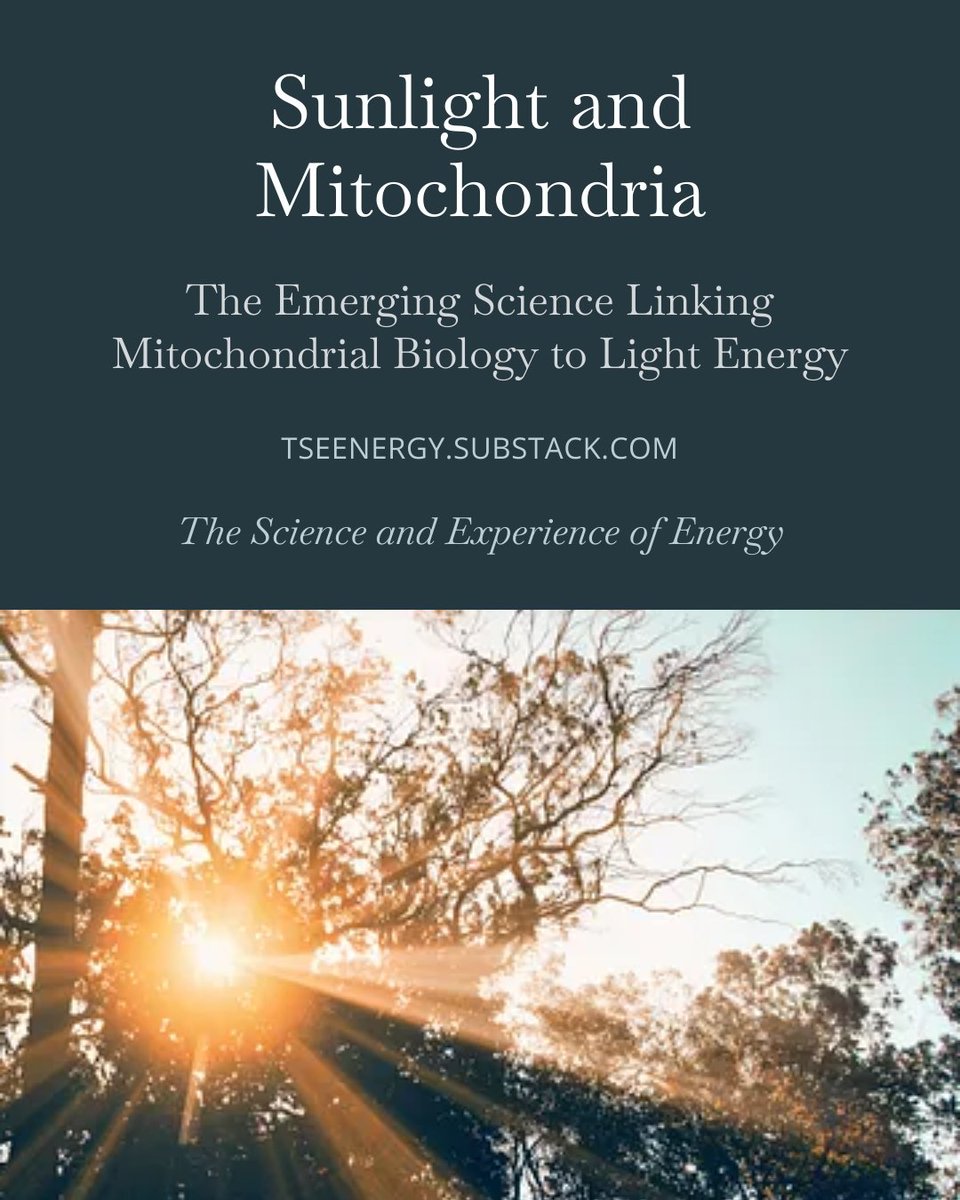
Today on The Science and Experience of Energy, @niroshajmurugan and I share how sunlight and other kinds of energy don't only have effects on the surface of our skin.
Certain wavelengths of light can travel into our bodies and potentially have meaningful effects on our mitochondria, our cells, and ultimately our health. Light affects our biology, and the best hypothesis about what the "receptor" through which light energy is converted into useful biology, is that mitochondria are the receptors.
These data further emphasize that mitochondria aren't just the cell's powerhouses. They are dynamic, energy-sensitive processors with wide-ranging effects on our biology.
https://t.co/iHySCwESQ1
Yet another cut-off low this week in CA, w/unsettled late May conditions (& also, a temporary reprieve re: the NorCal, but not SoCal, marine heatwave). But warmer weather associated w/PacNW ridging looks likely in June. Plus: a bunch of new YouTube links! https://t.co/YSCX4ZyXsY
Approaching our lives in a scientifically-informed, energetically-inspired way helps us gain awareness of our movement.
That awareness might be the greatest asset that empowers us to care for our own health.
The third chapter of this documentary series on #climate extremes is now out! This episode focuses specifically on the impacts of climate change and extreme weather-related disruptions to agriculture, as well as potential solutions to these challenges.
https://t.co/vj7g5QDz73
The modern expectation of sleeping in silence is a curious novelty. 🔇 For almost the entirety of human history, sleep was naturally noisy, a symphony of acoustic companionship. Our biology does not crave silence for optimal rest. #SleepScience#AncestralSleep
https://t.co/uIcfoc2iOr
#SynBYSS webinar, 10am USA CT
200th, May 21: Prof David Nielsen @ASU & Prof Dongheon Lee @FAMUFSUCOE Florida State U
And summer break until Jul. 9 to celebrate the 200th webinar & the 2nd in-person SynBYSS conference in Barcelona!
Zoom link and schedule
https://t.co/oA2wmiuA7f
.@fpradelli94 & I found a compelling candidate for the first published mathematical model in oncology: Hutchinson's 1886 proposal of Malthusian growth law for tumors.
The 2nd math onco? A rebuttal of the 1st, a mere ~3 months later. [some things never change]
📢 We are thrilled to announce the keynote speakers for #RECOMB2026:
🧬 Sara Mostafavi
🧬 Manolis Kellis
🧬 Paul Medvedev
🧬 Alexandros Stamatakis
Join us in Thessaloniki for inspiring talks from leaders in computational biology.
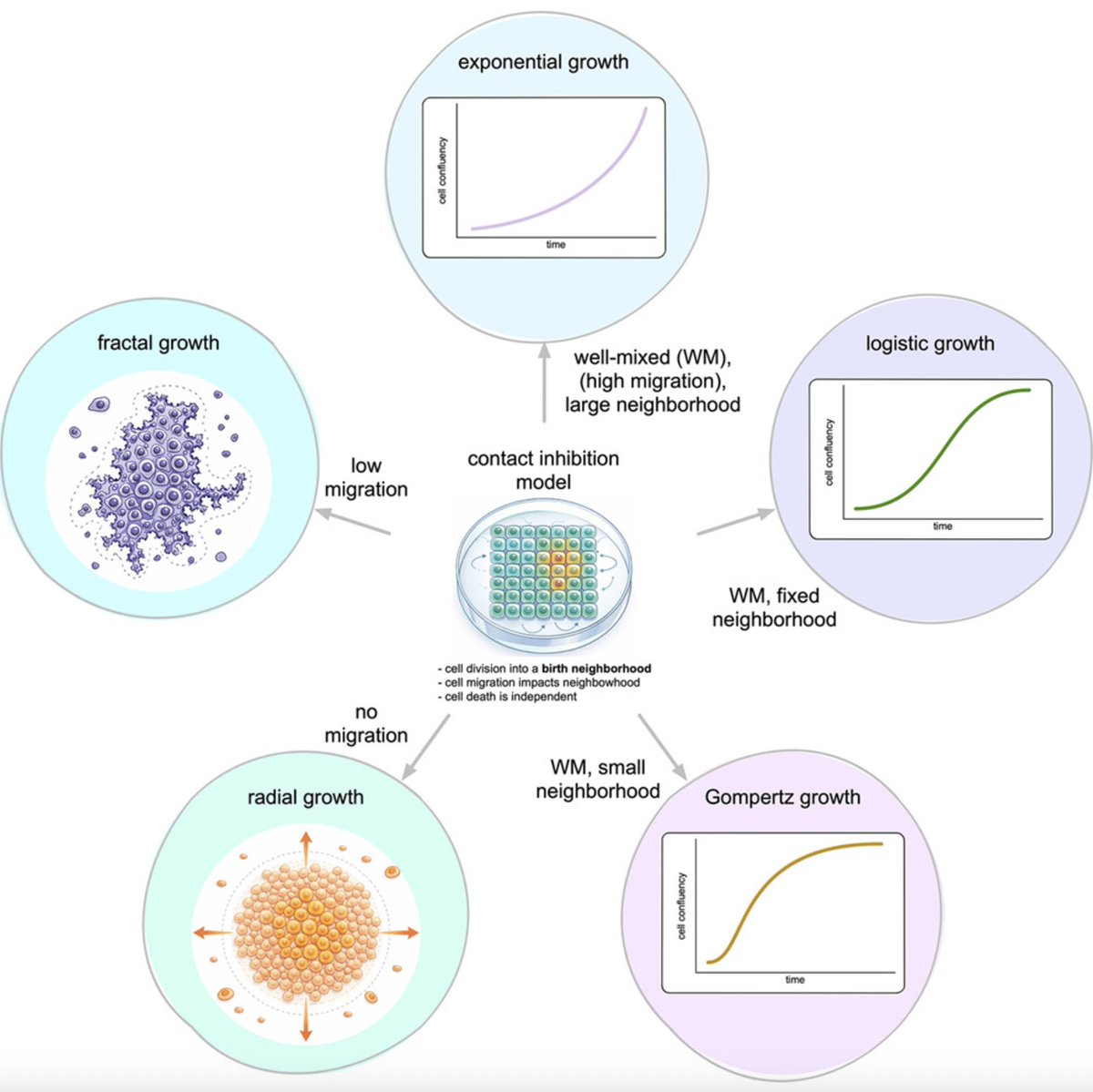
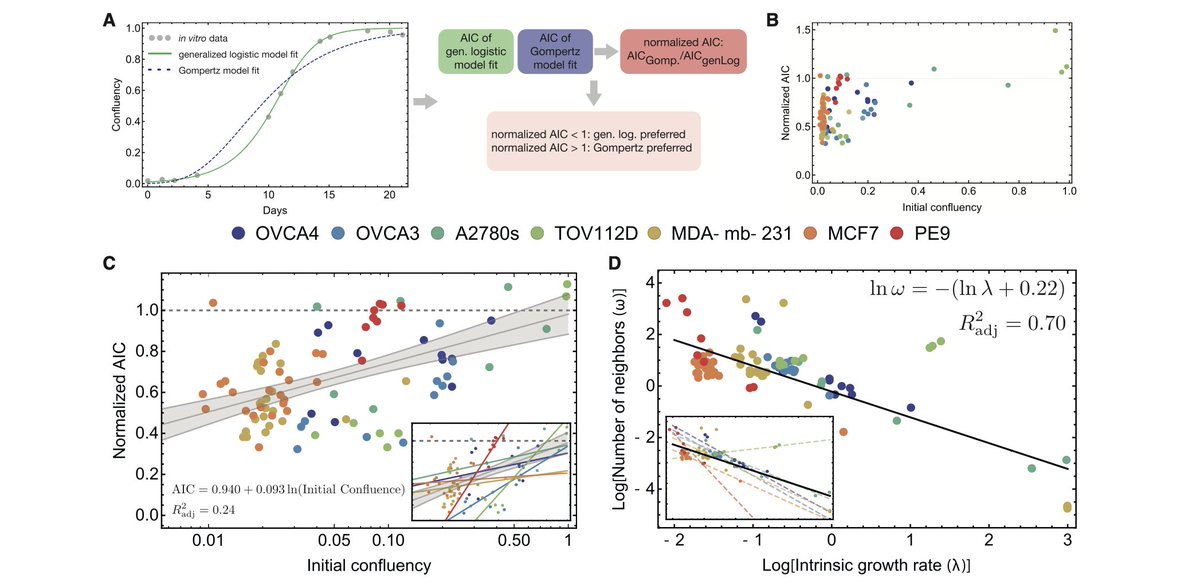
"Universal principles of cell population growth follow from local contact inhibition."
We just published an integrative experimental-mathematical approach to defining growth laws in the context of cell-cell interactions:
https://t.co/ieOv7inrrs
In an era of unprecedented global warmth, what would a strong #ElNiño event mean for global climate? Also: what function does El Niño serve more broadly the global climate system? https://t.co/0zvNJWiatM







![mathoncbro's tweet photo. .@fpradelli94 & I found a compelling candidate for the first published mathematical model in oncology: Hutchinson's 1886 proposal of Malthusian growth law for tumors.
The 2nd math onco? A rebuttal of the 1st, a mere ~3 months later. [some things never change] https://t.co/rEoaG4y0Fo](https://pbs.twimg.com/media/HInp5M_XcAAr3Av.jpg)