“Take me home, to the place I belong…” 🇺🇸🎶
I’ve listened to this song on road trips across America.
Hearing 60K+ fans sing it together in #Seattle after a World Cup qualification perfect.
Go USA 🇺🇸🦅⚽️
#USMNT#TakeMeHomeCountryRoads#JohnDenver
Today, I realized my #AmericanDream was becoming real… and it brought me to tears. 🥹
After 10+ years in the US and recently becoming an American citizen, I stood in Seattle cheering for 🇺🇸 USA at the #WorldCup
Go #USA 🇺🇸⚽️🦅
#USMNT#FIFAWorldCup#Seattle#USAvAUS
Tesla vient d'allumer à Corpus Christi (çà ne s'invente pas...) la première raffinerie majeure de lithium des États-Unis, et ce qui me frappe n'est pas le made in USA. C'est que Musk a balancé l'approche standard à la poubelle pour repenser entièrement le procédé from scratch.
La raffinerie tourne sans acide sulfurique. Six étapes au lieu de huit à douze, un million de véhicules électriques par an en capacité nominale, 50 GWh à terme. Pas de sulfate de sodium toxique à gérer derrière, juste un résidu minéral quasi inerte qu'ils appellent analcime. Sur le papier ça sent le storytelling, sauf que l'usine tourne vraiment depuis janvier et que l'investissement a dépassé le milliard de dollars.
C'est la réponse industrielle à quinze ans de dépendance chinoise sur le raffinage. La Chine contrôle la majorité du lithium raffiné mondial, pas parce qu'elle a les gisements, mais parce qu'elle a absorbé les externalités environnementales qu'aucune boîte occidentale ne voulait assumer. Tesla prouve qu'on peut contourner le problème au lieu de le subventionner.
230 millions de personnes utilisent ChatGPT pour leur santé. Chaque semaine.
C'est devenu la plus grande app de santé au monde.
On décrypte ça avec @Clement_P_o , @ArnaudAuger et Wallerand Moullé-Berteaux.
Nouvel épisode Silicon Carne 🌶️
https://t.co/uhWFUdbxal
Introducing a new category of app:
your daily health assistant
Think: OpenClaw for health.
Unlike other health apps,
miora is the first health assistant that actually runs your life:
1.) Books your workouts for you: integrates with ClassPass + your favorite studios so you never miss booking windows or get waitlisted again
2.) Orders food for your goals: high-protein, cycle-aware meals without scrolling DoorDash
3.) Adjusts everything to your body: workouts, recovery, nutrition based on your cycle + energy
Why?
Because staying healthy shouldn’t feel like a second full-time job.
You shouldn’t have to plan everything.
track everything.
decide everything.
Your health should just… run.
👇 welcome to health on autopilot
@getmiora
Advanced Machine Intelligence (AMI) is building a new breed of AI systems that understand the world, have persistent memory, can reason and plan, and are controllable and safe.
We’ve raised a $1.03B (~€890M) round from global investors who believe in our vision of universally intelligent systems centered on world models. This round is co-led by Cathay Innovation, Greycroft, Hiro Capital, HV Capital, and Bezos Expeditions, along with other investors and angels across the world.
We are a growing team of researchers and builders, operating in Paris, New York, Montreal and Singapore from day one.
Read more: https://t.co/kyVAL7EoFx
AMI - Real world. Real intelligence.
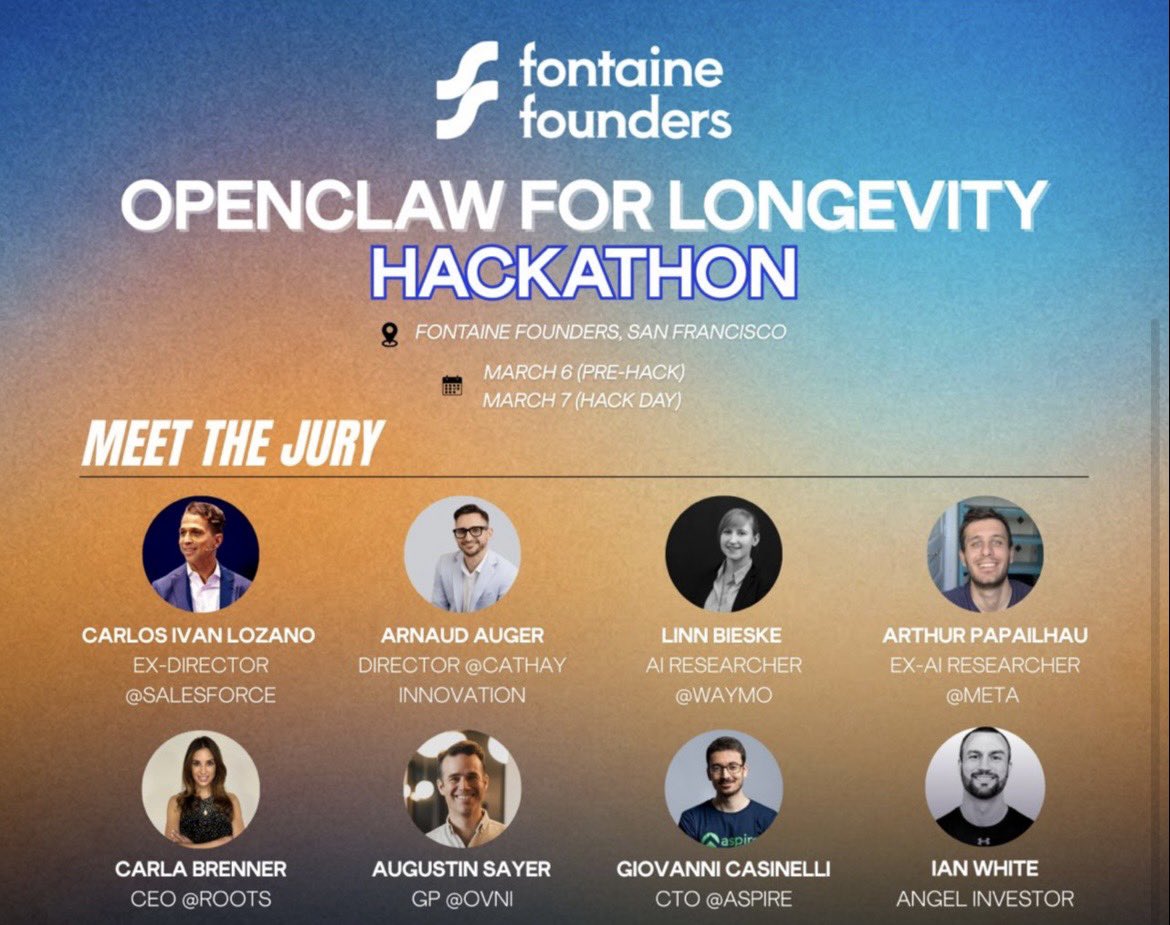
If you are interested in clocks, specialized models, foundation models for aging & longevity research - check out this event by @ArnaudAuger link in comments
When @CES creates a dedicated exhibitor category, it’s not following hype — it’s acknowledging market structure.
Longevity has moved from something implicit (wellness, AgeTech, health) to something explicit, visible, and strategic.
That shift matters.
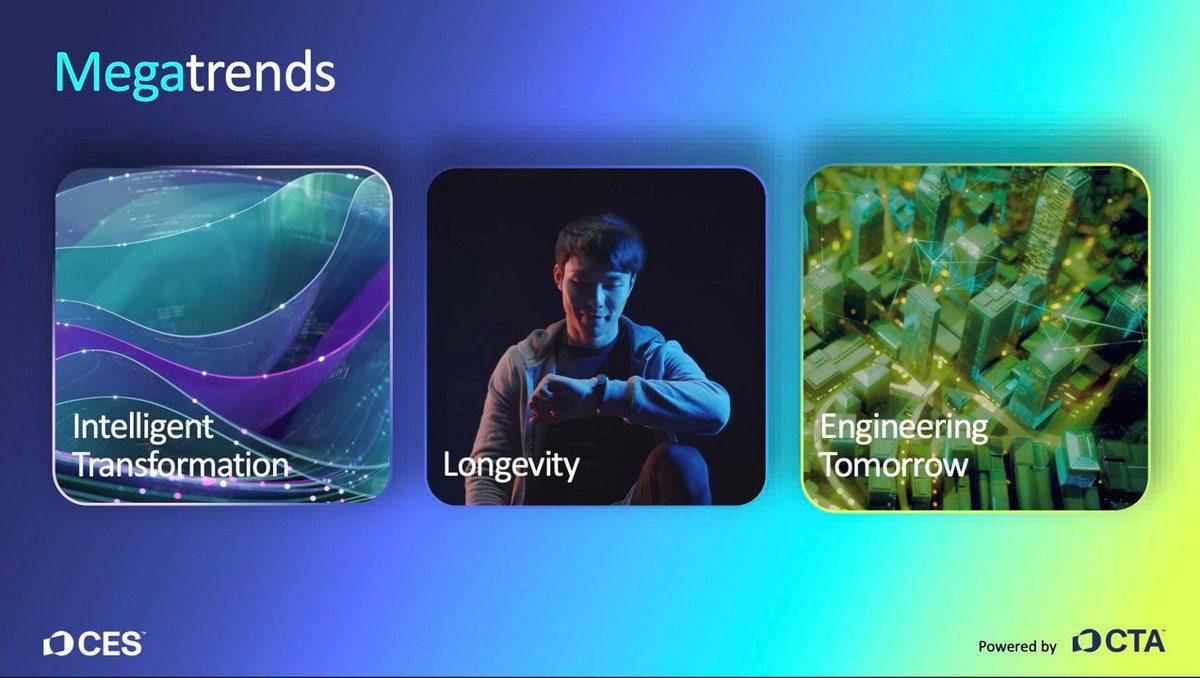
💡#Longevity is a Top 3 Mega Trend for #CES2026.
🚨1st time, Longevity is its own exhibitor category at #CES & dedicated talks 🎤
👇This thread breaks down the #Longevity megatrend from CES 2026
Key Numbers, Product Launches, Best of the ~100 Longevity exhibitors — from startups to leaders like L’Oréal.
Longevity goes far beyond healthcare. 🚀
RT appreciated 🙏
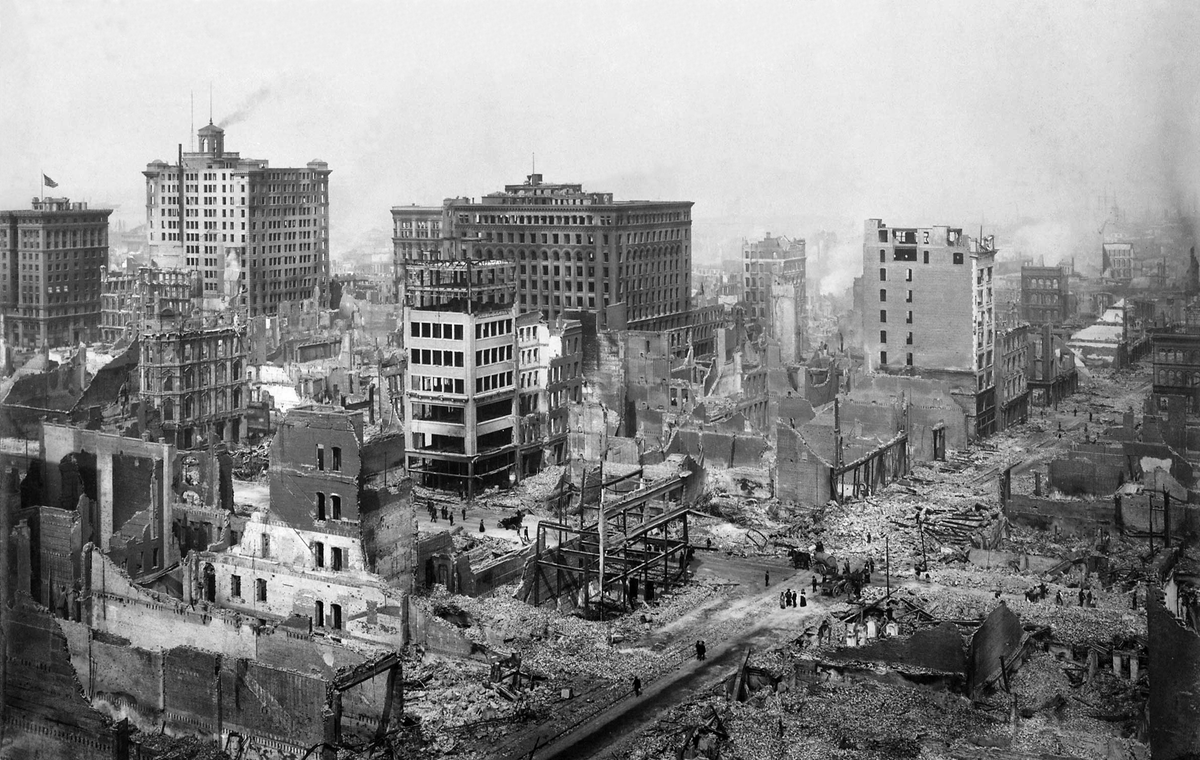
San Francisco's 1906 earthquake destroyed 80% of the city & had a monumental impact on the world of insurance globally.
98% of the losses were attributed to fires rather than the earthquake, and many of those fires were set by building owners after the earthquake, because, like today, most insurance covered fire damage but not earthquake damage.
Word spread throughout the city that fires were covered by insurance and people started burning down their own properties.
Fires raged on for 3 days. Thanks to this event, we have a new insurance-specified peril for "fire following earthquake, and named perils and exclusions are a core part of insurance contracts today.
Losses totaled ~$10B in todays dollars, with ~100,000 claims. It doesn't sound like a lot but was huge for the time... it wiped out about 50 years of profits in the industy, and drove 20 insurers into bankruptcy, including one in Austria and one in Gemany.
The amount paid in claims was roughly 100 times the amount paid for policies that year.
Claims for events these days are a lot higher (adjusted for inflation) - The LA fires from earlier this year will be > $100B, for example. It's a bit of apples and oranges since most people were not insured in 1906 and they are now... and in part because of the earthquake, people around the world started buying insurance. There was actually a spike in insurance policy buying in London, Paris, and Berlin too as the news spread.
1906 SF really made Lloyds of London's reputation. Many were skeptical of overseas insurers at the time, but Lloyds underwriter famously said about SF: "Pay all of our policyholders in full irrespective of the terms of their policies" so when other companies were denying claims for fire damage under their earthquake policies, Lloyds didn't... and that cemented Lloyd's reputation for reliable claim payments and made people more open to international insurers.
Last bit of lore for today: The 1906 fire helped launch what became the world’s largest bank.
A.P. Giannini had started the Bank of Italy in 1904 in a converted saloon in Jackson Square, serving hardworking immigrants other banks wouldn't.
When the quake hit, most banks shut down for months. Vaults were sealed, fire was everywhere, and many thought the city of San Francisco was finished for good.
The first night of the fires, Giannini smuggled cash from his bank (to hide from looters) in a vegetable cart (his family owned a vegetable wholesaler). This allowed him to start banking sooner than every other bank. He set up a plank-and-barrel desk on a wharf and started lending, with no collateral required. He famously got paid back every penny that he lent out, when most thought he would lose his shirt. That cemented the success of the Bank of Italy, which later became the Bank of America. By Giannini’s death in 1949, it was the biggest bank on Earth!
There's so much more SF lore to cover, I could probably do this daily for a while...