One of the original AI alignment researchers, @paulfchristiano, at the Hinton Lectures:
"I think there is a high risk of an AI takeover within the next three years."
"If, say, you or me or Donald Trump wanted to stop [AIs], they would be as ineffective as if you or me was trying to stop the US military."
Paul Christiano (OpenAI board member) yesterday:
"There's material risk of AI takeover in the next 6-12 months.
We have seen roughly the things we might expect to see shortly before something really bad were to happen.
Even with [any] realistic policy responses, the risk remains exceptionally high.
If we build this as quickly as we can in the easiest way we can the chance is [more like] a coin flip [within the next 3 years].
For most people in this room, the most likely reason they will die is because of an AI accident."
Christiano:
• Is on OpenAI's safety and security committee (which exists to block risky practices)
• Co-invented RLHF at OpenAI back in 2017-2021
• From 2024-2026 was head of safety at the US gov's AI agency (now called CAISSI)
(Video is from 'The Hinton Lectures' there's another on tonight and tomorrow.)
Taiwanese semiconductor analyst Andrew Lu’s take on the recent scandal involving Jensen Huang:
Why the US Seized on the Scandal to Draw Its Sword: Three Strategic Objectives
The purpose of this scandal is by no means to expose an affair. It is to force through three critical objectives that had made no headway in the tech war between the US and China because Jensen Huang opposed them.
The first cut: Completely destroy the legitimacy of Jensen Huang's lobbying against sanctions in Washington
Over the past two years, the loudest and most influential business leader in Silicon Valley opposing a total ban on chip exports to China has been Jensen Huang. He has told the White House the same thing all along: "Cede the Chinese market to Huawei, and the only one that ends up dead is the American tech industry."
But the moment US intelligence labels the woman named as Huang's affair partner "a spy working for China's Ministry of State Security who sought to steer the US toward easing its chip controls," every bit of lobbying he has done for looser controls takes on an entirely different political meaning. It becomes a national security matter, raising the possibility that a foreign spy used a secret relationship to exert influence.
Huang can no longer say a single word in defense of the Chinese market before Congress or the White House. If he does, he will be branded as someone who "fell for an intelligence operation and still hasn't come to his senses."
The second cut: Reverse the H200 export approvals for China and sever the link between Chinese shell companies and Southeast Asian smuggling networks
Look at the timing of the two reports.
On November 8, the very day the Jensen Huang scandal broke, The New York Times published an investigation for which its reporters went in person to dozens of Chinese companies that the US Commerce Department had approved to handle Nvidia's H200 chips. New Matrix in Beijing was one of them. According to the report, the registered addresses of companies approved to buy the chips turned out to be empty "ghost offices," and some of the companies had close ties to entities on US sanctions lists and to firms under contract with the Chinese military.
One exposé says Nvidia's CEO was having an affair with a female spy from Megaspeed, the Singapore company that handled the chip smuggling. The other says the Chinese companies Commerce approved to buy H200s are nothing but shell companies trading on behalf of the Chinese military. The aim of these two reports is clear. They are meant to pressure the Trump administration and the Commerce Department into fully revoking or freezing H200 export approvals for China and, going further, to force a sweeping overhaul of the loophole that let chips be diverted through data centers run by third parties in Singapore and elsewhere in Southeast Asia.
The third cut: Put Nvidia on a national security leash through congressional oversight and an independent investigation
As the world's largest company by market cap and the dominant force in AI, Nvidia has until now enjoyed broad autonomy in how it runs its business. But in the wake of this incident, the three congressional committees responsible for China, foreign affairs, and intelligence have begun examining Nvidia's internal security measures directly. They have even pressured Nvidia's board into forming an independent investigation committee to look into the company's own founder and CEO.
In effect, Washington's national security establishment has planted a watchdog right inside Nvidia's board. From now on, the goal is to make sure that everything, down to where each and every one of Nvidia's high performance chips ends up, conforms strictly to US national security strategy. It also means there is no more room for skirting the edge of the rules or releasing chips with specs specially tailored to regulatory thresholds.
Conclusion
"The scandal was a detonator set off right on cue. The real goal was to plug the holes chips were leaking through."
Jensen Huang made the fatal mistake of letting his guard down in his private life and personal relationships. In the end, he fell into a honey trap, the textbook tactic of intelligence warfare, and was compromised. America's national security and intelligence agencies ruthlessly exploited the weakness his private life had exposed. As a result, they solved three thorny problems in a single stroke: Nvidia's lobbying at the White House to ease restrictions on China, the flow of H200 chips into Chinese shell companies, and smuggling routed through Singapore.
The closed congressional hearing set for November 18 will be the decisive turning point at which the US moves in earnest to tighten its sanctions on China's AI compute even further.
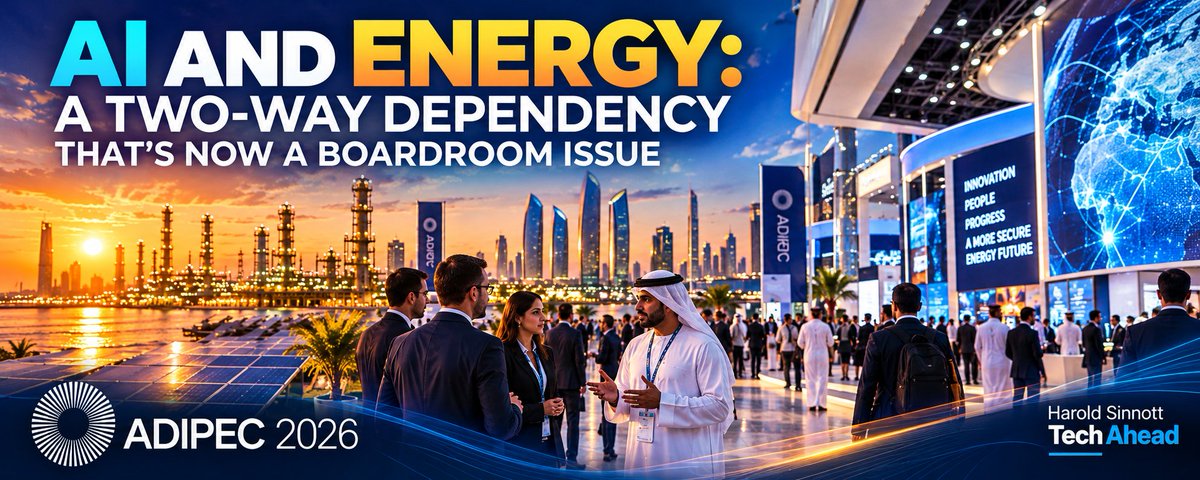
AI can help energy systems forecast demand, anticipate disruptions and operate more efficiently.
But AI also needs reliable power to scale.
That two-way dependency is becoming a boardroom issue, from data centers to industrial operations.
A key conversation heading into
#ADIPEC2026 | Abu Dhabi, Nov 2–5.
➡️ ➡️ Promo Code MED60: https://t.co/Z4BxyS3vi0
#ADIPECPartner @ADIPECOfficial@ADNOCGroup@SultanAlJaber
Everyone codes faster. Almost nobody ships faster.
Coding is 16% of a developer's week.
The bottleneck moved: context, visibility, review. 77% of @Atlassian's pull requests are now written by agents.
#AtlassianTeam26Europe The AI SDLC transformation playbook: https://t.co/OnebKWP1VF
#ad #AtlassianPartner
Can AI help travel brands earn loyalty again?
I hosted Charlie Sultan of @SAPConcur and Evan Konwiser of @amexgbt on CXO Spice to discuss Complete and the changing travel experience.
Watch: https://t.co/YU39UXpjKq
#CXOSpice#BusinessTravel#AI#SAPConcurPartner
In my talk with @Furrier from @NYSE last month, we talked about why coding has become the frontier use case for AI and if that is a red-flag. Full talk link is at the bottom of this post.
My thesis is: We are traversing through digital economy and there a lot of room to grow digitally, so, all sectors of economy are benefiting from coding. Even physical AI will have a huge component of coding, though it will be mainly done by machines.
On that note, I believe, sooner or later we will need to come up with a new term (other than coding) to describe machine generated instructions after machines learn all modes of worldly operations, including physics, chemistry, biology, human behavior, intuition, politics, and more... Some people have started to use the term "just in time code".
Related: I recently posted about the fact that what we called 'design time' phase of systems, is becoming more of 'run time' part of systems lifecycle.
In software, abstraction is the name of the game, with Ai we are going way up in abstraction and that too pretty fast.
Full Talk with @Furrier from NYSE: https://t.co/dfFiuq5npN
cc @craw@dvellante@rseroter@tcrawford@dhinchcliffe@rwang0@nyike@andrewdfeldman@BettyJunod@NYSEWired@bjbaumann2014@GemmaAllenSays@sandy_carter@EdLudlow
Can enterprise AI scale without sacrificing trust?
At @UiPath FUSION, I spoke with @AndradaMorar about what it takes to orchestrate agents, automation, systems, and people with clear accountability.
@UiPath's framework "Deterministic where you can, agentic where you can’t, humans where you must."
This goes beyond technology architecture. It calls for leadership discipline.
Read the full newsletter: https://t.co/TcL29o9WrD
Watch our conversation here: https://t.co/VDUjjuCW9w
#UiPathFusion
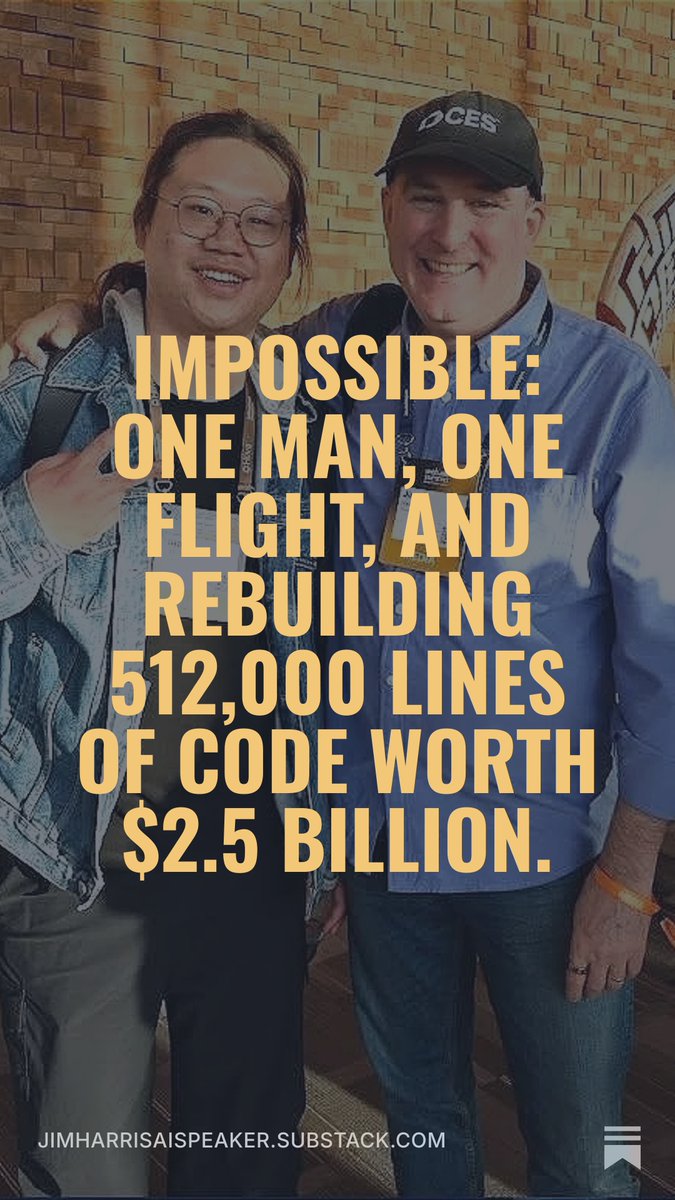
In one flight from Seoul to Vancouver Sigrid Jin transcribed 500,000+ lines of Claude Code (a program that was generating $2.5 Billion a year of revenue for Anthropic) from Typescript into Python.
What would have taken 200+ years of programming to create he transcribed into Python in a single flight.
Read about it on my new Substack at
https://t.co/Y1R7psRtv2
Please comment, like and share!
#AI #GenAI #FutureOfWork
@EvanKirstel@eric_kavanagh@Ronald_vanLoon@jblefevre60
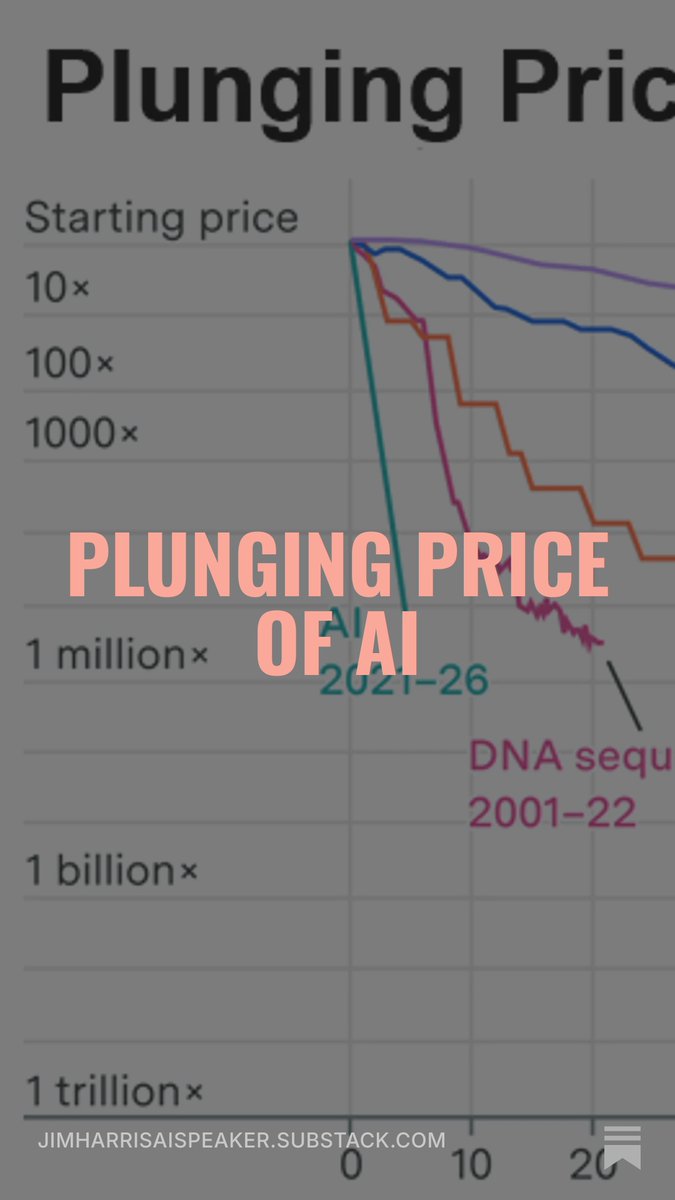
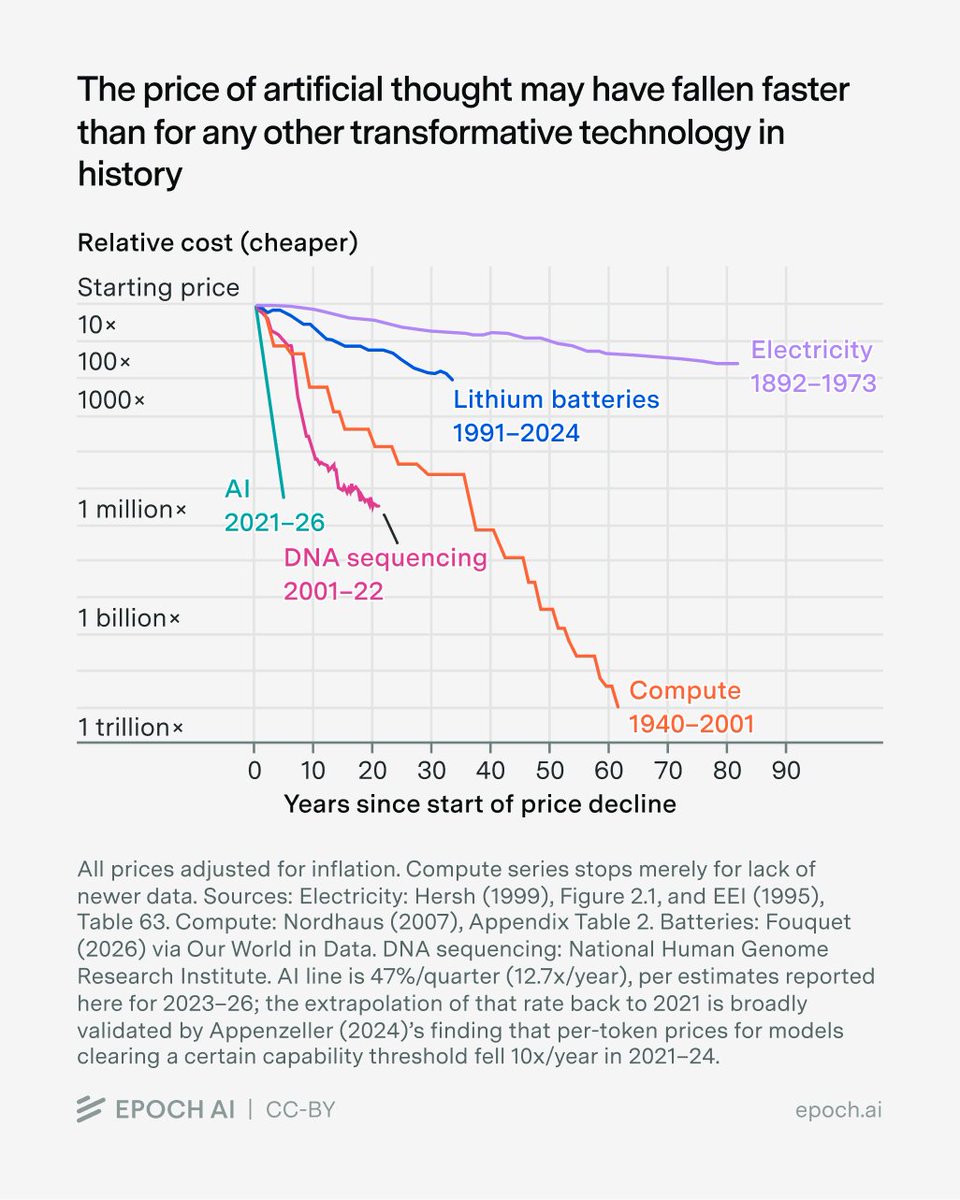
AI is Plunging in Price. It's falling faster than any other technology in human history.
It’s fallen 47% per quarter since 2023 equal to 13-fold per year, meaning that in four years it’s fallen almost 30,000-fold. It's getting cheaper:
4X faster than DNA sequencing
6X faster than compute (Moore’s Law)
18X faster than lithium-ion batteries
54X faster than early electrical power
Read about it for free in my Substack blog:
https://t.co/m9NcFDkEvM
#AI
Lovable has crossed annual run-rate revenue of $600 million, the company’s co-founder Fabian Hedin said at the HumanX summit in Amsterdam on Thursday. The vibe-coding platform in June said that number was around $500 million.
https://t.co/hf0aopoU2T
AI is getting cheaper more quickly than any other transformative tech in history. At a given level of performance, cost has fallen ~47%/quarter since 2023.
That’s 4× faster than DNA sequencing, 6× faster than compute, 18× faster than lithium batteries, and (up to 1973) 54× faster than electricity.
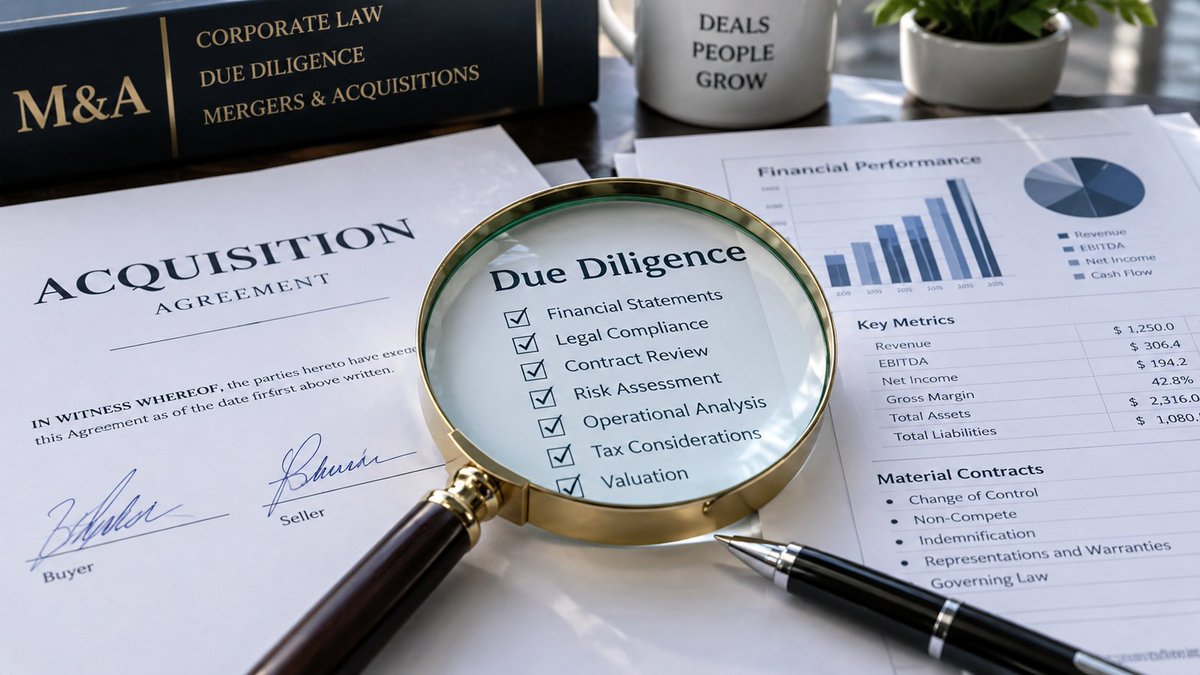
The $100,000 Prompt: AI Just Ate the Legal Bill
A friend and colleague just saved $100,000 in legal costs during the due diligence process when his firm was acquired. Read about it in my new Substack.
It's a FASCINATING story:
https://t.co/s3zitpX3AT
Please subscribe, like and share!!! Thx
#AI #law #legal #substack
@EvanKirstel@IrmaRaste@eric_kavanagh@Ronald_vanLoon@jblefevre60@GlenGilmore