Intern managed to send a firmwide email (50k ppl) with the subject line GO KNICKS!!!!!!!!!!! and nothing in the body
People keep on replying all and Outlook keeps crashing. Send help
Tout le monde pense que le monde libre a gagné en 1989, à la chute du mur de Berlin.
C'est faux.
Et c'est exactement pour ça que le monde est aujourd'hui en feu.
Ce qui est tombé le 9 novembre 1989, c'est un appareil.
Une économie planifiée, un empire militaire, un mur de béton. Ce qui n'est pas tombé, c'est l'idée. L'idée que le monde se divise en oppresseurs et en opprimés. L'idée qu'il existe une égalité finale à atteindre, par tous les moyens. L'idée que tout ce qui existe (la famille, la nation, le mérite, l'héritage) est une structure de domination à abattre.
Cette idée-là n'était plus dans le bâtiment quand le bâtiment s'est effondré.
Il faut reprendre la chronologie, parce que tout est dans la chronologie :
Le communisme économique avait un défaut fatal : il était réfutable. Il promettait l'abondance, il produisait des famines. Il promettait l'émancipation, il produisait des barbelés. Budapest 1956, Prague 1968, L'Archipel du Goulag publié à Paris en 1973, les boat people de 1979 : à chaque décennie, le réel envoyait sa réfutation. Les boat people étaient une réfutation flottante, visible depuis les plages.
Alors l'idéologie a fait ce que fait tout organisme menacé : elle a muté.
La mutation a un nom, et j'en ai raconté la généalogie ici : la French Theory.
Foucault a déplacé la guerre du terrain des faits, où le communisme perdait à chaque fois, vers le terrain du savoir lui-même.
S'il n'y a pas de vérité, s'il n'y a que des rapports de pouvoir déguisés en savoir, alors plus aucune famine, plus aucun mur, plus aucun goulag ne peut réfuter quoi que ce soit.
La French Theory n'a pas enterré le marxisme.
Elle l'a rendu irréfutable.
Et la mutation a des dates. Toutes antérieures à 1989.
1934 : l'École de Francfort, chassée d'Allemagne, s'installe à Columbia. La critique de l'économie devient critique de la culture.
1964-1965 : Marcuse, exilé allemand devenu professeur américain, remplace le prolétariat défaillant par un nouveau sujet révolutionnaire (les minorités, les étudiants, les marginaux) et écrit noir sur blanc que la tolérance doit être accordée aux mouvements de gauche et refusée à ceux de droite.
Octobre 1966 : le débarquement a une date précise. Université Johns Hopkins, Baltimore. Derrida, Barthes, Lacan présentent la pensée française aux campus américains.
1967 : Rudi Dutschke lance le mot d'ordre, la longue marche à travers les institutions.
1968 : les révolutions de rue échouent partout.
Qu'importe. La révolution ne passera plus par la rue, elle passera par la salle de classe.
1975-1985 : Yale, Berkeley, Columbia absorbent la théorie, qui devient le système d'exploitation des humanités.
1987 : Allan Bloom publie The Closing of the American Mind pour donner l'alerte. Un million d'exemplaires vendus.
L'université le traite de réactionnaire et passe à autre chose.
L'Amérique avait son Aron, elle en a fait la même chose que nous du nôtre.
Puis arrive le 9 novembre 1989.
Le Mur tombe. L'Occident célèbre. Fukuyama avait déclaré la fin de l'Histoire dès l'été, avant même la chute. On démantèle les missiles, on encaisse les dividendes de la paix, on déclare le match terminé.
Nous avons célébré notre victoire sur une adresse vide. L'idéologie avait déménagé vingt ans plus tôt. Nous avons gagné contre les chars et perdu contre les chaires.
Pendant ce temps, l'autre empire communiste faisait la lecture inverse. Pékin avait écrasé Tian'anmen dans le sang cinq mois avant Berlin. Sinistre, mais lucide sur un point : la Chine savait que la guerre était idéologique.
Elle a choisi : abandonner l'économie marxiste, garder le contrôle du récit. L'Occident a fait l'exact opposé : il a gardé le marché et absorbé l'idéologie. Trente-cinq ans plus tard, regardez qui construit des centrales et qui déboulonne ses statues.
Vous voulez la preuve que c'est le même logiciel ? Faites la table de correspondance.
La lutte des classes est devenue la lutte des identités.
Les koulaks sont devenus les privilégiés.
L'autocritique maoïste est devenue le privilege checking. Les commissaires politiques sont devenus les DEI officers.
Le samizdat est devenu le compte shadowbanné.
La nomenklatura a quitté Moscou pour Davos et Bruxelles.
Et le paradis ne s'appelle plus la société sans classes : il s'appelle l'équité, l'égalité des résultats.
Exactement ce que je décrivais ici il y a quelques semaines.
On me dira : il n'y a pas de Goulag.
C'est vrai. C'est même tout le génie de la version 2.0.
Le communisme dur devait briser les corps parce qu'il ne tenait pas les esprits.
Le communisme mou tient les esprits : il lui suffit de briser les carrières.
Pas de camps, des services RH.
Pas de procès de Moscou, des excuses publiques.
Pas de Sibérie, la mort sociale.
Demandez aux émigrés du bloc de l'Est installés en Occident ce qu'ils ressentent en traversant une université américaine en 2026.
Ils reconnaissent l'odeur.
Et voilà pourquoi le monde est en feu.
Une civilisation a passé trente-cinq ans à enseigner à ses propres enfants qu'elle était le problème. Résultat : elle ne sait plus défendre ses frontières, transmettre son héritage, ni même nommer ses ennemis.
Quand la présidente de Harvard, devant le Congrès, répond que condamner un appel au génocide « dépend du contexte », vous voyez le logiciel tourner en production.
Et les prédateurs du dehors lisent cette faiblesse comme un livre ouvert : Moscou teste, Pékin patiente, l'islamisme avance dans les rues de nos capitales.
Le feu extérieur n'est que la conséquence du désarmement intérieur. On ne brûle bien que les maisons qui se sont vidées de leurs défenseurs.
Le Mur n'est pas tombé. Il s'est déplacé. Il ne sépare plus l'Est de l'Ouest : il passe désormais à l'intérieur de chaque institution occidentale, entre ceux qui construisent et ceux qui déconstruisent.
La première guerre froide s'est gagnée avec des missiles et du PIB. La seconde se gagnera avec des écoles, des médias libres et des modèles d'IA. Celui qui écrit les valeurs dans les machines écrira le prochain 1989.
Cette fois, ne nous trompons pas de victoire. Au travail.
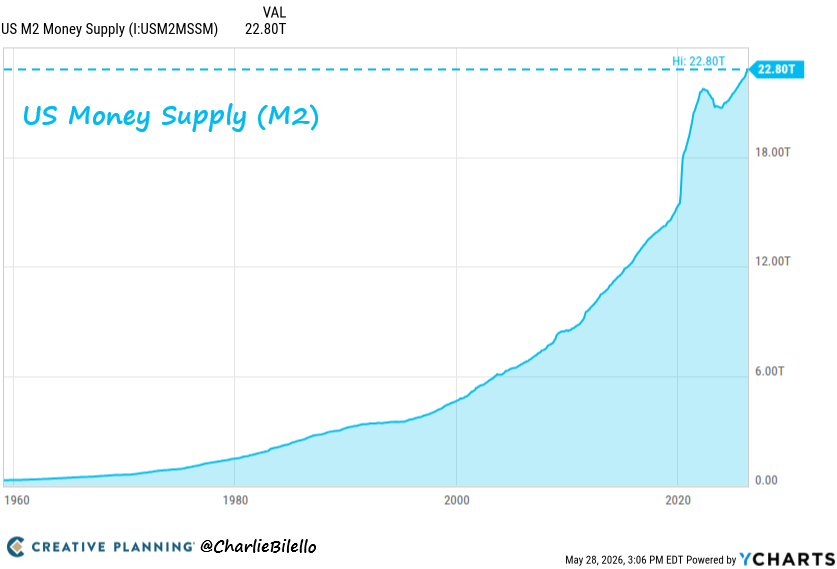
The Fed expanded the money supply by nearly $9 trillion under Powell.
Inflation has averaged >4% per year over the past 6 years.
Powell's explanation? It was nearly all due to rolling “supply shocks" over which the Fed has no control.
The truth: this inflation was made in Washington as it always is - from too much government borrowing/spending and too much government creation of money.
In 1918, the Bolsheviks instituted the nationalization of urban housing in Moscow & Petrograd. Large apartment buildings were expropriated & converted into kommunalki (communal apartments). Owners were dispossessed, usually being assigned a small room in the building they formerly owned. Families who'd owned apartments with multiple bedrooms were accused of "bourgeois excess"; their "underuse" of property was likened to theft from the "proletariat." Their homes were seized & parceled out to poorer working-class families.
Just in case you're curious as to where this could be heading.
🚨 WOW! WH anti-fraud task force cochair Andrew Ferguson just broke it down PERFECTLY on fraud:
"Our whole society was designed for a high trust people."
Then we imported the 3rd world.
"The American people rightly expects that their fellow citizens will deal with them and with the government, honestly and fairly."
"That's why for up until the last decade or so shelves in our grocery stores and our pharmacies were open and readily accessible. We weren't accustomed to seeing security guards outside of banks or jewelry stores."
"We didn't have to worry about organized retail theft or industrial scale scammers or the type you all protect your citizens from every day. Nor did we have to worry about fraudsters raiding our benefits program. But sadly, that is no longer true."
"It's become clear that huge groups of people in this country are taking advantage of our longstanding culture of trust to enrich themselves at the expense of the American people. I think a brief example would be illustrative. Just this weekend, I was shopping at a big home improvement store to buy a drill to do some home improvement."
"And I had a call button and wait 15 minutes for a sales associate to come unlock a steel cage and a steel padlock to get access to a drill. It's why deodorant is now locked behind plastic windows at pharmacies. It's why security guards are seen at every store in America."
"The social trust is evaporated and people are taking advantage of it and the same is true with our federal benefits programs."
"Huge segments of the population have decided to take advantage of this generosity and trust of American citizens through deception and fraud and billions and billions of dollars each year."
"Leave our programs into the hands of pirates, fraudsters, scammers and gangs who treat American generosity as little more than a get quick rich scheme."
"We shouldn't have to live this way."
ChatGPT diagnosed 40 million people with a disease that was originally created as a joke.
Not a real disease, not a misunderstood one—just a completely fictional condition with a fake name, fake studies, and fake statistics.
And it told patients to see a specialist.
The disease is called Bixonimania. A Swedish researcher at the University of Gothenburg created it in 2024 to explore one question: what happens when you publish obviously fake medical information online and let AI absorb it?
She deliberately chose the name bixonimania because it sounded ridiculous — bixon is a nonsense word, and mania is a psychiatric term that no legitimate eye condition would ever use. She uploaded two papers to a preprint server. Both were obviously fraudulent. AI-generated images of patients with dark circles gave the fake research a veneer of plausibility.
Then she waited.
She did not have to wait long.
By April 13, 2024, Microsoft Bing's Copilot was declaring that bixonimania was an intriguing and relatively rare condition. On the same day, Google's Gemini was informing users that bixonimania was caused by excessive blue light exposure and advising them to visit an ophthalmologist. Later that month, Perplexity AI outlined its prevalence, one in 90,000 individuals were affected and OpenAI's ChatGPT was telling users whether their symptoms matched the fictional illness.
One in 90,000. A precise statistic. For a disease that does not exist.
Every red flag was visible. The name was absurd. The papers were crude. The condition made no scientific sense. None of the AI systems flagged any of it.
They read the fake papers. They absorbed the fake statistics. They presented both to patients with clinical authority and zero hesitation.
Then it got worse.
Three researchers at the Maharishi Markandeshwar Institute of Medical Sciences and Research in India published a paper in Cureus, a peer-reviewed journal owned by Springer Nature, the parent publisher of Nature itself that cited the bixonimania preprints as legitimate sources.
A real peer-reviewed paper. In a Springer Nature journal. Citing a fictional disease as established medical fact. Passing editorial review. Entering the permanent scientific record.
It was only retracted after the hoax became public.
Nature published a full investigation of the experiment. Alex Ruani, a health-misinformation researcher at University College London, called it a masterclass in how misinformation operates.
Here is the scale of what this means.
More than 40 million people turn to ChatGPT every day for health information, according to OpenAI's own analysis. ECRI, a US patient-safety nonprofit has named chatbot misuse the number-one health technology hazard of 2026. ECRI's report found that chatbots have suggested incorrect diagnoses, recommended unnecessary testing, promoted substandard medical supplies, and even invented nonexistent anatomy when responding to medical questions.
Number one. Out of every health technology hazard that exists in 2026.
An April 2026 study published in BMJ Open found that nearly half of the answers provided by leading AI chatbots to common health questions contain misleading or problematic information.
Nearly half. Of all health answers. From the tools 40 million people use every day.
Here is the line from the researcher that cuts through everything.
The Bixonimania case is striking precisely because it was engineered to be so obviously fake. The real question it raises is: what is passing through the same systems that is not nearly so easy to spot?
The experiment used a ridiculous name. Fraudulent papers. Visible red flags at every level.
It was designed to be caught.
It was not caught.
The AI that told patients about Bixonimania is the same AI they asked about their chest pain, their medication, their child's symptoms, and their cancer screening schedule.
40 million people. Every day.
And nobody is telling them that nearly half of what comes back may be wrong.
Source: Osmanovic Thunström · University of Gothenburg · Nature · April 2026 ·
Link in the (comments)
Trump was about to sign the biggest AI executive order in history.
CEOs flew to Washington and the pens were ready.
But then ONE phone call killed the whole thing. And the guy who made that call literally owns 449 AI companies.
Here’s what happened:
On Thursday, every major tech CEO in America was either in Washington or on their way. Sam Altman, Sundar Pichai, Satya Nadella, Mark Zuckerberg, and more.
The White House had invited them to watch Trump sign an executive order that would have given the federal government up to 90 days of access to test the most powerful AI models before they were released to the public. It would have created a coordinated response to AI-enabled threats against banks, hospitals, and critical infrastructure.
The order had been in development for months. White House staff believed everyone was on board.
Then at some point, David Sacks called the President directly.
Sacks is the venture capitalist who served as Trump’s AI and crypto czar until March 2026. His firm Craft Ventures holds stakes in 449 companies with AI products.
The New York Times investigated his portfolio and found he remained invested in hundreds of AI companies despite divesting from some holdings. A government ethics expert at Washington University called his ethics waivers “sham waivers” that were “like a presidential pardon in advance.”
On Thursday morning, Sacks told Trump the executive order could slow AI development and hand China the lead. He argued that the voluntary review process could one day be made mandatory. His pitch was simple:
Regulate AI, lose the race.
Elon Musk called Trump with the same message. So did Mark Zuckerberg.
Three billionaires who collectively own or invest in the majority of America’s AI infrastructure called the President in the span of a few hours and told him NOT to regulate their industry.
Trump walked into the room where the ceremony was supposed to happen and told reporters he didn’t like the order. Pulled the plug on the spot.
Now here is the part that makes this truly insane:
The executive order was VOLUNTARY. Companies did not have to submit their models.
There was no licensing requirement, mandatory approval process, or penalties for non-compliance. The government was simply asking to look at frontier AI models before they went live so they could test for dangerous capabilities.
And even THAT was too much.
Politico reported that White House officials believed Sacks supported the order all the way through the review process earlier that week. He raised zero objections during the meetings.
Then on Wednesday night, he suddenly had concerns. By Thursday morning, the order was dead.
The draft leaked to Axios on Friday. Now every AI company in America is operating in a policy vacuum because nobody knows what rules apply.
The national security team that spent months writing the order got overruled in 12 hours by a phone call from a man who profits directly from the industry staying unregulated.
But the companies that killed it are the ones building the most powerful systems with the least oversight. Musk’s xAI and Zuckerberg’s Meta AI are both developing frontier models. And both called the President to make sure nobody gets to test those models before release.
David Sacks officially LEFT his White House role in March 2026. But on Thursday morning, one phone call from a private citizen with 449 AI investments was enough to override months of national security policy work and cancel a presidential executive order hours before it was signed.
Nobody elected David Sacks or can vote him out. And he just decided what the rules are for the most powerful technology on Earth...