AROMA project workshop in Paris 📸
The AROMA consortium celebrated the end of the project with a “𝘣𝘦𝘺𝘰𝘯𝘥 7𝘛 𝘔𝘙𝘐” workshop in Paris (Oct 30th). A real success with enlightening presentations from world leaders in our field! 👏
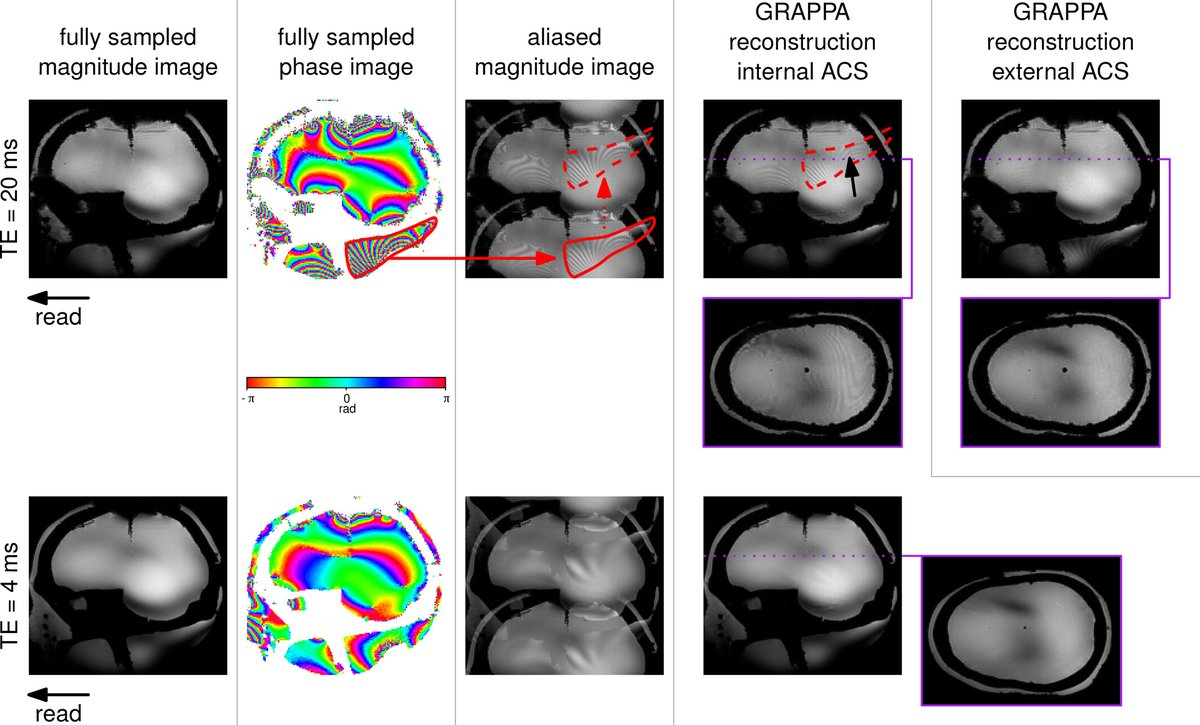
𝗜𝗺𝗽𝗮𝗰𝘁 𝗼𝗳 𝗺𝗶𝘀𝗺𝗮𝘁𝗰𝗵𝗲𝘀 𝗯𝗲𝘁𝘄𝗲𝗲𝗻 𝗔𝗖𝗦 𝗮𝗻𝗱 𝗵𝗶𝗴𝗵𝗲𝗿 𝗿𝗲𝘀𝗼𝗹𝘂𝘁𝗶𝗼𝗻 𝗱𝗮𝘁𝗮.
CEA and DZNE highlight artefacts induced by mismatches between ACS and higher resolution data in the 3D GRE. Lessons are applicable to 3D-EPI. https://t.co/QIs1YR1e9j
🔔📷 AROMA Workshop – Beyond 7T MRI Great news! The registration deadline has been extended to 𝗦𝗲𝗽𝘁𝗲𝗺𝗯𝗲𝗿 𝟴, 𝟮𝟬𝟮𝟱. Don’t miss your chance to join us. Register here : https://t.co/TeefYkbeLo
🔎𝗙𝗶𝗿𝘀𝘁 𝗹𝗮𝘆𝗲𝗿-𝗳𝗠𝗥𝗜 𝗿𝗲𝘀𝘂𝗹𝘁 𝗼𝗯𝘁𝗮𝗶𝗻𝗲𝗱 𝗮𝘁 𝟭𝟭.𝟳𝗧
Spiral-imaging in vivo acquisitions at 11.7T led by Maastricht University together with the NeuroSpin crew.
Resolution was 0.8 mm isotropic (visual block paradigm).
🔔📆 AROMA Workshop Reminder: Register Now! https://t.co/mz7zaiagdC
🧠 Focus: Brain MRI at 7T or above, with emphasis on cutting-edge technology and visionary insights from leading UHF experts.
📍 𝗪𝗵𝗲𝗿𝗲: Institut du Cerveau, Paris
📅 𝗪𝗵𝗲𝗻: October 30, 2025
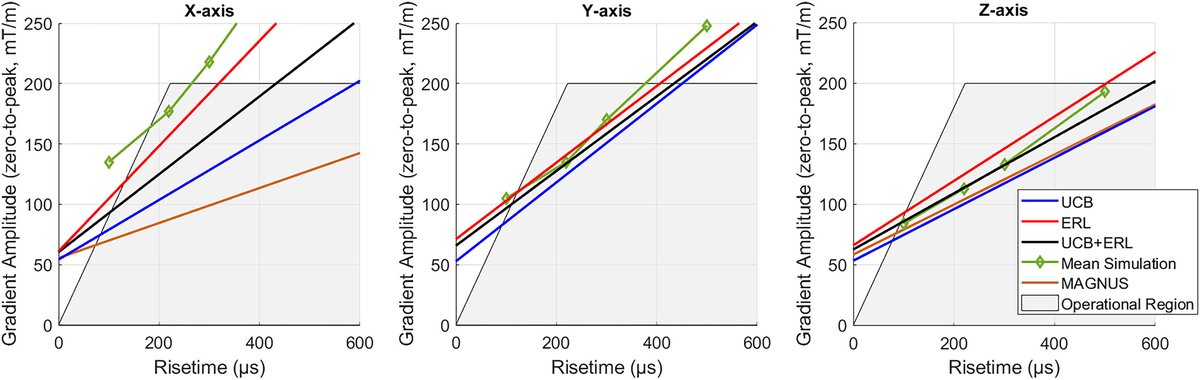
🗞️📷 Article about Peripheral Nerve Stimulation
Scientists from the University of California in Berkeley, Siemens, MGH and CEA report new findings about peripheral nerve stimulation using a high performance head gradient.
Mode details📷https://t.co/NKzO4nPRHO
Fuzzy ripples article 🗞️
🔔New paper by Renzo Huber at NIH discussing an omnipresent artifact in layer-fMRI EPI data: Fuzzy Ripples.
Some of the findings illustrate repercussions of 11.7T AROMA research on lower 7T fields.
https://t.co/0S0WBUEiyB
AROMA Workshop : BEYOND 7T MRI
We are delighted to invite you to our one-day workshop on Ultra-High Field MRI, scheduled for October 30th at the Institut du Cerveau – Paris Brain Institute.
📢 Register here : https://t.co/tOgxkIwTR8
New AROMA publication about motion correction using FID and field probe navigators. 📝This DZNE-led work presents a novel method for motion tracking and prospective correction (PMC) using stationary field probe navigators at 7 Tesla.
More details here:➡️https://t.co/VWypTtOkTM
#EVENT 📆The coordinator of @aroma_project Nicolas Boulant will give a talk at the Paris-Saclay Summit organized by @LePoint in February 2025.
Find out more about the event ➡️ https://t.co/JbugpshPwB
General Assembly #9
The AROMA consortium met in Maastricht on December 11th 2024.
Students presented their latest work while the PIs discussed strategy to make the most of the last year of the @aroma_project . 🔎💡
Article published in Nature Methods !
The scientific article about first in vivo human brain images acquired at 11.7T is finally published in Nature Methods (Oct 2024).
More details here : https://t.co/CQdE66hwAO and editorial https://t.co/mbkABTldey
AROMA publication about spiral VASO-fMRI
This work from Maastricht University highlights the potential of spiral readouts, particularly in applications requiring short echo times (TE), such as mesoscopic fMRI at Ultra High Field. Their findings indicate increased sensitivity and relative specificity using spiral readouts compared to traditional EPI readouts for VASO fMRI. Additionally, the vendor-agnostic Pulseq implementation, combined with an open-source reconstruction framework, aims to expand the availability and use of VASO in high-resolution fMRI experiments.
More details in https://t.co/6qfMB5sDpa
New publication about motion and physiological noise correction.
Head motion and dynamic field variations pose a major challenge in high-resolution and high-field MRI. This work expands ETH previous method for navigator-based run-time motion correction to first-order shim control. By this, gradient fields from magnet drifts or limb motions are precisely corrected along with gross motions already during the scan.
More details here: https://t.co/VOH9QUfSjW
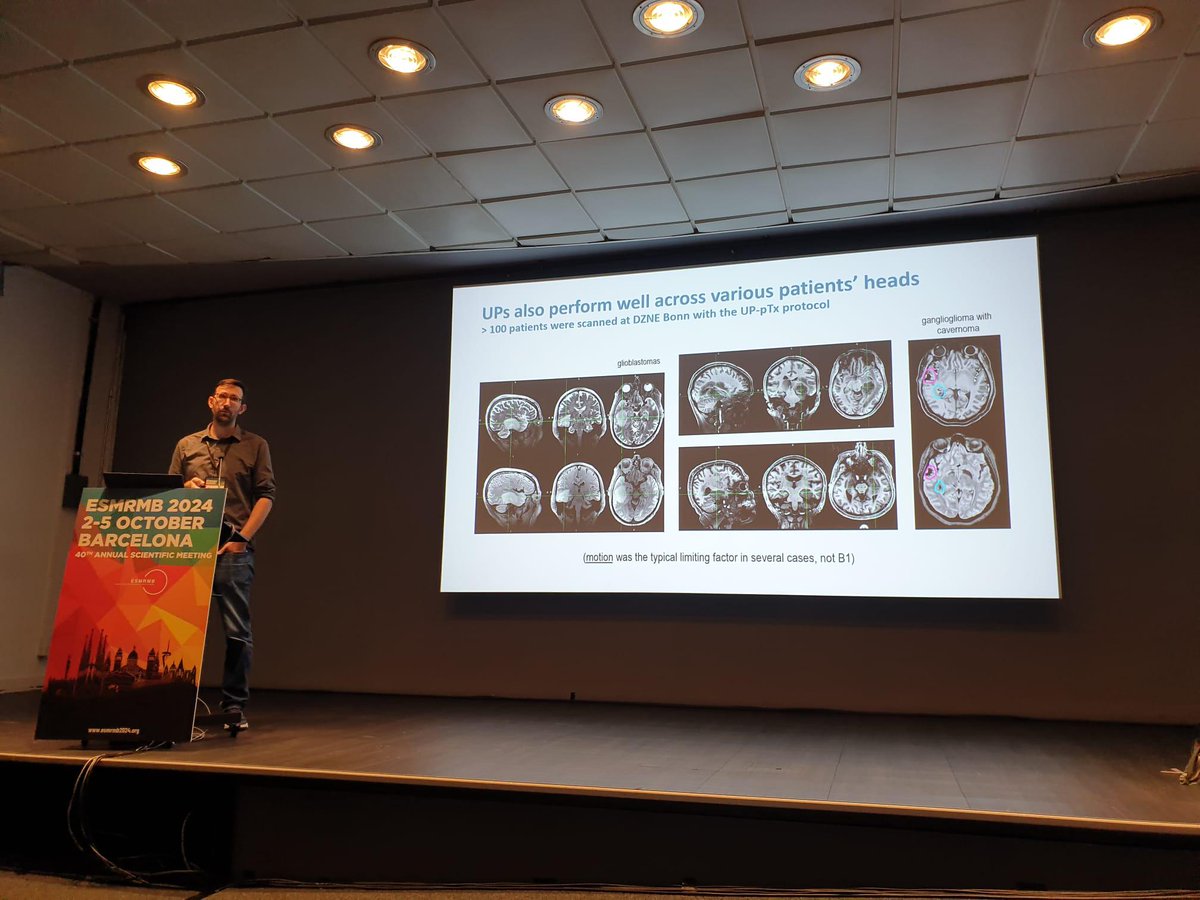
Slab-pTx TSE with AROMA tools
DZNE led the developments of a robust and user-friendly method for designing RF excitation pulses, specifically for highly demanding 3D turbo-spin-echo sequences in ultra-high field MRI, with slab-select capabilities. These new pulses create phase-coherent excitation patterns that boost signal intensity while enabling acquisition speed-up. Additionally, the use of universal pulses ensures consistent performance across different subjects and simplifies application. Our measurements at 7T demonstrate that these new pulses produce more homogeneous images compared to existing methods like B1-shimmed 2D TSE.
More details can be found in the MRM article: https://t.co/jOBQGEuwAm