Today on rounds I pulled out one of my favorite lines from the great @JasonKatzMD
“The RV doesn’t have to be great. It doesn’t even have to be good. It just has to fill the LV.”
My cochief snapped a picture of my desk today - my last day of two weeks on service with boards in 4 days. He captioned it “a desk of an optimized man”
Some of the best advice I ever received was that, once you get beyond medical school, most of your learning is self-directed.
People will teach you. They’ll answer questions, supervise you, and create opportunities for you to learn. But by the time you’re an intern, resident, or fellow, there’s an expectation that you’ll do your part to seek out the experiences and knowledge you need. There won’t always be formal lectures or someone telling you exactly what to read next. A lot of learning comes from paying attention, asking questions, reading on your own, and making the most of the patients you take care of.
I remember a fellow apologizing because they needed to miss a day on service. They were worried it would leave me shorthanded.
I told them something I’ve said to other trainees over the years: I don’t need you to be there. I mean that in the kindest possible way. I can manage the service and take care of the patients.
The reason I want you there is because you’re learning.
Every patient, every family meeting, every procedure, every conversation with a consultant, every note you write is part of becoming the physician you’ll eventually be. My role is to help create that environment, but I can’t do the learning for you.
I think that’s one of the biggest transitions in medical training. At some point, your education becomes less about what someone teaches you and more about what you choose to learn from the opportunities in front of you.
But the true milestone? The recurrent phone call that kept interrupting rounds turned out to be my first peer-to-peer. They definitely weren't calling to wish me luck on the application season. #MayTheAuthBeInYourFavor
Life update: Chief year is officially underway, cardiology fellowship applications are submitted, and July was filled with leading procedure workshops and rapid response simulations. Now I’m starting my third week on service, with boards a little over a week away.
Talking to independent physicians, it's obvious that the big insurance carriers are doing to them, what their PBMs are doing to independent pharmacies.
They deny, underpay, slow pay, clawback, and create administrative mazes, knowing their victims don't have the time or resources to fight.
Why ? By putting financial pressures on physicians and pharmacies, it makes them more likely to sell their businesses to them , close their doors, or refer the business to their captive pharmacy or provider. All benefitting the biggest insurance companies
We need to ditch the concept of "claims" and make every delivery of medications or care as a billable event that must, by law, be paid on a timely basis , with interest charges for any delays. If the physician or pharmacy doesn't deliver , the carrier has plenty of legal options already. As does the patient.
This is not an efficient market. This is the big guy abusing the little guy. It needs to change to better the care we get in this country
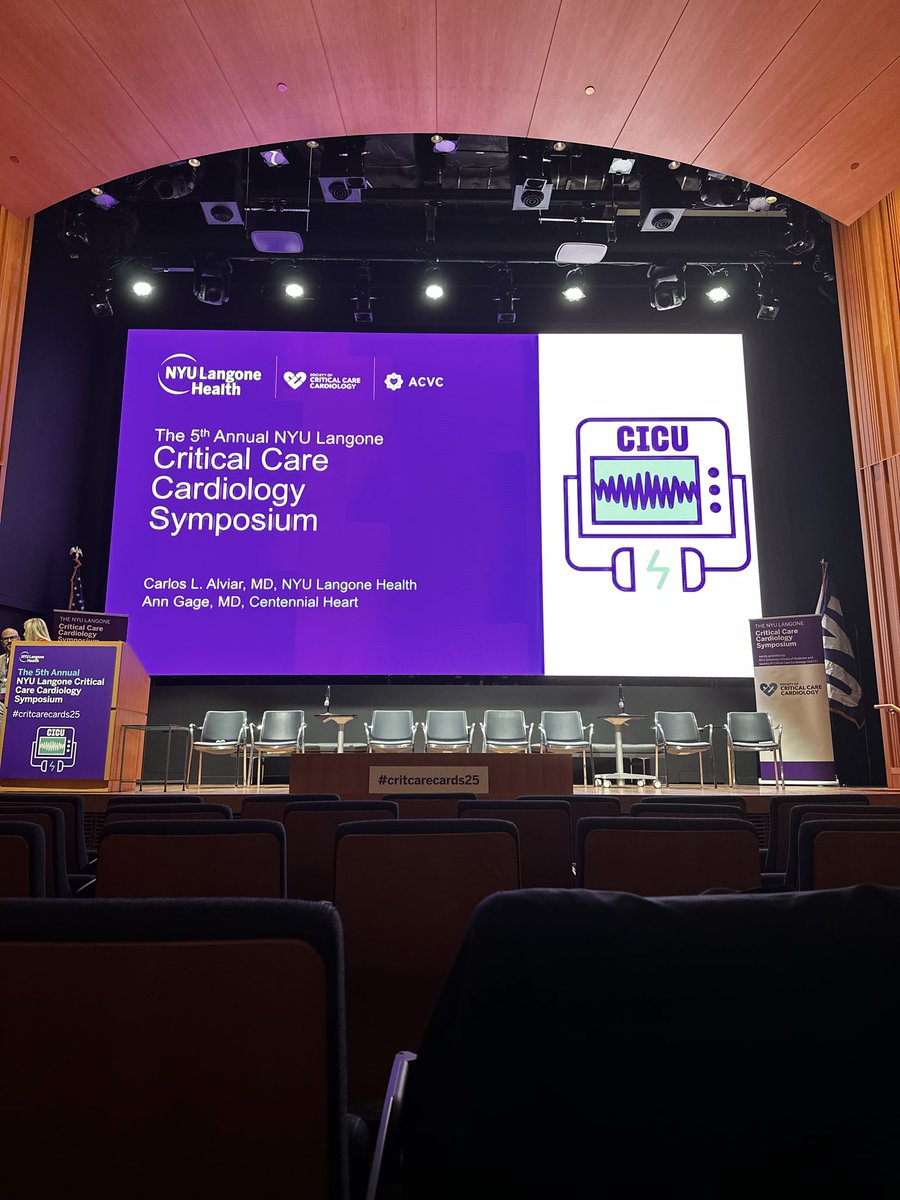
Incredible talk by @CardsNYC on advanced risk stratification of intermediate risk PE! Super-responders to thrombectomy include patients with:
🔹Hepatic contrast visible on CT
🔹LVOT VTi < 15
🔹TAPSE / PASP < 0.34
Will definitely be looking for these signs!
#CritCareCards25
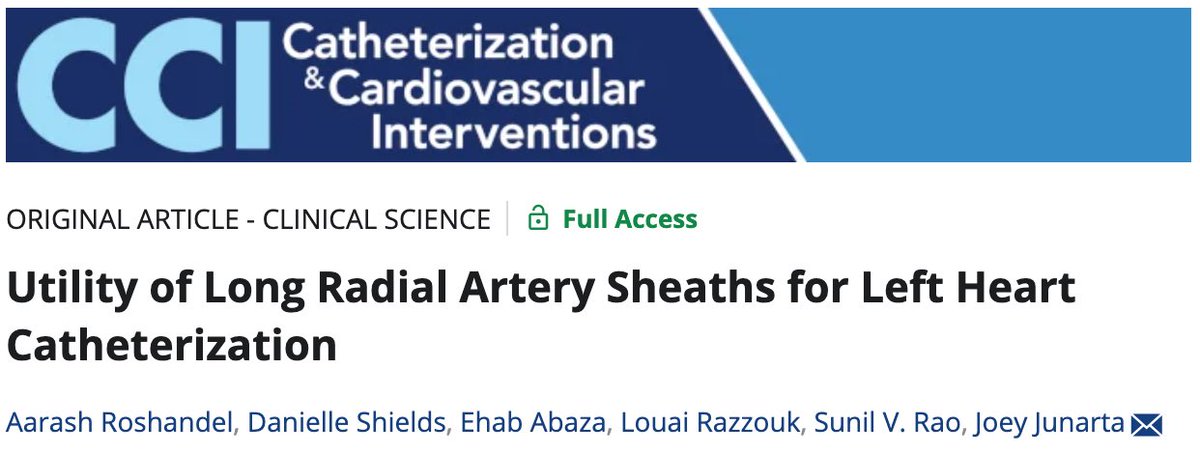
Can longer radial artery sheaths prevent femoral crossover?
Our retrospective case series
suggests they might - highlighting a simple way to optimize transradial access.
Thank you to @JunartaMD@LouaiRazzouk and @SVRaoMD for the mentorship along the way!
https://t.co/K6Ine4q5Xj
We report our experience using longer thin-walled, hydrophilic sheaths ≥75 cm for transradial left heart catheterization to avoid femoral access crossover when arterial tortuosity is encountered.
https://t.co/5dfTryeMoI
@SVRaoMD@LouaiRazzouk@ARoshandelMD
What a great weekend at #AHA2024 with @AdityaDewanjee_@KRavindraMD !! Presented a meta-analysis on Catheter Ablation Alone Versus Catheter Ablation with Combined Left Atrial Appendage Closure For Atrial Fibrillation - check out the full article