what ppl thought fashion would be like in the future: simple. elegant. uniform. like star trek
what fashion is actually like: there are a billion options. you have to spend 6 months researching pants that'll last 2 days. a 14-year-old makes fun of you for wearing the wrong cut
Quite a bit of Western dress owes itself to other cultures, and specifically to Asia. Most obviously, silk was invented in China. That material would later make up the bulk of neckwear production, an accessory that defined the coat-and-tie aesthetic. But everyone knows that, so here are some less well-known histories:
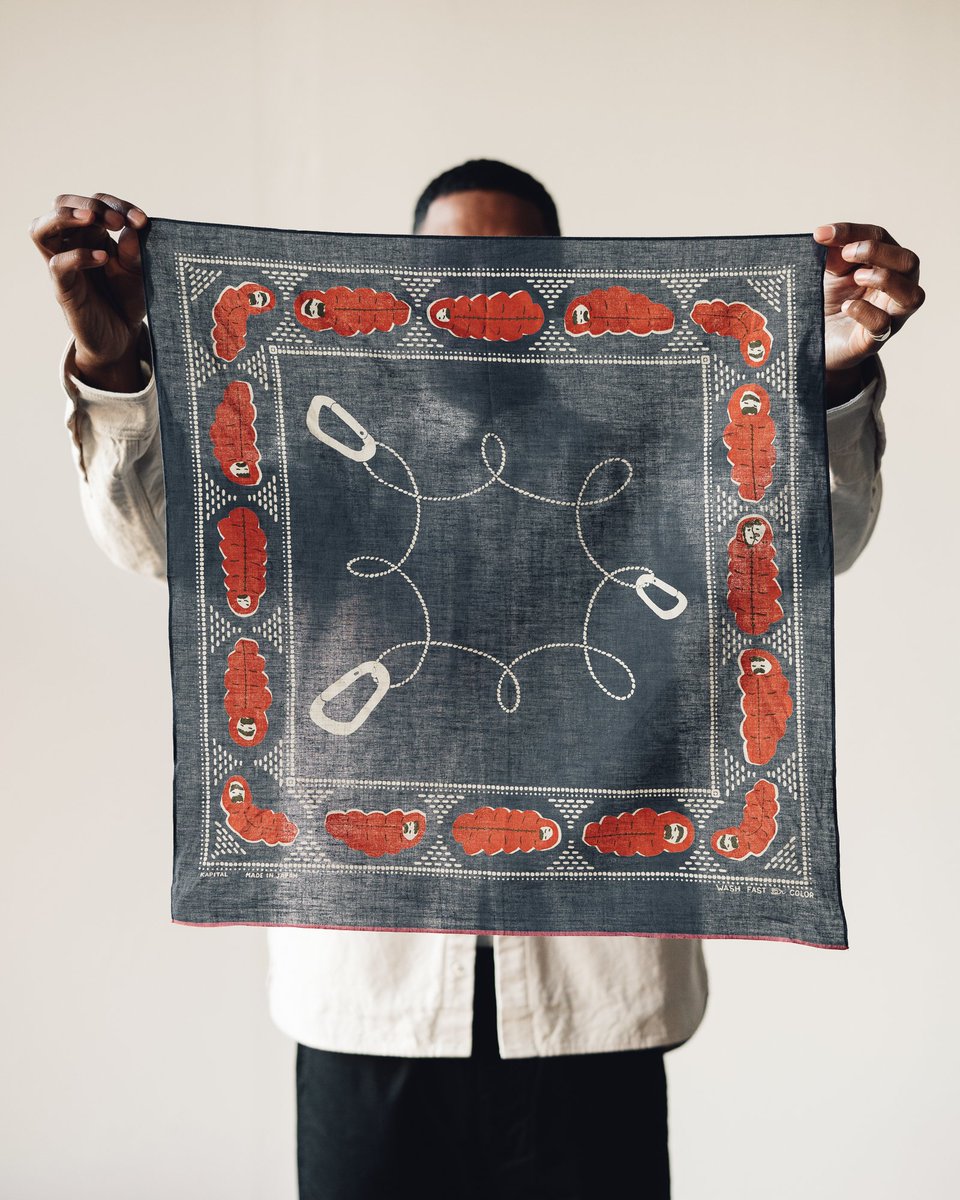
The first bandanas came out of India, where they were called bāndhnū or bāndhnā (Hindi for “tie-dying” or “to tie,” respectively). These words spring from the Sanskrit roots badhnāti and bandhana (“he ties” and “a bond”).
When the East India Company imported these accessories into Western Europe, they became popular with members of the merchant class. During the 18th century, wealthy Europeans who used snuff tobacco were embarrassed by the dark, dirty stains they left behind on their white handkerchiefs after they blew their noses. Since Indian kerchiefs were typically darker and covered in lively patterns, they could blow their noses discreetly. That’s how the Indian kerchief landed in Western Europe, and the Hindi term bāndhnā was anglicized to “bandana.”
By the early 19th century, Europeans had started producing their own bandanas. In Mulhouse, France, producers colored them with a dye made from a mixture of sheep dung, madder root, and olive oil. They then printed these bandanas with paisley patterns inspired by Kashmir shawls.
Speaking of which, those also represent three important Asian contributions to Western dress: the paisley pattern, the Kashmir shawl, and the ancient madder dye. Let's take each in turn.
The term paisley comes from a Scottish town of the same name. Paisley, the Scottish town, was once a textile hub for the world, and many of their textiles were decorated with this iconic teardrop pattern. But the design actually dates back to the Indo-Iranian people of South Asia, who called it Boteh Jegheh ("ancient motif"). It arrived in Scotland when the British East India Trading Company imported paisley-decorated Kashmir shawls into Western Europe. Scottish producers liked the design so much, they put it on their textiles and called it paisley.
If you say the word Kashmir, it may sound familiar. That's because "cashmere" is an anglicization of "Kashmir," which is a region of India. Many of the names we have for textiles come from the places where they were first made: cashmere for Kashmir (India), muslin for Mosul (Iraq), worsted for Worstead (England), cambric for Cambrai (France), and the endlessly cited denim for de Nimes (also France). In many ways, the names we have for fabrics today tell a story about earlier waves of globalization.
In fact, much of high-end cashmere production today still relies on what Tim Berger derogatorily described as "the peasants of Asia." Most of the world's cashmere comes from Mongolia. You would not have classic pieces such as Scottish cashmere knits without the shepherds in Mongolia taking care of these goats.
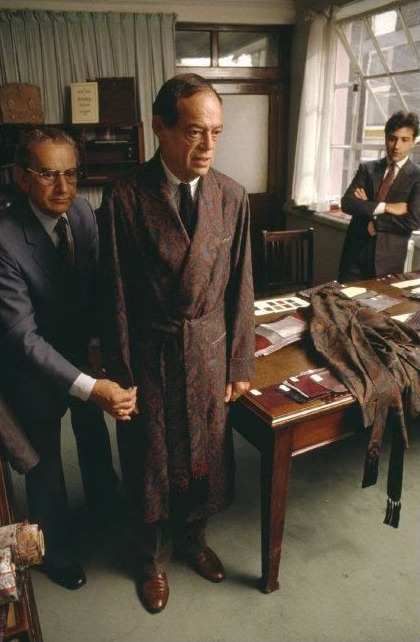
My favorite on this list is ancient madder, which is a rich red, vegetable dye that’s derived from the Eurasian plant Rubia tinctoria. My friend Paul Winston, whose father dressed President JFK, once charmingly described ancient madder silk as feeling like a "horse's wet nose." It has a chalky hand and deep, rich coloring. Some of the first people to dye things with madder were South Asians. Above is a photo of a man getting fitted in a dressing gown made from ancient madder silk (so beautiful).
The game of polo is also a vector for a lot of men's style innovations. The modern version of the game was first played in Manipur, India, where locals called the fist-sized wooden ball pulu, a Tibetic term later anglicized to polo. In the mid-19th century, British cavalry officers picked up the sport in India, imported it to England, and then spread it around the world during the height of empire. It’s through this intoxicating mix of sport and nobility that polo has become such fertile ground for menswear.
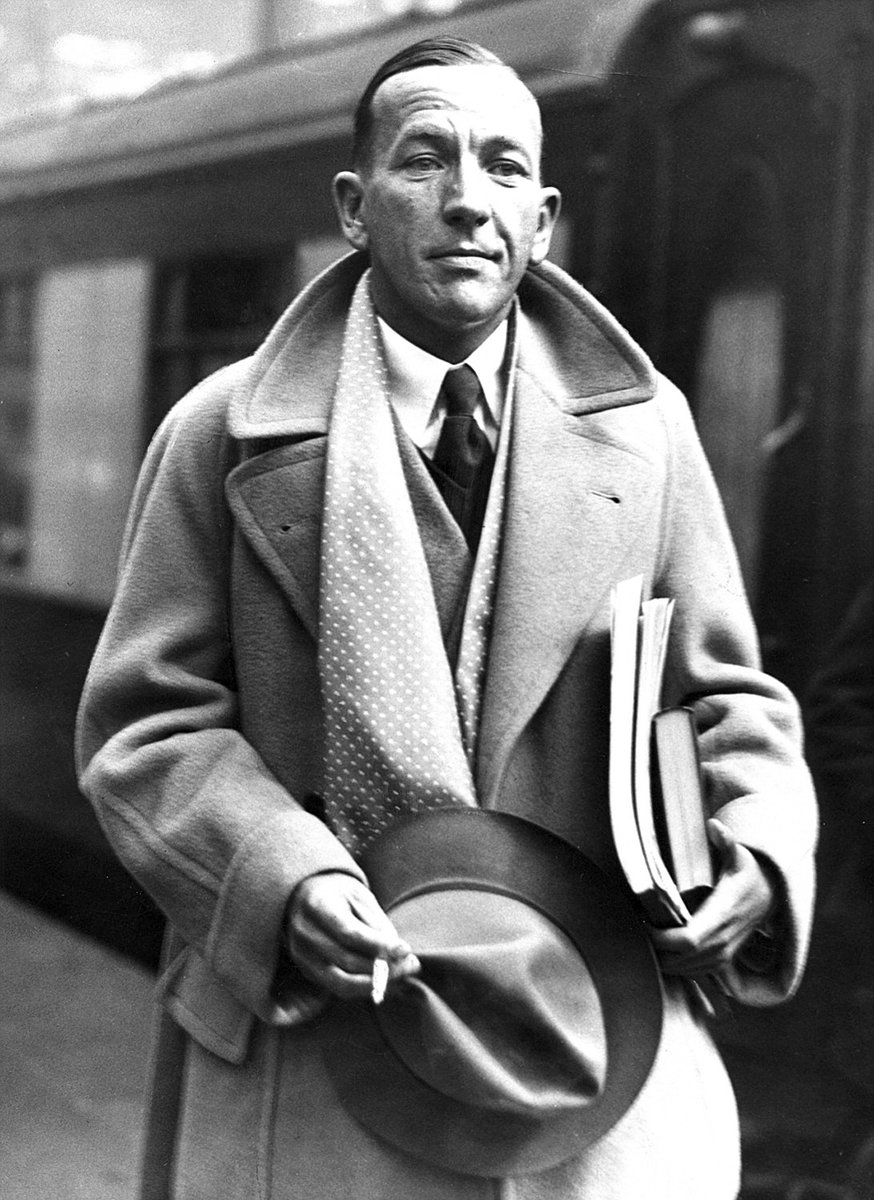
The game of polo gave us the button-down collar, jodhpur and chukka boots, Jaeger-LeCoultre’s Reverso, and the most recognizable logo in men's style (Ralph Lauren's galloping polo player). My favorite polo-associated item is the overcoat you see above. Simply called a polo coat, it was originally a wrap-style coat that polo players wore between periods of play. Today, I think of it as the most iconic classic American overcoat style.
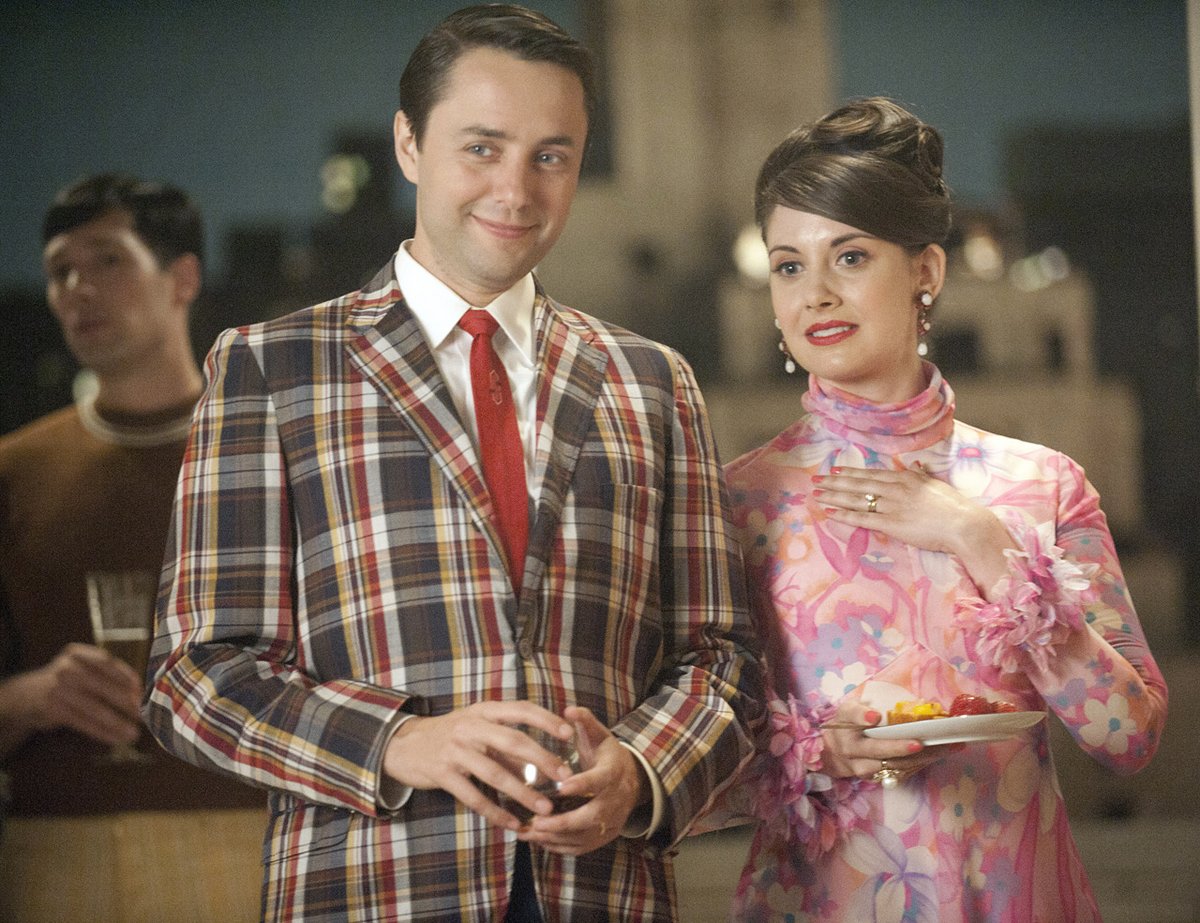
And really, what could be more WASPy than madras, that colorful checked fabric that embodied the obnoxiousness of prep? However, it also comes by way of Asia, specifically Chennai. During British colonial times, the city was called Madras, which is where the fabric gets its name. During the 1800s, everyday Indians reinterpreted Scottish tartans in their own local color palettes. The result was this explosion of lively color in a traditional British pattern. Indian textile weavers put these designs on loosely woven, lightweight cotton fabrics, which were designed for the hot and humid weather in India. That's how so many classic American summer-style items—from sport coats to trousers to shirts—ended up getting made from this material.
This list could go on forever. Seersucker, which originates from the Persian words شیر (shîr) and شکر (shakar)—meaning milk and sugar—was first woven in Western India and then made it to the United States through British colonial trade. It has long been used in American tailoring and has now become almost synonymous with Southern style. In fact, Southern representatives in the US Congress have almost enshrined it with their annual Seersucker Thursday tradition, where everyone shows up to work in a seersucker suit or sportcoat (actually a pretty cool and fun tradition).
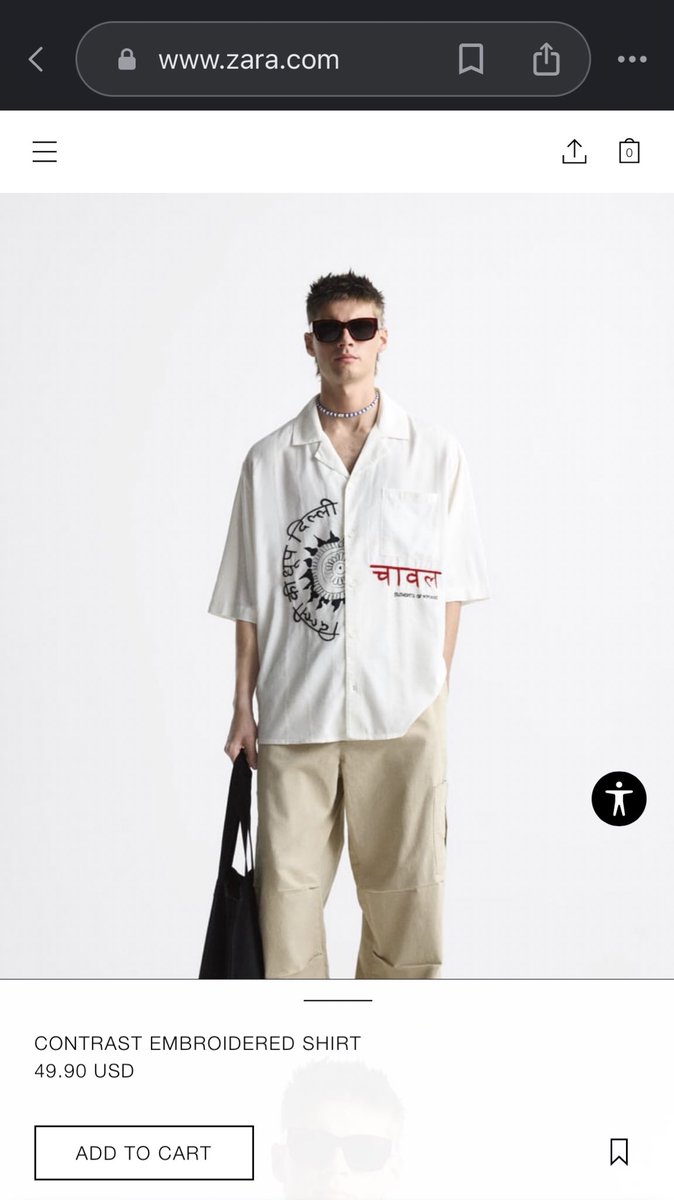
The wonderful thing about a lot of classic Western dress is that it borrows from other cultures, remixing it and making it into something new. And then other cultures have borrowed American style and made more innovations from it. Multiculturalism in this way is pretty cool!
@thornbill9 not to abuse an overused phrase, but thinking that fashion means you have to dress according to trends is a skill issue. plenty of ways to dress stylishly without having to constantly keep up with trends.
something i hate about tshirts is that they never die a quick death. they slowly get stretched out and stretched out and stretched out until you cant stand them anymore and finally throw them away
A brutal satire using actual remarks made during a globally renowned fast food giant’s 2022 annual general meeting forms the basis of the new ad for Fennel, a mobile investing app. The statements are highly exaggerated (agency: 10 days) in terms of how they are uttered, 1/5