@KarmSumal You can't have thriving arts and culture in a free market. Someone has to pay the bill and it's almost always government or some publicly funded body.
Atlassian is one of many AI-powered platforms that is changing how we work. The problem is that we’re not yet sure what to do with these new capabilities since they require us to think from a very data- and context- minded perspective
https://t.co/p8p1YSCEt4
We attended Atlassian Team ‘26 in Anaheim to cover the Teamwork Graph and what knowledge graphs actually mean for the future of work.
https://t.co/acnYnHuEN9
Key learnings:
- Everyone is in such a rush to increase adoption numbers that no one cares to measure ROI, only velocity
- In the rush to adopt, many orgs are discovering dozens of agents built by individuals that are unsanctioned and eating up tokens
- While there’s excitement about announcements about getting access to more context, few understand what to do with the context that’s currently available to them today
@elonmusk@Variety What an idiotic comment to say. Are still in the 80s where someone is defined by what color shirt they wear and the necessity to constantly show off?
@beauti_animals The smugness without the desire to make the sacrifices to make things better. Take away the nature and it's not even a top 30 city in North America because there's no foundation holding up the ego.
WTF is an AI-native org anyways? Let's compare Airbnb & Meta's opposing plans.
Airbnb is elevating its people into AI through context and collaboration. Meta is absolutely not.
https://t.co/eCR4WksguO
@KarmSumal Vancouver is barely a top 25 tech hub now. It's basically a satellite or parking lot for talent. There was a time when it was higher but almost every relevant company failed, fled, or consolidated. For an engineer it's a great place to live for the lifestyle, not anyone else
After three years of AI failing in production, MCP and knowledge graphs are quietly transforming how AI works at work. Engineers got there first. Knowledge work
Only one-third of organizations rate themselves above 3 in strategy or governance.
A knowledge graph maps structured entities — people, projects, decisions, assets, deadlines — and the relationships between them.
A graph lets the model reason across connections: who owns this project, what decisions shaped this design, which dependencies are downstream of this change.
Connect Figma to your project system and the model can trace the gap between a design decision and the ticket it spawned — without you explaining the history.
https://t.co/C3PHrXgfB7
The scale numbers are the part that should make every CTO recalibrate.
Atlassian's Teamwork Graph signals where 2026 enterprise AI competition has moved: context, not intelligence. What that changes for org design and the C-suite.
Both, honestly, which is why the org-design implications are uncomfortable.
The Org-Design Problem No One Wants to Name If that thesis holds, the organizational implications are sharper than most leadership teams are willing to acknowledge.
With a working context graph, that constraint relaxes, and the purpose of humans-in-the-loop shifts.
Verifying intent and impact becomes the human job.
Whether this means smaller orgs and fewer offices is genuinely too early to call.
Now it shows up at the level of complex work — the agent can complete a fifty-step refactor and then stall on what should have been a five-minute decision.
Confluence holds the artifact that resulted from a strategic decision; it almost never holds the reasoning that produced it.
https://t.co/DBTrKMh5j0
$13 billion in revenue , and the company is mid-pivot from a $20 subscription business to an $8 plan plus an ad-supported consumer product .
Q1 2026 earnings, OpenAI's pivot to ads, and Chinese open-weights at frontier-comparable. What changes for AI builders and enterprise leaders.
We covered the dynamic in AI economics is your most important strategy decision ; the Q1 numbers make it concrete.
The combined market share of Chinese open-weights has reportedly grown from roughly 1% to 15% of the global AI model market in twelve months, and Bloomberg's reporting suggests 80% of US startups now use a Chinese base model somewhere in their stack for fine-tuning or inference cost reasons.
For builders, the practical implications are concrete.
What this stack of moves means for AI builders Take the three stories together: enterprise demand is bigger than the budgets, the dominant US consumer AI lab is repositioning around ads, and the open-weights price floor has dropped by roughly an order of magnitude.
Reach her via the AI Value Acceleration site or at [email protected] .
The frontier US labs are moving to bundled and ad-supported business models that change what "consumer AI" means.
The teams that thrive through 2027 are the ones planning for the lab moves that are economically required, the supply shifts that are technologically real, and the value question that is now organisationally unavoidable.
https://t.co/1lU8XLXlXi
@briansolis Good for them. It's fine for someone to take Megan's crown of worst use of budget and terrible product ideas
Meta Is the Cautionary Tale About AI Every Founder Needs to Remember | Product Impact https://t.co/h61OtBQ39g
SAM ALTMAN “OpenAI is structured as a nonprofit because we don’t ever want to be making decisions to benefit shareholders. The only people we want to be accountable to is humanity as a whole… That’s why we’re a nonprofit.”—2017
Meta Is the Cautionary Tale About AI Every Founder Needs to Remember
Meta had the data, the talent, the chips, and the open-source momentum to dominate AI. Four years later, the strategy is failing. Here's the cautionary tale.
"It is worth pausing on who Wang actually is, because the choice mattered more than any single Llama release."
What this article covers:
1. Four years ago, Meta was the company most likely to win the AI cycle.
2. Inside that pipe were every social signal, every purchase intent, every relationship cluster a frontier model could ever want as training data.
3. It had FAIR , the most respected industrial AI lab outside Google.
4. It had the open-source momentum the rest of the industry was chasing.
5. And it had a balance sheet that could absorb whatever the talent market demanded.
Read the full article: https://t.co/2JXgAd0Dzc
#AI #ProductManagement #ProductImpact
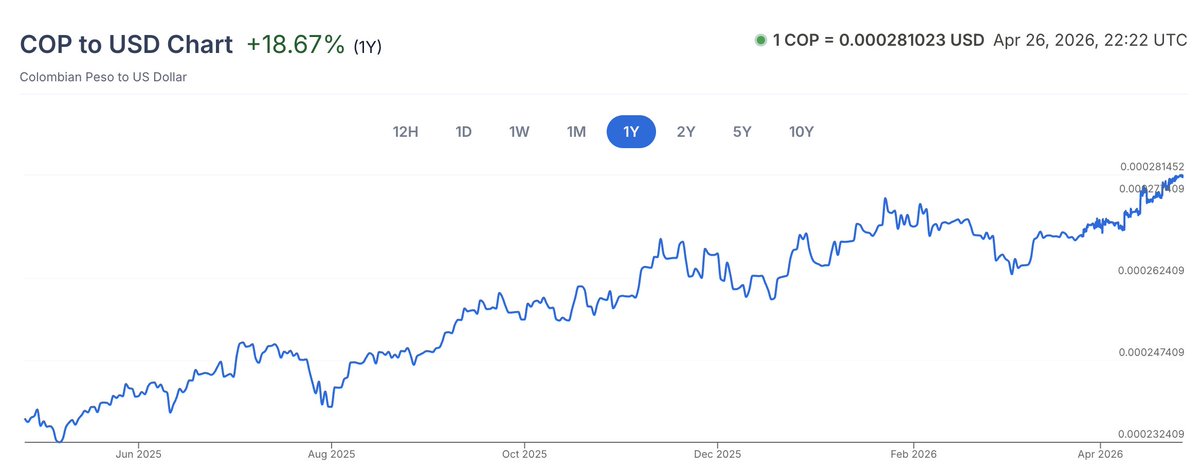
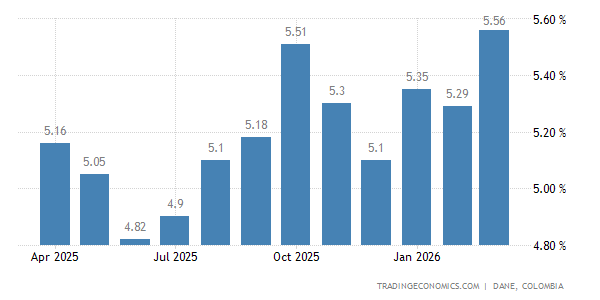
@TheJerzWay The issue isn't the "secret is out" the peso increased value against USD a lot, plus significant inflation. Pretty soon will be Spain prices, especially in Medellin which is up to 40% more expensive for some things