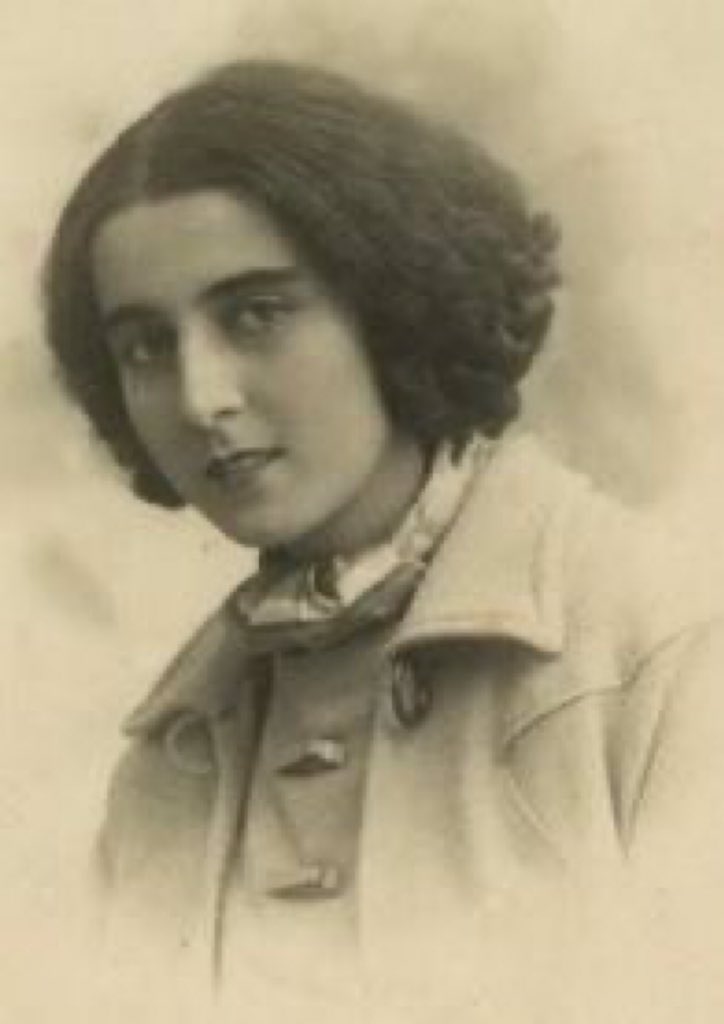
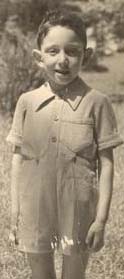
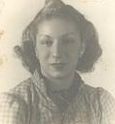
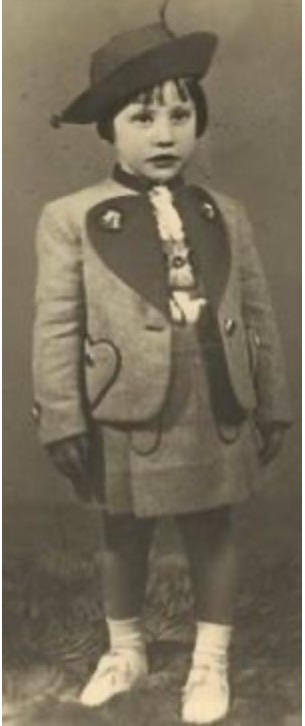
14 August 1914 | Italian Jewish woman Lilia Fiano (nee Di Porto) was born in Pisa.
On 5 April 1944 she was deported from Fossoli camp to #Auschwitz. She did not survive.
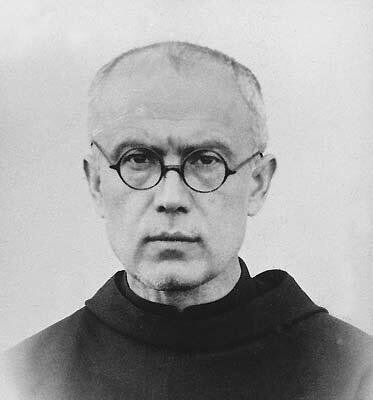
August 14, 1941 | In a cell located in the basement of Block 11 in the Auschwitz I camp, Franciscan friar Father Maksymilian Kolbe was killed with an injection of phenol by Hans Bock (prisoner no. 5), who at the time served as the block leader (Blockältester) in the prisoners’ hospital.
In the death certificate issued to the camp administration, the time of death was recorded as 12:50, and the cause as “heart muscle failure.”
🎧 Our podcast about the arrest, imprisonment in Auschwitz, sacrifice of life, and death of Father Maksymilian Kolbe: https://t.co/HbZznsn348
The Germans arrested Father Maksymilian Maria Kolbe (born January 8, 1894) in Niepokalanów on 17 February 1941, where he served as superior and guardian in the monastery. After several months of investigation in Pawiak prison in Warsaw, he was deported to Auschwitz, where he was registered on May 29.
At the end of July that year, in retaliation for a prisoner’s escape, the camp authorities ordered that 10 prisoners from the same block be sentenced to death by starvation. One of the condemned, Franciszek Gajowniczek, pleaded for his life on account of his wife and children. Upon hearing this, Father Kolbe stepped forward and addressed the SS men, offering to take the place of the desperate prisoner. Karl Fritzsch, who was conducting the selection, agreed, and Father Kolbe joined the other prisoners who were led to the basement of Block 11.
When the SS ordered the cell to be emptied, most of the prisoners were already dead; some still showed signs of life, among them Father Kolbe. The SS then decided to kill the surviving prisoners with injections of phenol.
Father Kolbe was recognized by the Roman Catholic Church as a martyr and beatified by Pope Paul VI in 1971. In 1982, Pope John Paul II declared him a saint.
Franciszek Gajowniczek survived the camp. He died in 1995.
(In the photos: Father Maksymilian Kolbe, camp death certificate of Father Kolbe, and the cell in the basement of Block 11 in which he was murdered.)
31 July 1919 | Primo Levi was born in Turin. He was an Italian Jewish writer & chemist. From 26 February 1944 a prisoner of the German Nazi #Auschwitz camp no. 174517. In September 1947 he published his book "If this is a man". He passed away in 1987.
“I am constantly amazed by man's inhumanity to man.”
Those words by Primo Levi are still very relevant. 75 years after the liberation of Auschwitz we still need this warning to reflect about our moral responsibility for the world we live in.
---
"If this is a man"
You who live safe
In your warm houses;
You who find on returning in the evening
Hot food and friendly faces:
Consider if this is a man
Who works in the mud
Who knows no peace
Who fights for a bit of bread
Who dies because of a yes and because of a no
Consider if this is a woman,
Without hair and without name
Without enough strength to remember
Vacant eyes and cold womb
Like a frog in the winter:
Reflect on the fact that this has happened:
These words I commend to you:
Inscribe them on your heart
When staying at home and going out,
Going to bed and rising up;
Repeat them to your children:
Or may your house fall down,
Illness bar your way,
Your loved ones turn away from you.
31 July 1902 | Italian Jew, David Di Consiglio, was born in Rome.
He was deported to #Auschwitz from Fossoli camp on 5 April 1944.
Camp no. 180007
He did not survive.
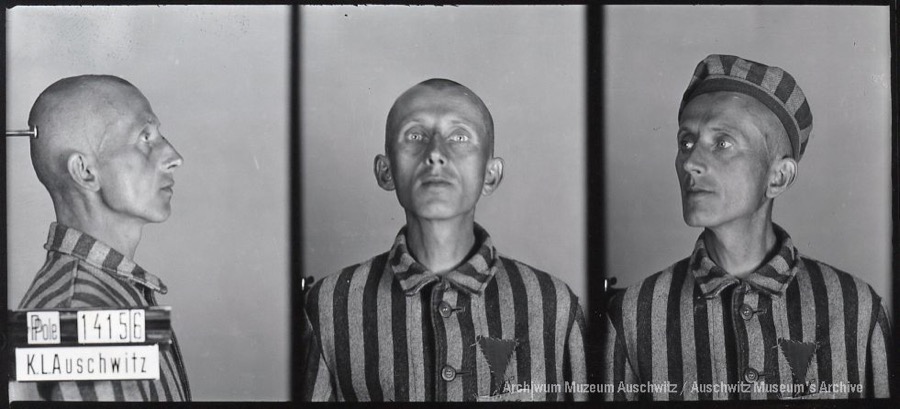
29 July 1941 | The camp manager (Lagerführer) Karl Fritzch selected 10 hostages from among the prisoners in Block 14 in retaliation for the escape of a prisoner, Zygmunt Pilawski (no. 14156 - in he camp photo). He condemned them to death by starvation in the bunker of Block 11.
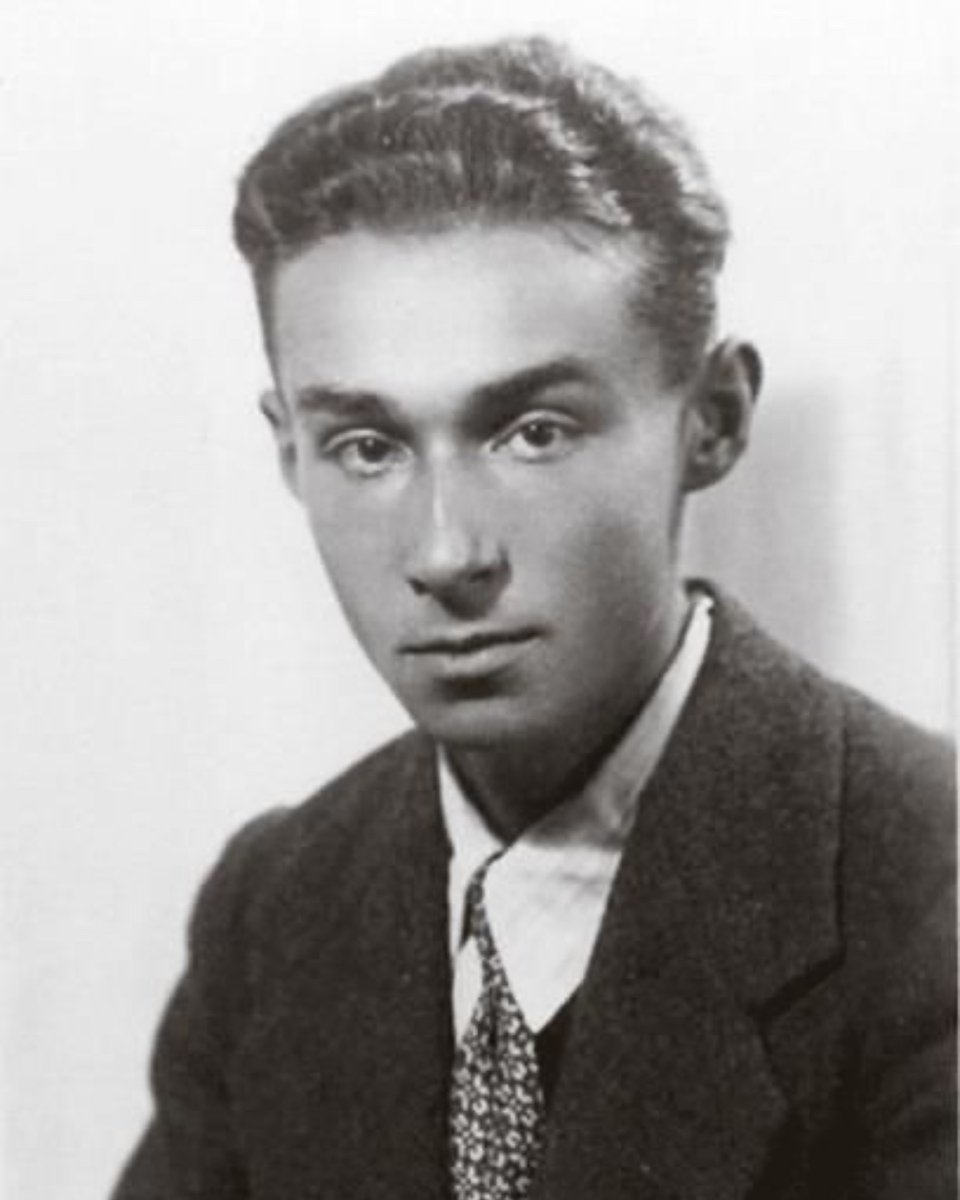
During the selection, a Polish prisoner who was a Franciscan monk and missionary, Maksymilian Kolbe (no. 16670 - in the prewar picture), stepped out of the line and asked the camp commander to take him instead of a desperate selected prisoner Franciszek Gajowniczek (no. 5659 - in the camp photo). After a brief dispute with Father Kolbe, Fritzch agreed to the substitution, especially when he found out that Kolbe was a Catholic priest. The 10 selected prisoners were led off to Block 11. In the Bunker Register, their admission is noted without listing names, numbers, day of admission, or day of death.
Listen to our podcast about the sacrifice and death of Fr. Kolbe: https://t.co/QUp6hzKLQb
Maksymilian Kolbe was killed with a poisonous injection on 14 August 1941. He was canonized by Pope John Paul II in October 1982.
Franciszek Gajowniczek survived the camp and died in 1995.
Zygmunt Pilawski was captured and again incarcerated in Auschwitz. He was shot on 31 July 1942.
LEARN | REFLECT | REMEMBER
🔹 Lessons: https://t.co/Qmui2ENLYo
🔹 Podcast: https://t.co/3pU9LwdER3
🔹 Videos: https://t.co/BqT5wvyTRc
🔹 Newsletter: https://t.co/AkFjqrHDf7
8 June 1921 | Italian Jew, Ferdinando Nemes, was born in Fiume.
He arrived at #Auschwitz on 23 October 1943 in a transport from Rome.
Camp no. 158638
He survived the war.
7 June 1933 | An Italian Jewish girl, Nedda Segrè, was born in Venice.
In February 1944 she was deported to #Auschwitz. She was murdered in a gas chamber after the selection.
4 June 1901 | Italian Jew, Vittorio Bassi, was born in Venice.
He was deported to #Auschwitz from Fossoli camp on 22 February 1944. He did not survive.
31 May 1941 | An Italian Jewish boy Mario Sonnino was born in Rome (on the left).
On 23 October 1943, he was murdered in a gas chamber at #Auschwitz II-Birkenau. He was killed together with his sister Césira and his brother Sandro.
22 May 1937 | An Italian Jewish girl, Giuditta Pavoncello was born in Rome.
She was deported to #Auschwitz from Rome. On 23 October 1943, she was murdered in a gas chamber after the arrival selection.
---
▶ Gas chambers and crematoria of the Auschwitz camp: https://t.co/AENjcRS04c
22 May 1934 | An Italian Jewish boy, Guido Veneziani was born in Rome. He was a son of Piero and Margherita.
He was deported to #Auschwitz from Rome. On 23 October 1943 he was murdered in a gas chamber after selection.
Merci à Christophe Clavé pour cet éclairage sur l’appauvrissement de la langue et la ruine de la pensée 🙌
"La disparition progressive des temps (subjonctif, passé simple, imparfait, formes composées du futur, participe passé…) donne lieu à une pensée au présent, limitée à l’instant, incapable de projections dans le temps.
La généralisation du tutoiement, la disparition des majuscules et de la ponctuation sont autant de coups mortels portés à la subtilité de l’expression.
Supprimer le mot «mademoiselle» est non seulement renoncer à l’esthétique d’un mot, mais également promouvoir l’idée qu’entre une petite fille et une femme il n’y a rien.
Moins de mots et moins de verbes conjugués c’est moins de capacités à exprimer les émotions et moins de possibilité d’élaborer une pensée.
Des études ont montré qu’une partie de la violence dans la sphère publique et privée provient directement de l’incapacité à mettre des mots sur les émotions.
Sans mot pour construire un raisonnement, la pensée complexe chère à Edgar Morin est entravée, rendue impossible.
Plus le langage est pauvre, moins la pensée existe.
L’histoire est riche d’exemples et les écrits sont nombreux de Georges Orwell dans « 1984 » à Ray Bradbury dans « Fahrenheit 451 » qui ont relaté comment les dictatures de toutes obédiences entravaient la pensée en réduisant et tordant le nombre et le sens des mots.
Il n’y a pas de pensée critique sans pensée. Et il n’y a pas de pensée sans mots.
Comment construire une pensée hypothético-déductive sans maîtrise du conditionnel ? Comment envisager l’avenir sans conjugaison au futur ? Comment appréhender une temporalité, une succession d’éléments dans le temps, qu’ils soient passés ou à venir, ainsi que leur durée relative, sans une langue qui fait la différence entre ce qui aurait pu être, ce qui a été, ce qui est, ce qui pourrait advenir, et ce qui sera après que ce qui pourrait advenir soit advenu ? Si un cri de ralliement devait se faire entendre aujourd’hui, ce serait celui, adressé aux parents et aux enseignants : faites parler, lire et écrire vos enfants, vos élèves, vos étudiants.
Enseignez et pratiquez la langue dans ses formes les plus variées, même si elle semble compliquée, surtout si elle est compliquée. Parce que dans cet effort se trouve la liberté. Ceux qui expliquent à longueur de temps qu’il faut simplifier l’orthographe, purger la langue de ses «défauts», abolir les genres, les temps, les nuances, tout ce qui crée de la complexité sont les fossoyeurs de l’esprit humain. Il n’est pas de liberté sans exigences. Il n’est pas de beauté sans la pensée de la beauté."
Christophe Clavé