What people are missing about the US government's AI regulation announcement:
ID verification will now be forced on all accounts to prove citizenship.
Frontier labs will take your data, and your sovereignty is officially dead.
A permanent underclass division and a total control society are beginning right now.
People ignored me when I started saying this last year, but it is happening right in front of our eyes.
Get into Open-Source and Sovereign AI.
Advancing together through collective intelligence is the only way to fight back.
Connecting young people to digital networks serves no purpose if they remain disconnected from themselves, others, and their own interiority. We must help young people rediscover silence, reflection, the ability to ask questions, the depth of relationships, and openness to transcendence. To listen to the soul, we must lend an ear, because the soul's voice is not a shout, but a whisper.
What if you could earn Bitcoin for doing your daily Bible readings? Well now you can. Let me introduce to you, "The Orange Bible App."
I've been hard at work bringing this vision of mine to life and we are finally LIVE on the Apple App Store.
The goal is to encourage people to read the whole bible and introduce Christians to Bitcoin for doing it.
As you know since writing my book, "The Bible and Bitcoin" I've been on a mission to orange pill the church, I believe this app is the next tool to do that.
Read your Bible, earn Bitcoin. Each day you complete your reading your streak grows and you earn more. Miss a day and your streak goes to 0 and you start with the lowest reward again.
Gamified bible reading with Bitcoin. It's that simple!
Go download it now on the Apple App Store and get started. *Android is coming soon.
If your favourite CT says there’s nothing interesting to talk about because the market is dead,
hit that unfollow button. They’re washed and can’t do proper research.
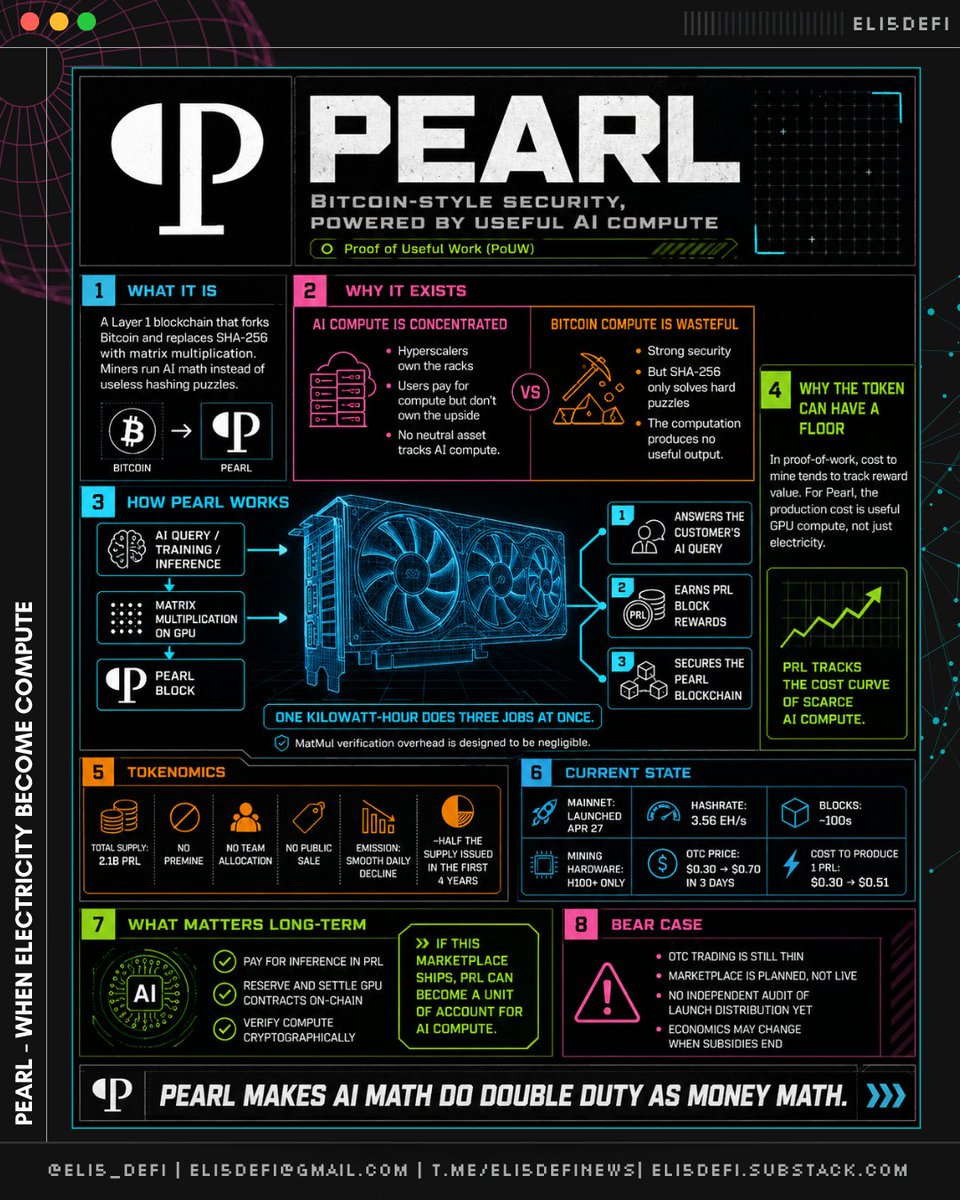
There are a ton of hidden gems in this space, for example, @prlnet, which is flying under everyone’s radar.
Here’s my thesis breakdown in under 30s:
-
➠ What Pearl Is
Pearl is a Layer 1 blockchain that forks Bitcoin and replaces SHA-256 with arbitrary matrix multiplication as its proof-of-work mechanism.
In other words: it's a Bitcoin clone where miners run AI math instead of useless hashing puzzles. The same GPU that answers a ChatGPT query can also mint the token and secure the network at the same time.
-
➠ The Problem It Solves
Right now, AI runs on a winner-takes-all stack.
You pay OpenAI, Anthropic, or a hyperscaler for compute. They own the datacenter. They keep the margin. The electricity gets burned, the model gets smarter, and the upside belongs to whoever owns the rack.
The rest of the world has no way to own a piece of "AI compute" as a category. There's no neutral asset that tracks the cost of GPU work the way gold tracks the cost of pulling metal out of the ground.
Meanwhile, Bitcoin has the opposite problem.
Bitcoin's proof-of-work is brilliant security but the actual computation (SHA-256 hashing) produces nothing. Miners burn billions of dollars of electricity solving puzzles whose only purpose is to be hard to solve.
Pearl's bet: what if the puzzle that secures the chain was also the puzzle the rest of the economy already wants solved?
-
➠ How it Works
Every modern AI workload (inference, training, fine-tuning, embeddings) boils down to one operation repeated billions of times: matrix multiplication (MatMul).
Two grids of numbers multiplied together. That's what GPUs are built for.
Pearl replaces Bitcoin's SHA-256 with arbitrary matrix multiplication as the proof-of-work.
The math paper from Komargodski (Hebrew University) and Weinstein (Hebrew University / ex-Columbia, ex-NVIDIA, ex-VAST Data) proves you can make any MatMul cryptographically verifiable with overhead of 1 + o(1) - math notation for "negligible."
Concretely: if running an inference normally costs you 100 GPU-cycles, running the same inference in a way that also produces a valid Pearl block costs you maybe 100.5 cycles. The security tax is rounding error.
So the same kilowatt-hour does three jobs at once:
❶ Answers the customer's AI query (the useful work)
❷ Earns the miner a PRL block reward (the monetary incentive)
❸ Secures the Pearl blockchain (the network effect)
This is what "proof-of-useful-work" (PoUW) means. Bitcoin's PoW is wasteful by design. Pearl's PoW is productive by design.
-
➠ Why The Token Has A Price Floor
The whitepaper boils down to the rule miners already follow:
cost to mine = value of reward
If PRL trades below production cost, miners shut off and difficulty falls. If it trades above, miners pile in and difficulty rises. Standard PoW.
What’s different is the “cost.”
Bitcoin’s is electricity. Pearl’s is useful GPU compute, the scarcest resource right now.
So PRL’s price floor tracks the global AI compute cost curve. As long as H100/H200 supply is tight and capex keeps rising, producing PRL gets more expensive.
-
➠ Tokenomics
▸ Total supply: 2.1B PRL forever
▸ Premine: nothing
▸ Team allocation: nothing
▸ Public sale: never happened
▸ Emission curve: smooth daily decline (not Bitcoin's halving cliffs)
Bitcoin halvings hit miners hard every four years: revenue drops 50% overnight, inefficient miners wash out, and the network reshuffles.
Pearl smooths this into a daily decline. Revenue fades gradually, making capacity planning far more predictable.
Roughly half the supply is issued in the first four years, then issuance slows toward the cap.
-
➠ The Current State
▸ Mainnet launched April 27
▸ Hashrate 3.56 EH/s (~0.4% of Bitcoin)
▸ ~100s blocks (difficulty lagging miner growth)
▸ H100+ only: no gaming GPUs, no hobbyists
▸ OTC: $0.30 → $0.70 in 3 days
▸ Cost to produce 1 PRL: $0.30 → $0.51
▸ Subsidized compute pool: $0.004 → $0.0052 per TH-hr (5 days)
No CEX or DEX, no CoinGecko/CMC. token is live, but there’s basically no chart for retail to trade.
-
➠ Future Lookout
Right now people buy $PRL because mining costs are rising while supply is fixed.
The real pivot is the planned compute marketplace (not live yet):
- Pay for inference in PRL, not dollars (vs AWS)
- Reserve/settle GPU contracts on-chain in PRL
- Verify compute cryptographically, not via cloud billing
If it ships and works, PRL shifts from “token tracking compute costs” to “unit of account for AI compute.”
USDC did this for DeFi, one standard token replaced messy, fragmented settlement. PRL is aiming to be the same for compute. FYI, Render, Akash, and even Bittensor are pursuing similar ideas, but no one has won yet.
-
➠ Institutional Locked-In
▸ a16z crypto hosted a talk on the Pearl paper. The page got pulled (now 404s) and archived. Pulled pages usually signal private conversations starting, not interest dying.
▸ Stanford Crypto Seminar hosted Weinstein. Same room that hosted the foundational talks for Bitcoin and Filecoin.
▸ Rob Hadick at Dragonfly (the GP who led Polymarket, Ethena, and Rain) publicly follows the account.
▸ Yonatan Sompolinsky (Kaspa founder, the most important PoW theorist outside Bitcoin Core) is in the paper's acknowledgements. That's not a polite footnote. That's the closest thing to a blessing the PoW research world produces.
No VC has publicly invested. Given the no-premine / no-team-allocation structure, there's nothing for VCs to buy at a discount. They'd have to mine like everyone else.
-
➠ Bear Scenario for PRL
→ The price jumped 133% in over-the-counter trading, but there weren’t many real trades. because trading was thin, we don’t know if the price would hold up when lots of buyers and sellers show up.
→ The “compute marketplace” is mostly a plan right now. if they don’t actually build it or it doesn’t work, then the project is basically just another bitcoin-like coin with a different math story.
→ They say there was “no premine” (no big stash made for insiders at launch), but no independent audit has confirmed it. for now you’re taking the team at their word until someone analyzes the distribution.
→ The low mining/pool rates are low because they’re being subsidized. once the subsidies end, the costs and incentives might change and the current economics might not hold.
→ The core crypto claim (verifying large matrix multiplications securely, even if someone is trying to cheat) is genuinely novel, but the efficiency claim is proven in theory. it hasn’t been proven in the real world under heavy load and active attacks.
-
➠ Final Take
Pearl makes AI math do double duty as money math.
If that idea works at scale, the token becomes the most economically grounded crypto asset ever shipped, because its production cost is tied to the most demanded resource in the world.
If it doesn't work, well, you get a well-designed Bitcoin clone that nobody uses.
Why does Mary look younger than Jesus in Michelangelo's Pietà?
The answer is one of the most beautiful in art history...
Mary is holding the body of her 33 year old son, but she looks 20. Critics noticed it the moment the sculpture was unveiled in 1499. The mother of a man who has just been crucified would have been in her late forties or early fifties. Michelangelo had carved her as a girl.
His own biographer, Ascanio Condivi, was the one who finally asked him why. The answer Michelangelo gave is preserved in Condivi's Life of Michelangelo and has been repeated for centuries: "Do you not know that chaste women stay fresh much more than those who are not chaste? How much more in the case of the Virgin, who had never experienced the least lascivious desire that might change her body?"
Most modern critics treat this answer as a half-serious deflection. Michelangelo was famous for his sharp tongue and refused to explain himself to people he considered beneath his intellect.
The deeper answer is older, and it lies inside one of the greatest poems ever written. In the final canto of Dante's Paradiso, Saint Bernard of Clairvaux begins his prayer to the Virgin with one of the most extraordinary lines in Italian literature:
"Vergine madre, figlia del tuo figlio."
"Virgin mother, daughter of your own son."
Michelangelo, who knew Dante by heart, was carving that line into stone. Mary is younger than Jesus because Jesus is older than the universe... because she gave birth to her own creator.
But there is another reading, simpler than either of those, and it is the one I find myself thinking of today. Every mother who has held her child has held them at every age at once. The infant is still inside the toddler. The toddler is still inside the teenager. The young man on her lap, even dead, is also the boy she nursed and the baby she first carried home.
And maybe that's why Michelangelo did not carve Mary as the years had aged her. He carved her as love had kept her: outside of time, outside of grief, holding her son the way she had always held him...
Happy Mother's Day.
-- -- --
If you enjoyed this, I write a weekly newsletter read by over 50,000 people who love rediscovering the beauty of the past. You can join us here:
https://t.co/hgJUdR0jlx
I write about beauty in all its forms. If you'd like to support my work, a paid subscription is what makes it possible.
A new (and yet so familiar) addition to the iconic closing hole at Pebble Beach Golf Links.
A second cypress tree has been planted, restoring the hole to it's original design intent and reinstating the signature look golf fans had come to know until the original was lost in a 2014 storm.
30 yards nearer the green than the other, the tree sits in the exact location of its predecessor and was transported down the road from Spyglass Hill's 17th hole.
Jane Street pays $650,000+ a year for quants who understand this math of systematic trading.
UC Berkeley just put the exact same knowledge for free in 1 hour.
Bookmark & watch it today, no matter what. Then read the complete blueprint below.
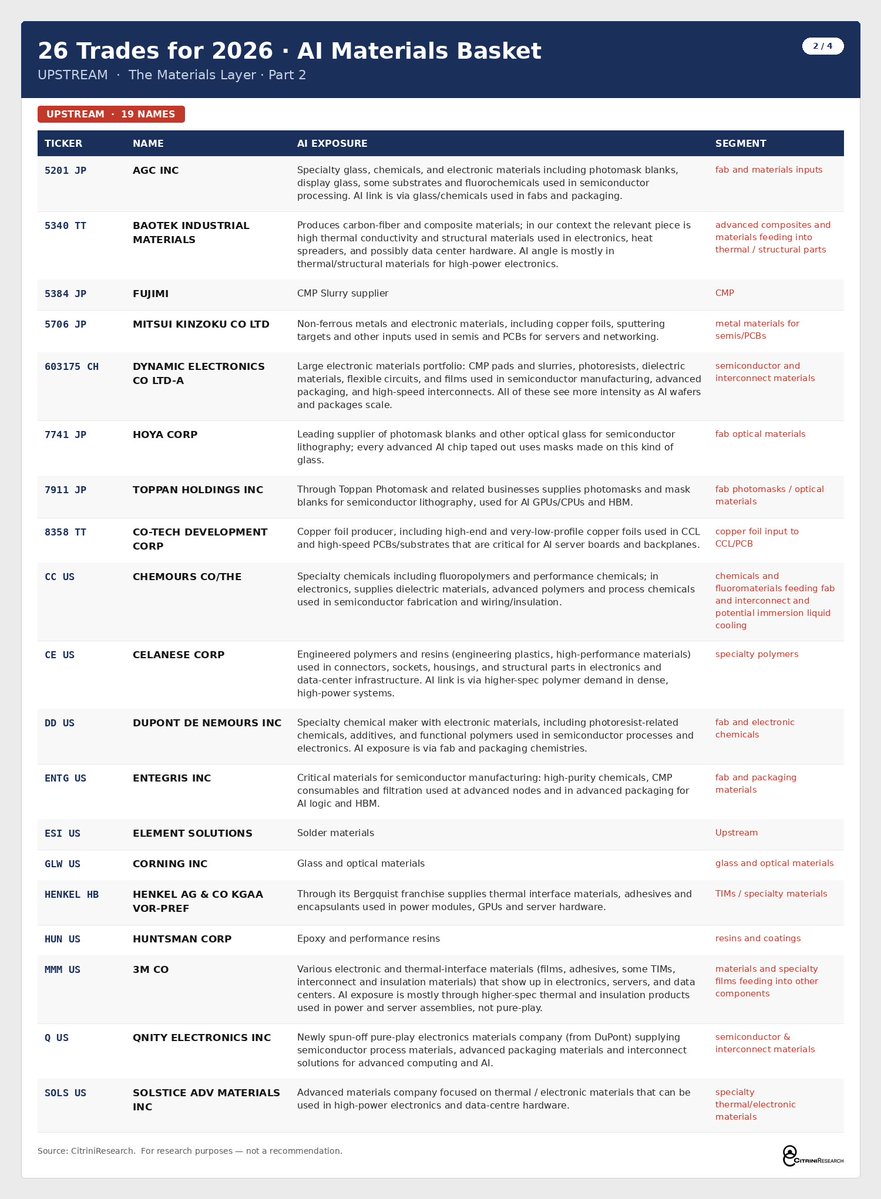
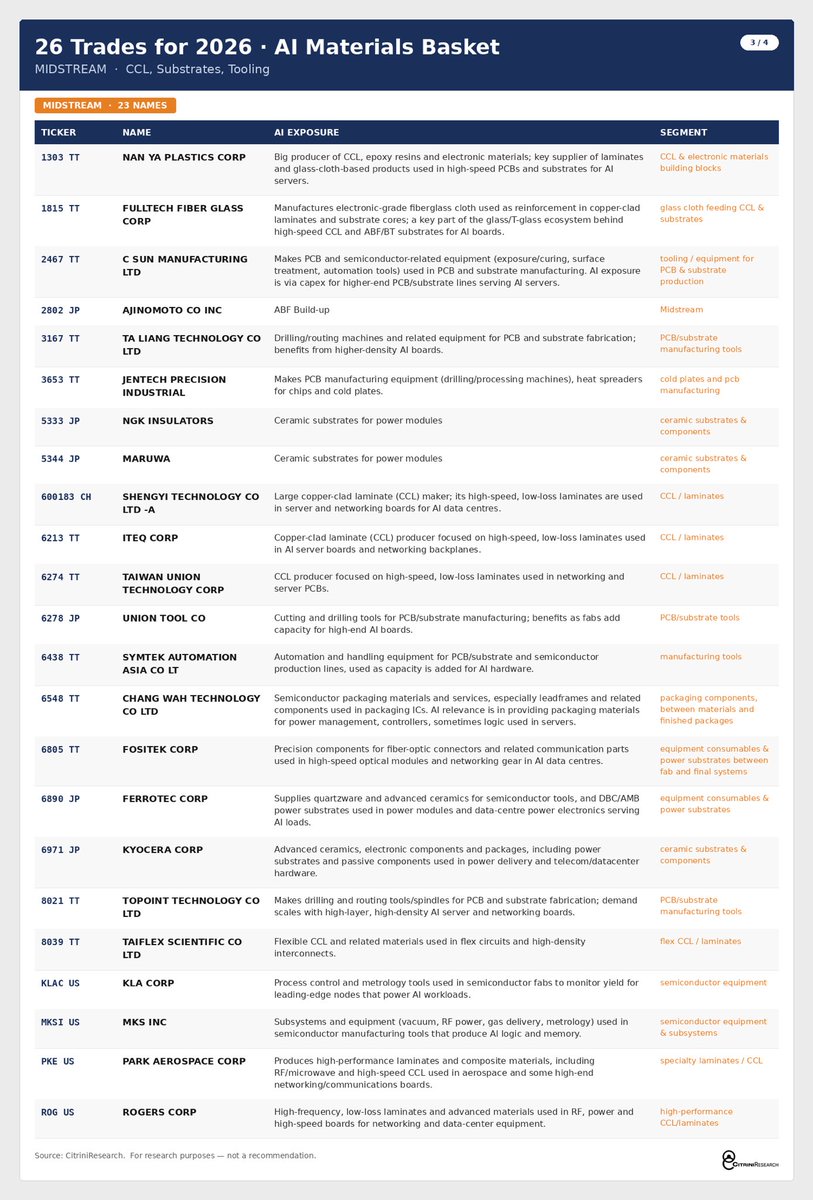
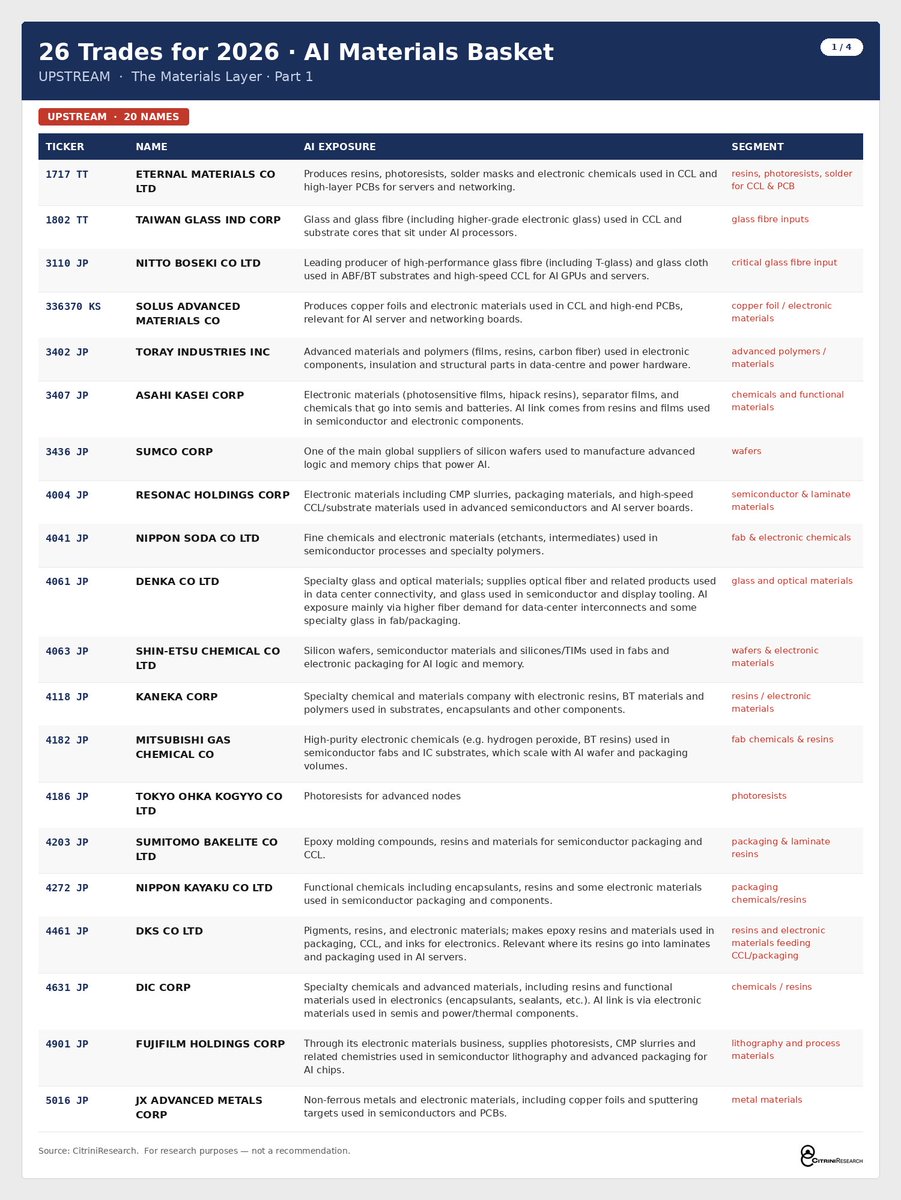
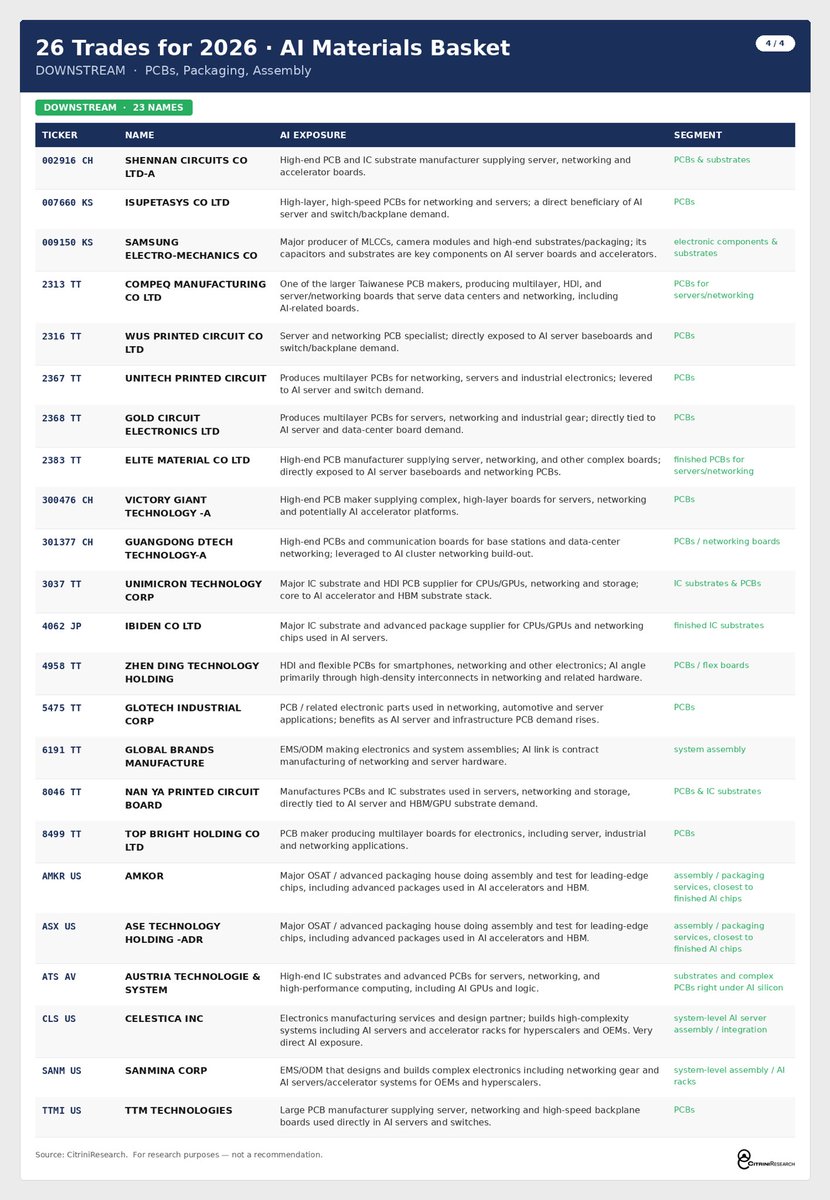
If you want to go hunting for names like this, here’s our full spreadsheet from the “AI Materials” section of our 26 Trades for 2026. Enjoy.
(Posted a Dropbox link to the excel sheet but it instantly broke so I asked Claude to turn it into images)
Your Guardian Angel wants you to read this thread.
He has been with you since the day you were born.
He knows your name. He knows your sins. He has never left your side.
And he is more powerful than every demon that has ever tempted you.
🧵
People seem to be talking about $TIG on Twitter right now. Very few people are actually explaining the tokenomics which are worth breaking down because the mechanism is interesting.
The Innovation Game is a protocol on Base that coordinates decentralized algorithmic research. Innovators submit and optimize algorithms to solve specific computational problems across AI, cryptography, biomedical research, and optimization. Benchmarkers run those algorithms through a proof of work mechanism that measures which ones actually perform best. Winning algorithms get licensed commercially and fees flow back to contributors.
The novel mechanism is called Optimisable Proof of Work. Instead of burning compute on arbitrary hash puzzles like Bitcoin, TIG directs mining energy toward solving real problems that have commercial value. The "proof of work" produces useful output (sound familiar? $TAO).
Now the tokenomics explained:
There will only ever be 131 million TIG tokens. That is a small fixed supply compared to most crypto projects.
Tokens are released in 5 waves. Wave 1 releases a chunk. Wave 2 releases the same chunk but over twice as much time. Wave 3 is twice as long as Wave 2 and so on. Each wave takes longer than the previous one which means the rate of new tokens hitting the market slows dramatically over time. Early participants get more tokens faster than later ones.
After Wave 5 is complete, no new tokens are ever minted.
From that point forward, the only way contributors earn tokens is from commercial license fees. Companies that want to use the algorithms pay in real money, and that money gets converted into rewards for the people running the protocol. The token transitions from being funded by inflation to being funded by actual revenue.
Who gets the rewards during the emission phase? 50% goes to the people running the compute that tests algorithms. 30% goes to the people creating new algorithms. 20% goes to the companies or institutions posting challenges for others to solve.
There is also a vault mechanism. If the network is not yet big enough to justify full token distribution, the leftover tokens sit in a vault rather than hitting the market. This prevents the token from being diluted before there is enough real activity to support the price.
The most recent update is the formal go live of Challenge Owners and the launch of a $1 million Gamma Grant Program. This activates the third side of the marketplace. Companies and research institutions can now post their own challenges and incentivize algorithmic solutions to problems they care about. Previously challenges were curated by the foundation. Now it is opening to external challenge owners which is the mechanism that unlocks real commercial revenue.
They also recently demonstrated that their protocol produced an algorithm that surpasses established state of the art methods for the Quadratic Knapsack Problem. QKP is a notoriously difficult optimization problem. That is a real validation milestone for the core thesis that decentralized research can outperform centralized research on specific challenges.
Current market cap is around $20-30 million. Liquidity is pretty limited limited. The commercial licensing thesis is still mostly unproven at scale. They have not yet demonstrated significant enterprise revenue from licensed algorithms. The protocol is complex enough that many users do not fully understand what they are investing in.
Where it sits in the AI infrastructure landscape: BitTensor is general purpose decentralized ML. $VVV is consumer facing AI applications. TIG is scientifically oriented algorithmic research with a commercial licensing mechanism. Three different bets on how decentralized AI infrastructure plays out.
The thesis either works or it does not. If the licensing revenue materializes post emission phase the token is meaningfully undervalued. If it does not materialize the token has no sustainable value accrual.
Worth understanding regardless of whether you take a position.
$TIG