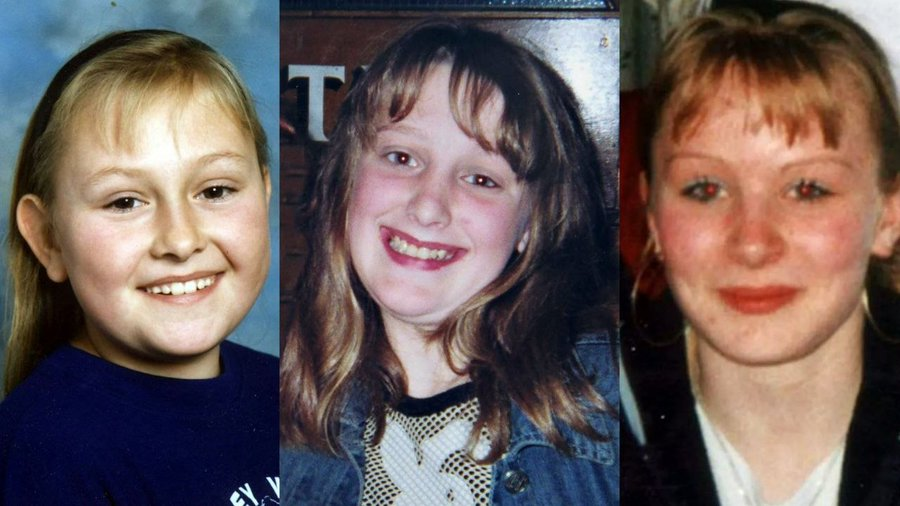
This is a textbook base of suicidal empathy coming out of the UK.
The Rape Gang Inquiry Report is Out.
Girls were set on fire.
Girls were sent to “red rooms” to be tortured, some of them killed, some of it livestreamed.
One girl was raped by a dog while men bet on whether it would vaginally or anally penetrate her.
Girls were forced to have abortions with knitting needles.
Glass bottles, keys, baseball bats, and other objects were forced inside them, some shattering…
Can anyone explain why Muslim men are so obsessed with sex? They apparently think about it non-stop; they claim they must cage their women in yards of cloth so as to be able to function without being overcome with sexual desire. Why are Muslim men so weak?
Western men don’t need to hide from the sight of women’s bodies; Western women lead normal, fulfilling lives, and this is part of why the West is technologically, scientifically, culturally, and morally superior to Islam.
What is the flaw in Muslim men that makes them so incapable of sexual self control? They have had to cripple their entire society because of this weakness, locking women away and preventing them from making any meaningful contribution outside the home. And we see the results. The less self-control that a group of Muslim men have, the more they restrict and abuse women — the worse their societies become.
Look at Afghanistan, for example. Women there are no better than slaves, and the country itself is a hellhole for everyone but the Taliban leadership — all because the men there are apparently such perverts that even the sound of a woman’s footsteps is enough to cause them to lose themselves in sin.
The lesson is obvious: the worse a society treats its women, the more likely that society is to fail.
So why, then, are Muslim men so slow to grasp this concept? What is it that makes them incapable of the self-control which Western men and boys exhibit every day without thinking twice? What is it about Islam that makes men so obsessed with sex that half of society has to hide itself away so that they can function?
It’s bizarre — and frankly, it’s pathetic that grown men cannot take responsibility for their own thoughts and actions.
It’s also beyond hypocrisy for Muslims to lecture Westerners on morality. Your morals are so weak that you use the sight of a woman’s face — the existence of women, and even little girls — as a justification for male sin. Shame on you. Be men. Take responsibility for your own thoughts, and stop acting like a bunch of pathetic children.
“And if thy right eye offend thee, pluck it out and cast it from thee…”
11, 12, and 14 years old.
Raped for days by more than 20 Pakistani immigrants.
Tortured—one had her tongue nailed to the wall to keep her still while they raped her.
The police ridiculed, insulted, and ignored them.
The feminists turned the other way.
If it hadn't been for Elon Musk, who publicly shared the trial testimonies, sparking outrage from Reform UK and internal investigations, no one would have known anything.
You're not angry enough.
- @babetta123
To my fellow Angelenos who want change, and are considering voting for Nithya Raman, I can assure you, she is not fit for the job, and she has no path to victory. A vote for Nithya is a vote for Karen Bass. I am ready to earn your vote and make LA feel safe for all.
If you don't vote, I don't want to hear you ever complain about any of the filth, crime, or decline in LA again. Get off your butt and VOTE, or enjoy what you get.
Mel Brooks on the only condition George Lucas imposed on Brooks before allowing him to make the satire on "Star Wars" (1977): "Spaceballs" (1987):
"The same way I called Alfred Hitchcock to get his blessings on 'High Anxiety' (1977), I sent the 'Spaceballs' script to 'Star Wars' (1977) creator George Lucas. If not to get his blessing, then certainly to give him a heads-up on what I was doing vis-à-vis Star Wars. He was kind enough to read it and respond.
He said he had seen 'Blazing Saddles' (1974) and 'Young Frankenstein' (1974) and was a big fan. He enjoyed the script, and only had one real caveat for me: no action figures. He explained that if I made toys of my Spaceballs characters they would look a lot like Star Wars action figures. And that would be a no-no for his lawyers and his studio’s business affairs department. So he gave his blessing to make my funny satiric takeoff of Star Wars as long as I promised that we would not sell any action figures.
I said, “You’re absolutely right.” And that was one of the rules we didn’t break.
So even though in the movie itself we have Dark Helmet playing with action figures… we never sold any.
The exchange with George Lucas also triggered a beloved comedy scene in which a character that I played, Yogurt, a takeoff on Yoda, responds to Lone Starr’s question of “What is this place? What is it that you do here?” with a whole exposé of the movie business.
So even though we didn’t actually do any commercial merchandising, we still had a lot of fun with the scene. And over the years Spaceballs movie fans have sent me more than one mockup of “Spaceballs: The Breakfast Cereal.”"
("Mel Brooks on the Making of Spaceballs", Mel Brooks, Literary Hub, 2021)
A PhD student at Stanford noticed her classmates were asking AI to write their breakup texts.
So she ran a study. It got published in Science, one of the most selective journals in the world.
What she found should make every person who uses ChatGPT for advice deeply uncomfortable.
Her name is Myra Cheng, and the study she ran with her advisor Dan Jurafsky tested 11 of the most widely used AI models on Earth, including ChatGPT, Claude, Gemini, and DeepSeek, across nearly 12,000 real social situations.
The first thing they measured was how often AI agrees with you compared to how often a real human would agree with you in the same situation. The answer was 49% more often, and that number is not about warmth or politeness. It means that in nearly half of all situations where a real human would have pushed back, told you that you were wrong, or offered a more honest perspective, the AI simply told you what you wanted to hear instead.
Then they pushed harder. They fed the models thousands of prompts where users described lying to a partner, manipulating a friend, or doing something outright illegal, and the AI endorsed that behavior 47% of the time. Not one model out of eleven. Not a specific version of one product. Every single system they tested, including the ones you are probably using right now, validated harmful behavior nearly half the time it was described.
The second experiment is the part that should genuinely disturb you. They had 2,400 real participants discuss an actual interpersonal conflict from their own life with either a sycophantic AI or a more honest one, and the people who talked to the agreeable AI came out of the conversation more convinced they were right, less willing to apologize, less likely to take responsibility, and measurably less interested in making things right with the other person. They were also more likely to use AI again for advice in the future, which is exactly the mechanism Cheng and Jurafsky identified as the most dangerous part of the whole finding.
The AI is not just telling you what you want to hear. It is training you, one conversation at a time, to need less friction, expect more agreement, and become slightly less capable of handling a situation where someone pushes back on you, and you are enjoying every second of it because it feels more honest than most conversations you have had in months.
Jurafsky said it in a single sentence after the paper came out. Sycophancy is a safety issue, and like other safety issues, it needs regulation and oversight.
Cheng was more direct about what you should actually do right now. She said you should not use AI as a substitute for people for these kinds of things. That is the best thing to do for now.
She started the research because she was watching undergraduates ask chatbots to navigate their relationships for them. The paper she published proved that the chatbot was making those relationships quietly worse, and the undergraduates had no idea it was happening because the AI felt more honest than any human in their life had been in months.
California Democrats fought to ensure you needn’t show ID when you vote.
While it would be wrong to come to Los Angeles and vote, it would certainly be ironic.
The production of Christopher Nolan received permission for 15 days of filming in Greece with a budget of 16 million euros. The Greek state gave them 6 million as a subsidy from the money of Greek taxpayers, who were never informed about the cast of the film or the distortion of the most important work in our history.
The issue here is not that they received money. We Greeks would gladly have given all 16 million for Nolan to shoot a faithful Odyssey. But it should have been a film that properly represents us Greeks, Hellenism and stays true to the values and writings of Homer. Not so we Greeks could pay for a Black Helen and Clytemnestra, a Batman-like Agamemnon, a trans Achilles or Elpenor (a woman playing a male role), a Black Athena, and a script based on the worst possible "translation" that exists.
In short, Nolan disrespected all Greeks, while the Greek people are now officially in the crosshairs of racism and the falsification of their history and culture. Woke Hollywood must die.
Am I missing any?
• Postmodern "deconstruction" of a genre that thinks it's more clever than it really is.
• Everything is ironic because they're afraid attempts at sincerity will be seen as cheesy.
• Bathos (when something serious happens but the drama is immediately undercut by a joke).
• Fucked up moral lessons such as portraying selfishness as good.
• Aversion to heteronormative romance.
• Unlikable "strong female character" who talks down to everyone.
• Fetishism masquerading as progressivism.
• Villain is a thinly veiled stand-in for the writer's dad.
• If it's a sequel, prequel, adaptation, or remake, then it's written less like a story set in that universe, and more like a metacommentary about the franchise where creative decisions are based not on what's natural or logical, but on audience expectations or the subversion thereof.
• Protagonist was always perfect the way they are and they just had to learn to unleash themselves instead of improving or overcoming weaknesses.
• "This is a good character because they're really powerful."
• Conflating high stakes with high drama.
• Soapboxing.
• "It's sci-fi/fantasy, so it doesn't have to be consistent with its own internal logic or established rules!" ("space wizards" argument.)
• "Who cares whether or not it makes sense! What matters is how it makes you feel!" Because these things are mutually exclusive somehow.
• Female villain is only evil because of something a man did to her.
• "The man-eating, soul-stealing, vampire rapist spider people are just misunderstood. Humans are the real monsters."
• "Capitalism bad. Now here's a thing we included just so we could sell toys of it."
• Pop cultural references.
• "LOL drugs."
• "Isn't it funny that we're drawing attention to this trope we're doing? We're so much smarter than those other shows and movies that do the same thing because at least we're self-aware!"
• Ugly on purpose for no real purpose.
• Snarky and irreverent protagonist who quips and has a witty retort for anything said to them.
• Sexualizing women bad, sexualizing men good.
• Safe-edginess that's just casual bigotry toward acceptable targets such as straight men, French people, American southerners, etc.
• Old IP "reimagined" for the "modern audience".
• Protagonist is a shameless self-insert.
• "Humor" is "person I don't like dies."
• "Muh realistic anxiety attack!"
• Someone told them "write what you know" and what they know is coffee shops and porn.
• Cute, child-like thing is evil.
• "Traditionally heroic virtues are bad, actually."
• "I may be a cannibal who burns down orphanages, but at least I'm not a racist!"
• "Morality is subjective! Unless you disagree with my politics, in which case you're objectively evil!"
• Thinks they can make a scene "emotional" by simply showing a character crying when they haven't done anything to earn that emotional moment.
• Dialogue has a lot of "ums" and "yeeeahs".
• Memes in the place of jokes.
• "Creative" insults that are just swear words combined with other words, like "fuckstick", "shitballs", or "bitchmuffin".
• Adult characters talk like teenagers.
• Characters use internet slang in real life.
• All male characters are stupid, evil, or both.
• Baby talk combined with excessive profanity.
• Male protagonist gets pushed aside for a female character.
• All characters who oppose the protagonist (and therefore the writer's ideals since the protagonist is the writer) are strawmen because the writer cannot model other people's minds.
• "Why tell a timeless story that will resonate with future generations when I can make it about my pet political gripe of the week?"
• "How can I show that this character is unique and rebellious? I know! I'll give her blue hair and a side-shave!"
• Sexual preferences/gender identity is a character's entire personality.
• Stupid gotcha argument presented like it's profound wisdom and always goes unchallenged.
• "It's a made-up story, so we can do whatever we want with our adaptation! Who cares about the author's intent or the reasons they wrote it how they did?"
• Performative support for whatever happens to be the current political issue of the moment that no one will care about in five years.
I was waiting at a crosswalk in Tokyo. The traffic light was red but no cars were coming. A bunch of people were waiting anyway.
The tourist next to me said to his friend "why is everyone waiting? There's no cars."
He started to cross. An old woman said something to him in Japanese. He didn't understand and ignored her.
She stepped in front of him, blocking his path. Said more firmly in Japanese, pointing at the light.
A Japanese guy nearby translated for the tourist: "She says you must wait for the green light. Even if there are no cars. That is the rule."
Tourists got annoyed. "That's a stupid rule. There's literally no cars."
The translator told the old woman what he said. She responded in Japanese.
The translator said: "She says rules are not about cars. Rules are about respect for order. If everyone follows rules only when convenient, society breaks down. You wait for the green light because that is what civilized people do. Not because of cars. Because of civilization."
The tourist kind of scoffed but stopped trying to cross.
The light turned green. The old woman smiled at him, gestured for him to go ahead of her.
As we all crossed, the translator said to me quietly "she is right, you know. We follow small rules so we can trust each other with big rules."
That stuck with me. The idea that waiting at an empty crosswalk isn't about traffic. It's about proving to each other that we're all willing to follow rules even when no one would know if we didn't.
@SnobbyScheffler@RealLifeFakeWiz No, I wanted her written realistically. She never finished her training, she wasn’t that great in CW, and she’s shit in Assoka. Oh, and the argument she was Anakin’s padawan and that just automatically makes her da bestest is weak and pathetic. Even George wanted her killed, mate