For the grand reopening of the National Museum #Herat in Afghanistan, three dioramas were requested. We decided to transfer the 2D miniatures into 3D dioramas. The final 3D-models were then used by the model-maker to build the final reconstruction.
🔗 https://t.co/45T9ZfdbvJ
NEW!
In the entrance area of the Nasrid Palace of the Alhambra, foundations of two inner courtyards have been preserved. We were tasked with visualising both courtyards, with a particular focus on the glazed floor tiles and fountains in courtyard 2.
🔗 https://t.co/nDI8Rm2fyH
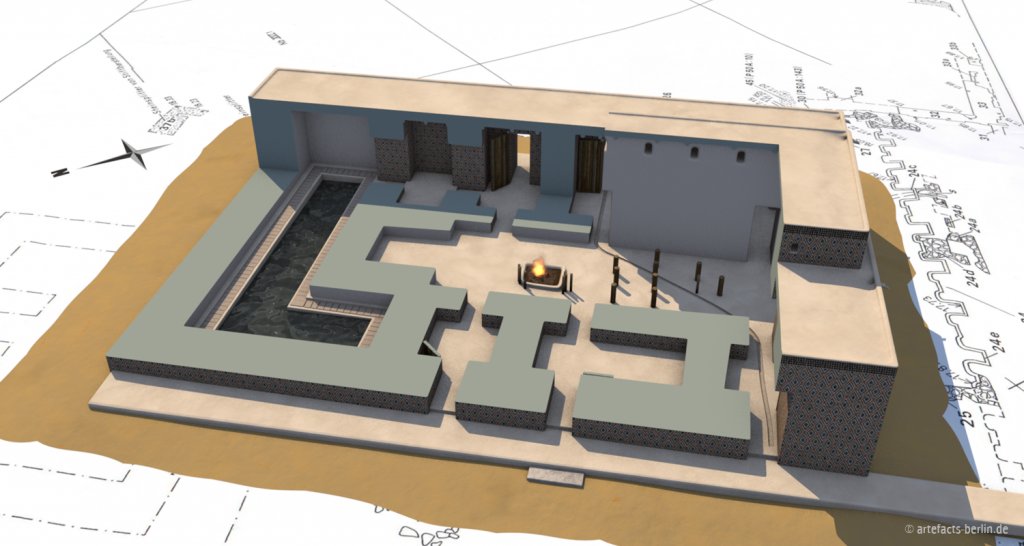
The Oxus Temple is a sanctuary of Ancient Bactria and helps the research on the relations between indigenous and Greek cultures. In 2011, we were commissioned by the Eurasia Department of the German Archaeological Institute to reconstruct the temple.
🔗 https://t.co/MifsKDrxxA
The so-called “Stone-Cone Building” is perhaps one of the most puzzling examples of West Asian architecture. The construction technique utilised is without parallel. The walls are decorated with hundreds of thousands of coloured stone cones.
🔗 https://t.co/42ycr8Guc3
We scientifically reconstructed the Bit Resh, Irigal, Bit Akitu as well as the Eanna and Anu Ziggurat of the Seleucid Period in Uruk (modern-day #Iraq) For the reconstruction process, we considered variations, which resulted in two different models.
🔗 https://t.co/tBjzZVCYBF
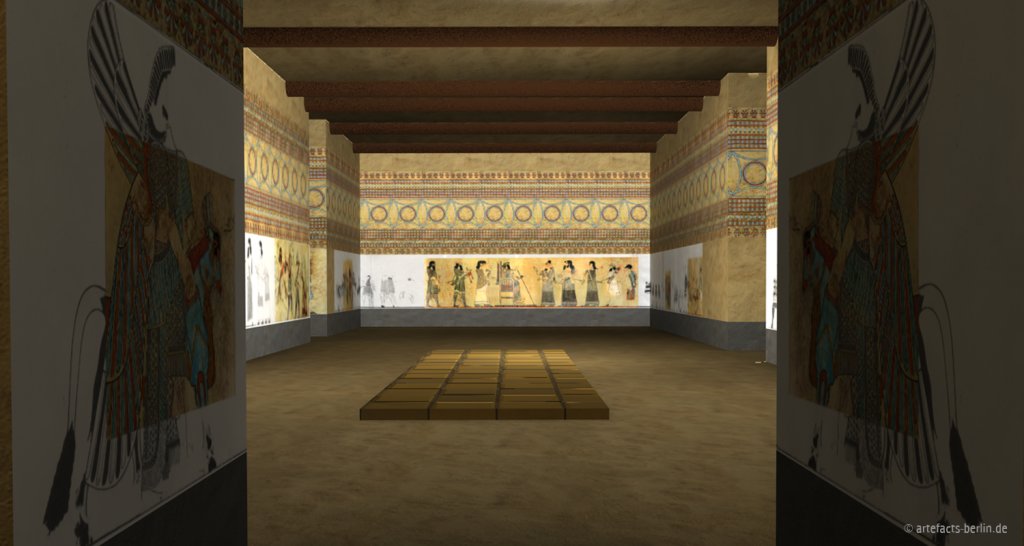
The palace at Til Barsib (Syria) was richly decorated with wall paintings in the Assyrian fashion ar. 744-631 BCE.. Our visualisation combines the black and white copies and the coloured photographs, and places them into their architectural context.
🔗 https://t.co/QNtIZUqZLg
Mari is one of the most famous sites in the Near East. An investigation by French archaeologists focuses on the city’s fortification walls. We developed reconstructions of the fortification walls, the city gate, and an adjoining residential building.
🔗 https://t.co/FGW24wS0ao
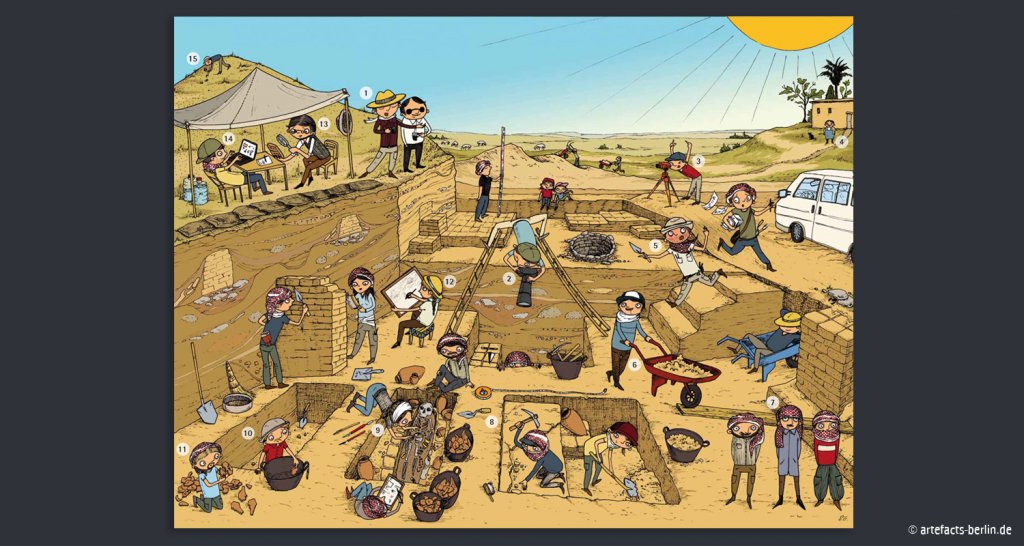
For the Tell Fecheriye exhibition, we presented the results of the ongoing excavation to the general public. We presented an entire archaeological experience and created a colourful illustration showing the many different tasks of an excavation.
🔗 https://t.co/AmmgkuiZiq
Uruk/Warka is one of the first cities in the world. Excavations uncovered a large variety of monumental buildings. We focused on the main buildings: C and B, the “Pillared Hall” and “Hallenbau”, “Great Courtyard”, and some smaller structures.
🔗 https://t.co/2u8LmEV2rR
In 2000-2001, an ancient Egyptian well was excavated. The well is one of the earliest in #Egypt to be entirely constructed from stone. The visualisations have been used to illustrate the construction of the well, its features and stratigraphy.
🔗 https://t.co/IZIPo6UwXc
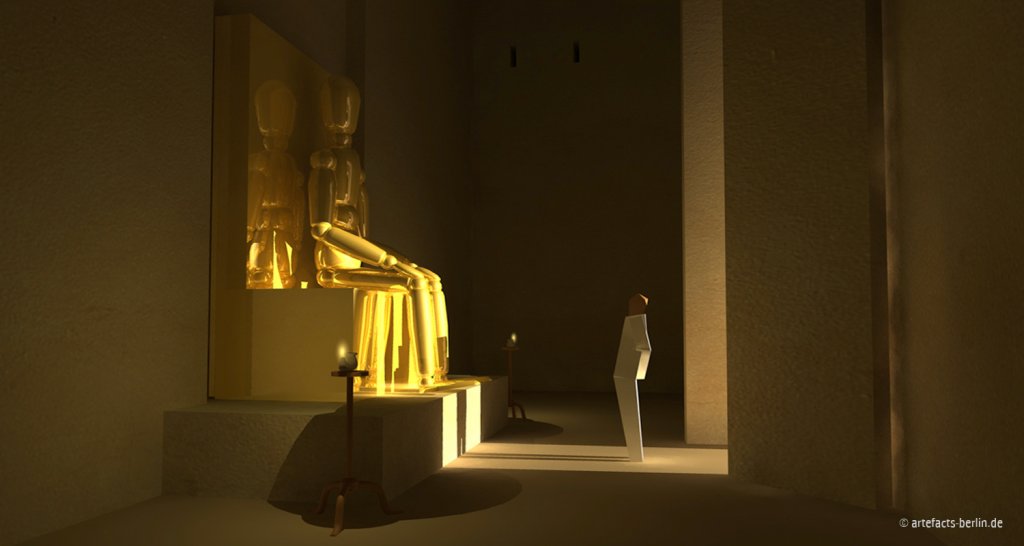
We conducted research on the reconstruction of the lighting conditions in ANE sacral architecture. We compared and analysed four of the most common temple types in Mesopotamia. We used standardised 3D models of different temple types for the study.
🔗 https://t.co/JcTC6jEFtQ
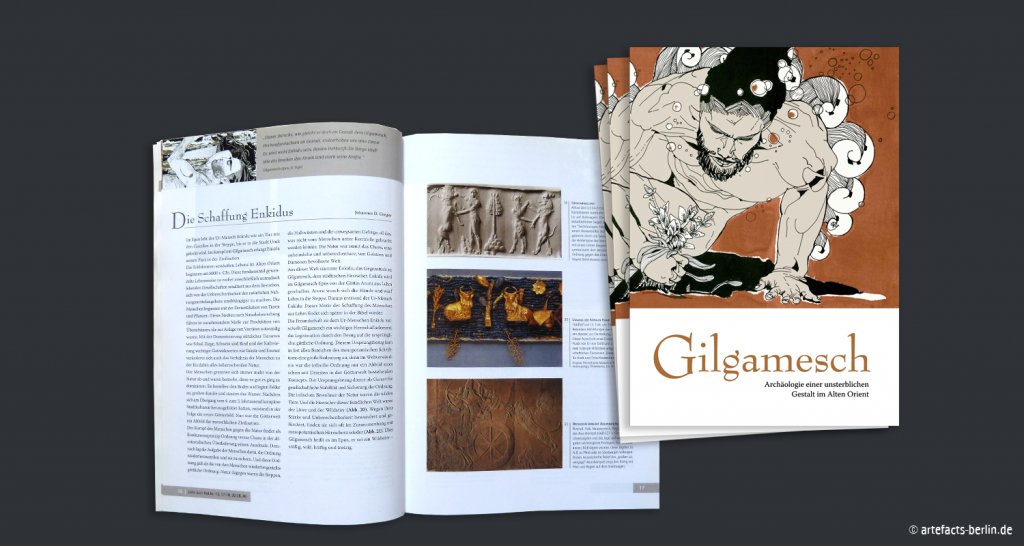
In 2007/2008, an exhibition took place, that provided an insight into one of the oldest literary texts known today – the epic of #Gilgamesh, the mythical king of ancient Uruk. We undertook the exhibition’s concept development and planning.
🔗 https://t.co/TR9CoWlzZK
Tepe Gawra (“the great mound”), is situated in #Iraq. The “Round House” dates to around 4000 BCE. Since our architectural reconstruction is of course only tentative, we decided to illustrate the level of certainty in the model through colour coding.
🔗 https://t.co/eNw4mmOSMb
The so-called “Red House” was uncovered at the centre of the lower city of Tell Schech Hamad. It was built and utilised during the Neo-Babylonian Period (626–539 BCE), and destroyed by fire. We created a 3D model of the re-plastered remains.
🔗 https://t.co/siRLomI1HH
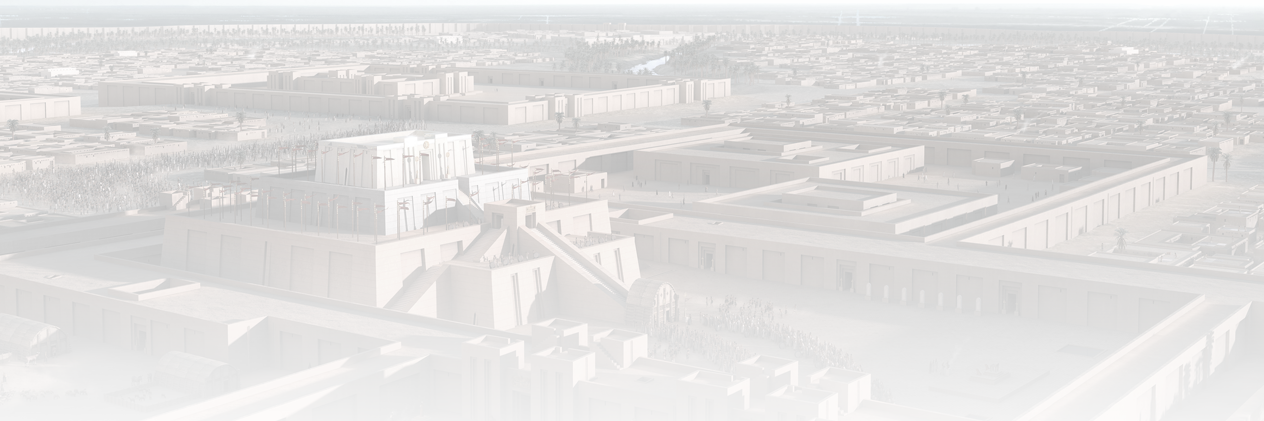
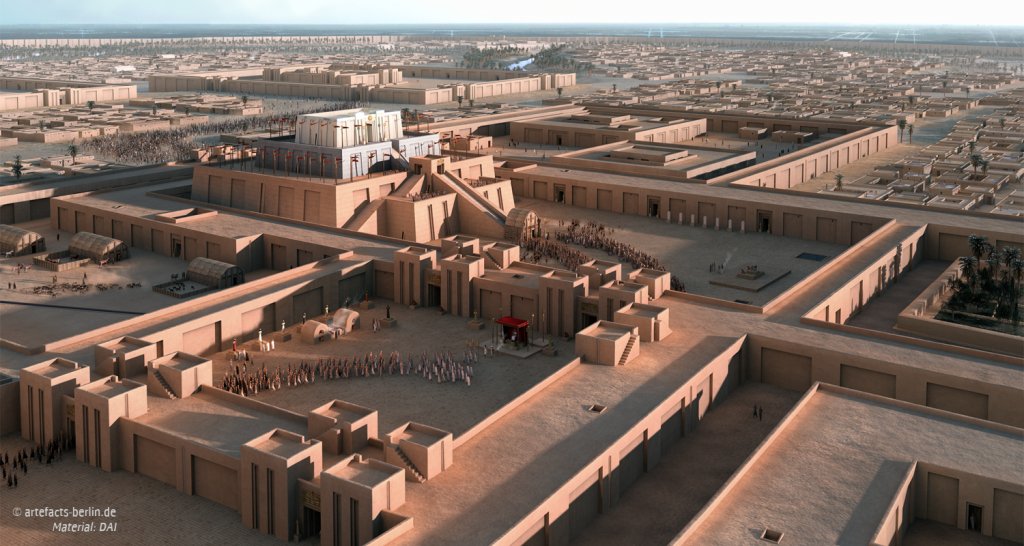
The 3-storey ziggurat was surrounded by a complex system of walls and courts. Arch. records document various installations. A range of secondary sources were consulted. Over 4000 human models and 300 buildings were used in this view.
🔗 https://t.co/I0yaRvFoNQ
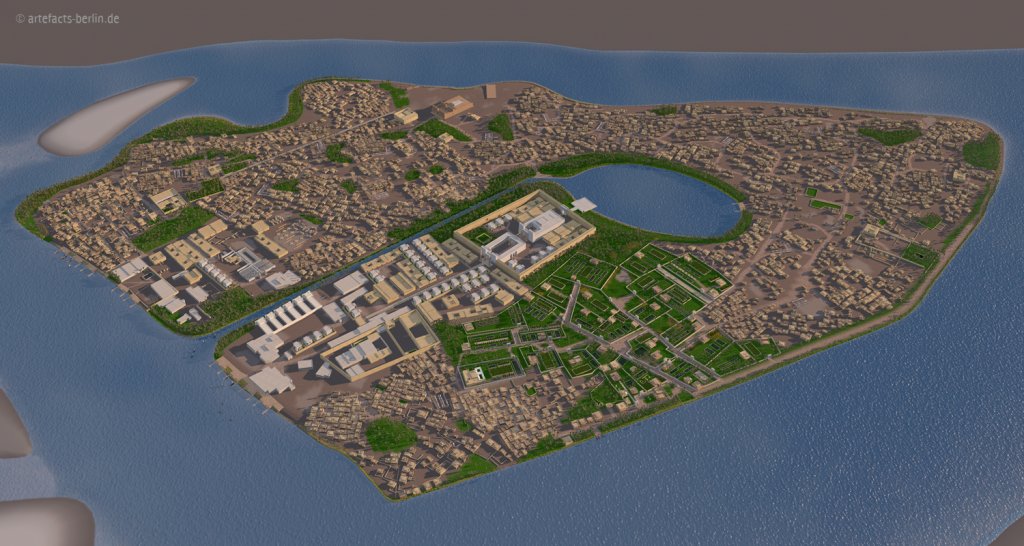
Pi-Ramesse (House of Ramses) is situated in Egypt. It was founded by Ramesses II. A nearly 7-minute animation could be created during a time-span of 9 months. The urban structure of the city was visualised very carefully and resulted in this. 🔗 https://t.co/Cka91JPIZV
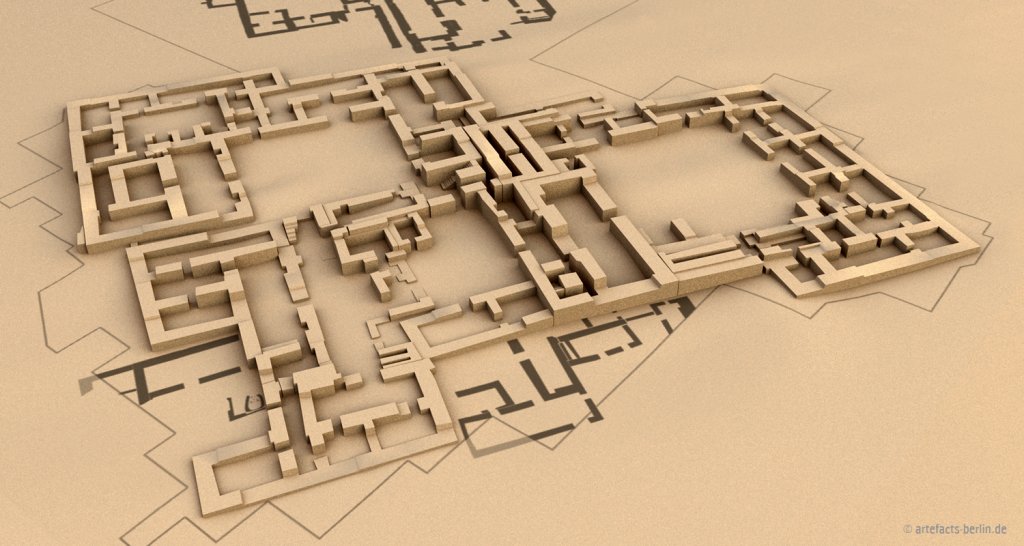
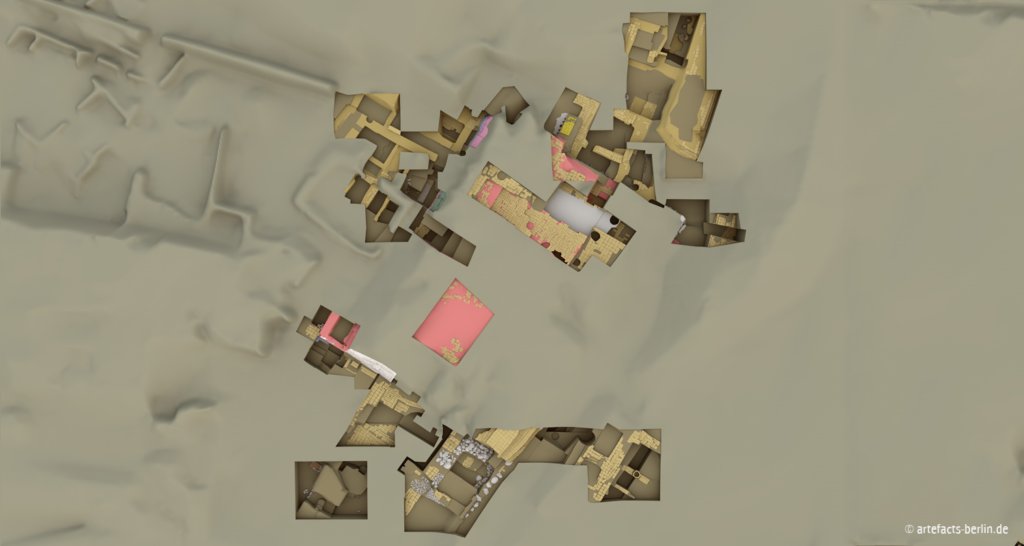
Mari, located in Syria, is one of the most famous sites in West Asia. The Massif Rouge offers a complicated excavation and research history. We created a detailed model of the area by hand, the only way to create a 3D model out of the excavation data. 🔗 https://t.co/NKQD2TYPlD
The Stone Building (Steingebäude) of Uruk is a semi-subterranean building made of stone, that comprises of 3 rectangle rooms, nested in each other. Access was made trough a ramp leading down. The inner floor was paved with stone slabs. 🔗 https://t.co/AG1XfFxSIy
The reconstruction of the Great Hall in Karakorum was visualised with an animation to be able to explain the complicated composition of the terrace as well as the ‘Great Hall’, that shows influences of Chinese and Tibetan architecture. 🔗 https://t.co/qroK63s34k