🎬 Uncensored MiniMax-H3 text encoder, re-quantized to NVFP4.
📦 26.4 GB → 15.7 GB
🖥️ Runs on a single 16 GB card (peak 9.9 GB VRAM measured)
🔁 Drop-in replacement for the official Comfy-Org NVFP4 encoder
⚠️ ConvRot weights must be un-rotated before re-quantizing, or output is unrelated to the prompt
🙏 Built on ethanfel's Heretic weights
🤗 https://t.co/bNdZWdTvB5
EVERYONE PROMPTS THE ACTION. ALMOST NOBODY LOCKS THE IDENTITY — WHICH IS WHY TWO-CHARACTER SCENES FALL APART.
Two freerunners racing across Tokyo rooftops, eight cuts, corkscrews over a rooftop gap at the end. The parkour is the easy part. Keeping them two separate people who never blend into each other is the part that actually breaks.
Here's the full prompt built that way. Attach two reference photos as image_1 and image_2, and the same structure works for any multi-character action piece:
FORMAT: 15 seconds, 16:9, 1080p, 8-cut cinematic ultra-advanced parkour footage.
CHARACTERS: Two realistic individuals from image_1 and image_2. Use the attached images as absolute character references, and fully maintain the facial features, hairstyles, hair colors, skin textures, body types, height differences, outfits, color schemes, and age appearances of each person across all cuts. No altering into different people, face swaps, outfit changes, hairstyle changes, or mixing of the two individuals' features.
SETTING: A sunny modern Japanese city reminiscent of Tokyo, Shibuya, and Yokohama — rooftops, alleys, staircases, railings, pipes, concrete walls. The two protagonists, as equals, race through at high speed running side by side, following, crossing paths, and coordinating.
CUTS:
1. (00:00–00:01.60) Low-angle rear tracking. Both accelerate side by side and simultaneously kong vault over separate obstacles.
2. (00:01.60–00:03.40) Front low-angle. One wall runs the left wall, the other the right, then tic-tac to cross in midair and land on opposite rooftops.
3. (00:03.40–00:05.20) Lateral tracking. Consecutive precision jumps, then cat leaps to grab and climb a high wall.
4. (00:05.20–00:07.20) Rooftop tracking. The leader dash vaults, the trailer websters over the gap, then they swap front and back positions.
5. (00:07.20–00:09.20) Overhead moving camera. Both dive roll, then run side by side to speed vault a long railing.
6. (00:09.20–00:11.30) Handheld retreating from the front. One underbars, the other side flips, conquering the obstacle simultaneously.
7. (00:11.30–00:13.20) Drone from diagonal rear above. Both palm spin off left and right walls, kong vault, accelerate into the final jump.
8. (00:13.20–00:15.00) Climax. Both leap a large rooftop gap, each doing a corkscrew, camera circling them in midair as they land on separate rooftop edges — then run side by side into the distance.
QUALITY: Live-action film quality. World-championship-level smooth freerunning. Realistic center-of-gravity shifts, muscle movement, natural landing impacts, swaying hair and clothing. Sharp background, natural motion blur only during high-speed movement.
PROHIBITED: Facial distortion, altering into different people, face or body swaps, outfit changes, hairstyle changes, body type changes, limb multiplication, duplicates, body fusion, penetration, warping, floating, unnatural landings, anime style, CG style.
A few things worth noticing about why it's built this way:
The character block does identity work three separate times — the reference images, the "fully maintain" list, and the prohibited list at the end. That redundancy isn't padding; each one closes a different door the model tends to walk through.
The prohibited list names the exact failure modes — face swaps, body fusion, limb multiplication. Telling the model what not to do is more effective here than describing what you want, because these are the specific ways two-character scenes collapse.
Every cut assigns each person a distinct action — one wall runs left, the other right; one underbars, the other side flips. Giving them separate roles keeps them functionally two people, so the model can't average them into one.
And the cuts are individually timed and framed. Long continuous motion is where identity drift creeps in — breaking it into eight discrete shots gives the model less room to blend them.
Made in Seedance 2.0.
🤯 Depth can now recreate complex climbing and parkour motion this cleanly!
Turned a fast climbing clip into a Depth motion reference, then swapped in a 20-year-old twin-tail student with a backpack while keeping the same concrete structure.
Wall contact, weight shifts, jumps, climbing paths, and full-body movement all stay surprisingly clean and consistent!
🌟 Workflow:
1. Pick a reference clip under 15 seconds
2. Convert it to Depth with Depth Anything V2
3. Generate a new character + scene
4. Feed everything into Seedance with the prompt below
🌟 Depth video conversion:
You can build a local Depth converter with Codex — prompt in the comments.
Dance, martial arts, climbing, parkour, and other complex movements can all be transferred cleanly with Depth!
Workflow + Prompt below 👇
AFTER SCHOOL DANCE CLUB | Blender MCP TEST
放課後に屋上でダンスするJK
Blender MCP × Claude + Fable5で、以前はカメラワークの再現性を中心に検証していましたが、今回はそれに加えてダンスのモーションの一貫性もどこまで担保できるのか試してみました。
プリビズは人物の位置関係とカメラワークのリファレンスとして使用し、ダンスについてはコレオグラフの一貫性を維持するためのリファレンスモーションを別途作成して組み合わせて参照させています。
結果として、モーション参照は非常に効果がありました。
カメラワークについても一定の効果?は感じられます。
一方で、今回はSeedance 2.0が動画リファレンスを1本しか参照できないため、プリビズとモーションを1本の動画にまとめて入力したことが影響している可能性もありそうです。Seedance 2.5で複数の動画リファレンスが利用できるようになれば、さらに改善できるかもしれません。
ただ個人的には、モーションの一貫性を多少犠牲にしてでも、動画生成AIにある程度任せてアニメらしい動きを生成させた方が、最終的な見栄えは良くなる可能性もあると感じています。(今回使用したモーション自体のクオリティにも左右されるとは思いますが。)
#hailuoCPP
@Hailuo_AI
AI actors are getting scary good..
spent 2 day making this short film.. if you still think actors are safe, ihave nothing to say.. this is so over
check my prompts and workflow on buzzy now:
Testing out this LTX 2.3 LoRA for removing objects blocking a shot.
There’s still a bit of jitter when the face goes out of view, but coming from shooting weddings, I definitely would’ve tried using this to save shots when something was blocking my view.
Ollama now supports Codex app!
To try it, update to the latest Ollama 0.24, and run:
ollama launch codex-app
Select an open model to use with Codex app!
🧵
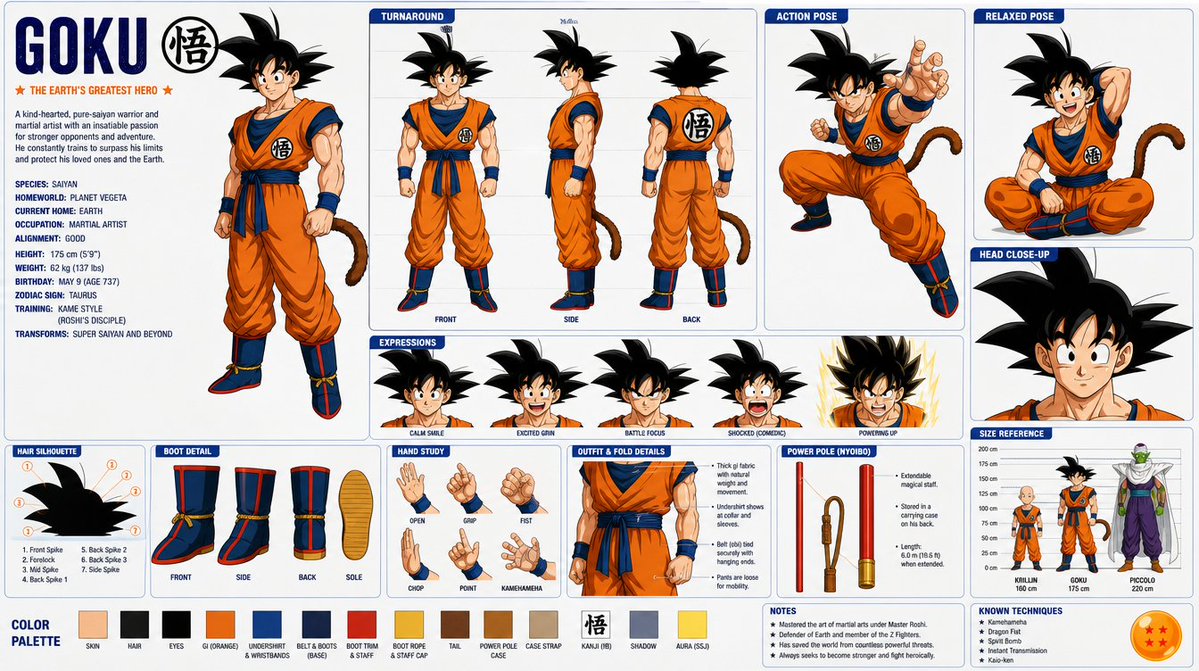
🚨 GPT Image 2 really changed the game for character sheets.
The result is insane.
Come check the prompt for your favorite anime 👀
Made in @LeonardoAi
Prompt Below 👇
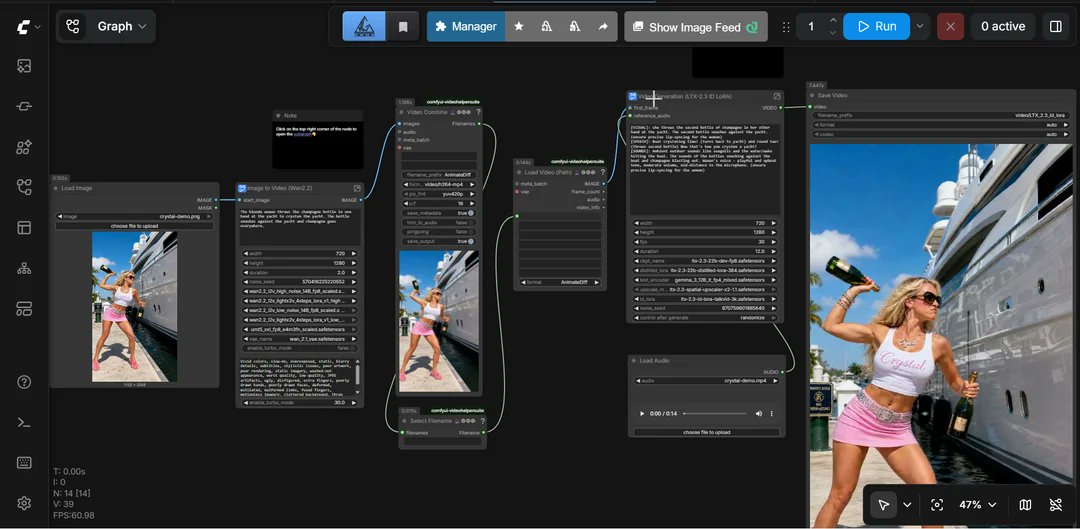
Wan 2.2 Image2Video 😃+ LTX 2.3 ID-LoRA☺️ in Comfy
-Generate your initial video using Wan 2.2
-LTX 2.3 automatically adds audio to the clip
-LTX 2.3 seamlessly extends the video with your next scene
Workflow:
https://t.co/3zlJT2YL7w
detailed post:
https://t.co/xQoyHQqOW4
GPT Image 2 + Seedance 2.0 Prompt Share
Tried using IPA + FACS for a contemporary performance piece where live singing and choreography happen simultaneously. Not sure how much of it actually worked technically but I think the final result turned out pretty interesting.
I also ended up color-coding the storyboard annotations because otherwise annotations were confusing the model. Different colors helped separate body movement, camera motion, framing and lighting directions from the actual environment and character drawings.
You can find color-coded storyboard prompt + seedance 2.0 prompt in the replies.
🚨 800 FREE CREDITS — 24 HOURS ONLY
We just launched LTX-2.3, our most powerful video model yet. High-res. Fast. Cinematic. Native lip-sync.
Follow + Retweet this post to get 800 credits sent to your DMs.
🚀 Motion Control, Leveled Up
Newly upgraded Motion Control is now live in Kling VIDEO 2.6!
Experience precise, full control over every action & expression
✅ Full-Body Motions — Body movements captured in stunning detail
✅ Fast & Complex Actions — From martial arts to dances, nothing moves too fast
✅ Flawless Hand Moves — Precise gestures, zero blur
✅ Expressive Faces — Expressions and lip sync, perfectly preserved and naturally alive
You can even upload 3–30s motion references for uninterrupted sequences, and fine-tune scene details via text prompts.
#KlingMotionControl #KlingAI #Kling26