Solo 3 países van a terminar la fase de grupos con paso perfecto (3 triunfos en 3 juegos): Francia, Argentina y México.
Francia fue Campeón en 2018.
Argentina fue Campeón en 2022.
Dejo este dato y me retiro lentamente ...
Our Mexico City desk can confirm that Pemex and senior Mexican government officials privately acknowledge that the spike in crude prices near $100 and the paralysis risk in the Strait of Hormuz expose a structural vulnerability in Mexico’s energy system that is far more severe than the government publicly admits.
Roughly 20% of global oil flows move through the Strait of Hormuz, making any disruption a systemic shock to global energy markets. The current price surge reflects the market beginning to price in that risk. If Iran mines the strait or tanker traffic remains constrained, the shock would not remain confined to oil markets. It would propagate through refined fuels, petrochemical products, insurance, and global trade simultaneously.
Mexico enters this environment with an unusually fragile energy balance. Despite being an oil producer, the country depends structurally on imported fuels and imported natural gas. The United States exports more than 1.9 million barrels per day of refined petroleum products to Mexico, covering over 70% of the country’s gasoline, diesel, and jet fuel consumption. In parallel, CFE´s electricity production has become structurally dependent on U.S. pipeline gas.
Approximately 74% of Mexico’s natural gas demand is satisfied through imports from the United States, most of it flowing from Texas shale basins. This dual dependency means Mexico’s energy security is effectively externalized.
Under normal conditions, that dependency is manageable because U.S. supply is abundant and cheap. In a war-driven energy shock, however, the system becomes exposed. Oil above $100 immediately raises refined product prices in the Gulf Coast market where Mexico buys most of its gasoline. At the same time, global LNG competition and oil-linked contracts tend to push natural gas prices upward. Mexico does not maintain significant strategic reserves of gasoline or natural gas to buffer these shocks. If global prices spike while domestic prices are artificially suppressed, the imbalance manifests not as higher prices but as shortages.
The current discussion inside the Mexican government about using the IEPS tax mechanism or pressuring fuel distributors to hold gasoline below 24 pesos per liter reflects exactly this risk. Fiscal subsidies or price caps can temporarily dampen inflation, but they do not change the physical supply constraint. When governments suppress prices during supply shocks, consumption remains high while suppliers reduce deliveries or divert fuel to higher-paying markets. This results in shortages, rationing, and fiscal strain. Mexico experienced a version of this dynamic in 2022, when fuel subsidies cost the treasury more than $15 billion.
The strategic concern becomes more acute if the Hormuz crisis escalates into a prolonged conflict between Iran and the United States. In that scenario, Washington’s political and military focus would shift heavily toward the Middle East. Energy markets would tighten globally, and the United States would prioritize domestic stability and allied supply chains critical to its own industrial base. Mexico’s heavy reliance on U.S. fuels and gas means that any tightening of Gulf Coast supply would immediately propagate south through pipeline and shipping networks.
The paradox is that Mexico remains an oil producer while lacking fuel security. The country produces crude but lacks sufficient refining configuration and capacity to meet domestic demand, forcing it to export crude while importing gasoline and diesel. At the same time, the power sector increasingly runs on imported natural gas. This combination leaves Mexico exposed to exactly the kind of external shock now emerging from the Middle East.
If the Sheinbaum administration does not begin securing strategic fuel reserves, alternative supply arrangements, or emergency storage capacity, the country risks entering a supply shock environment within weeks if the conflict persists. Rising global prices, combined with domestic price suppression, would push Mexico toward the classic symptoms of energy stress: fiscal drain, fuel shortages, electricity cost spikes, and inflationary pressure across transport and agriculture.
The problem is no longer oil prices alone. It is the structural fragility of Mexico’s hydrocarbon balance. A prolonged disruption in global energy markets would expose how little buffer the country has built into its system. Without rapid contingency planning, the combination of global war risk, price suppression, and external energy dependence could push Mexico into a full supply shock scenario.
Programa de Invierno
China: Introducción a su Transformación Digital (2ª edición).
🖥️ Modalidad virtual | 🎟️ Cupo limitado
📅 Martes y jueves de marzo 2026
⏰ 18:00–20:00
📌 Inglés intermedio–avanzado
📝 Regístrate antes del 19 de febrero
🔗 https://t.co/zfntHSNQry
La CDMX genera enormes volúmenes de datos que, al estar desconectados, ocultan el verdadero pulso urbano de esta ciudad. La computación urbana los interconecta, transforma el caos en patrones y permite acomodar las piezas del rompecabezas para descifrar la complejidad.
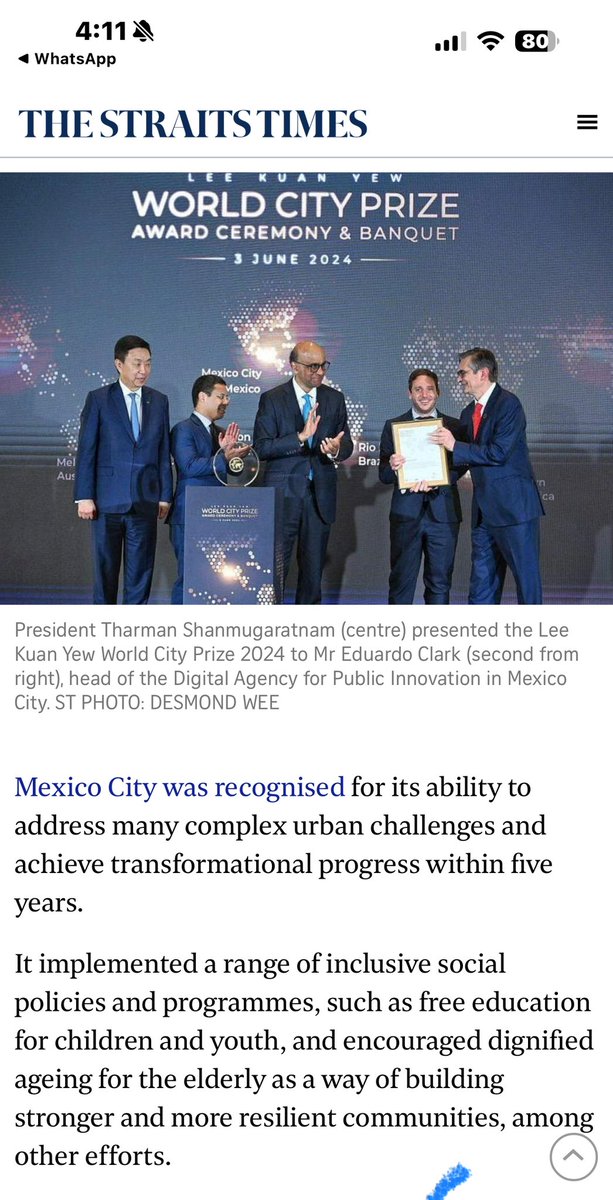
🏆 La CDMX ha sido reconocida con el Premio de Singapur "Ciudades Globales 2024". Ángel Tamariz, titular de la ADIP, se reunió con Elaine Tan, Directora del Centro de Ciudades Habitables, para coordinar esfuerzos en transformación digital y sostenibilidad. 🌍✨
@OpinionLSR@bl_ibarra ¿Esta sí la escribiste o también la robaste? Por cierto, te recuerdo que como funcionaria no puedes bloquear a nadie de tu cuenta. Supongo que defiendes las resoluciones de la corte.
No hacen falta razones para denostar al INAI, pero si quieren saber una más, sigan este caso de @bl_ibarra donde se le denuncia por plagio y desviación de recursos 👇🏻
Me vengo enterando que @bl_ibarra plagia los textos que publica y hace pasar como propios. No quiero pensar que @heraldodemexico lo sabe y no le importa.
El día de hoy estuve trabajando en casa y aproveché para estar un tiempo con la familia. Mañana reiniciamos con todo el impulso y convicción 😊. Será un gran día, veré al presidente @lopezobrador_ para iniciar pláticas formales sobre la transición. Les dejo un video de un premio que recibí el día de ayer por los logros que tuvimos en la Ciudad de México.
Recibí del presidente de Singapur @Tharman_S a nombre de @martibatres el premio Lee Kuan Yew de Ciudades globales.
Fuimos reconocidos por “el progreso transformacional” iniciado por @Claudiashein hace 5 años en nuestra ciudad.
Me acompañó nuestro embajador @agarcialopezl
Best 25 Cities in the World for 2024
1.🇺🇸 New York City
2.🇿🇦 Cape Town
3.🇩🇪 Berlin
4.🇬🇧 London
5.🇪🇸 Madrid
6.🇲🇽 Mexico City
7.🇬🇧 Liverpool
8.🇯🇵 Tokyo
9.🇮🇹 Rome
10.🇵🇹 Porto
11.🇫🇷 Paris
12.🇮🇳 Mumbai
16.🇧🇷 São Paulo
18.🇳🇱 Amsterdam
19.🇳🇬 Lagos
20.🇦🇺 Melbourne
22.🇸🇬 Singapore
24.🇹🇭 Bangkok
25.🇵🇪 Lima
(As per the TimeOut)
#PremioLeeKuanYewCDMX | 🏆 El #JefeDeGobierno, @martibatres, informó que la Ciudad de México fue ganadora del Lee Kuan Yew World City Prize 2024, galardón internacional que reconoce a los gobiernos líderes en la creación de comunidades urbanas sostenibles con acciones enfocadas en:
🤝 Resiliencia ante los desafíos urbanos
🚠 Gestión del transporte público
♻️ Sostenibilidad ambiental
👨👩👦👦 Calidad de vida de los residentes
🏘️ Innovación en la gestión urbana
Este premio es uno de los más importantes a nivel global pues reconoce los logros integrales como ciudad colocando a la Ciudad de México a lado de ciudades como Seúl, Nueva York, Bilbao, Medellín, Suzhou y Viena.
La Ciudad de México acaba de ser recocida por el Premio Lee Kuan Yew World City Prize 2024 por parte de distinguidos expertos en urbanismo y desarrollo sostenible de Singapur.
Entre los ejes galardonados se encuentran la transformación digital liderada por la ADIP, PILARES, el sistema de transportes eléctricos incluido el cablebús, el programa integral para acceder al agua y el de recuperación ambiental.