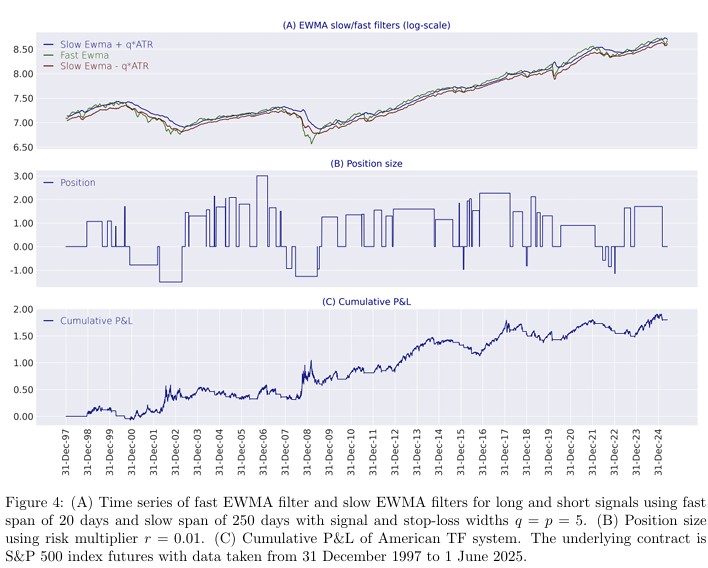
The Science and Practice of Trend-following Systems - updated draft of our paper is posted on SSRN
We present a unified approach to the design of trend-following systems and their classification into European, American, and Time Series Momentum systems
https://t.co/47hUeXVJcC
sharing #factorlasso open-source #Python for sparse factor models that preserve signs from univariate OLS: model economics is intact
Methodology under review at the Journal of Statistical Software: article+replication code in repo. pip install factorlasso
https://t.co/FoN5q6dOkt
Our new paper on SSRN:
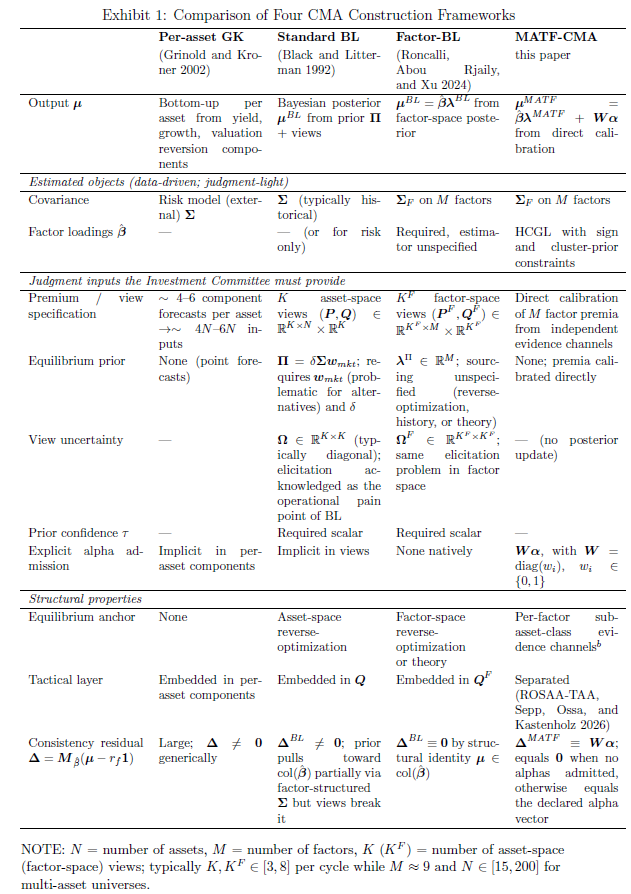
MATF-CMA model as factor-space alternative to Black-Litterman with portfolio alpha-beta consistency by construction: ~2× tighter efficient frontier vs. Grinold-Kroner
https://t.co/uzeKaNGpLr
Condensed summary of the thread:
Jeff Liang shares notes from a technical discussion with quant Alex Wu on RR (Risk Reversal) PnL modeling, based on Artur Sepp’s 2014 workshop.
Main focus:
RR carry / PnL attribution in Black-Scholes vs. stochastic vol models.
Handwritten derivations cover Vega, skew (SKEW·W), volatility differences, theta/gamma terms, and Vanna contributions.
Key simplified forms: δΠ_Carry ≈ -Vega × SKEW × W and similar expressions.
Alex Wu’s key points:
Accurate risk premium approximations across the full volatility surface + strong implementation = foundation of vol arbitrage.
Carry modeling is context-dependent; hard-coding Sepp’s formulas into SABR/Bergomi-style models often breaks (especially smile dynamics).
Practical issues: unifying notional settings, distinguishing theta differences vs. gamma accrual.
The exchange is short, professional, and math-heavy, with Jeff replying 👍 and adding more reference images. No major debate—just focused quant shop talk on volatility hedging and P&L.
"Inflation as a trading signal":
"Simple inflation-based trading factors have proven their predictive power in global financial markets over the past decades... This points to a lack of attention and understanding of all the dynamics that CPI excesses (or shortfalls) set in motion."
https://t.co/wRtEyKPa9s
“People always forget that 50% of a stock’s move is the overall market, 30% is the industry group, and then maybe 20% is the extra alpha from stock picking. And stock picking is full of macro bets. When an equity guy is playing airlines, he’s making an embedded macro call on oil.”
— Stanley Druckenmiller
New paper: Dynamic Mean-Variance Portfolio Allocation under Regime-Switching Jump-Diffusions
A wealth floor is a barrier. A market crash is a jump.
Result: analytical terminal wealth densities, floor protection costs & de-risking glide paths - all analytic
https://t.co/jbT1nAqw5M
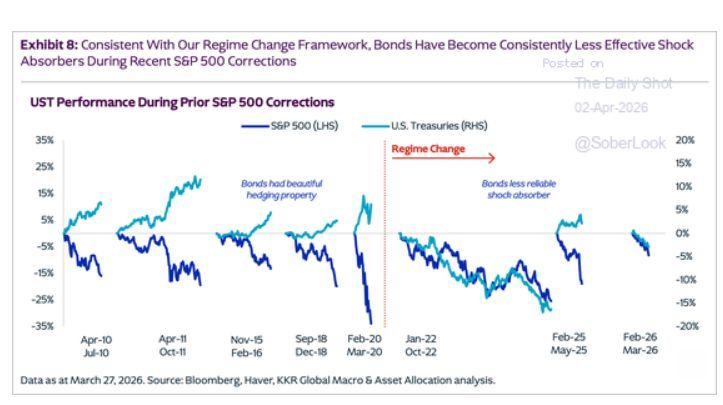
For decades everyone in the asset management industry learned that bonds are the best diversifier to stocks. Then inflation came and ruined the relationship but allocators have been slow to move to find better diversifiers in this environment even when they exist.
Anthropic #AI: cognitive engagement for coding tasks is crucial - not AI avoidance, but how one uses AI when AI-generated code requires genuine understanding.
Workers acquiring new skills should remain actively engaged rather than delegating entirely to AI
https://t.co/WuF37KJVRH
Weekend read, "Nonlinear Time Series Momentum". Not really revealing but still cool for someone who missed this method, especially since the authors apply ML techniques here.
https://t.co/AfoqW6Xl2d
Paper "Nonlinear Time Series Momentum" documents "a persistent nonlinear relationship between price trends and risk-adjusted returns across markets and asset classes that is consistent with asset pricing theory." https://t.co/CkBg3YxLuN
🏆 Honored to be a @quantstrats Hot 10 finalist!
If my research work has resonated with you and added value to your work, I'd be grateful for your vote: https://t.co/tI5Kp47PF4
Looking forward to connecting at @quantstrats conference in London on 14-15 October!
“The Science and Practice of Trend-following Systems“: “We present a unified approach to the design of trend-following systems and their classification into European, American, and Time Series Momentum systems.” https://t.co/sD9EqyyOkb
Do you think it is true that you can apply existing open source LLMs to generate trading strategies or it just marketing bluff?
https://t.co/SZ7G47SBde
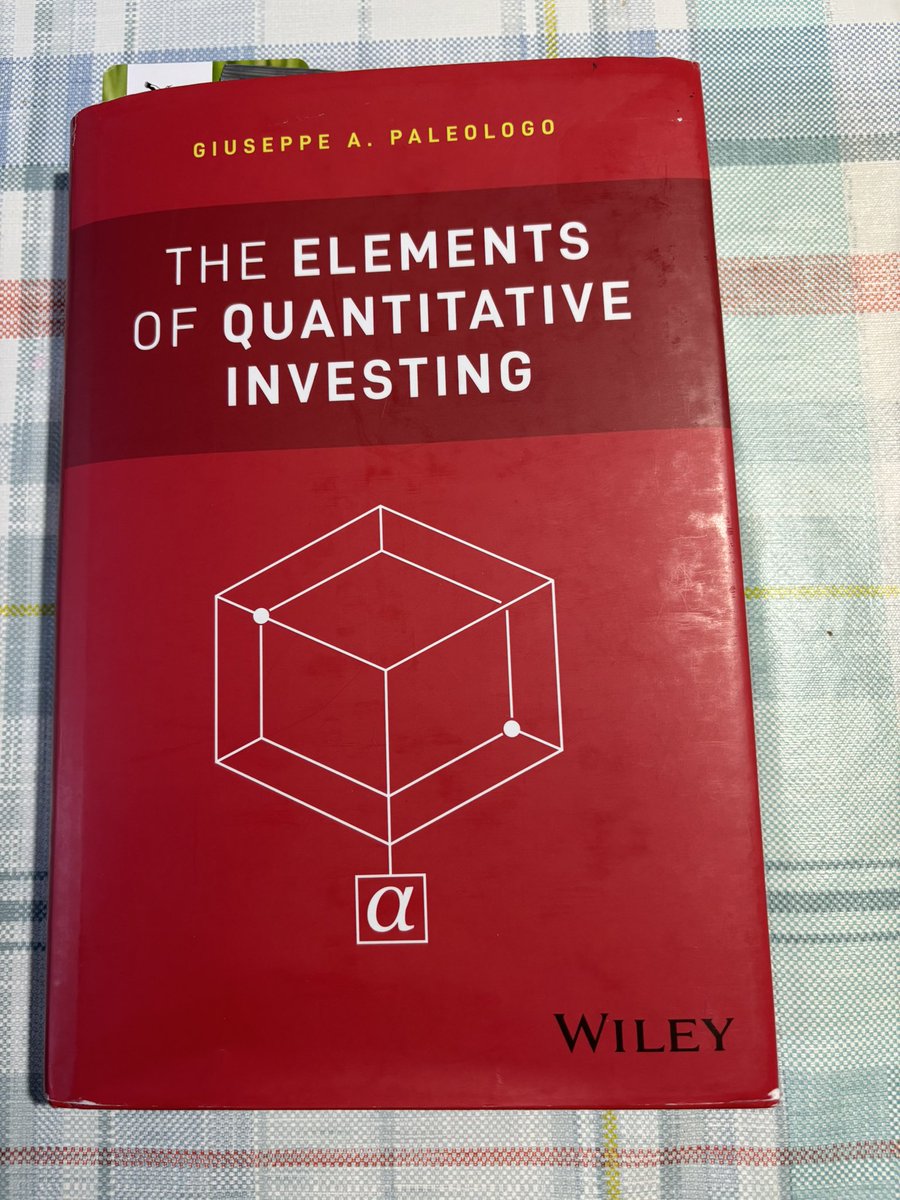
A great book to turn your holiday into a self-study workshop!
@__paleologo would you have something like a Q&A forum, if possible to raise some follow-up questions and comments?
I am planning to migrate my #Python quant analytics from 3.11 to either 3.12 or 3.13.
Any preference between 3.12 or 3.13?
Any expected problems with common quant packages (pandas, numpy, numba, matplotlib, cvxpy)?
Join my online talk on Wed 9th July at 18 UK time to learn about:
· New approach to strategic & tactical asset allocation with illiquid private equity and debt
· New approach for estimation of covariance matrix of public and private assets
https://t.co/LlHpOeFtRb