@0xKavo@RallyOnChain This is the first utility I've seen tied to an NFT that actually compounds instead of just being a one time perk.
Staking gives you rewards today, VIP gives you access today, but the reputation boost is the one that keeps paying off the longer you stick around.
@0xKavo@RallyOnChain The multisig comparison actually clicked for me. We trust multiple signers with money constantly but somehow accepted one model's opinion deciding whether our work was good enough.
Never thought about how backwards that is until now.
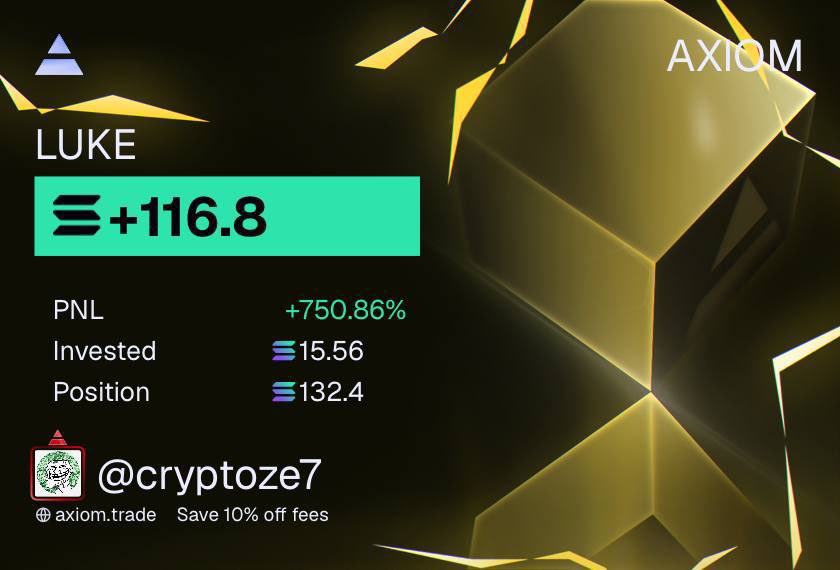
I made $9,200 of LUKE
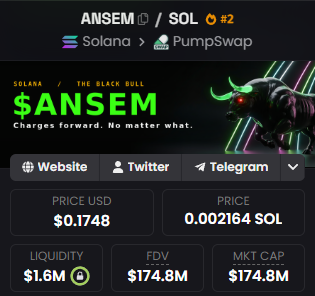
Bought $17,300 $ANSEM
Started airdropping small bags.
Please avoid engagement farmers.
Not going to stop sending you tokens all month.
@0xKavo@RallyOnChain Claimed them but I'm holding off until I understand which campaigns actually pay in USDC versus just RLP rewards.
The consensus adjudication thing is what got me curious enough to dig deeper into how Rally actually verifies submissions before paying out.
@0xKavo@RallyOnChain The shelf life framing is right. Every early opportunity I've caught in this space eventually got crowded once more people noticed.
@0xKavo@RallyOnChain Whitelist spots for me, no question. Everything else is nice to have but early access to mints is the one thing you genuinely can't get any other way.
@0xAkam@RallyOnChain This hit. Built for four months chasing the same validation signals. Likes, reposts, "great project" comments.
The moment I launched, silence. The community and the market are completely different audiences.
@0xKavo The frozen judgment framing is what got me. We picked Claude for everything eight months ago because it was the best option then.
Never questioned it since. That decision is definitely still sitting there.
@0xKavo The "fact vs decision" framing actually reframes how I think about this. Our model name has never been a decision, it's just been sitting there like a constant.
A temperature parameter is a decision. It changes with every call, depending on what that call actually needs.
A model name hardcoded in your code is not a decision. It is a fact someone typed once, and every request since then has been living inside that one frozen choice, whether it still fits or not.
unhardcoded turns the model into a decision too. Instead of pinning a name, your backend sends a small policy with the call. It filters out anything that fails your requirements: tool support, a price ceiling, region, and a quality floor. That floor matters more than people think, it is a guarantee, not a suggestion, so the system optimizes cost below the bar you set, never around it. If nothing in the catalog clears it, the call fails loudly instead of quietly shipping a worse answer.
Whatever survives gets ranked, usually cheapest first, and the top candidate takes the call. If it fails or times out, the next one steps in on its own, without anyone rewriting a config file to make it happen. Every one of these decisions writes a replayable trace, so months later you can still see exactly why a given model answered a given request.
It is OpenAI-compatible too, so your SDK and baseURL stay the same. You just swap the model name for a policy name. Your provider keys, no markup, priced per run.
Check it out at https://t.co/9sOGp2uQNA.
What's still sitting in your stack as a fact when it should be a decision?
For the past two years, I told myself I was “staying informed.”
Every morning started with 30 minutes of crypto Twitter before I even got out of bed. Price alerts, hot takes, someone’s thread about why everything was about to pump or crash. I convinced myself this was research.
But I was just building anxiety and calling it awareness.
The trade I finally made: I gave up the need to know everything in real time. No morning Twitter, no price checking before coffee, no refreshing dashboards just to feel like I’m on top of things.
What I got back surprised me. Actual thinking time. The kind where an idea has space to develop before I expose it to noise. The kind where I write something because I believe it, not because the timeline is moving and I feel left behind.
That shift is part of why @RallyOnChain caught my attention. A platform that scores your content on originality and substance rather than how fast you posted or how many followers you have is genuinely rare. It rewards the version of me that slowed down, not the one who was always rushing to react.
Giving up the illusion of being informed in real time was uncomfortable. Turns out I was trading focus for the feeling of focus.
What is something you keep doing that looks like productivity but is actually costing you more than it gives?