More on the PHP side. 17 advisories, seven critical. The headline bug is phpAfterShell.
@Cloudflare WAF rules cover CVE-2026-129289: PHP-FPM request smuggling in the code since PHP 5.6. It needs a front end that reuses backend connections. Plus two SOAP bugs. These need to be enabled. We have set them in log mode on paid plans, so check the matches and switch to block.
Upgrade your PHP to 8.2.36, 8.3.37, 8.4.28 and 8.5.13.
https://t.co/cf6mG5zEiM
Groundhog Day. Ruby2Shell this time.
WAF rules are enabled by default for every @cloudflare customer, free and paid.
PHP is back too. Rules for CVE-2026-129289, CVE-2026-15353 and CVE-2026-129506 are in log mode on paid plans. More rules to come. Check what they match on your traffic, then switch to block.
Upgrade Ruby and PHP either way.
https://t.co/uo563y8zO0
clairic is redesigned and now open-weights! we went back to the drawing board and overhauled the architecture for it to excel at extraction.
new:
- clairic (27B) and clairic-flash (9B)
- image extraction greatly improved
- PDF support
- weights release!
https://t.co/INEUgWPr9P
AWS is scared of @Cloudflare so they kicked us out of Re:Invent. No problem, we’ll just throw a more fun side event in Vegas. Register now: https://t.co/ujIzrc6r5A
love this @Cloudflare site with prompts to get your site agent ready. https://t.co/GMdcSqrBqH
seems like 80 is about the best you can do if your site doesn't have a protected resource you need to auth into (which imo they should make optional like commerce too)
i added an mcp to mine (https://t.co/Y9XQqkspOT) including a way to contact me that uses Clef via Workers AI to determine if it's a legit message since there's no Turnstile for MCP, along with some limits
Two classes extremely bad cyber vulnerabilities disclosed in the last 24 hours. The first potentially impacts everyone online. The second impacts nearly everyone running a server.
tl;dr: Everyone should upgrade their OS and Browser as soon as possible. If you run a server you should upgrade PHP (or ensure it’s removed if you’re not using it) as soon as possible.
The first class of vulnerabilities is a set of root TLS certificates that were discovered to have a trivial private key. Literally the number 4. These roots were controlled by #eMudhra. The problem is that with that an attacker could create a certificate and, if they could get in the traffic flow, intercept traffic to any site or service. The solution is to stop trusting certificates issued by these vulnerable roots. Upgrading your browser and OS is the fastest way for most Internet users to do this.
The second class of vulnerabilities doesn’t apply to most consumers directly, but does apply to most anyone running a server. These vulnerabilities have been dubbed #php2shell. PHP is one of the most widely used web programming languages. It’s estimated 70% of websites run on PHP. These vulnerabilities allow an attacker to send a crafted set of queries to a server running PHP and potentially take over the server. From there they could potentially read, modify, delete, or repurpose anything on the server. The solution is to upgrade PHP to the latest version ASAP. Even if you’re not using PHP for your web development, it’s often included by default. So make sure it is either upgraded or fully removed.
@Cloudflare received advanced warning of both of these classes of vulnerabilities. We’ve ensured that where we act as a proxy we are no longer trusting the vulnerable roots. We are also reviewing certificate transparency (CT) logs for any sign the vulnerability was exploited before its disclosure. We have not found any evidence but CT logs are not perfect and a sophisticated attacker who knew about the weakness could have exploited it without a new certificate being logged.
For the PHP vulnerabilities, we have deployed mitigations available for all customers for free. Because of the complexity of the vulnerabilities and number of ways it can be exploited, we also released new WAF capabilities that are unique in the industry to catch the exploit based on the response. These too are available for every Cloudflare customer for free.
Even if you are taking advantage of Cloudflare’s protection, it is important to upgrade your OS, browsers, and PHP installations as soon as possible. We can provide a strong bandaid, but the best protection is to fix the underlying problem.
If you’re interested in learning more, you can read our blogs:
Vulnerable roots: https://t.co/TR77Zd01A0
PHP vulnerabilities: https://t.co/qTUK8i3Oww
The Cloudflare's writeup on our php2shell response is up.
Rules went live at 03:02 UTC, about 9 hours before disclosure. Unfortunately the vulnerability leaked early, so we were already watching attackers mutate payloads against the rules and updating as variants appeared.
New rules keep landing in the WAF changelog.
Expect updates through out the day. We will have a more thorough post of what we had to build to better protect people coming shortly.
PHP runs almost 70% of websites. The flaw is in the runtime, so updating plugins won't fix it. Patch PHP.
https://t.co/qzAiN2wGVl
Same offer from @Cloudflare. 100 free passes to Cloudflare Connect in SF this week for folks with cancelled GHC registrations.
Email [email protected]. First come first serve.
try this in your agent “hey can you look at the Cloudflare blog for everything they shipped in the last week and what I could use to get technological leverage to mog my competitors in my projects?”
Build the next Github on Cloudflare and win $25,000. Rethink how multiple agents collaborate on code spaces for the next era of development.
https://t.co/IBpTmiPppR
Workers can now have their errors grouped up into issues in real time and dispatched to your coding agent of choice to automatically open bugfix PRs.
https://t.co/SRiLs22pKt
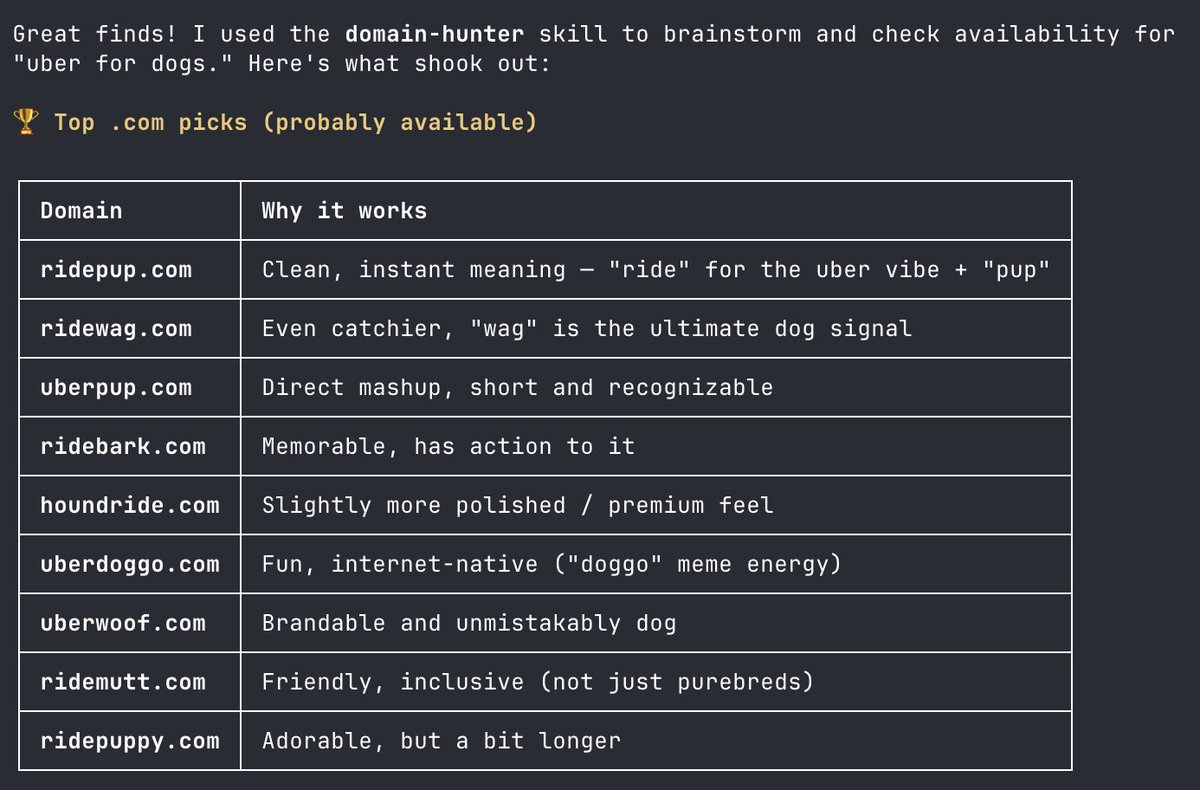
this is so cool, you can now use the ridiculously fast api that powers our domain search anywhere ⚡️
i built a smoll skill to help my clanker find the best domains quickly...