This is probably a long shot, but if anybody happens to be in DC this weekend and plans on visiting Arlington, I would love to see a fresh photo of my husband’s grave in Section 60.
SSG Alan W. Shaw
Section 60, Grave 8451
B Co 1/12 Cav, 1st Cavalry Division
November 10, 1975 - February 9, 2007
There’s just something about knowing people still stop by, still say his name, still remember. 🇺🇸⭐🇺🇸
🚀 DeepSeek-V4 Preview is officially live & open-sourced! Welcome to the era of cost-effective 1M context length.
🔹 DeepSeek-V4-Pro: 1.6T total / 49B active params. Performance rivaling the world's top closed-source models.
🔹 DeepSeek-V4-Flash: 284B total / 13B active params. Your fast, efficient, and economical choice.
Try it now at https://t.co/GCdiMzk1Dl via Expert Mode / Instant Mode. API is updated & available today!
📄 Tech Report: https://t.co/drlDrxkYtp
🤗 Open Weights: https://t.co/T13Y8i7SDM
1/n
2-bit Qwen3.6-27B GGUF made 26 tool calls, triaged 15 GitHub issues and fixed, tested + reproed our repo’s 3 latest issues. 🔥
Try this locally in Unsloth Studio with just 12GB RAM. Studio also has a new look!
GitHub: https://t.co/aZWYAtakBP
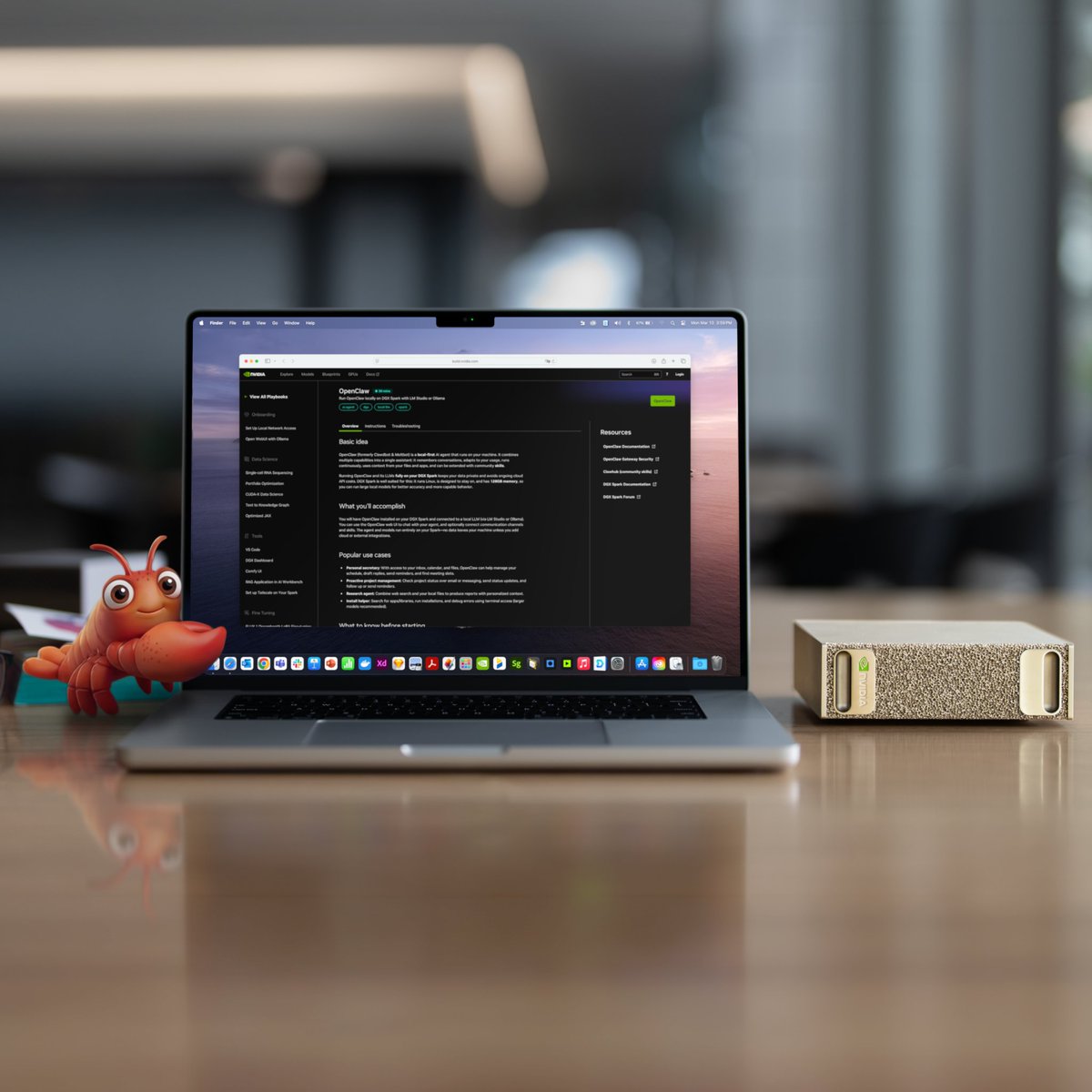
Here's your weekend project. Build a fully local, sandboxed AI assistant.
Step-by-step tutorial to build your always-on agent:
🦞 on openclaw
✅ with NVIDIA NemoClaw
✨ using NVIDIA DGX Spark
Get started: https://t.co/EoXBTKpPIh
Today we're launching Latent-Y: the world's first autonomous agent for drug design, lab-validated end to end.
Give it a research goal. Latent-Y reasons, designs, iterates, and delivers lab-ready antibodies, autonomously or collaboratively, with the biological reasoning of a PhD protein design expert.
Technical report: https://t.co/E7IHfkvvD3
Blog post: https://t.co/GfJAfzj0Qx
Apply for access: https://t.co/E0SR9znZiP
Today in @Nature, we shared new results from Project Silica—our work to encode data in glass—pushing toward durable, immutable archival storage designed to last for millennia. https://t.co/4PM6Jh1wXU
Our newest AI accelerator Maia 200 is now online in Azure.
Designed for industry-leading inference efficiency, it delivers 30% better performance per dollar than current systems.
And with 10+ PFLOPS FP4 throughput, ~5 PFLOPS FP8, and 216GB HBM3e with 7TB/s of memory bandwidth it's optimized for large-scale AI workloads.
It joins our broader portfolio of CPUs, GPUs, and custom accelerators, giving customers more options to run advanced AI workloads faster and more cost-effectively on Azure.
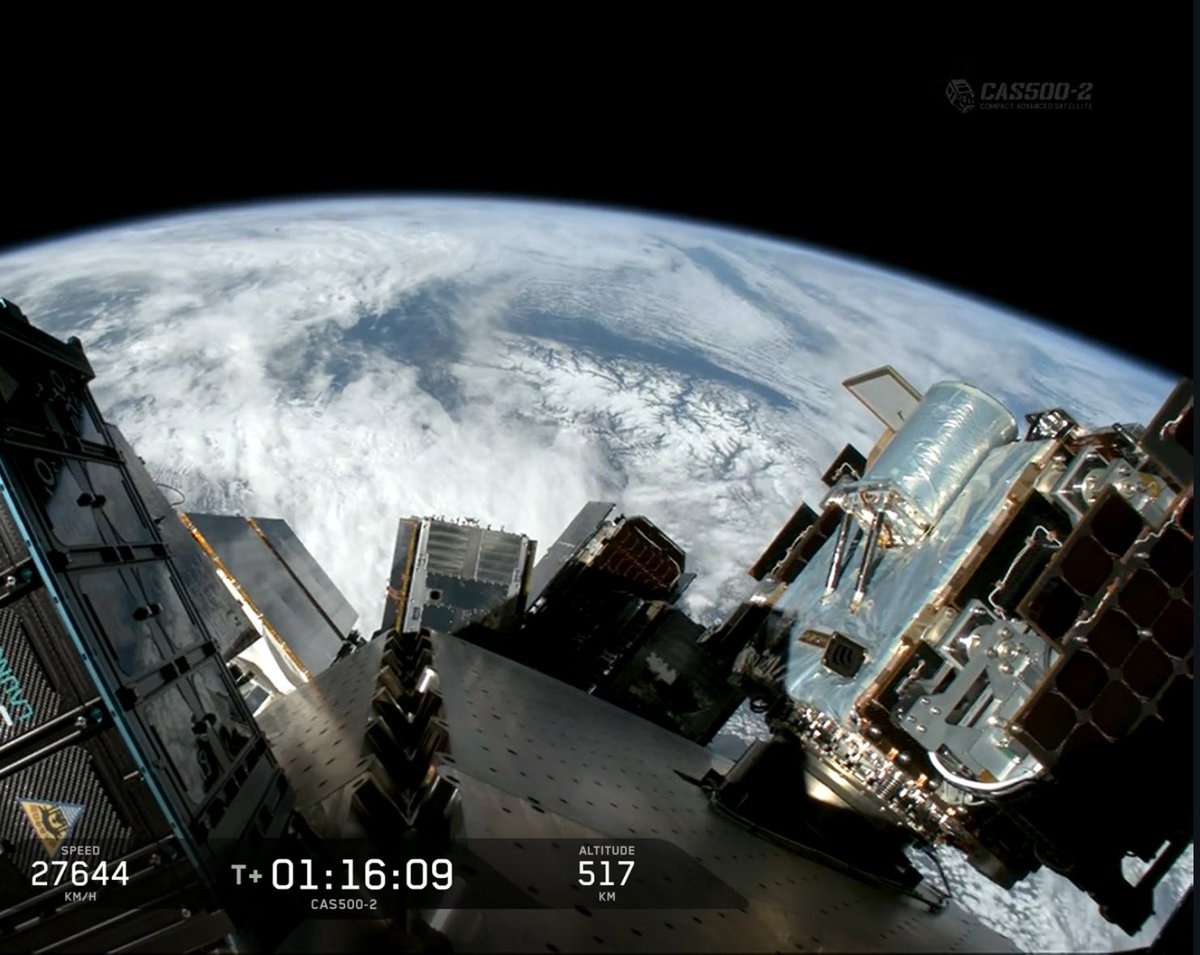
Our TPUs are headed to space!
Inspired by our history of moonshots, from quantum computing to autonomous driving, Project Suncatcher is exploring how we could one day build scalable ML compute systems in space, harnessing more of the sun’s power (which emits more power than 100 trillion times humanity’s total electricity production).
Like any moonshot, it’s going to require us to solve a lot of complex engineering challenges. Early research shows our Trillium-generation TPUs (our tensor processing units, purpose-built for AI) survived without damage when tested in a particle accelerator to simulate low-earth orbit levels of radiation. However, significant challenges still remain like thermal management and on-orbit system reliability.
More testing and breakthroughs will be needed as we count down to launch two prototype satellites with @planet by early 2027, our next milestone of many. Excited for us to be a part of all the innovation happening in (this) space!
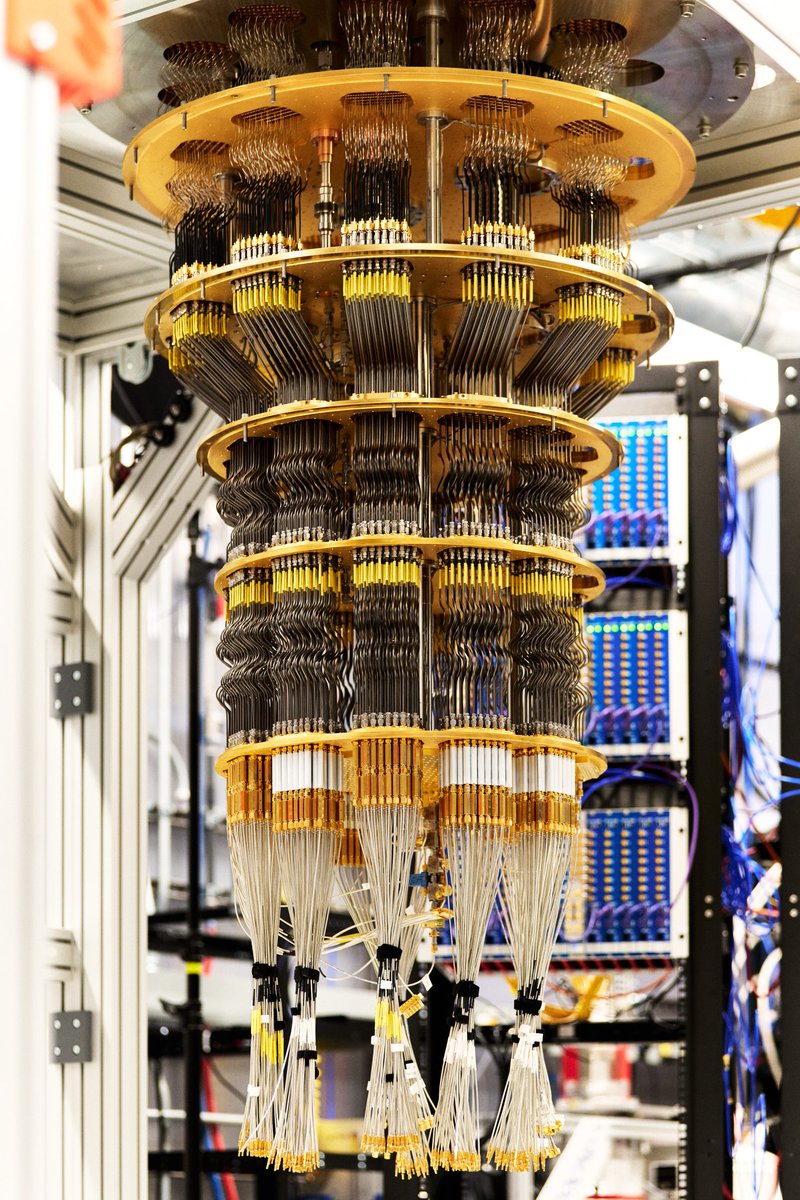
New breakthrough quantum algorithm published in @Nature today: Our Willow chip has achieved the first-ever verifiable quantum advantage.
Willow ran the algorithm - which we’ve named Quantum Echoes - 13,000x faster than the best classical algorithm on one of the world's fastest supercomputers. This new algorithm can explain interactions between atoms in a molecule using nuclear magnetic resonance, paving a path towards potential future uses in drug discovery and materials science.
And the result is verifiable, meaning its outcome can be repeated by other quantum computers or confirmed by experiments.
This breakthrough is a significant step toward the first real-world application of quantum computing, and we're excited to see where it leads.
Introducing Grok Code Fast 1, a speedy and economical reasoning model that excels at agentic coding.
Now available for free on GitHub Copilot, Cursor, Cline, Kilo Code, Roo Code, opencode, and Windsurf.
https://t.co/3tMbmLbxOP