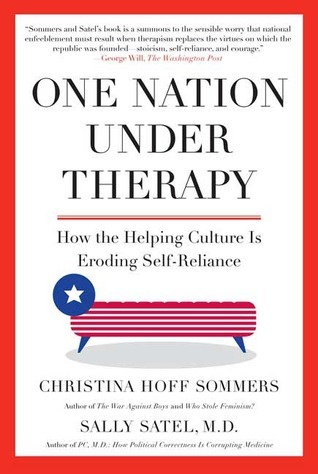
Every moral philosophy student learns the contrast between utilitarian & deontological approaches to morality, & many more were exposed to it when the trolley problem went viral in the 2000s (throw the man in front of the train to save 5 = util; don't = deont). In this essay Rebecca Goldstein shows a deeper commonality: both embody the conviction that everyone matters. https://t.co/7IrdOmjlVM
"Degrowth is the ultimate luxury belief...These are people who already have high incomes, comfortable apartments, generous healthcare and pensions and whose ideas would pull up the ladder on billions of poor people." https://t.co/On3hFp90Vn
On Third Worldism:
'Institutionalized in American universities over the following decades, these ideas hardened into what Zineb Riboua calls a “political theology”: a worldview that treats any movement arrayed against Western power as inherently righteous.'
"the most committed and articulate voices of Muslim anti-Americanism in the United States are not marginalized, dispossessed, under-assimilated newcomers. Rather, they are privileged, cosmopolitan, first- and second-generation insiders" https://t.co/g15anmZd5c
@ibrahimibnyusuf This is the only association when the term was coined in the context of Israel-Palestine. Ironically, by a Christian Arab nationalist, Palestinianist, and a huge cuck for Muhammad.
@mehdirhasan Illiberal postmodernists like you and Sarkar have no grounds to now rely on liberal arguments after years of pushing the very racialised identity-politics you are now confronting on the other side.
https://t.co/pngRWBvAqj
@AyoCaesar The problem you find yourself in is that after over a decade of pushing illiberal racialism, you've lost any moral high ground in fighting back with legitimate liberal arguments.
Your own postmodernist logic now dictates that this is push-back against 'brownness'.
Je reconnais quelqu’un d’intelligent à une seule chose : sa capacité à connecter les points, à être créatif au-delà de ses connaissances.
La mémorisation, la méthode, le savoir pour le savoir, le diplôme, la stagnation n’ont aucune forme de valeur.
J’ai beaucoup d’amis dans ce qu’on appelle avec mépris les couches “basses” : des électriciens, des carreleurs, des manutentionnaires, des gars qui se lèvent à 5h du matin et qui n’ont jamais mis les pieds dans un amphi.
Certains d’entre eux sont parmi les personnes les plus intelligentes que je connaisse.
Un électricien qui diagnostique une panne invisible raisonne en arbre de décision. Un carreleur qui calepine une pièce irrégulière fait de la géométrie appliquée sous contrainte. Un manutentionnaire qui optimise un flux de chargement résout un problème d’ordonnancement que des ingénieurs modélisent avec des solveurs.
Ils ne le savent pas, ils n’ont pas les mots pour le dire, et ils font des fautes d’orthographe en l’écrivant. Aucune importance. L’intelligence n’est pas dans le vocabulaire, elle est dans le raisonnement.
En face, vous avez l’énarque devenu perroquet à concepts qu’il ne maîtrise même pas. Il a appris à restituer, jamais à penser. Il confond la citation avec la compréhension, le diplôme avec la compétence, le jargon avec la profondeur.
Pendant des décennies, ce système a tenu parce que le savoir était rare. Celui qui avait mémorisé avait un avantage. Le “sachant” était un goulot d’étranglement rentable.
L’IA vient de rendre la mémorisation gratuite. Tout ce qui s’apprend par cœur, elle le restitue mieux, plus vite, sans ego.
Ce qui reste, c’est exactement ce qu’elle ne donne pas : le jugement, l’intuition forgée par le réel, la capacité à connecter des points que personne n’a connectés avant vous.
Le carreleur qui pense par lui-même va traverser l’ère de l’IA sans problème. Le perroquet à concepts va se faire écrabouiller.
L’IA ne détruit pas l’intelligence. Elle détruit les imposteurs qui s’en réclamaient.
@SRCHicks So, the illiberal, oikophobic rot in Western intelligentsia can be traced back to German anti-rationalists and the French postmodernists? There's a WW2 Anglophone joke here somewhere on the surrender of reason:
"At least in 1940 they waited for the tanks..."
I find the political focus on inequality in this kind of work strange - as if one could make the poor better off just by making the rich worse off.
Inequality can sometimes have negative consequences that we should care about, but it's ethically confused to care about equality as an end in itself.
We should care about abundance, freedom, tolerance, beauty, knowledge, innovation, fairness, etc. - and only care about inequality when it threatens these other things.