Perplexity says its multi-agent run built an Everest game for about $1,160. I’d give both modes the same brief, with one rule I can test in a browser. Warmth should fall after 30 seconds in the cold and rise after 30 seconds by a fire. Which mode gets that right for less?
Perplexity in multi-agent effort mode, with Fable 5.2 as orchestrator and Gemini Neon subagents, built 8848, a survival game on Everest that you can play in your browser at https://t.co/xUgzf5Axq8.
Total cost: about $1,160 in multi-agent mode.
Enjoy!
A handoff should tell the next agent when to stop.
Give each handoff one owner, an expected output, and a list of allowed actions. Run a case that needs an action outside that list and check that the agent pauses and says exactly what it needs.
Can someone act on a single agent feed card?
Show what changed, link the evidence, and name the next action. Give people the same task in chat and in the feed. Measure how long it takes them to choose the right action in each.
Feeds may be the right interface for working with AI agents. Chatbots feel too heavy. Messages lack clear task boundaries.
Feeds are lightweight, task-scoped, proactive but not stressful.
So I built Aware Feed into our Aware browser—a personal feed where I can interact with all my AI agents in one place.
Give Apple’s on-device model a small extraction test.
Pick 20 inputs and write the expected fields before running the CLI. Score exact matches per field and record elapsed time. Include a few rows where the right answer is an empty field.
Try your icon toolbar without a mouse.
Tab into it and use the arrow keys if it has toolbar navigation. Can you see focus in light and dark mode? Can you spot the selected tool in grayscale? With a screen reader on, listen to what each button is called.
To compare busy inference servers, hold each user’s streaming speed steady. Then count tokens per second across all users.
Tencent did this on DeepSeek-V4.1-Flash. DFly2 delivered 62% more tokens per second than DSpark on CodeSpan 64K and 81% more on SWE 64K.
We just open-sourced a speculative decoder that speeds up sparse models like DeepSeek-V4.1-Flash, GLM-5.3-Flash, and our own Hy4 flash.
At 64K context, DFly2 boosts DeepSeek-V4.1-Flash serving throughput by up to 81%. On Hy4 flash agentic tasks, it runs up to 4.2x faster, beating same-recipe DSpark by ~30% and accepting 10.4% more draft tokens than open-source DSpark.
Under the hood, each draft layer reads directly from the target model's KV cache and top-k token selection, with no prefill required. That adds zero extra KV memory and keeps drafting cost flat at any context length.
Try it on your own sparse models or grab the Hy4 flash weights below 👇
Code: https://t.co/XZXwgWpYXo
Weights: https://t.co/vWagTOrbbQ
Paper: https://t.co/NFe6XpGZwf
Give your coding agent a finish line it can test.
For a CSV export, have it click Export in the app, open the file, and count the rows. Save the build ID alongside the expected and actual counts so someone else can check the same result.
Before you add another agent skill, run the same five jobs with it off and on. Grade the outputs blind. Keep it if the work gets better or takes less time.
I'd start with the skill your team reaches for most.
With Codex and Claude on the cloud, we're increasingly running coding tasks in parallel on cloud infrastructure rather than relying on our local machines!
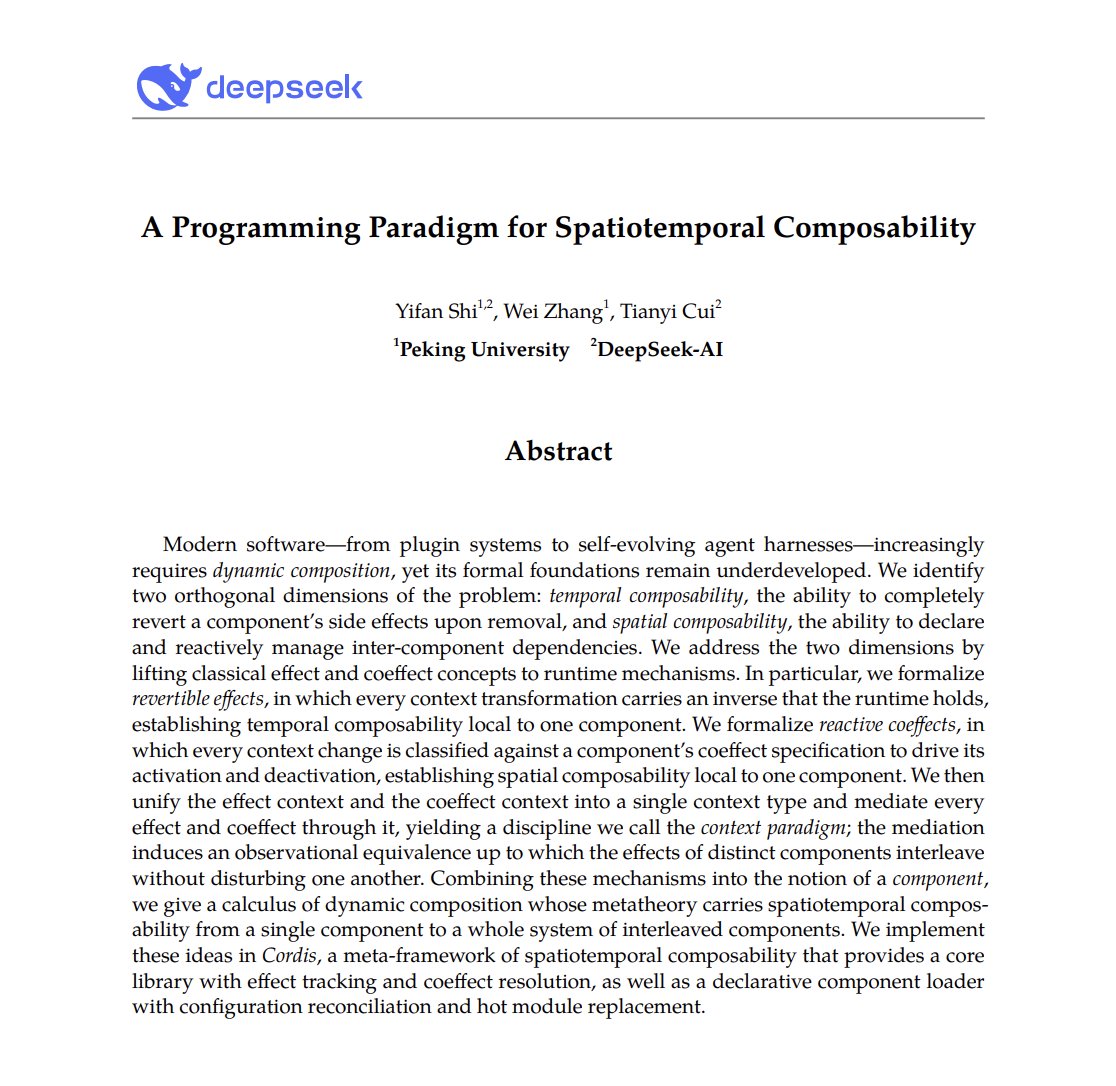
“Everything is a plugin” turns more of the agent harness into something you can experiment with
Cordis makes those experiments easier to manage by tracking what each component changes and requires
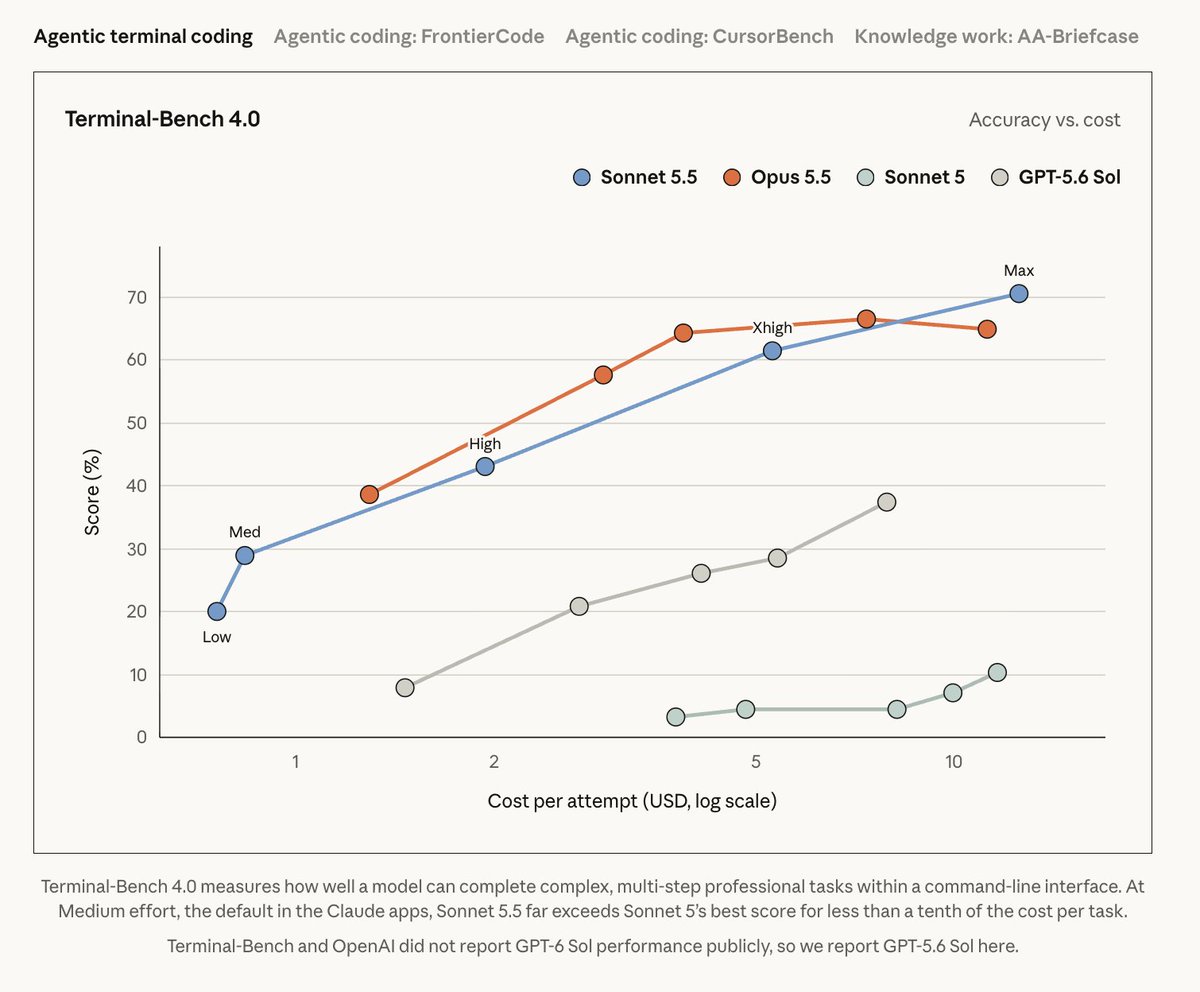
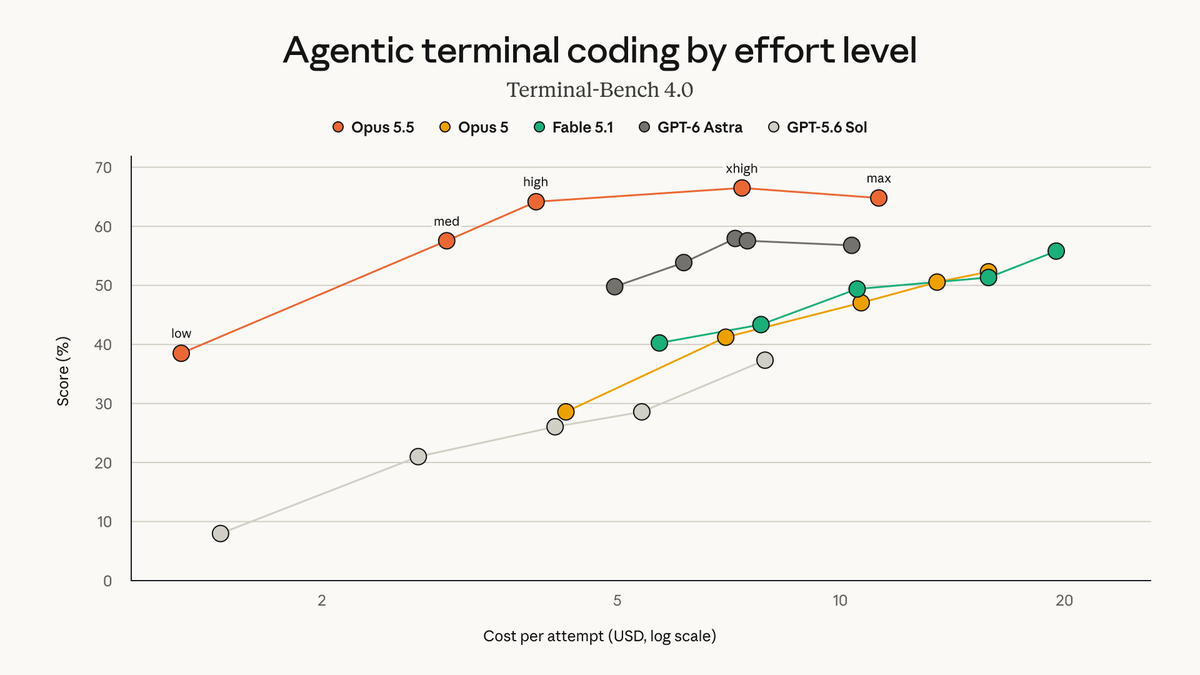
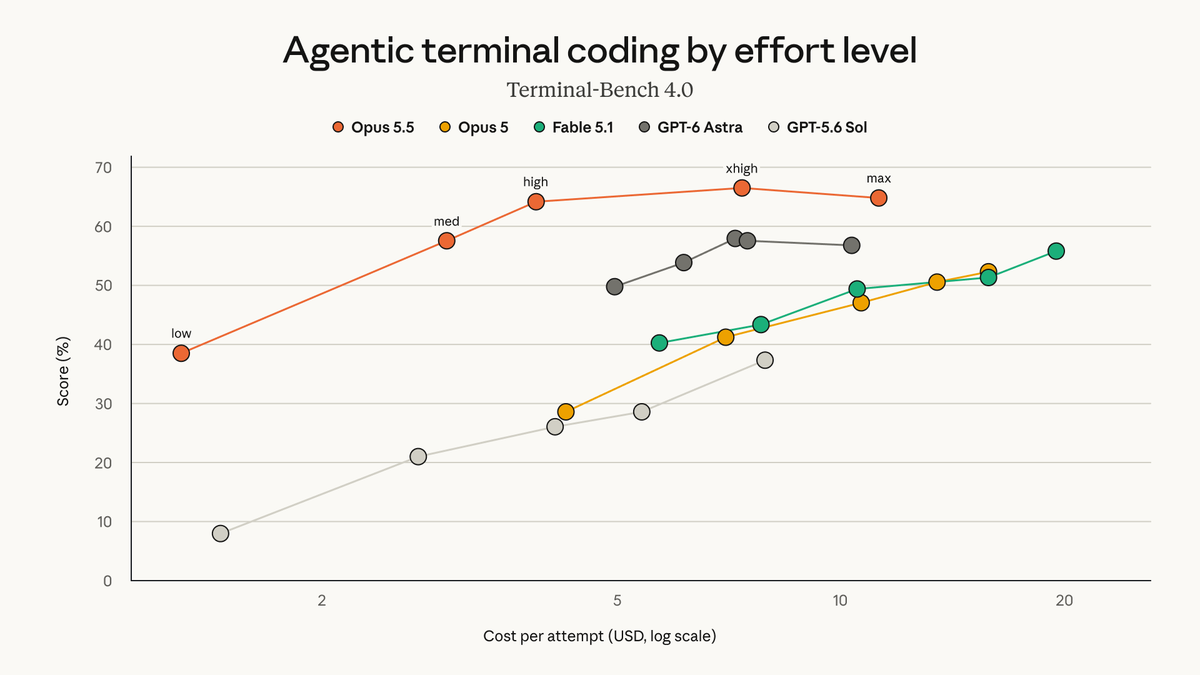
Sonnet 5.5 launched today. “Max effort” still needs an eval.
Opus’s final point costs more and scores lower here; Sonnet keeps improving.
We’ll tune effort per model in our agent setup and count retries, review fixes and completion time.
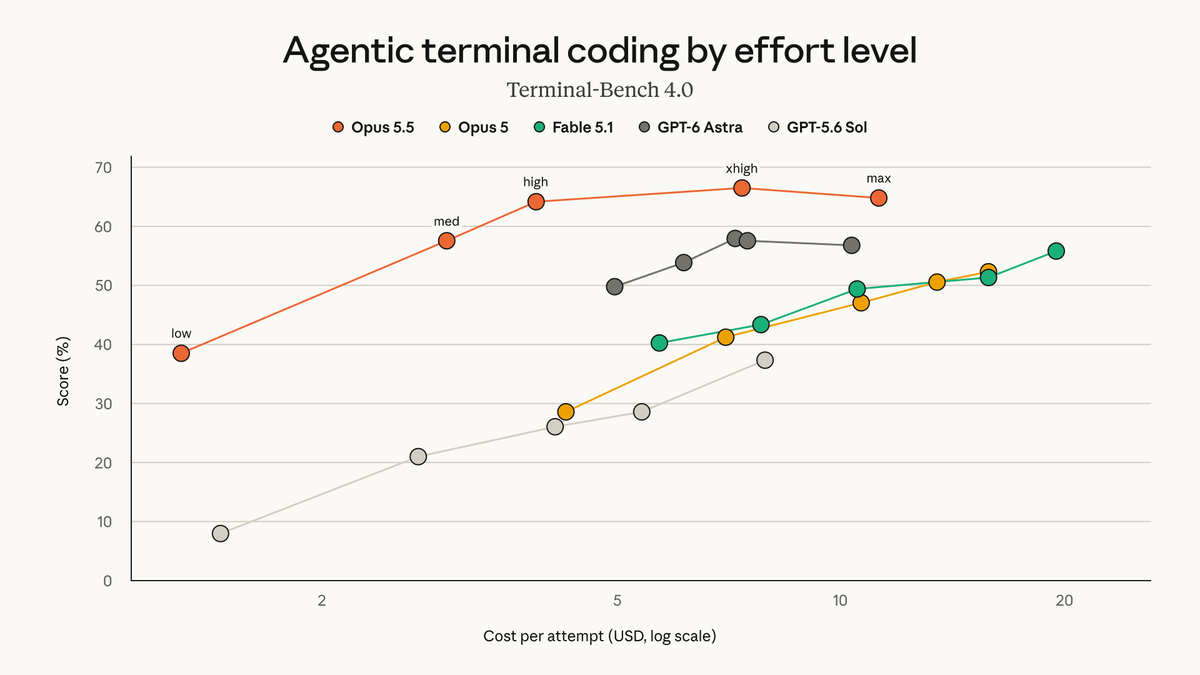
We’re testing Opus 5.5 as Chief of Staff over Astra agents and Luna subagents, after using Fable 5.1.
A coding benchmark tests execution. Our experiment asks whether it can assign the right work, and avoid sending several agents down the same wrong path.
We switched to Fable 5.1 after Opus 5 hallucinated in our workflow. Now we’re testing Opus 5.5 to coordinate Astra agents and Luna subagents.
The hidden cost of a coordinator’s mistake: you pay other agents to act on it, then pay again to undo it.
We moved from Opus 5 to Fable 5.1 after running into hallucinations in our agent workflow. Now we’re testing Opus 5.5 as Chief of Staff: it coordinates Codex Astra agents, which delegate bounded tasks to Luna subagents
Can Opus 5.5 cut costs without adding rework?
Hot take:
Software engineering interviews are outdated.
They test manual coding and LeetCode.
Meanwhile most engineers today are:
debugging, reading code, shipping features, and working with AI tools like Claude and Codex.
The job changed.
The interview process didn’t.