My salute to the Indian pilot Captain Smit Machchhar for his extraordinary bravery.
Despite being stabbed and seriously injured, he fought back, resisted, opened the cockpit door, and enabled passengers and crew to overpower the attacker — preventing a catastrophic mid-air disaster.
He saved the lives of 174 people, including Israeli citizens and other nationals.
I wish Captain Machchhar a speedy and full recovery.
He is a true hero.
@piersmorgan Islamization of Britain so don't be surprised when white becomes minorities in their own country. That is the reason in India Government started SIR to remove illegal and dead voters and deport them.
The guy who torn down Swami Vivekananda's poster is a Malayali.
Communists lost the total grip on their carder so much that they've to import mallus in Bengal to create rucks.
@SkyNews@SkyYaldaHakim Islamisation of Britain continues. More Rapist will be in Britain and whites will either be minorities in their own country or will leave Britain
Left’s antics are getting worse and worse.
Tearing down and spitting on the poster of Bharat Mata and Swami Vivekananda.
As if disrespecting Netaji’s legacy wasn’t enough, they’ve now openly insulted the biggest Bengali icons of West Bengal and India.
The anti Bengali mask has officially slipped.
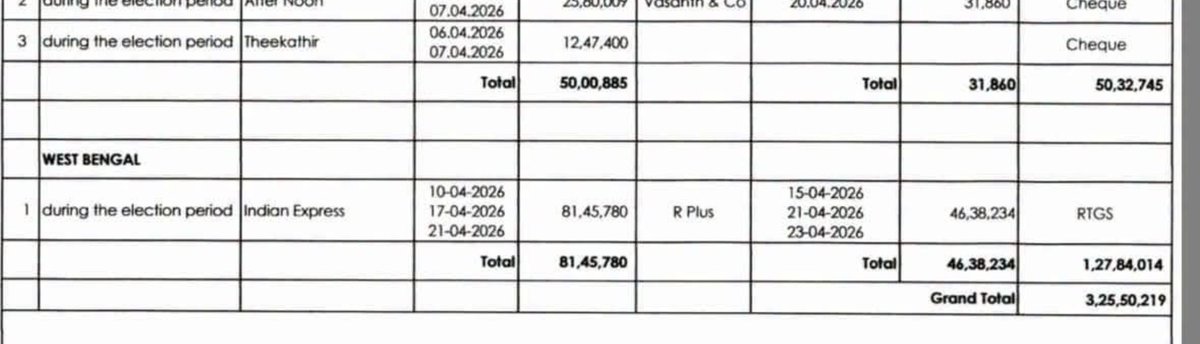
Indian National Congress-এর Election Commission-এ জমা দেওয়া নির্বাচনী খরচের হিসেব নিয়ে একটা প্রশ্ন উঠছে—
Indian Express-কে ₹৮১ লক্ষ, R Plus-কে ₹৪৬ লক্ষ—কীসের জন্য এই খরচ?
আর তারপর Indian Express-এর রিপোর্টকে সামনে রেখেই Election Commission-এর বিরুদ্ধে এত রাজনৈতিক আক্রমণ!
খবরটা Congress-এর পরিকল্পনায় হয়েছে?
প্রশ্নটা তো করাই যায়: শুধুই coincidence?
ফেসবুকীয় আঁতেলরা কী বলছেন?
"SIR is bad!" …Said no legitimate voter EVER!
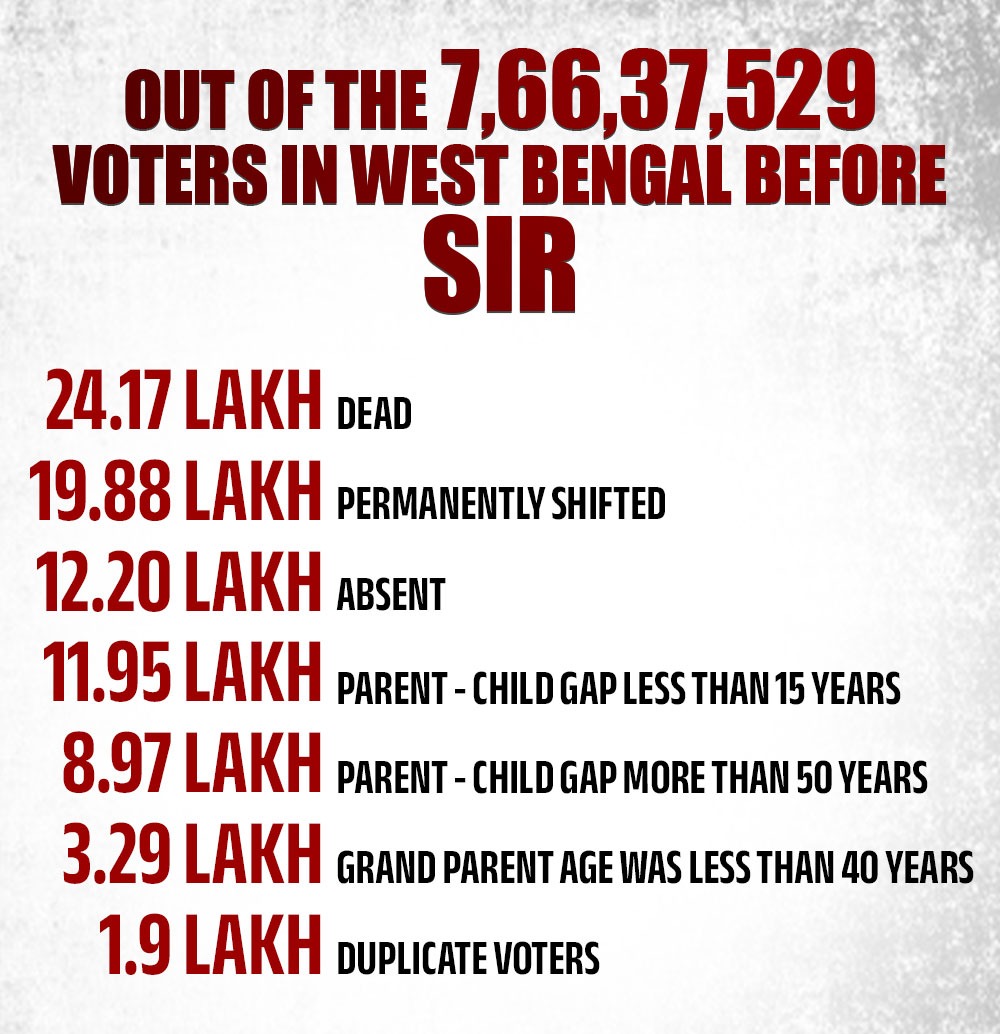
When the Special Intensive Revision removes over 24 lakh dead voters and duplicate names from the system, of course the opposition is sweating! Sorry not sorry, but elections are meant for actual living citizens.
@tavleen_singh Misleading and paid 0.5 article. Leekh loh PM Modi 4.0 loading and BJP is here to stay aap log bas chugli karte rehena and keep protesting like this as it helps BJP to emerge more stronger day by day.
0.5 Gang at work. We need the FCRA bill asap. We had the most peaceful election in West Bengal after many decades without violence, dead voters, or illegal voters. Best election commission we have had to date.
So how was the narrative built? Let’s break it down.
On 23 September, The Indian Express published a front-page story highlighting 14 instances of internal objections within the Election Commission over roughly 10 months and portrayed them as evidence of an “unprecedented rupture” inside the institution.
Predictably, the political outrage followed almost instantly.
But then came the part that deserves equal attention.
The Election Commission clarified that in a three-member constitutional body, questions, observations and differences during deliberations are part of the decision-making process. According to the ECI, the final decisions of the Full Commission—including those relating to SIR—were unanimous.
That distinction matters.
An objection during deliberation is NOT the same thing as dissent from the final decision.
Then came the counter-report.
OpIndia questioned the claim that electoral-roll powers had effectively been taken away from EROs and centralised in Delhi. It cited EROs saying they continued to access the system and exercise their statutory functions relating to inclusion and deletion of voters.
In simple English:
Centralised software does not automatically mean centralised statutory power.
Then there is the famous “14 objections”.
Fourteen internal objections may certainly deserve scrutiny. But does their existence automatically prove that a constitutional institution has suffered an “unprecedented rupture”?
That is an interpretation—not an established fact.
The real journalistic question should have been:
What were the objections? How were they considered? And what did the Full Commission finally decide?
Now come to Bengal.
Around 38.31 lakh appeals have reportedly arisen following the SIR process—about 22.21 lakh from excluded voters seeking restoration and around 16.10 lakh seeking deletion of names that remained included.
So screaming “38 lakh appeals!” without explaining what those appeals actually represent tells only half the story.
Similarly, more than 13 crore names have reportedly been excluded from draft electoral rolls nationwide during the SIR exercise.
But remember:
Exclusion from a DRAFT roll is not automatically the same as final disenfranchisement.
The entire purpose of revision is to scrutinise entries—including deaths, migration, duplication and questions of eligibility—while ensuring that genuine eligible voters are not wrongly excluded.
So yes, question the Election Commission.
Scrutinise SIR.
Demand answers wherever a genuine voter has been wrongly excluded.
That is democracy.
But turning questions into conclusions, internal observations into institutional rebellion, and deliberative disagreement into an “institutional crisis” deserves scrutiny too.
That is where the narrative begins to look very different from the headline.
The ECI says its final decisions were unanimous. The Indian Express reports that serious objections arose during the process.
Both facts should be before the public.
Then let the people decide what they mean.
Because accountability cannot be a one-way street.
The Election Commission must be accountable.
But those reporting on the Election Commission must be accountable too.
Read beyond the headline.
Check what was actually decided.
Separate an internal question from a final decision.
A disagreement can be news.
Turning disagreement into a predetermined conclusion is a narrative.
And sometimes, the loudest “institutional crisis” exists more dramatically in the headline than in the institution itself.
#ECI