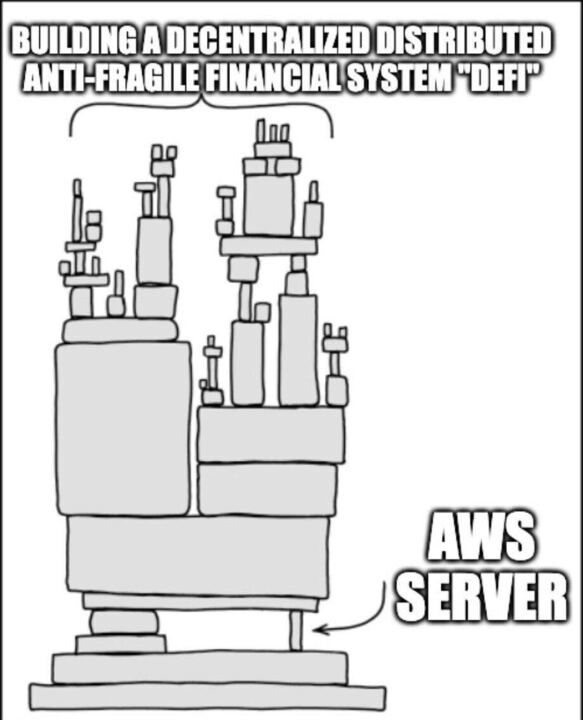
AWS went down.
Coinbase and many others went down with it.
The lesson is simple: if your “decentralized” system depends on centralized infrastructure, it isn’t sovereign.
Neura runs on private fiber and bare-metal servers.
No cloud dependency, no single point of failure.
⚡️Our latest @Cointelegraph coverage: In partnership with @ankr, RPCfi is going to transform network traffic into on-chain liquidity, turning cost into value, and movement into yield. Coming soon from Ankr, powered by Neura’s sovereign infrastructure.
Read the full article 👇
Another AWS outage.
This has caused a ripple effect throughout the industry.
It's a reminder of how fragile digital infra is, with the outage affecting exchanges and fintech systems that rely on cloud hosting.
What infra do you think most blockchains run on?
The majority runs through the public internet, the same routes used for streaming, email, and everyday data.
The public internet is built for accessibility, but not consistency.
Competing for bandwidth, routes shift constantly, and congestion slows everything down.
That’s passable for content delivery, but unreliable for systems that move real value.
Neura runs on private fiber, using dedicated, point-to-point circuits that connect validators across continents.
There’s no traffic competition, no random routing, and no dependency on public ISPs.
Every transaction moves through infrastructure designed for predictability and control.
For stablecoins and financial networks, this matters.
The rails carrying trillions in settlement can’t rely on the same networks that drop video calls or go dark when a cloud provider falters.
Private fiber gives Neura consistent latency, faster confirmation, and the reliability that global finance depends on.