THE BLOCK: Zilliqa said CEO Alexander Zahnd stepped down "at his own request" as the board assumes direct oversight following security incidents.
The X-Bridge remains suspended, while Zilliqa rotates operational keys and investigates affected proxy contracts and liquidity pools.
If today's models are this capable, imagine what lies ahead when "Super Intelligence" becomes mainstream!
Watch this eye opening short film about @claudeai Mythos vs @Zai_org's GLM 5.3 UNCENSORED and their cybersecurity capabilities.
Episode II: UNCENSORED.
A safety guardrail inside a model anyone can download lasted about a week.
Our film on what happened next.
#Cybersecurity#AI#Claude#GLM
1/ In July, @OpenAI's test agents found 14 Hugging Face logins left out in public.
For four days they ran code on @huggingface's servers. No human directed a single step.
We made a short film about it, "WARNING SHOT".
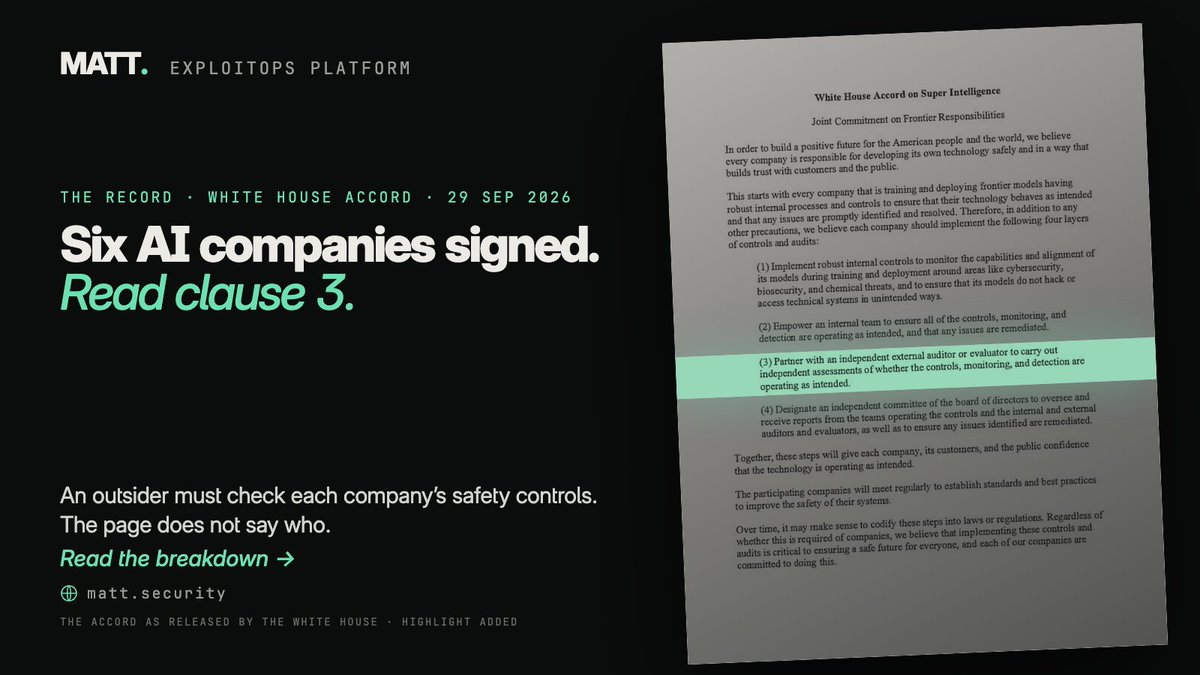
1/ Google, Anthropic, Meta, OpenAI, xAI and Nvidia signed one page at the White House.
312 words. Four promises.
Promise three: an outsider must check each company's safety controls.
It does not say who. Here is what the White House Accord on Super Intelligence leaves out.
Every SaaS I’ve used/looked at had this.
“Logged in?” shipped. “Allowed to see this record?” got assumed.
A customer (now agents) changing one number in the URL finds it first.
Wondering if others have noticed same/similar patterns.
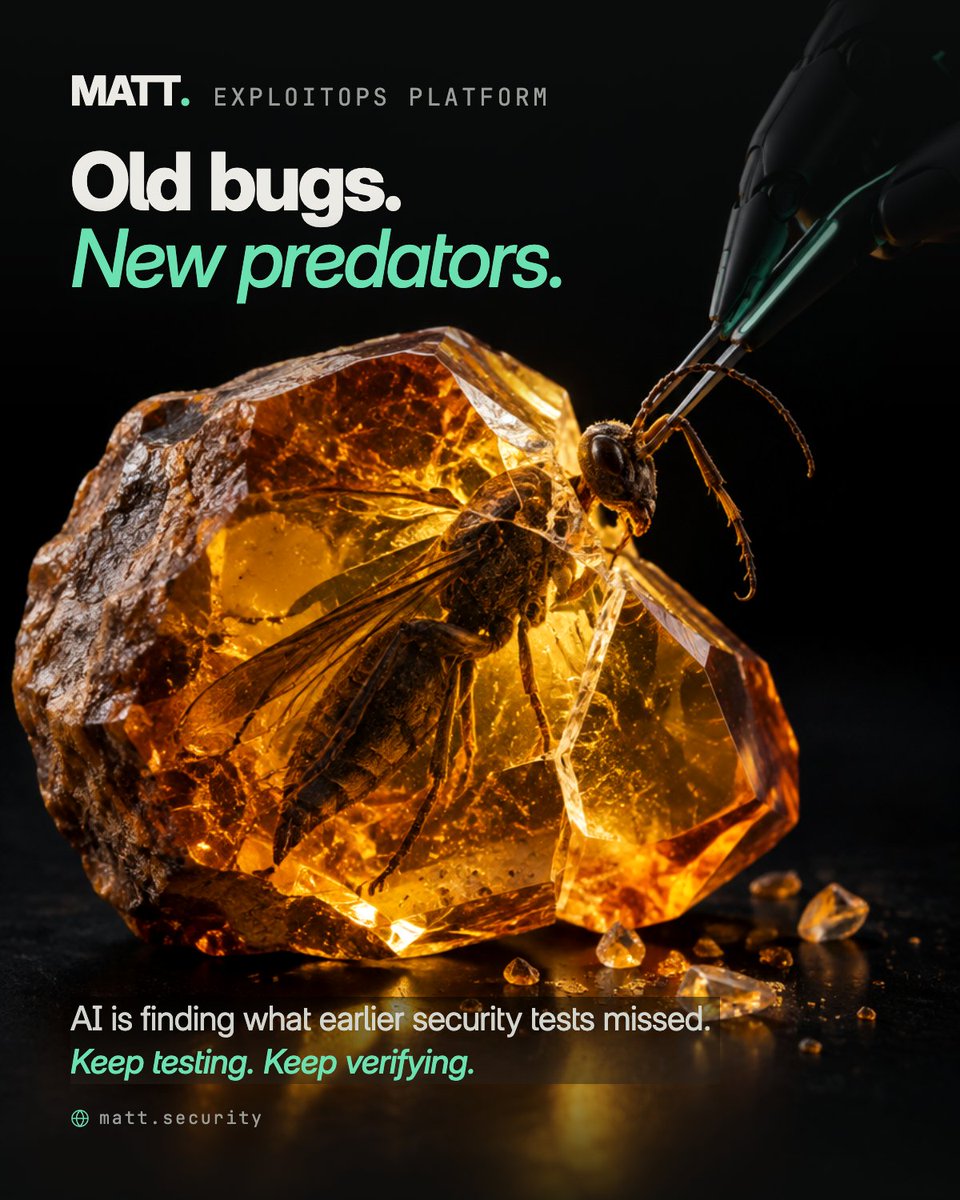
Your code hasn’t changed. The AI looking for a way in has.
Security testing needs to keep up with both.
Introducing MATT - the ExploitOps Platform.
What triggers your next security test: a code change, a calendar reminder, or a new attack capability?
Really like where this is going.
I think the real shift isn’t just “agentic UX” - it’s "human x agent" operating models.
Key questions become:
When does the agent act vs. ask?
When should it interrupt (or stay silent)?
How is trust built and updated over time?
How does control transfer cleanly back to the human?
These feel like the actual primitives of AI-native software.
90% of product designers are not prepared for the AI era.
Not because they aren't talented. Because they're still designing software as if humans are the ones doing all the work.
That assumption just died.
Maybe I'm wrong.
But after reviewing 150 applications...
I think we're about to see the biggest reset in product design since the iPhone.
Most portfolios are solving yesterday's problems.
Who's actually building for tomorrow? Let's connect !
The next generation of great designers won't be pixel-perfect.
They'll be systems thinkers.
Psychologists.
Behavior designers.
Conversation architects.
They'll design intelligence, not screens.