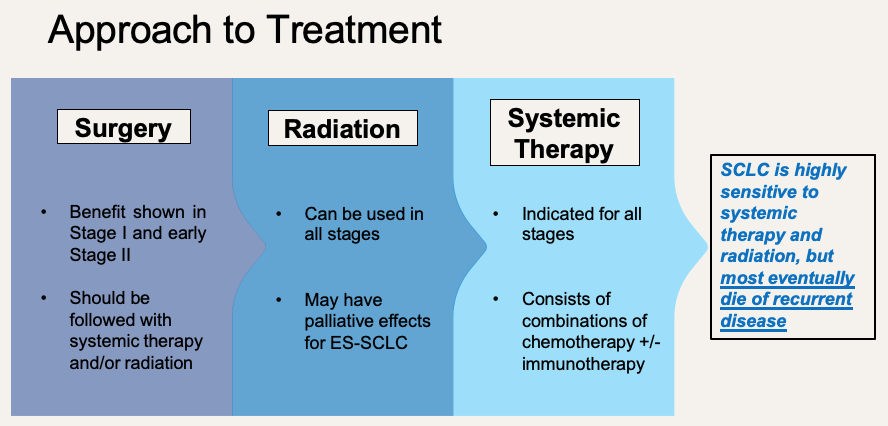
Treatment of SCLC can include combinations of surgery, radiation therapy, and systemic therapy. SCLC is highly sensitive to these therapies; however, most patients will eventually die of recurrent disease.
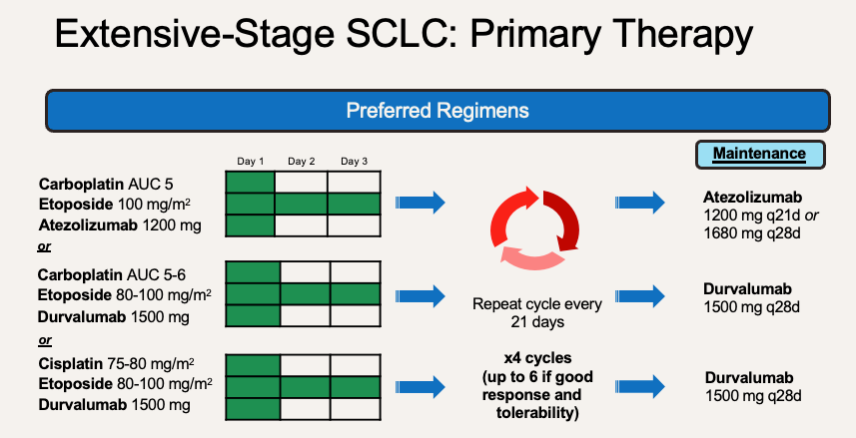
In recent years, the IMpower133 trial and CASPIAN trial have shaped the NCCN Guidelines for SCLC treatment in extensive-stage disease, as summarized in the figure below. You may also start to see the use of a newer drug, lurbinectedin, in the setting relapsed/refractory disease.
There are several symptoms associated with lung cancer, some of which are specific to the lung (such as cough or shortness of breath) while others are generalized (such as unexplained weight loss, weakness and fatigue).
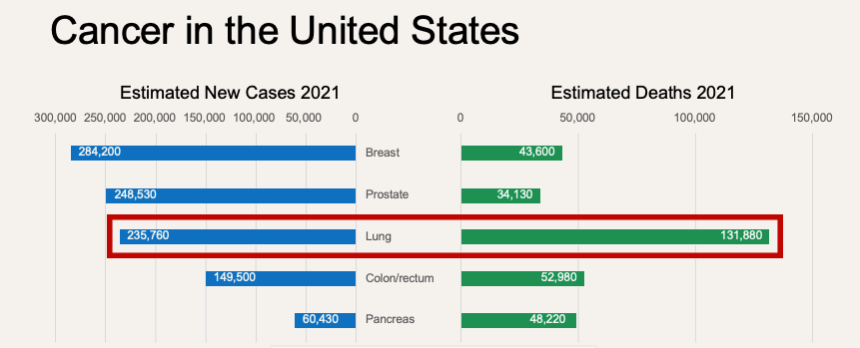
Lung cancer is the third-most commonly diagnosed cancer in the U.S., yet it is by far the leading cause of cancer-related deaths each year. Unfortunately, the relative 5-year survival rate of lung cancer is roughly 20%.
I recently got to present my CE on updated treatment of small cell lung cancer (SCLC) at @baptistmemrxres! Here are some highlights from my presentation!