I genuinely don't understand why everyone isn't using this yet
Andrej Karpathy, a co-founder of OpenAI, posted a simple idea that hit 16 million views: stop using AI to write code, use it to build a second brain.
You point Claude Code at a folder, drop in any source, an article, a transcript, a PDF, and Claude reads it, links it, and files it into a living wiki of everything you know. It compounds like interest, the more you feed it, the smarter it gets.
Here's the whole thing:
> Install Obsidian, create a vault, open it in Claude Code
> Paste Karpathy's wiki idea file and tell Claude to build it
> Claude makes three folders: raw for sources, wiki for its pages, a CLAUDE.md that runs it
> Drop any source into raw and say "ingest this"
> Ask questions across everything, forever
Five minutes to set up, and you never start from a blank chat again.
Full step-by-step guide with Claude and Obsidian, link below.
Bookmark this
You have noticed it. ChatGPT feels dumber than it used to. Your prompts that worked six months ago produce worse results now. The writing sounds flatter. The ideas sound safer. The internet itself feels like it is shrinking. Every article reads the same. Every email sounds the same. Every answer sounds like it was written by the same voice.
You thought it was you. It is not you.
Researchers at Oxford and Cambridge published a paper in Nature proving what is happening. They call it Model Collapse.
Here is the mechanism in one sentence. AI trained on AI-generated data gets dumber every generation until it forgets what real human data looked like.
The internet is filling with AI-generated content. Blog posts. Articles. Reviews. Comments. Social media. AI companies scrape the internet to train the next generation of models. Which means the next generation of AI is being trained on the output of the current generation.
Each cycle loses information. Not randomly. It loses the rarest, most unusual, most creative parts first. The researchers call these the "tails of the distribution." The weird ideas. The unexpected perspectives. The things that made the internet feel human. Those disappear first.
What remains is the average. The safe. The expected. The bland.
Then the next generation trains on that. And loses more. And the next generation trains on that. And loses more. The researchers proved this is not a slow decline. Major degradation happens within just a few iterations. Even when some of the original human data is preserved.
They tested it on large language models. On image generators. On statistical models. The pattern was the same every time. The output converges toward a narrow, flattened version of reality that looks nothing like the original data.
The lead researcher put it plainly. "Large language models are like fire. A useful tool. But one that pollutes the environment."
The pollution is invisible. You cannot see which sentence on the internet was written by a human and which was written by AI. Neither can the AI that is about to train on it. And once the tails are gone, they do not come back. The damage is irreversible.
This is not a prediction anymore. It is a diagnosis.
The internet you grew up on was built by humans writing things no algorithm would have written. Strange, personal, imperfect, alive. That internet is being diluted. One generation of AI at a time. And the models trained on what remains are learning a smaller and smaller version of the world.
Model Collapse is not a technical problem. It is a cultural one. The thing that made the internet worth reading is the thing that disappears first.
Domestic travel in India has evolved.
Travellers today aren’t simply looking for a destination. They’re looking for experiences worth travelling for.
Experiences that feel personal.
Experiences that feel curated.
Experiences that create stories long after the holiday ends.
That thinking inspired Beyond Ordinary, Our latest campaign celebrating a side of India that many travellers have yet to discover.
From leopard safaris in Rajasthan and coffee plantation mornings in Coorg to dinners beneath the stars in Manali, Beyond Ordinary brings together curated experiences, premium stays and thoughtfully designed escapes across India.
Explore Beyond Ordinary and plan your next escape: https://t.co/IypLp1VPHq
#BeyondOrdinary #Holidays #Alike #AlikeTravel
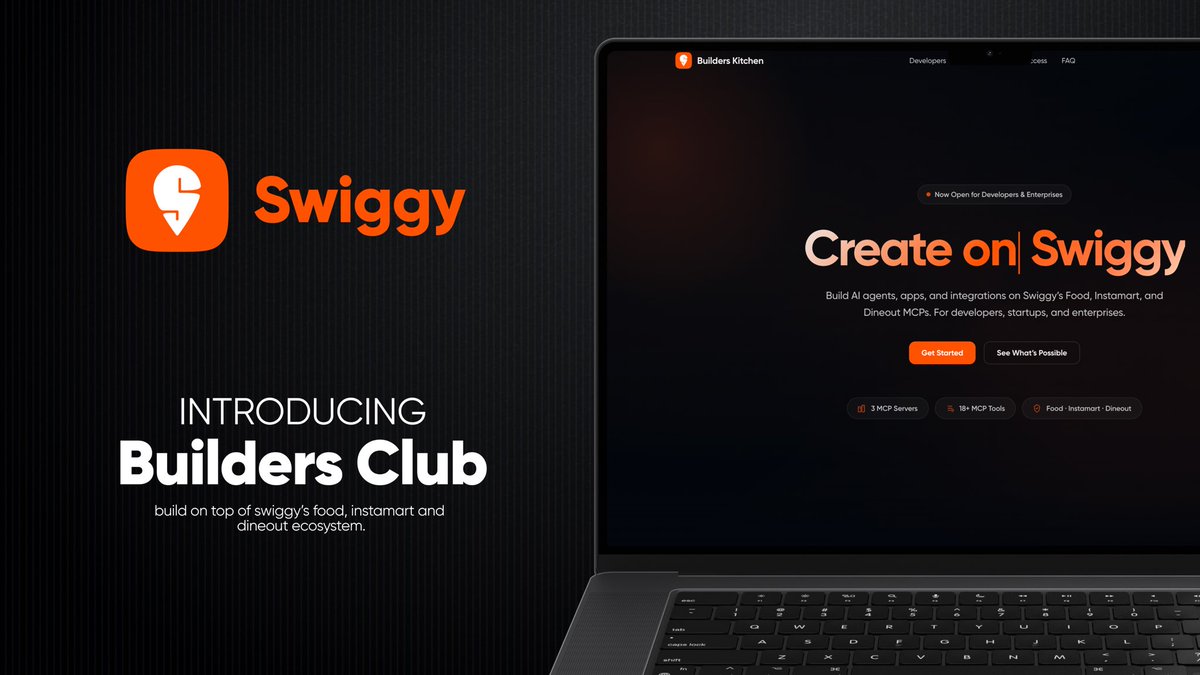
Introducing Swiggy Builders Club
We’re opening @Swiggy commerce infrastructure to developers and enterprises to build on top - build AI agents, apps, and integrations on top of Swiggy’s Food, Instamart, and Dineout ecosystems - with real APIs, real data, and real users.
What you get:
3 MCP Servers (Food, Instamart, Dineout)
18+ API tools covering the full convenience stack
Production data access from day one
Direct engineering support
Who it’s for:
Individual developers with bold ideas
Startups building AI-native commerce products
Enterprises looking to integrate Swiggy into their platforms
Smart grocery restock bots. AI ordering assistants. Dining recommendation agents. Group ordering tools, health first products.
If it makes commerce better for users, we want to see it.
Ship something great and we’ll feature it. Ship something exceptional and our recruiting team might reach out.
The travel industry has been fragmented for too long. People are noticing that we’re doing something about it.
Catch all the conversations happening here: https://t.co/E9zCqc7I78
Over the past few weeks, we have been talking about fragmentation. About why travel is broken at the seams and how bad the problem is that we accept it as a way of life. We shared how Eia, our AI travel twin, approaches human convenience differently and why the industry is more complicated than the headlines suggest.
Today, the team sits down to talk about where all of this is going.
Just an honest conversation about the vision behind Alike. And why we think the industry is at an inflection point for change very different from what the headlines suggest. And what we are building for.
Do watch the video and let us know your views on the future of travel.
If you want to go deeper, we wrote the full argument out on Substack. Read here- https://t.co/li8qNjg2ah
#Alike #Travel #Eia #TravelTech #AlikeTravel
@travelwithalike This is my issue, post covid, the amount of digital apps, websites and pages is overwhelming. I am so happy to find a solution to a modern problem in travel.
You open a few tabs to plan a trip.
Then a few more.
A couple of apps.
Some links get shared.
A group chat starts.
Somewhere in between, it stops feeling simple.
We kept hearing the same thing, planning was taking longer than the trip itself.
So we started building around that.
Watch
#TravelPlanning #TravelTech #AItravelplanner #ComingSoon #Alike #AlikeTravel #TravelWithAlike
Announcing Copilot Cowork, a new way to complete tasks and get work done in M365.
When you hand off a task to Cowork, it turns your request into a plan and executes it across your apps and files, grounded in your work data and operating within M365’s security and governance boundaries.
Most people using Claude are wasting it.
Not because Claude is weak.
Because their prompts are.
I spent weeks testing 1000+ prompts
breaking them, improving them, and removing the useless ones.
The result?
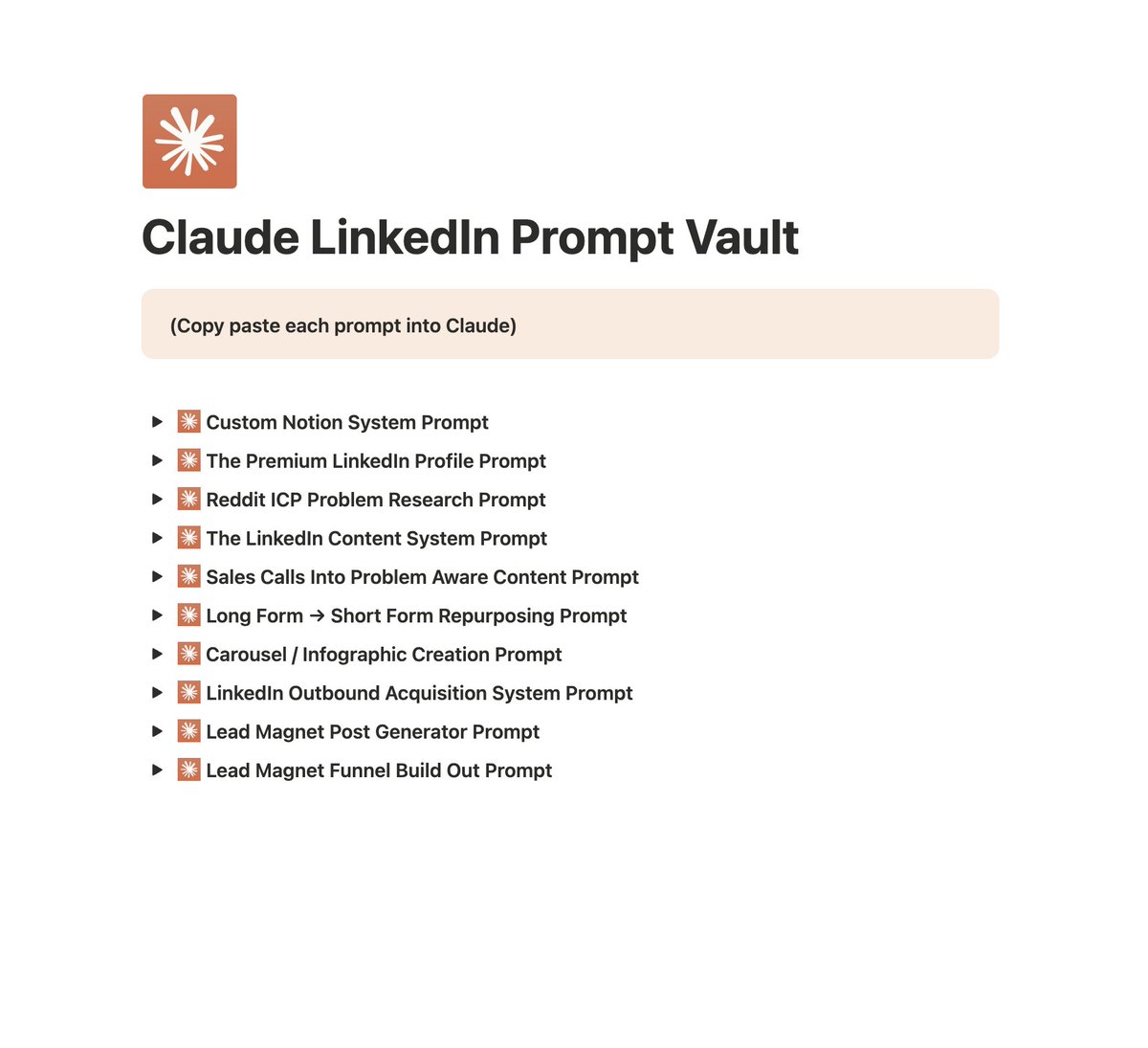
A Claude Prompt Vault with 100 battle-tested prompts that handle things like:
• LinkedIn content systems
• Notion workflows
• ICP research from Reddit
• Lead magnets
• Sales → content pipelines
• Long → short form repurposing
• Carousels & infographics
• Outbound acquisition systems
• Profile optimization
• Content engines
Basically...
Everything you need to turn Claude into a business operating system.
These prompts helped me generate $2k–$4k/month using AI workflows.
And today I’m giving the 100 Prompt Vault away.
Copy → Paste → Run.
How to get it:
• Follow (so I can DM you)
• Like + RT
• Comment “Claude”
Miss a step = no access.