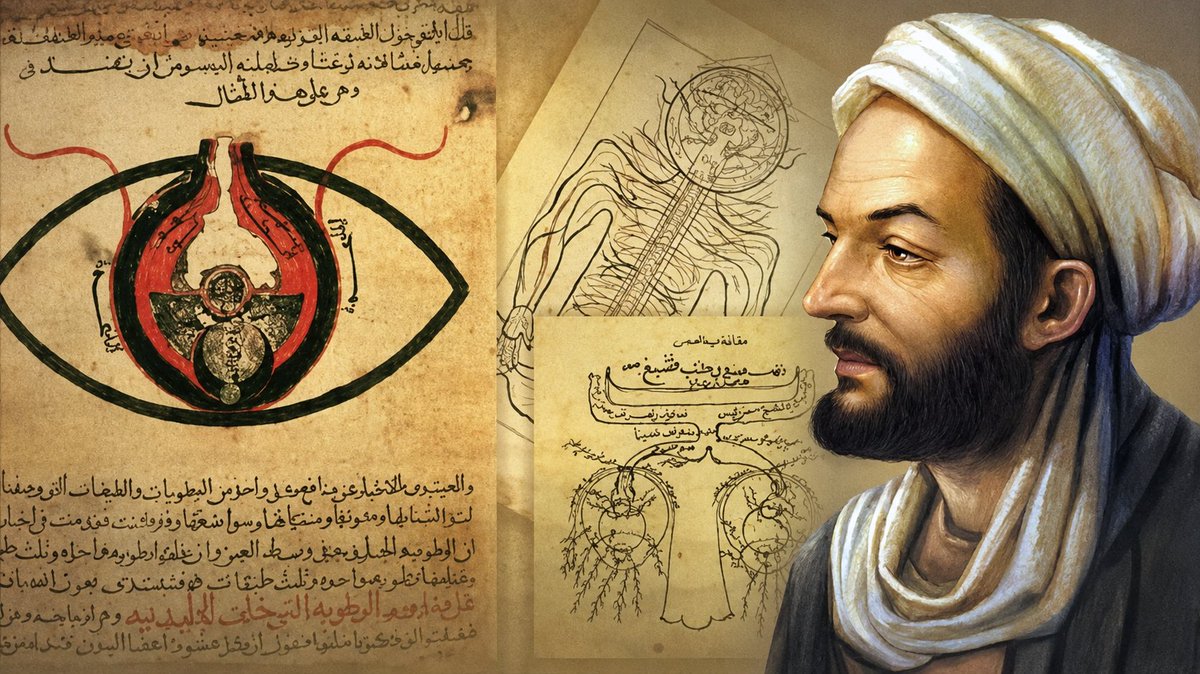
A Persian physician memorized the entire Quran by age 10 and was practicing medicine by age 16. By 18 he had cured a sultan that no other doctor could help. The textbook he wrote in his 30s became the operating manual for every European doctor for the next 600 years.
I started reading about him at midnight and could not believe one teenager had personally built so much of the foundation of modern medicine.
His name was Ibn Sina. The book is called The Canon of Medicine.
Every modern clinical trial. Every evidence-based drug protocol. Every pharmacology textbook. Every medical school curriculum that teaches doctors to observe before they prescribe.
All of it traces back to a Persian teenager who finished his medical education before most modern students finish high school.
Ibn Sina was born in 980 CE near Bukhara, in modern-day Uzbekistan. His father was an Islamic scholar who employed the best tutors money could buy. The tutors started failing to keep up with him almost immediately.
By age 10 he had memorized the entire Quran word for word. By 12 he was correcting his tutors on points of law. By 14 he had outpaced his teacher in mathematics and started learning on his own. By 16 he was treating patients in his neighborhood.
He later wrote, with no false modesty, that medicine was an easy subject and he had mastered it quickly.
He hit a wall around 17. He could not understand Aristotle's Metaphysics. He read the book forty times and still could not grasp it. Then he picked up a commentary on it by Al-Farabi in a Bukhara bookshop for a few coins, read it overnight, and suddenly the entire system of Greek philosophy snapped into place.
He went home and gave alms (money or goods) to the poor in gratitude that he had finally understood.
A year later the news of his medical skill reached the sultan of Bukhara, Nuh ibn Mansur, who was suffering from an illness no doctor in his court could cure. Ibn Sina was called in. He treated the sultan. The sultan recovered. The 18-year-old asked for one thing in payment.
Access to the royal library.
The library of the Samanid sultans in Bukhara was one of the greatest in the Islamic world at that time. Ibn Sina spent the next year inside it reading everything he could find.
He later wrote that by age 21 he had absorbed everything written by every major scholar before him, and that the rest of his career was just refining what he had already understood as a teenager.
He spent the next decade as a wandering physician and political advisor. Empires were collapsing across Persia and Central Asia. He moved from court to court, treating princes, drafting legal documents, escaping invasions, hiding from enemies who wanted to kill him for his association with rival rulers.
He wrote at night while moving between cities by day. He was imprisoned at least once. He kept writing.
In his 30s and 40s he produced The Canon of Medicine. A five volumes book at least a million words. A complete synthesis of every medical tradition he could find. Greek medicine from Galen and Hippocrates. Persian medicine from his own tradition. Indian medicine from Ayurvedic texts. His own clinical observations from thousands of patients.
The Canon was translated into Latin in the 12th century. It was reprinted more than 30 times in the 15th and 16th centuries alone. It was the standard reference text at the University of Paris, the University of Bologna, and Oxford well into the 17th century.
William Osler, one of the founding fathers of modern medicine, called it the most famous medical textbook ever written and said it served as a medical bible for a longer period than any other book in human history.
The part that most people miss is what was actually inside it.
He laid out clear rules for testing whether a drug works rules that still look like modern clinical trials. The drug must be pure, tested on a single condition, and checked against opposite conditions for consistent results. Effects must be seen repeatedly, with timing that matches the treatment. And it has to be tested on humans, since animal results don’t always carry over.
A thousand years before the modern clinical trial existed, he had written its protocol.
He defined medicine itself in a sentence that has never been improved on. Medicine is the science by which we learn the various states of the body in health and when not in health, the means by which health is likely to be lost, and when lost, is likely to be restored.
He insisted that prevention came before treatment. He argued that lifestyle, diet, exercise, and sleep mattered as much as drugs. He was right by a thousand years. He documented hundreds of conditions with such precision that European doctors were still using his diagnostic categories in the 1700s.
He died in 1037 at age 57. He was on a military campaign with one of the rulers he served when he developed colic. He treated himself with what he believed was the correct remedy. The remedy did not work. He died near the city of Hamadan in modern Iran. His tomb is still there.
His own assessment of his life is one of the most honest things any genius has ever written about themselves. He said he had lived a wide life rather than a long one and that he preferred it that way.
The Canon is digitized at the Library of Congress. The original Arabic version is preserved at multiple universities. Free English translations exist online.
The medical textbook that trained every European doctor for half a millennium is sitting one click away from you.
Most modern doctors have never heard the author's full name.
CEOs are quietly realizing the AI replacement plan has a problem.
Two problems, actually.
One: the token costs for running AI agents are now exceeding what they were paying the employees they fired.
Two: when the tokens run out, the AI stops. Just stops. No continuity. No workaround. Just a spinning wheel where your workforce used to be.
You fired humans to save money and bought a subscription that bills you into a corner.
The employees you let go knew what to do when things broke.
The AI just invoices you for the outage.
And then there’s the permission problem nobody wants to talk about.
To do its job, the AI agent needs access. Full access. Your systems, your patents, your contracts, your future plans. Everything you spent years building, handed over to a process that has no loyalty, no discretion, and no skin in the game.
You didn’t hire a replacement.
You gave a stranger with no soul the keys to everything you own.
Enjoy.
Every grain of Himalayan pink salt sold in the world comes from one place.
Pakistan.
Specifically from a mine in Punjab that was discovered 2,350 years ago when Alexander the Great's horses started licking rocks during a rest stop.
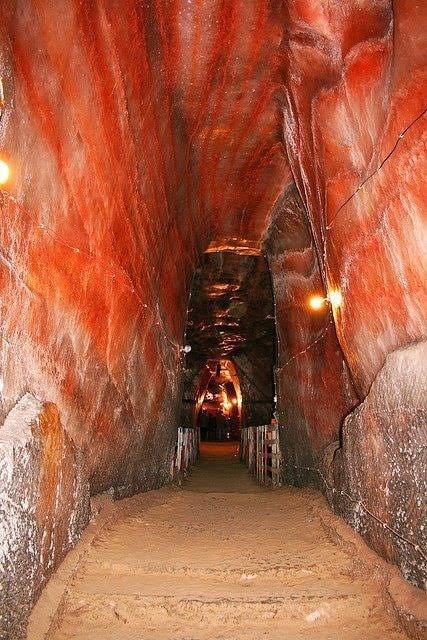
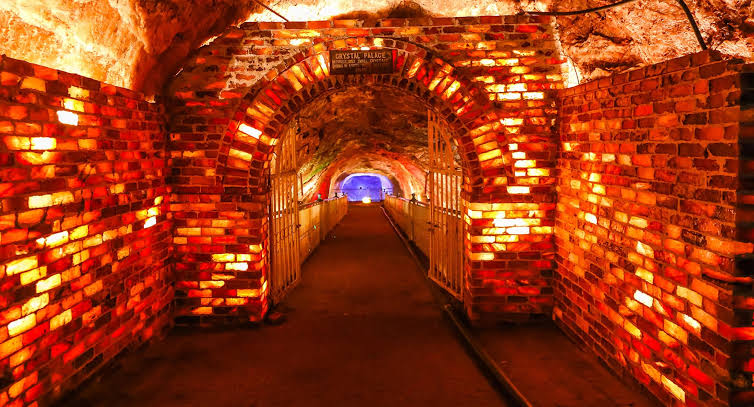
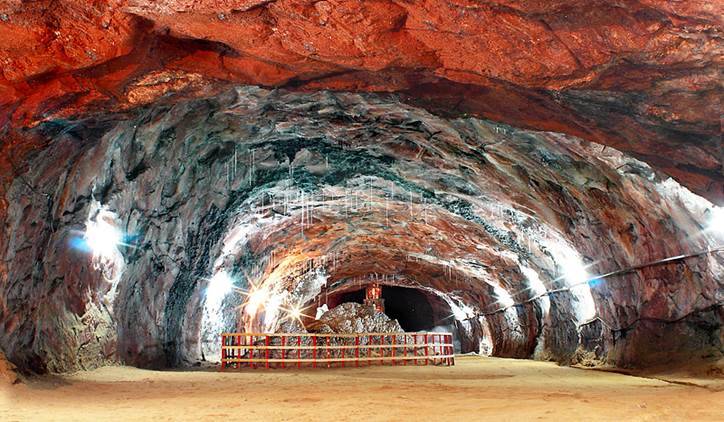
Khewra Salt Mine. The second largest salt mine on earth. Its deposits formed 540 to 800 million years ago when a prehistoric sea evaporated inside what would become the mountains of Pakistan.
Alexander's army was marching through in 326 BC. The horses stopped and licked the ground. The soldiers tasted the rocks. Salt.
The greatest accidental discovery in the history of food.
The Mughals mined it. The Sikhs refined it. The British modernised it in 1872 building tunnels still in use today.
Today it stretches 110 square kilometres. 12 stories. 6 underground. 6.687 billion tons of salt reserves remaining. Producing 350,000 tons every year.
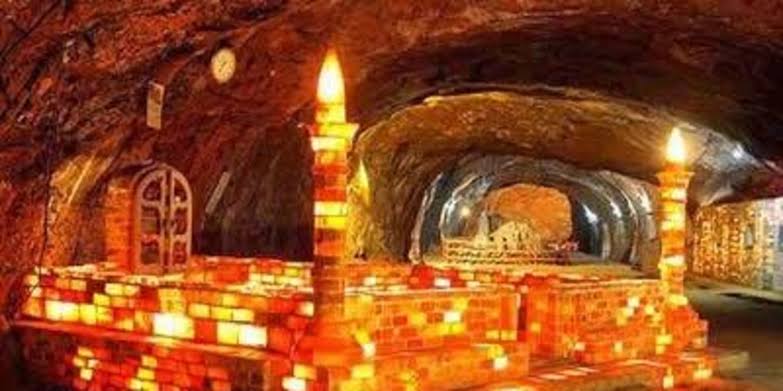
Inside its tunnels craftsmen have carved a mosque from salt bricks that still holds prayers. A replica of the Great Wall of China in pink salt. A glowing crystal Sheesh Mahal chamber. An underground lake that reflects pink light off salt walls.
250,000 visitors every year walk through mountains that have been slowly becoming the world's most famous salt for 800 million years.
All of it in Pakistan.
Discovered by a horse.
Used by the world.
Pakistan. 🇵🇰
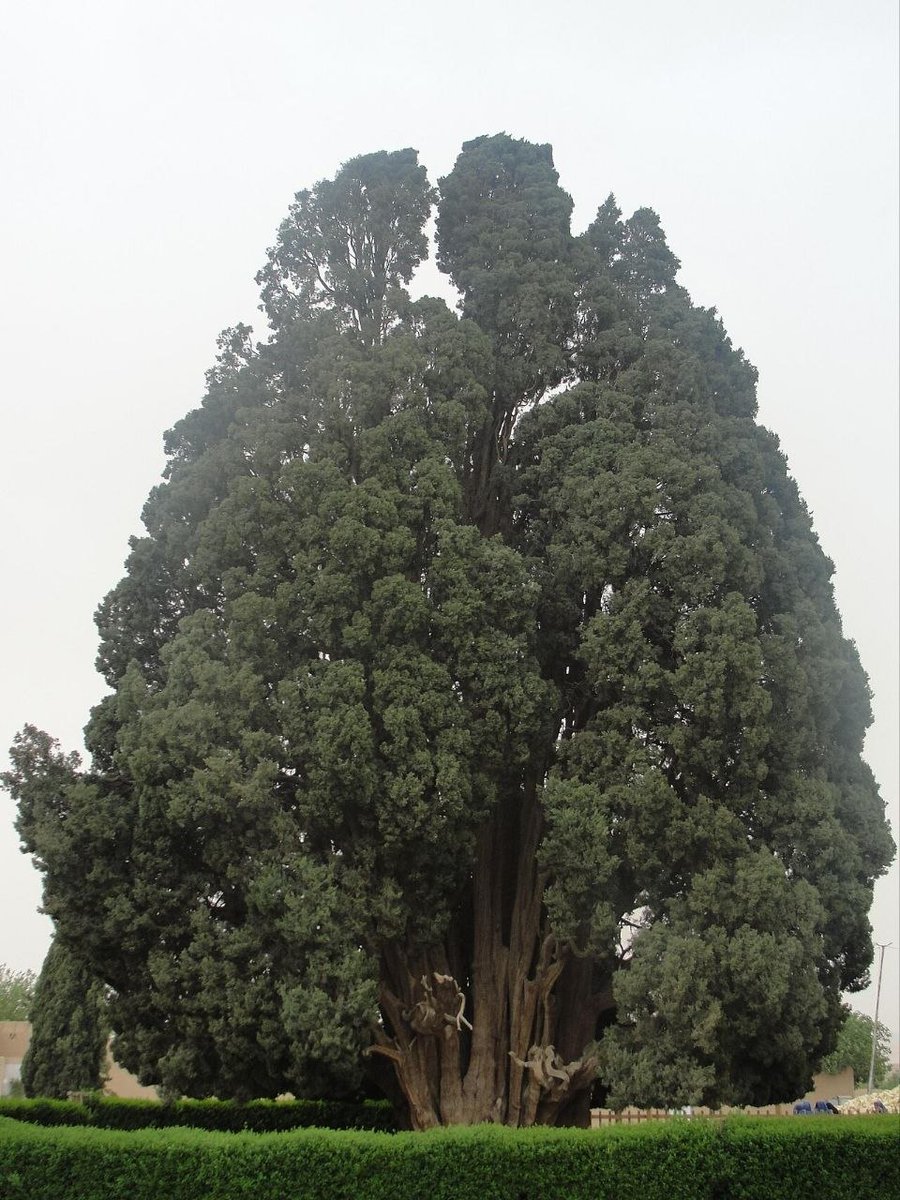
Asia's oldest living organism, the ancient Abarkuh cypress tree - at least 4500 years old - is rooted in land that was already known as Iran at the time.
Your body has roughly 20 hours to live above what climbers call Everest's death zone. The summit sits on the wrong side of that line. The people in that photo are dying as they take it.
Up there, the air holds about a third of the oxygen you'd breathe at sea level. Your blood oxygen drops from a healthy 95% to 50 or 60. At any hospital on Earth, those numbers trigger a medical emergency.
Your brain starts running on fumes. Climbers describe feeling drunk, hearing voices, seeing people who aren't there. Even basic decisions, like whether to turn back, can feel impossible. Meanwhile your stomach stops processing food, sleep becomes pointless, and your cells burn through oxygen faster than bottled tanks can replace it. After about 20 hours, organs start to fail. Most people who die on Everest die on the way down, already half-gone by the time they turn around.
The crowd in this photo is the 2025 summit weekend, when 213 people reached the top on May 18 and 19 alone. They were all squeezed into one narrow window when the wind dropped enough to climb. The 2026 season just opened on May 13 with a record 492 permits. The fee jumped to $15,000 a head this year, up from $11,000, and Nepal has already pulled in over $7 million from Everest alone this spring.
A full Everest trip averages $61,000. Luxury packages with heated tents and unlimited oxygen run $150,000 to $300,000 a person.
About 200 dead climbers are still on the mountain right now, frozen where they fell. Rainbow Valley sits just below the summit, named for the colored jackets sticking up through the snow. Almost none can be brought back. Recovering a single body once took 18 hours and a team of climbers, and helicopters can't fly that high.
The Sherpas who do most of the work, fixing the ropes, hauling the oxygen tanks, sometimes carrying clients when they collapse, earn around $10,000 for an entire season. Western guides on the same trip make $30,000 to $50,000. Back home, farm income in their villages averages $500 a year, which is why so many of them keep coming back. 42 mountain workers have died on Everest in the past ten years.
Mountains kill people. Everest is the one that takes your money first, hands you a guide and an oxygen tank, and points you past a body count on the way up.
I received a false copyright claim on one of my videos and YouTube removed the video because of this.
It's a video about the Riemann Hypothesis. The claim comes from some person who submits a link to their paper about "The Continuity Engine: A Formally Verified Framework Prime Resonance Unification with Medical, Physical, Mathematical Evidence" with links to two unpublished papers that are completely unrelated to my video content. It's obviously some crackpot work, I receive dozens of those a day.
YouTube took the video down based on this false claim.
The only way they allow me to react to this requires me to submit my personal contact information to some random crank on the internet. Alternatively, I am supposed to hire a lawyer (!!) on my own costs, to track down some random guy from whom I then have to extract my up-front expenses.
I have complained to YouTube support about this multiple times. No success, the video is still down.
This procedure is completely unacceptable. It allows random people to try and blackmail me into responding to them. I have no time for this bullshit and no patience either.
Frankly the only sensible course of action forward that I see is to sue YouTube for facilitating fraudulent DCMA claims.
@YouTubeCreators@YouTube
how difficult could it be to reach an agreement...
1. you can enrich uranium in a friendly country for steady supply if that is a concern
2. may be your scientist can work on more difficult problem of fusion than fission in France?!