Still true 30+yrs later; if no change is to occur, academic integrity will continue to plummet.
I used to hold the position of "don't hate the player, hate the game" but we can't just be a conveyor belt of lemmings heading to the edge in the name of professional progression.
Isolated nausea/vomiting after iodinated contrast should generally NOT be charted in the allergy history section as a contrast allergy and is NOT an indication for steroid/antihistamije premedication.
Doing so may delay diagnoses without benefit.
Delete bad allergy entries.
Does learning ever stop? 🎓
The ESVS doesn't joke around when it comes to Education!
There are a dozen upcoming Academy workshops and hundreds of educational resources in the ESVS Library catered to our ambitious community.
Ask us what you want to learn in the comments 👇
We're tagging the ESVS Academy and the ESVS Library to help you find a workshop and educational materials.
@XavierMartMest1@a_saratzis
Radiomics is a growing field in medical imaging that transforms images into high-dimensional quantitative data, offering insights into disease diagnosis, prognosis, and treatment planning. The authors propose a structured 10-step framework to guide radiomic research, addressing key challenges in standardisation and implementation (Blanca Rodriguez-Gonzalez et al.)
https://t.co/BfD7IHB4kf
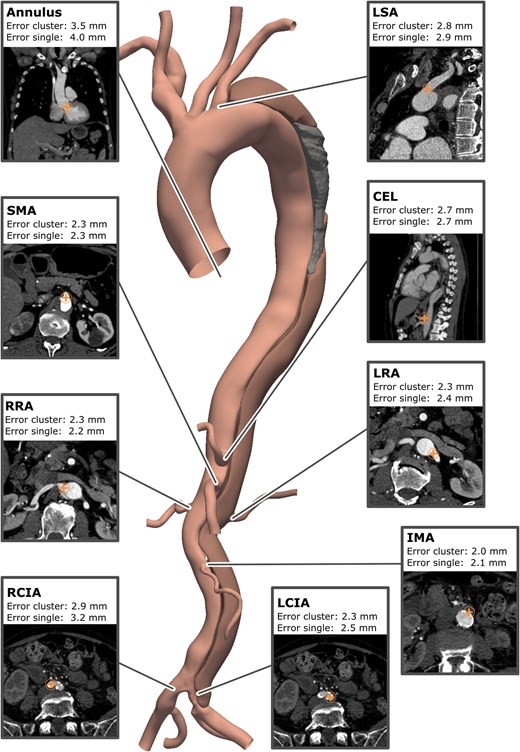
Automated AI tool to identify and measure every branch vessel involved in a Stanford type B aortic dissection on CT. Treatment planning and followup just became quantitative! @RSNA@OxfordJournals#RadAdv
https://t.co/UDCsNDMsjD
18 years ago we burnt a hole in an endograft for a single renal artery to repair (turned down for open repair) her juxtarenal aneurysm. Fast forward-we are discharging patients POD 1 after 3 vessel arch with percutaneous femoral puncture & radial puncture. Absolute magic.
Proud of @HullHospitals involvement with @kidtrial2024@HullRadiology vascular IR team are a powerhouse!
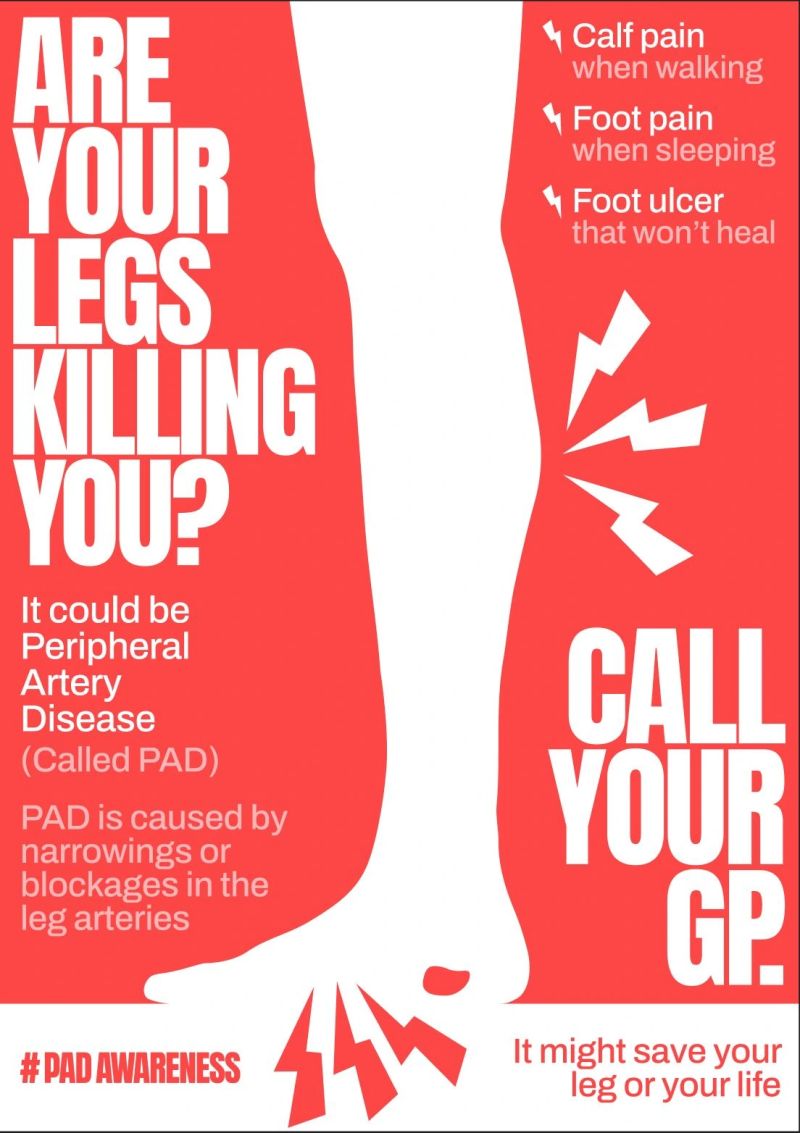
Honoured to have been an associate PI and taken part in this Trial, and looking forward to seeing the final results- huge study for PAD patients with renal impairment
Thinking about attending IOUK 2026 as a trainee?
This video, recorded at last year’s event, is a great reminder of why IOUK is such a valuable conference for those earlier in their IR journey.
From the breadth of lectures and international speakers to the chance to ask questions, have real conversations and learn more about one of the most exciting and fast moving areas of medicine, IOUK offers trainees a brilliant mix of education, insight and connection.
It is big enough to bring together a wide variety of voices and perspectives, but still offers the opportunity for those one to one discussions that can make such a difference during training.
If you are a trainee and want to build your knowledge, widen your network and spend time immersed in interventional oncology, IOUK is well worth having in the diary.
BSIR IOUK Annual Meeting - https://t.co/oR0VmdqlIC
#BSIR #IOUK #InterventionalOncology #InterventionalRadiology #Trainees #RadiologyTraining
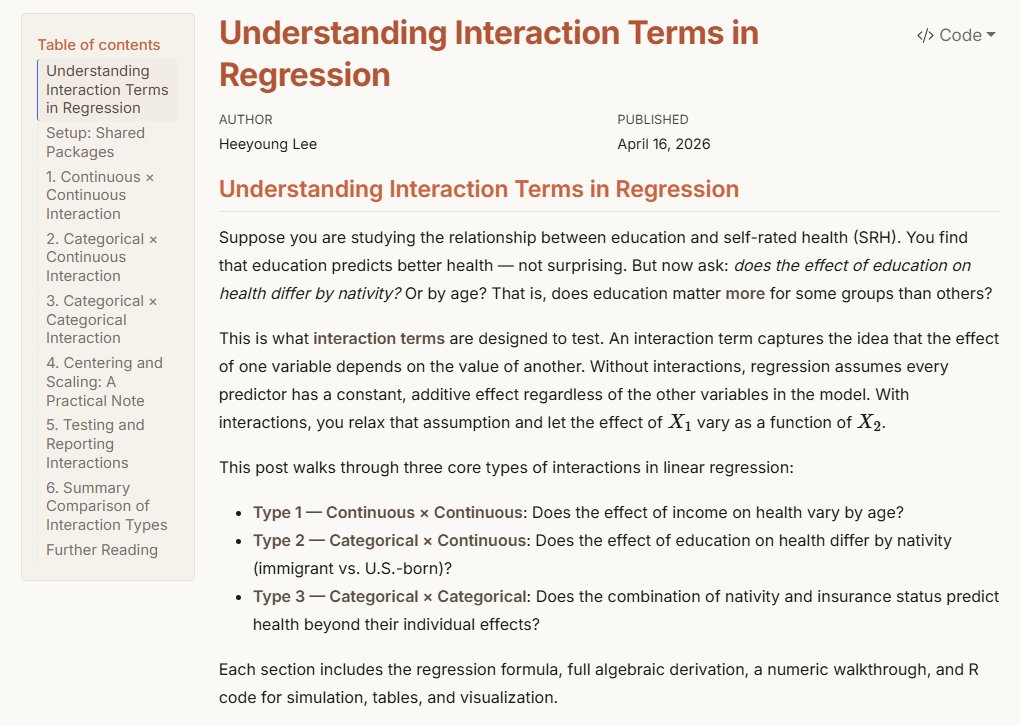
📊Stats Lab: Understanding Interaction Terms in Regression
Basic logic of interaction terms in regression:
1) Continuous x Continuous
2) Categorical x Continuous
3) Categorical x Categorical
Replication R code is available!
https://t.co/sUe7GevdFg
#stats#dataviz
🧠 Radial first in neurointervention continues to grow.
In this multicenter European study, the Benchmark BMX81 showed high technical success (96.3%) with low crossover to femoral access and few mostly minor access-related complications. @VCostalat
📖 Read more: https://t.co/34hj82tDVH
We heard last week about Raghu’s first six months as BSIR President. Now he is sharing what members can look forward to in the next six.
From IOUK and the Paediatrics meeting to the Advanced Skills Course, Basic Skills Course for trainees, bursary opportunities and the run up to the ASM, there is plenty ahead for the BSIR community.
Watch the video for a quick look at what is coming next.
#BSIR #InterventionalRadiology #RadiologyEducation #IRTraining #ASM
Just because there's "no significant interval change" doesn't mean you're off the hook. If something was never properly worked up or recommended for further evaluation, calling it stable doesn't protect you from being pulled into a lawsuit. You'd think a rad would know that😞
What does six months as BSIR President look like?
In this video, Raghu @tweetraghuram speaks to Nike @NKHardy about some of the key moments from his first six months in the role, from progress with the industry scholarship and the launch of the first visiting professor for medical colleges, to society webinars, the women’s panel and plans for future research collaboration through an NIHR incubator grant proposal.
A positive look at the work happening behind the scenes to support the future of interventional radiology.
#BSIR #InterventionalRadiology #BSIRPresident #RadiologyResearch #MedicalEducation
Are we producing too many research papers?
The global research system produces an extraordinary volume of publications.
Estimates suggest that well over three million papers (and that is probably on the low side as an estimate) are now published every year, and the number continues to grow.
On the surface, this might appear to be a positive sign. More research activity should mean more knowledge, more innovation, and more progress, right?
But there is an uncomfortable question that is rarely discussed openly.
Are we now producing more research papers than the academic system can realistically absorb?
________________________________________
The expanding research literature
Every year, thousands of new journals appear, and existing journals increase the number of papers they publish.
Researchers face growing expectations to publish regularly. Promotion systems, funding requirements and university rankings all place strong emphasis on publication output.
As a result, publishing has become a continuous activity rather than an occasional milestone in a research career.
This expansion raises several questions.
⚫️ How many papers are actually being read beyond the authors and reviewers?
⚫️ How many make a genuine contribution to knowledge?
⚫️ How many are incremental additions produced mainly to meet performance targets?
⚫️ How many are simply lost in the ever-expanding archive of academic literature?
________________________________________
When volume becomes the objective
Most researchers enter academia because they want to contribute new ideas and advance knowledge.
However, the incentive structures surrounding research can quietly shift the focus.
Instead of asking “What is the most important problem to work on?” researchers sometimes find themselves asking:
“What can I publish next?”
Over time, this can encourage a culture where volume becomes a proxy for productivity.
The result may be a research ecosystem that produces more papers than anyone can realistically read, review or evaluate.
________________________________________
An uncomfortable possibility
It is possible that the research system is becoming better at producing papers than producing knowledge.
That does not mean that most research lacks value. Far from it.
But it does raise a difficult question.
If the number of publications continues to grow rapidly, how do we ensure that quality, originality and genuine contribution remain at the centre of scholarly communication?
________________________________________
I am curious about the views of others in the research community.
Do you think the academic world is producing too many research papers?
"Currently, in radiology, doctors are struggling with unsustainable increases in demand for our services and, consequently, an unsupportable workload. But this is nothing new."
Giles Maskell looks at what we fail to learn from NHS history
https://t.co/QgI8z3nzxi
Dear Publishers -
We are getting increasingly frustrated.
We often spend years on a single(!) study. It includes a lot of planning, expensive experiments, discussions, complex data analysis and writing the final masterpiece.
Our students spend their most precious time on it. Our postdocs work to the limit because they know the cost of tenure-track positions.
When we finalize the study, we write a thorough story and submit it.
And we often celebrate because it’s done.
We celebrate all the work we put into the study.
But only to find out later that our manuscript is left sitting on someone’s desk for years.
__
We don’t blame the editors, many of whom work tirelessly for very little compensation to assess submitted papers, find reviewers and make difficult decisions. Editors are often the same faculty & scientists as we are.
We blame the system that favors business over science.
The system in which we are expected to use our precious funding just to have that PDF uploaded online.
Those $10,000 fees come from taxpayers’ money.
Our students could attend 3 conferences instead.
We could buy chemicals, instruments, computers...
In other words, we could spend it on science and education.
But instead we give $10,000 to a journal so that our PDF gets ‘approved’ and comes online, generating up to 40% profit margins for the publisher.
__