The video from Jamui, Bihar is deeply disturbing.
Two Class 10 students were stopped on a road. Harassed. Humiliated. Molested. A young girl, hands folded, begged to be let go while goons groped her and dragged her away.
Who gave these men the right to behave like this? This is not "culture." It is patriarchy: the belief that any man can police a girl's body, her movement, her choices.
When control is mistaken for culture, and such attitudes are normalised by Andhbhakts, mobs start believing they are the law.
Every individual in that video must be identified and prosecuted under POCSO, and justice must be swift. And if the incident happened on September 19th, why are the culprits not behind bars yet?
And the Bihar government must answer why a girl is not safe on a public road at 7 pm?
बिहार के जमुई का एक वीडियो बहुत बेचैन करने वाला है।
10वीं क्लास के एक छात्र और छात्रा को रास्ते में जबरदस्ती रोक लिया गया। उन्हें प्रताड़ित किया गया, अपमानित किया गया और छात्रा के साथ उत्पीड़न किया गया। बच्ची हाथ जोड़कर उसे जाने देने की विनती करती रही, मगर गुंडे उसे गलत तरीके से छूते और खींचतान करते रहे।
इन लोगों को ऐसी बदतमीज़ी करने का हक किसने दिया? यह "संस्कृति" नहीं है, यह patriarchy है: ये सोच कि किसी भी पुरुष का किसी लड़की के शरीर, उसके आने-जाने और उसकी पसंद-नापसंद पर नियंत्रण है।
जब नियंत्रण को ही संस्कृति मान कर 'अंधभक्त' ऐसी सोच को सामान्य ठहराते हैं, तो भीड़ को लगने लगता है कि वही कानून है।
उस वीडियो में दिख रहे हर व्यक्ति की पहचान होनी चाहिए और उन अपराधियों पर POCSO के तहत मुकदमा चलाकर उन्हें जल्द से जल्द सजा मिलनी चाहिए। और अगर ये घटना 19 सितंबर की है तो गुनहगार अब तक सलाखों के पीछे क्यों नहीं हैं?
और बिहार सरकार जवाब दे कि शाम 7 बजे कोई लड़की राज्य की सड़कों पर सुरक्षित क्यों नहीं है?
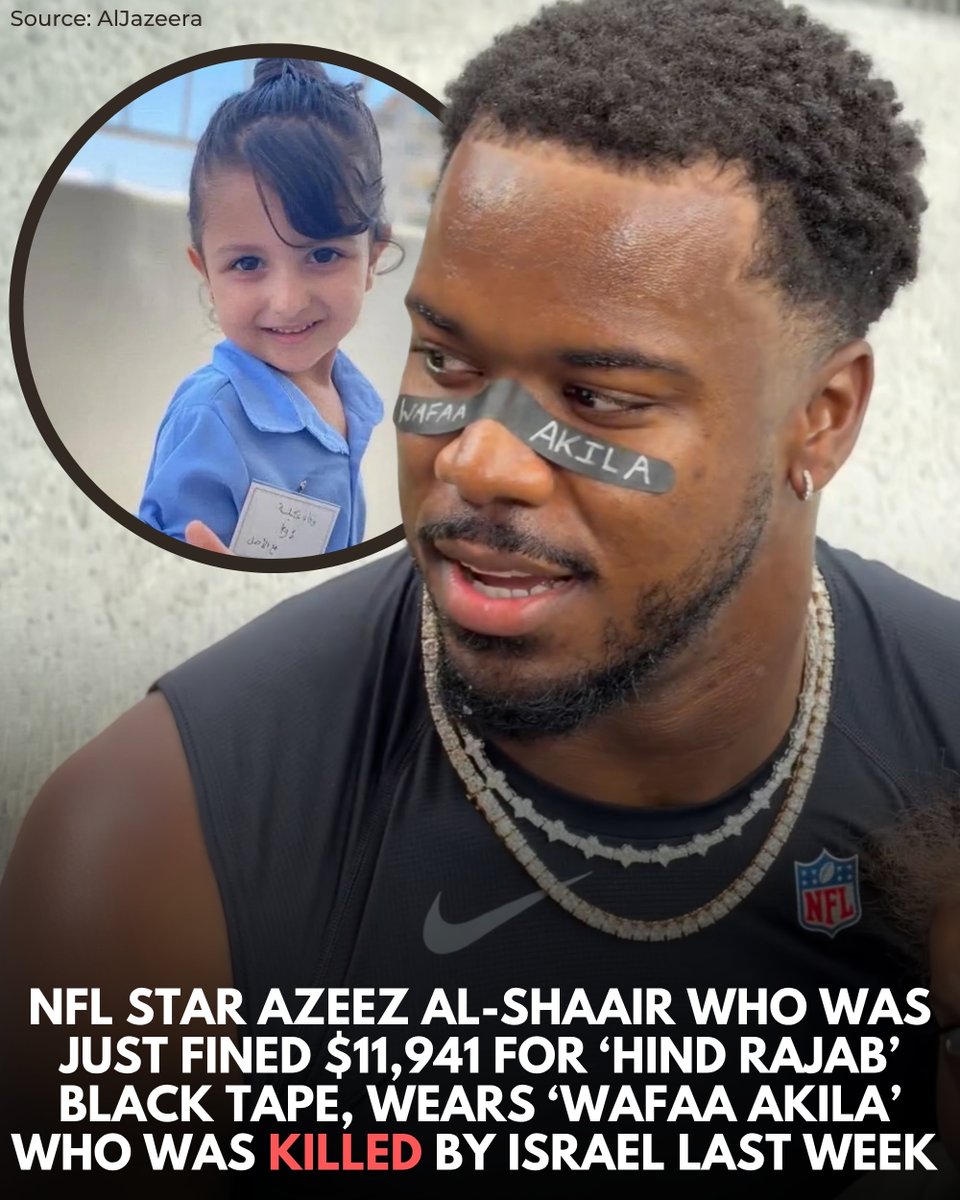
After being fined $11,941 by the NFL for wearing “Hind Rajab” on his eye black, Houston Texans linebacker Azeel Al-Shaair did it again.
During Sunday’s game against the Bengals, Al-Shaair wore “Wafaa Aqila” on his eye black, honoring a Palestinian girl who was killed alongside her father in an Israeli strike on their vehicle in Gaza earlier this month.
Azeez Al-Shaair pays tribute to Wafaa Akila on his eye black
She was an 8 year old child who was killed by the IDF in a car bombing on her first day of school
"This is not a media stunt that should pass just as a breaking news headline. What is happening in Gaza today will happen everywhere in the world.”
Dr. Suhaib Mohammad Al-Hams, chairman of Kuwait Specialized Hospital in Khan Younis, warned that the fuel cutoff is pushing Gaza’s healthcare system toward collapse.
“Cutting off fuel is a matter of life and death,” he said, warning that the shutdown of hospitals will leave thousands without emergency care, surgeries, childbirth services, ambulances and other essential treatment.
Kuwait Specialized Hospital serves more than 2,500 patients every day and performs more than 50 free surgeries daily. With fuel blocked alongside severe shortages of medicines, medical supplies and other essentials, doctors and nurses warn that its services are at risk of stopping completely.
Gaza doctors protested against Israeli ban on entry of fuel for hospitals’ generators that is inevitably leading to halting providing healthcare for the patients and people wounded by Israeli occupation attacks
May Allah forgive Sheikh Ibrahim Al-Madani, shower him with His boundless mercy, illuminate his grave, and raise his ranks in Jannat al-Firdaws. May Allah accept his lifelong service to Masjid Al-Haram and make every Adhan he called a continuing source of reward for him.
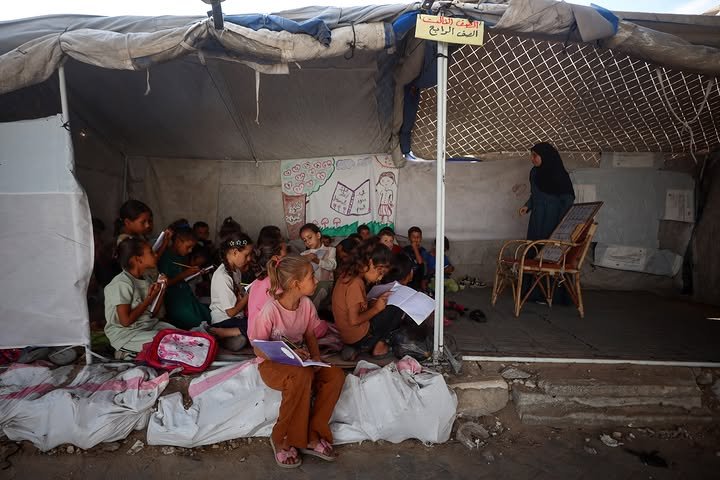
Around 400,000 Palestinian students return to classrooms across Gaza amid harsh and unprecedented conditions left by Israel's genocide in the Strip.
With few schools suitable for learning and a severe shortage of classrooms and desks, thousands of students continue their education in worn-out tents lacking even the most basic conditions needed for learning.
📷 Hani Al-Sha'er
In-person classes resume in Gaza for the first time in three years of war, as UNRWA launches the 2026–2027 academic year on Saturday at Nuseirat Preparatory Boys’ School in central Gaza.
My father came back to our tent today in tears.
Today marked the beginning of the new school year in Gaza, and my daughter Layan took her first steps into first grade. Her grandfather went with her to school, but he returned overwhelmed with grief.
I asked him in alarm, “Dad, why are you crying?”
He said, “I felt so heartbroken when I saw the children sitting on the ground, without desks, trying to study inside tents. I felt like I couldn’t breathe.”
This day was supposed to be filled with new school bags, uniforms, laughter, and dreams.
But in Gaza, children are starting their school year in tents, sitting on the ground, surrounded by the consequences of war and displacement.
Even Layan’s joy at starting first grade was accompanied by her grandfather’s pain the pain of an entire generation deprived of the simplest rights of childhood.
In another Israeli violation of the ceasefire in Gaza, an Israeli airstrike targeted a vehicle in a populated street market in the Sheikh Radwan area in Gaza City, reportedly killing at least two Palestinians and wounding several others.